Understand patterns Addition & Subtraction Worksheets for 8-Year-Olds
6 filtered results
-
From - To
Discover our engaging "Understand Patterns: Addition & Subtraction Worksheets" designed specifically for 8-year-olds! These worksheets help young learners grasp the concepts of addition and subtraction through fun and interactive activities. By focusing on identifying and understanding numerical patterns, children will develop crucial problem-solving skills and enhance their mathematical reasoning. Our worksheets promote a hands-on approach, making math enjoyable while fostering a deeper comprehension of mathematical operations. Ideal for classroom use or at-home practice, these resources will boost your child's confidence in math. Explore our collection today and watch your child master addition and subtraction with ease!
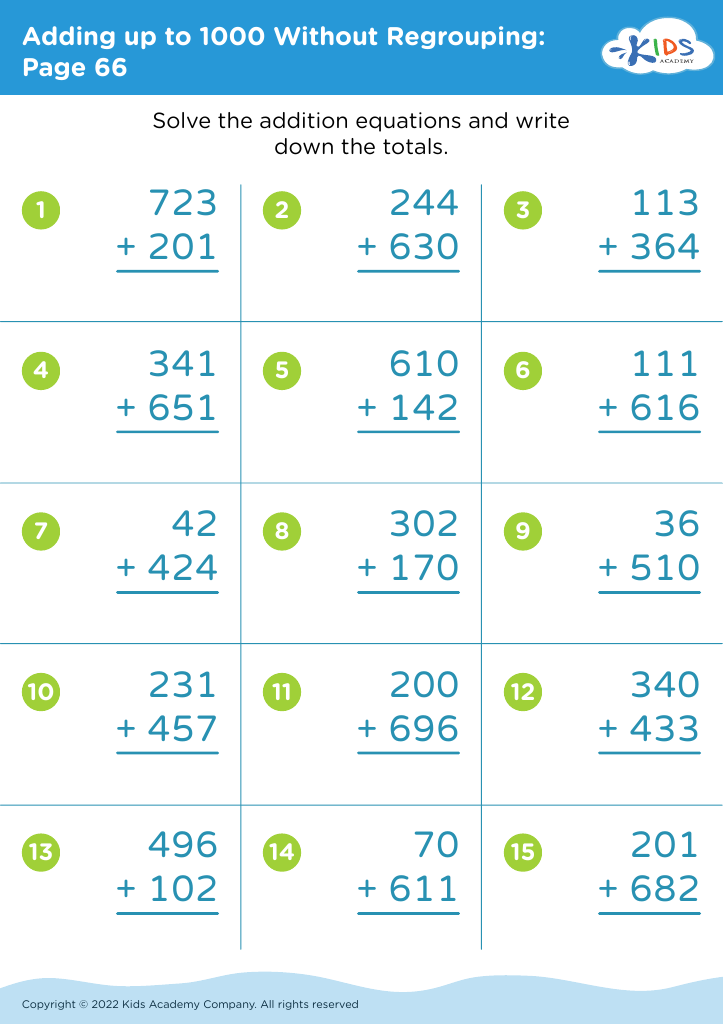
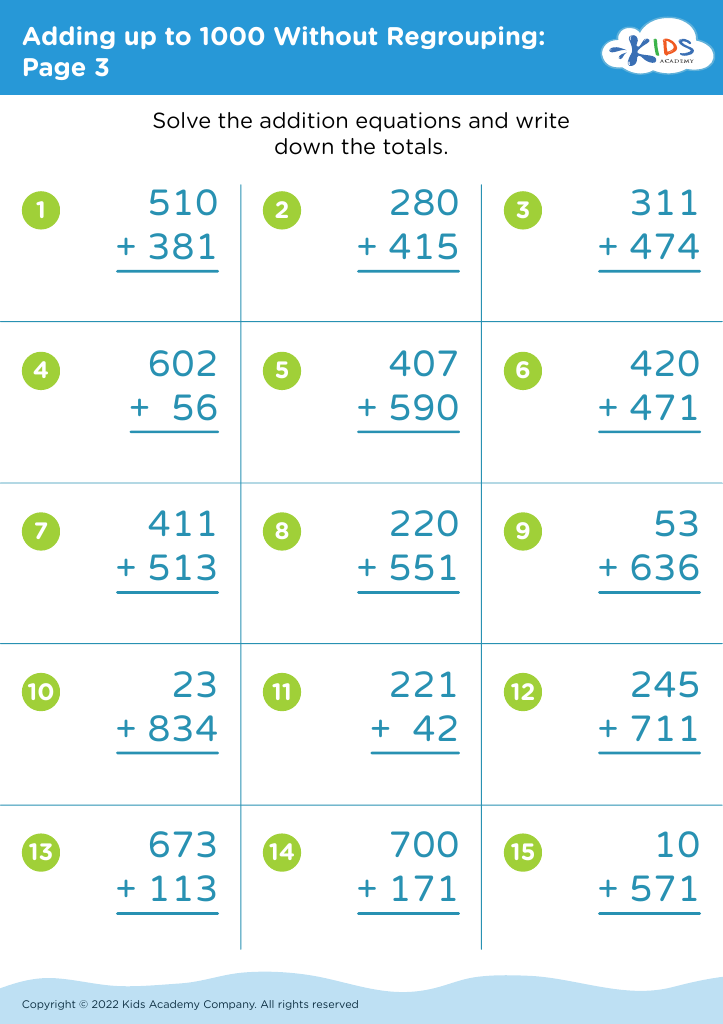
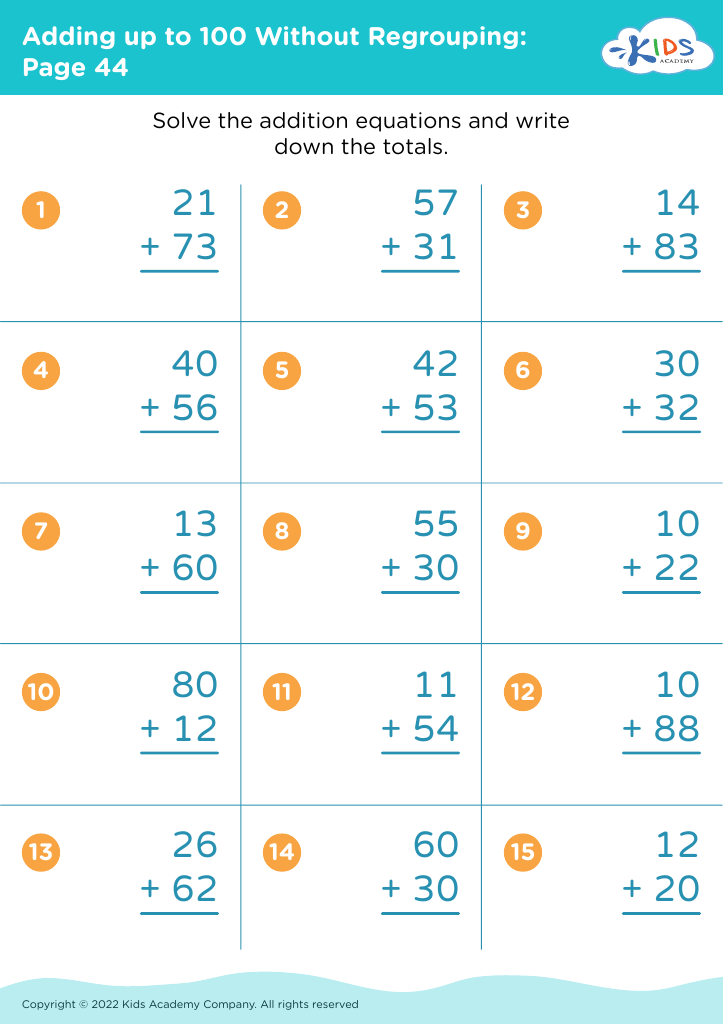
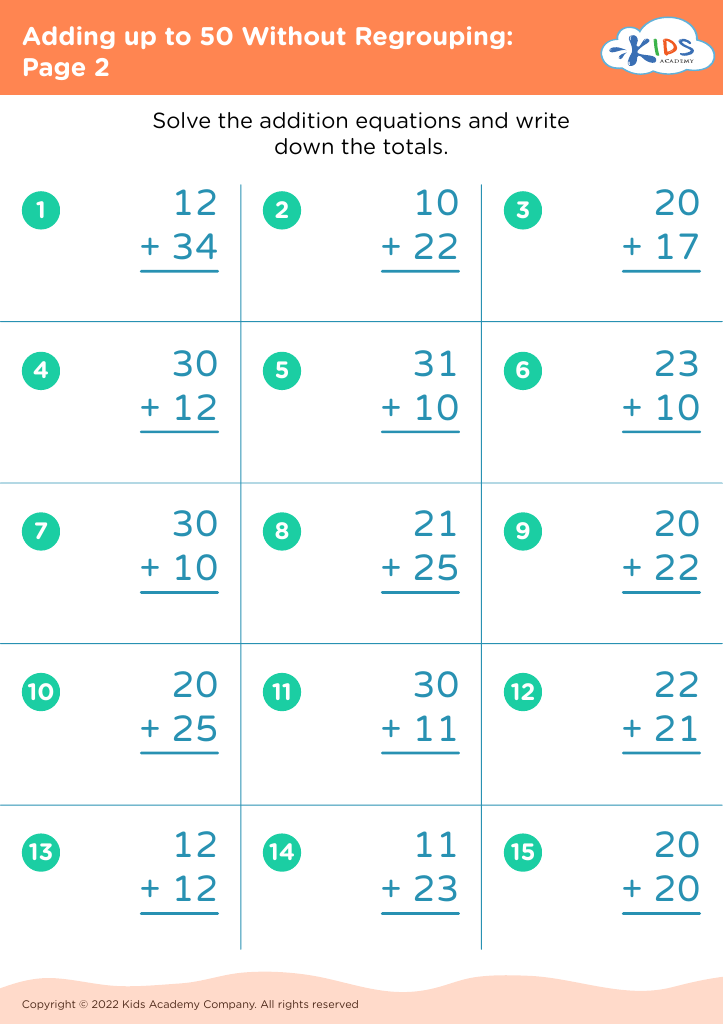
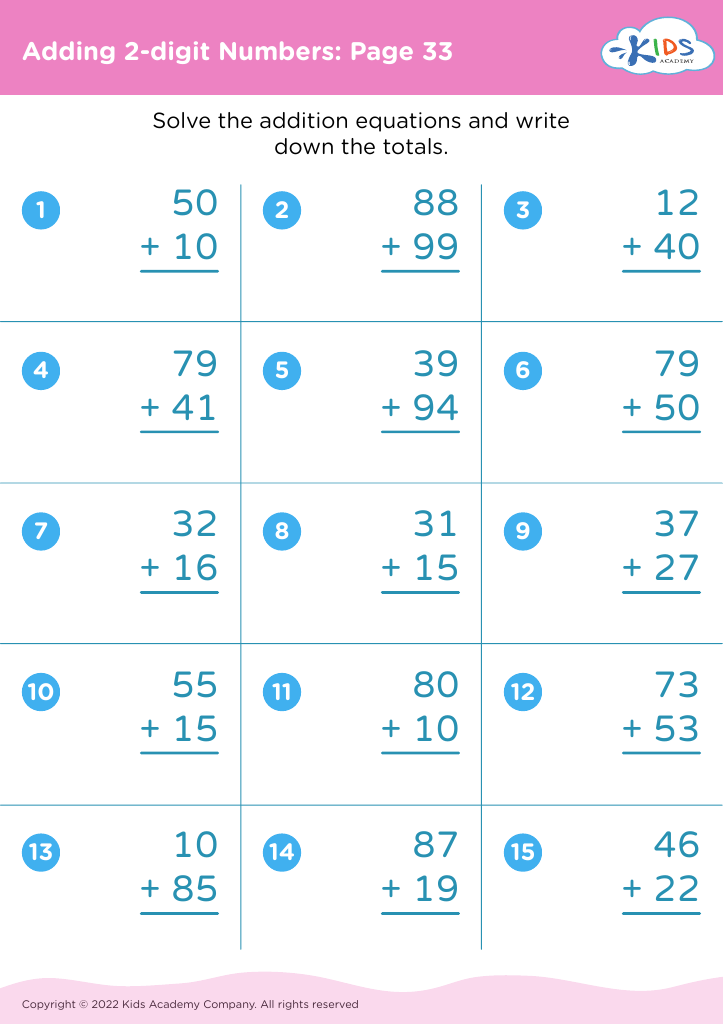
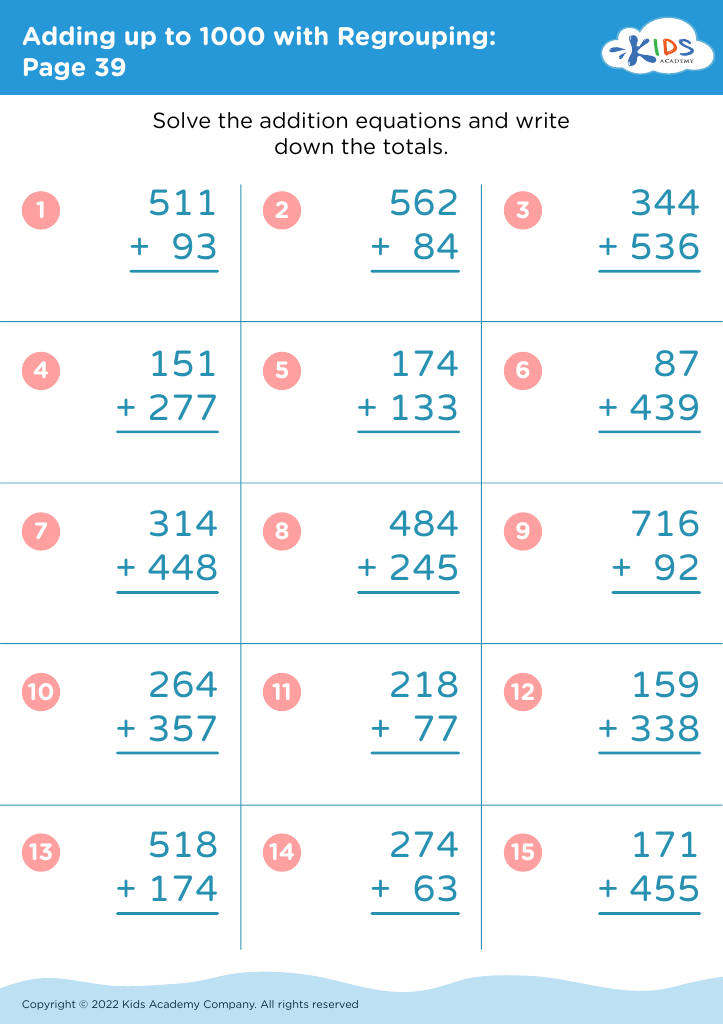








Understanding patterns in addition and subtraction is vital for 8-year-olds as it lays a strong foundation for their mathematical skills. At this age, children start to grasp more complex math concepts, and recognizing patterns helps solidify their understanding of how numbers work together. When children identify patterns in number sequences or operations, they develop critical thinking and problem-solving skills essential for later math topics, including multiplication and division.
Moreover, pattern recognition enhances computational fluency, enabling students to perform calculations more efficiently. For instance, noticing that 4 + 5 equals 9 can help them deduce that 14 + 5 equals 19 without direct computation. This ability supports their confidence and encourages a positive attitude toward math.
Parents and teachers should also care because pattern recognition is integral in making connections across various subjects, such as science and even art. It promotes logical reasoning and fosters resilience, as children learn to approach challenges methodically.
By nurturing this skill, adults prepare children not only for academic success but also for everyday problem-solving, ensuring they remain engaged in learning and capable of tackling more advanced mathematics in the future. Investing time in developing these foundational skills is crucial for children's overall cognitive development.








