
Understanding adjectives Addition & Subtraction Worksheets for 8-Year-Olds
5 filtered results
Difficulty Level
Grade
Age
-
From - To
Subject
Activity
Standards
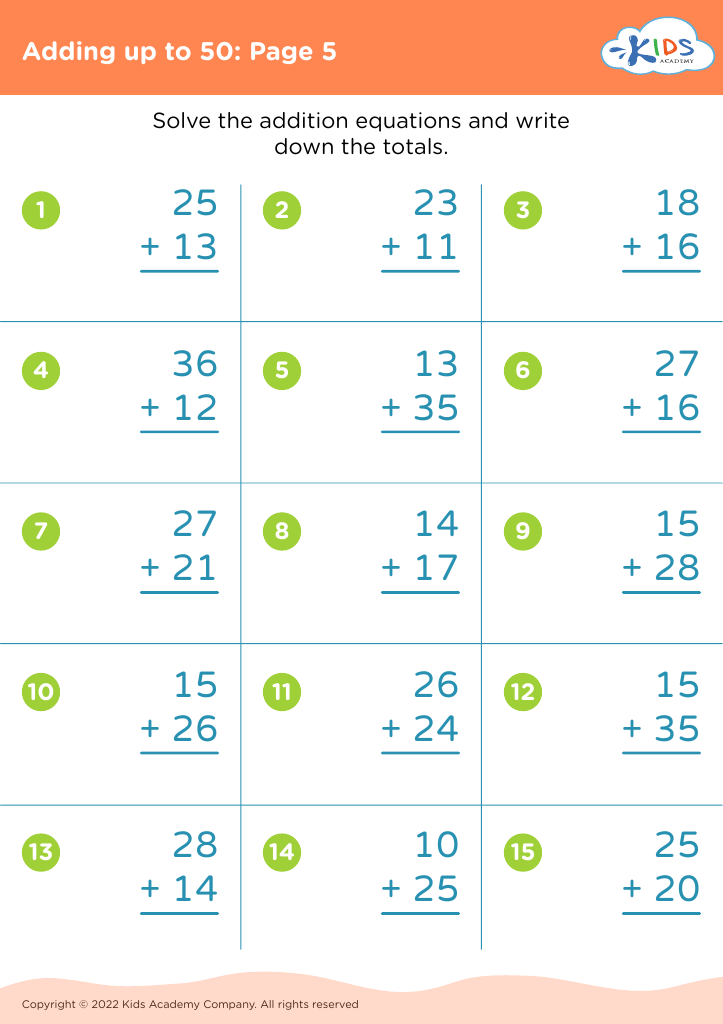
Enhance your 8-year-old's math and language skills with our "Understanding Adjectives Addition & Subtraction Worksheets." Designed for young learners, these engaging worksheets combine the fundamentals of arithmetic with the intricacies of language by incorporating adjectives into math problems. As children practice addition and subtraction, they will also learn to identify and use adjectives, enriching their vocabulary and comprehension. Ideal for classroom or home use, these resources help develop critical thinking while making learning fun. Boost your child's confidence in both math and language arts with this creative approach that makes understanding adjectives an enjoyable experience!
Favorites
With answer key
Interactive
Join Kids Academy for Free
Who is primarily going to use this learning content?








Understanding adjectives, along with fundamental concepts like addition and subtraction, is crucial for 8-year-olds as it lays the groundwork for effective communication and critical thinking. Adjectives expand vocabulary and enhance descriptive language, fostering a child’s ability to express ideas clearly. This skill is essential not only in everyday conversations but also in academic contexts, including reading comprehension and writing.
Moreover, mastering addition and subtraction at this age forms the basis for more advanced mathematical skills later on, such as multiplication and division. These foundational numerical abilities are vital for everyday life, from managing money to solving practical problems. By grasping these concepts, children build confidence in math, which can positively influence their overall attitude toward learning.
When parents and teachers prioritize understanding adjectives, addition, and subtraction, they support comprehensive education that encourages literacy and numerical fluency. This holistic approach not only equips children with essential skills they'll use throughout their lives but also cultivates a love for learning, promoting lifelong curiosity and resilience. Ultimately, investing attention in these areas enables children to navigate the world more effectively, academically and socially.








