Understanding directions Addition & Subtraction Worksheets for 8-Year-Olds
3 filtered results
-
From - To
Unlock your child's mathematical potential with our "Understanding Directions Addition & Subtraction Worksheets" specially designed for 8-year-olds. These engaging worksheets help children grasp essential math concepts by focusing on following instructions accurately. Young learners will enhance their addition and subtraction skills while developing critical thinking and comprehension abilities. Through a variety of exercises and fun activities, students will learn to interpret and execute directions effectively in mathematical contexts. Ideal for reinforcing classroom learning or supplementing home study, these worksheets provide valuable practice that makes math both fun and educational. Dive in today and watch your child's confidence in math soar!
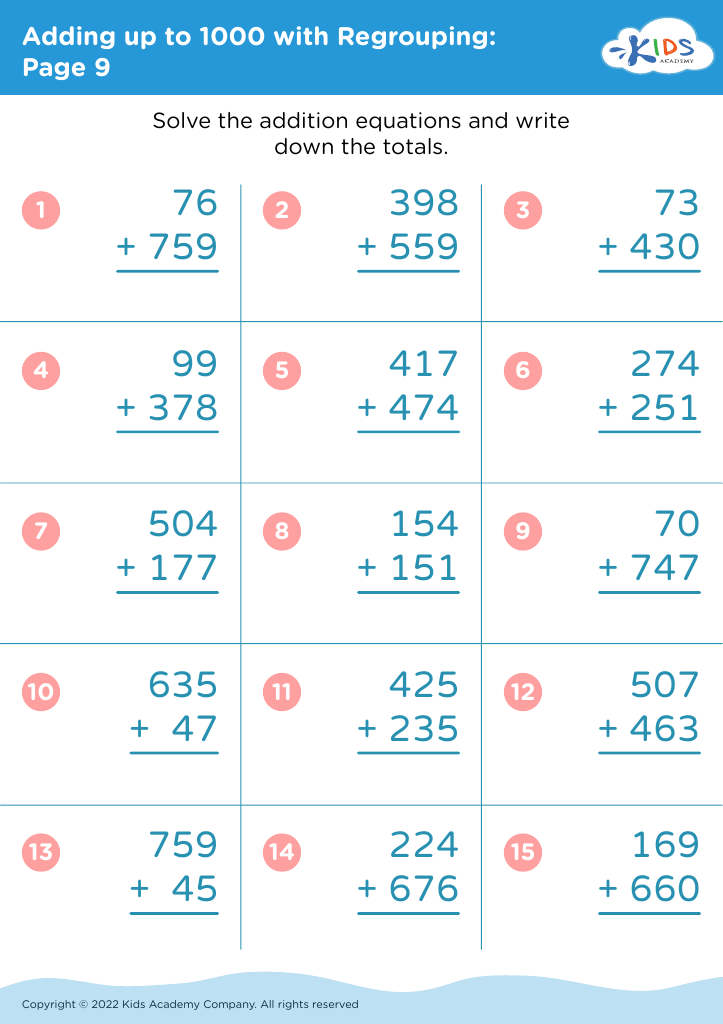
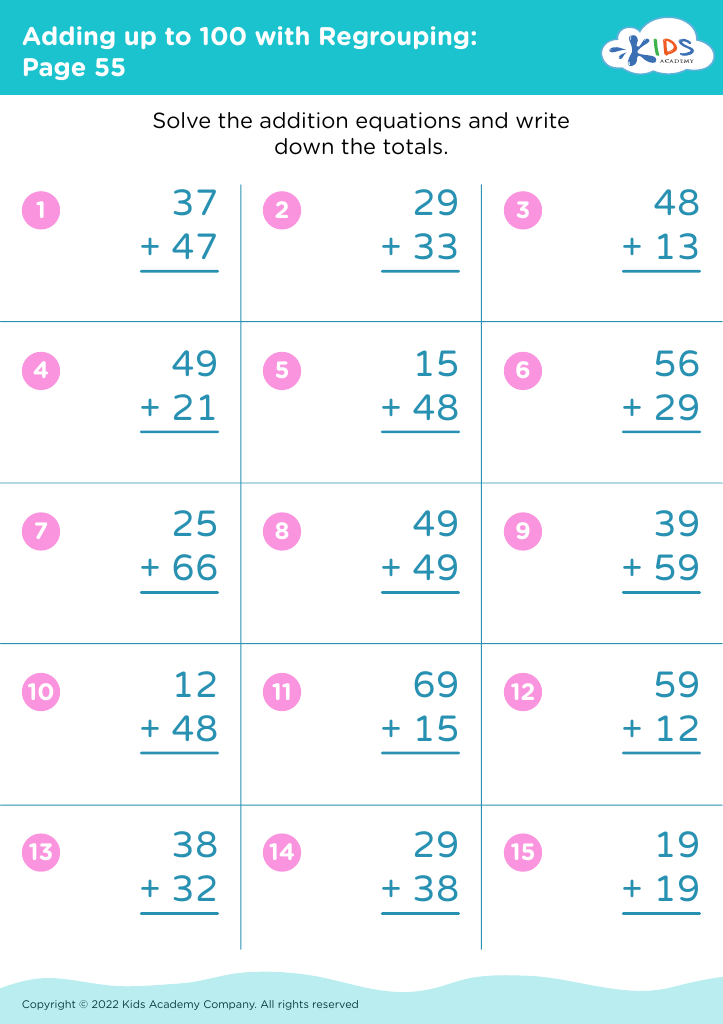
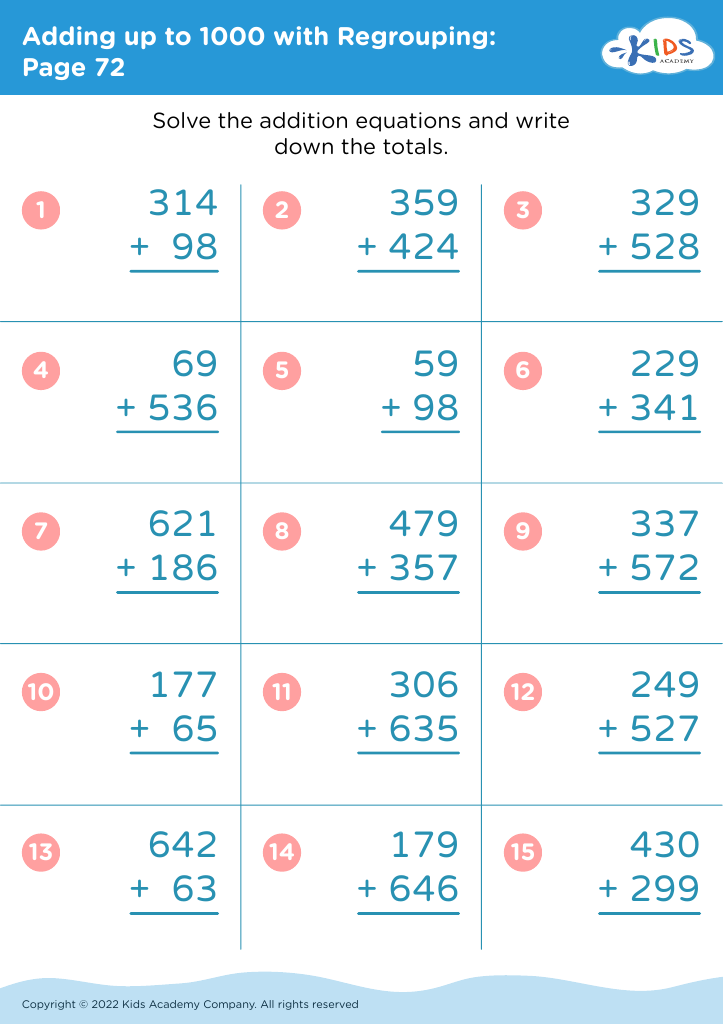








Understanding directions in addition and subtraction is crucial for 8-year-olds as it serves as the foundation for their mathematical development. At this stage, children are transitioning from basic arithmetic to more complex problem-solving tasks. When students grasp the meaning of directions associated with these operations, such as “add”, “subtract”, “more than”, or “less than”, they build essential skills in comprehension and critical thinking.
For parents and teachers, promoting proficiency in interpreting mathematical directions is essential for several reasons. First, it enhances students' mathematical reasoning, enabling them to confidently navigate word problems encountered in school and everyday life. This capability reduces frustration and fosters a positive attitude toward learning math.
Furthermore, a solid understanding of addition and subtraction lays the groundwork for advanced mathematical concepts, including multiplication, division, and even algebra in later grades. It helps students learn to approach problems systematically, enabling deeper cognitive development.
Finally, establishing a strong foundation helps nurture a growth mindset, encouraging children to seek help and persist in challenging situations. In summary, understanding directions in addition and subtraction is vital for academic success and developing critical life skills in young learners.








