Understanding number sequence Addition & Subtraction Worksheets for 8-Year-Olds
4 filtered results
-
From - To
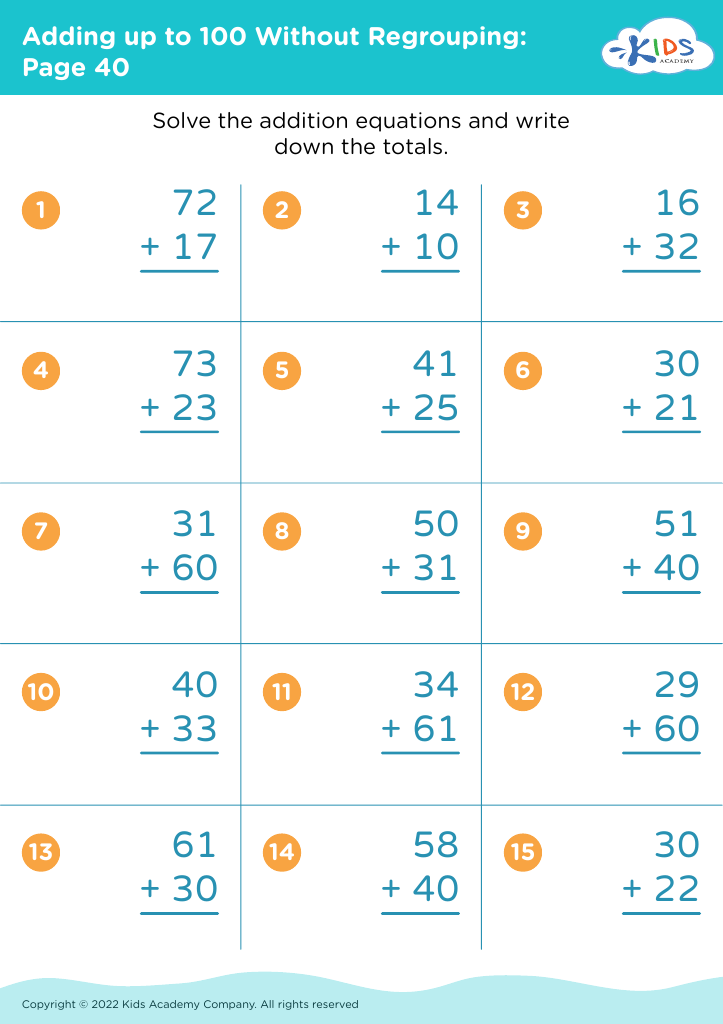
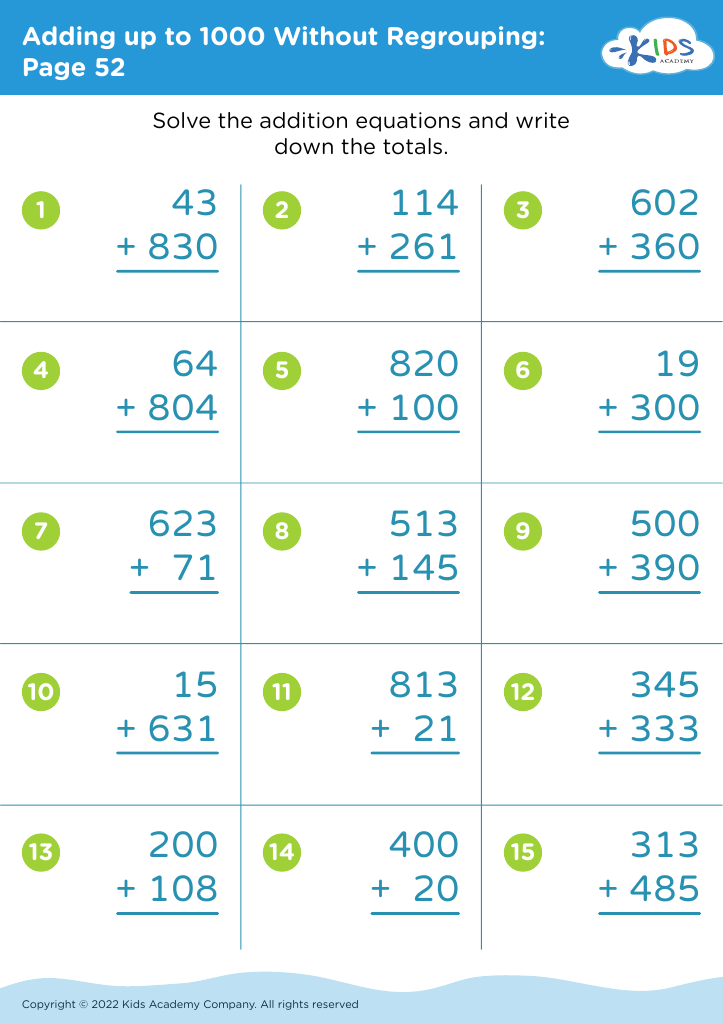
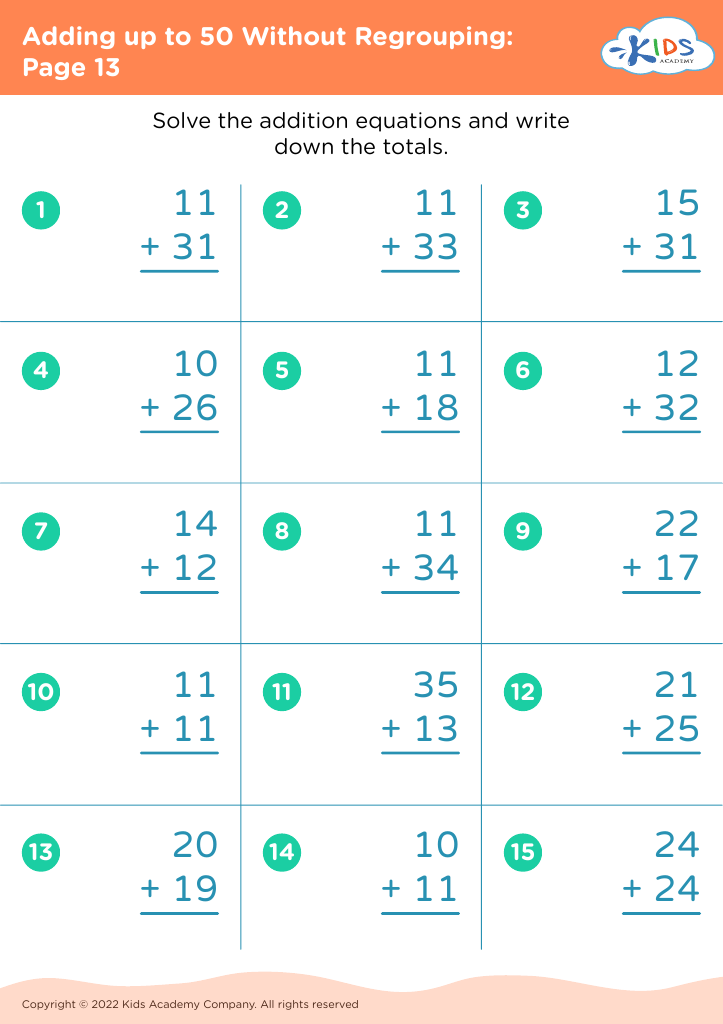
Our "Understanding Number Sequence Addition & Subtraction Worksheets for 8-Year-Olds" are designed to make math enjoyable and accessible. These engaging printable worksheets help children strengthen their number sense, practice addition and subtraction, and understand sequences. Our curated activities encourage logical thinking and problem-solving skills, ensuring your child gains confidence in math. Perfect for at-home or classroom use, each worksheet aligns with current math standards and takes students through a series of structured exercises. Explore our collection and provide your child with the tools they need to succeed in math, all while having fun.
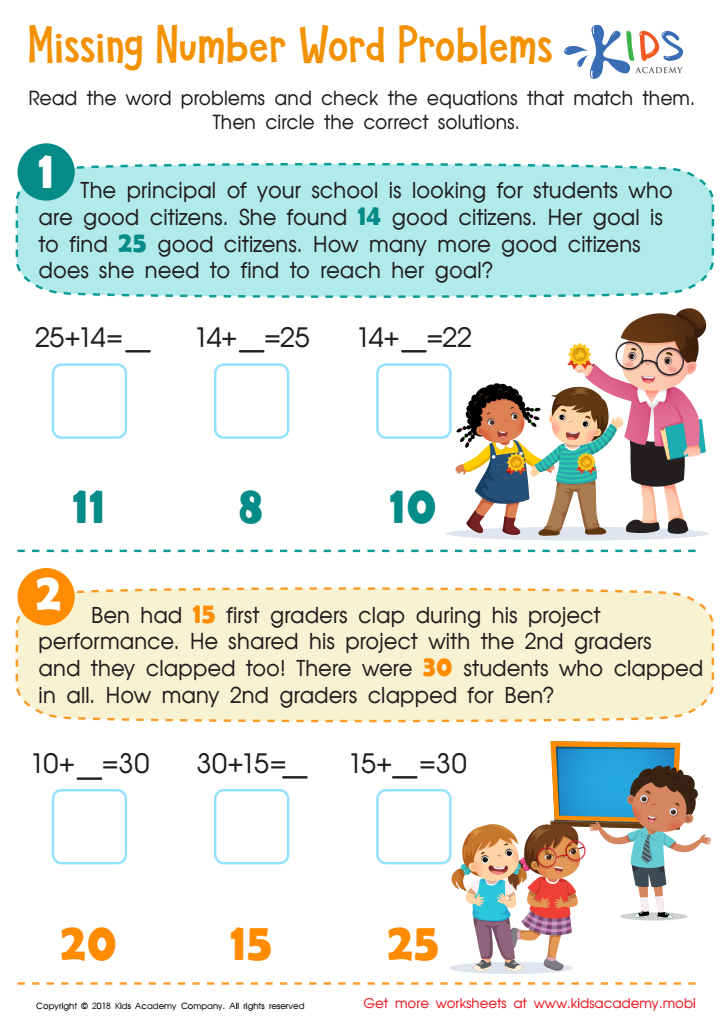
Missing Number Word Problems Worksheet
 Assign to My Students








Understanding number sequences and foundational operations like addition and subtraction is crucial for 8-year-olds as it serves as the bedrock for their future math learning and everyday life skills. Parents and teachers should prioritize nurturing these concepts because they significantly impact a child's cognitive development and problem-solving abilities.
Firstly, mastering number sequences helps children recognize patterns, which is essential for grasping more complex mathematical ideas later on, such as multiplication, division, and algebra. It makes children comfortable with numbers, promoting numerical fluency and accuracy.
Secondly, addition and subtraction are fundamental operations that form the basis for almost all future math problems. Being proficient in these skills aids in everyday activities like handling money, understanding time, and measuring items, thus fostering independence.
Moreover, early math skills are linked to better academic performance not only in mathematics but also in other subjects. Confidence in math can enhance a child's overall academic self-esteem, encouraging them to tackle challenges with a positive mindset.
Therefore, investing time in explaining and practicing these concepts can provide a strong mathematical foundation for 8-year-olds, making learning more advanced topics significantly easier and more intuitive. Parents and teachers are instrumental in this developmental stage, offering support and resources to ensure each child achieves numerical competency.








