Understanding patterns Addition & Subtraction Worksheets for 8-Year-Olds - Page 2
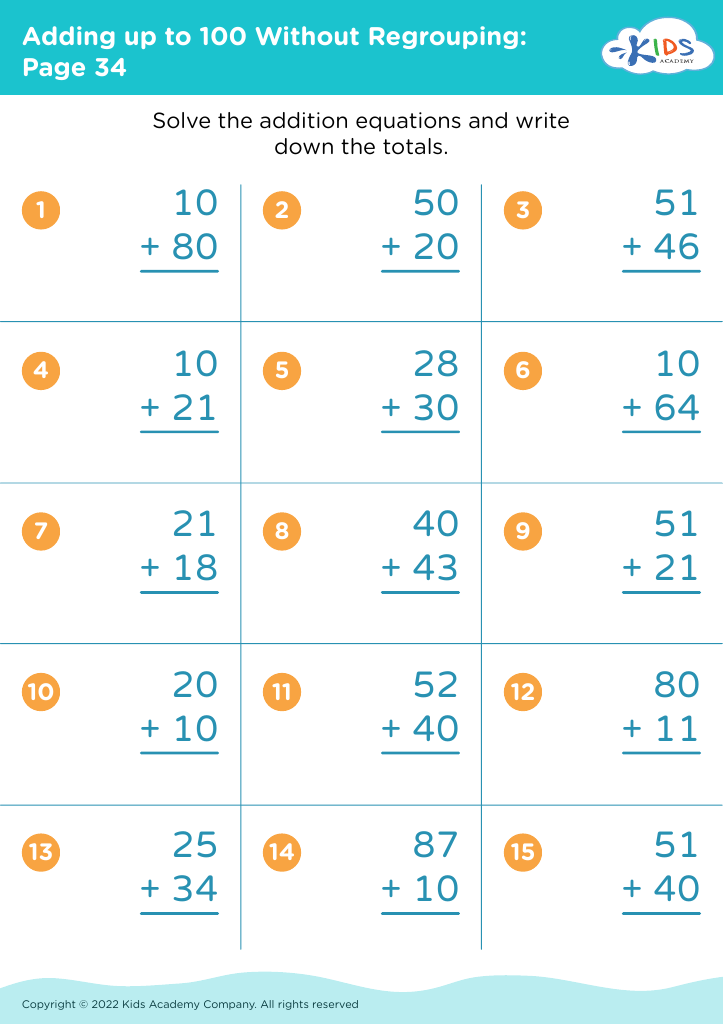
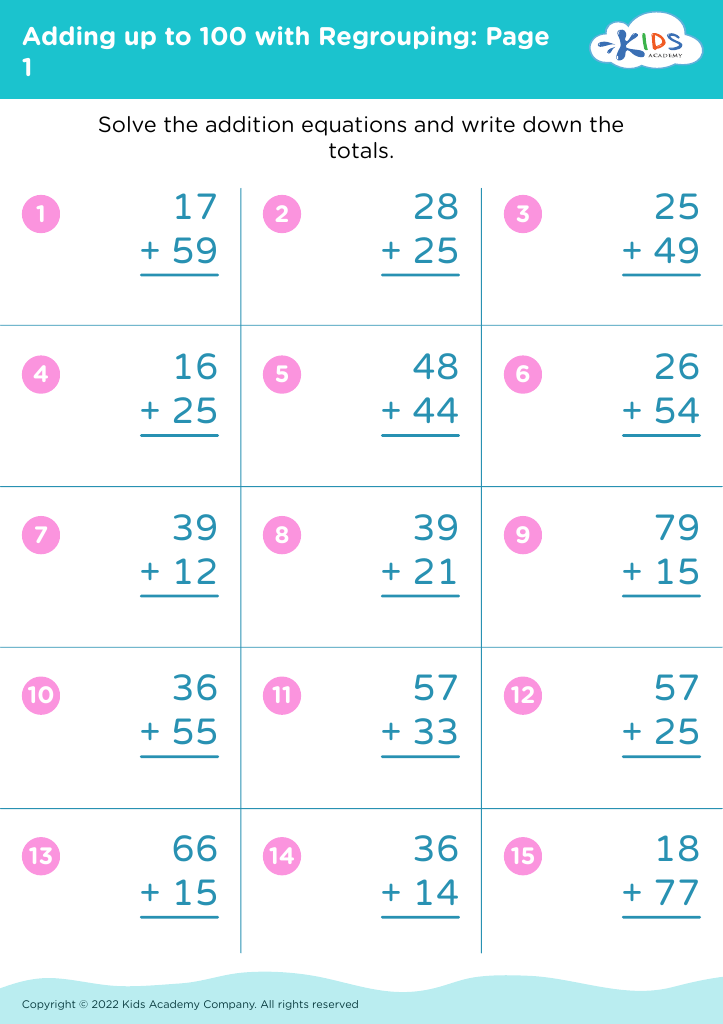
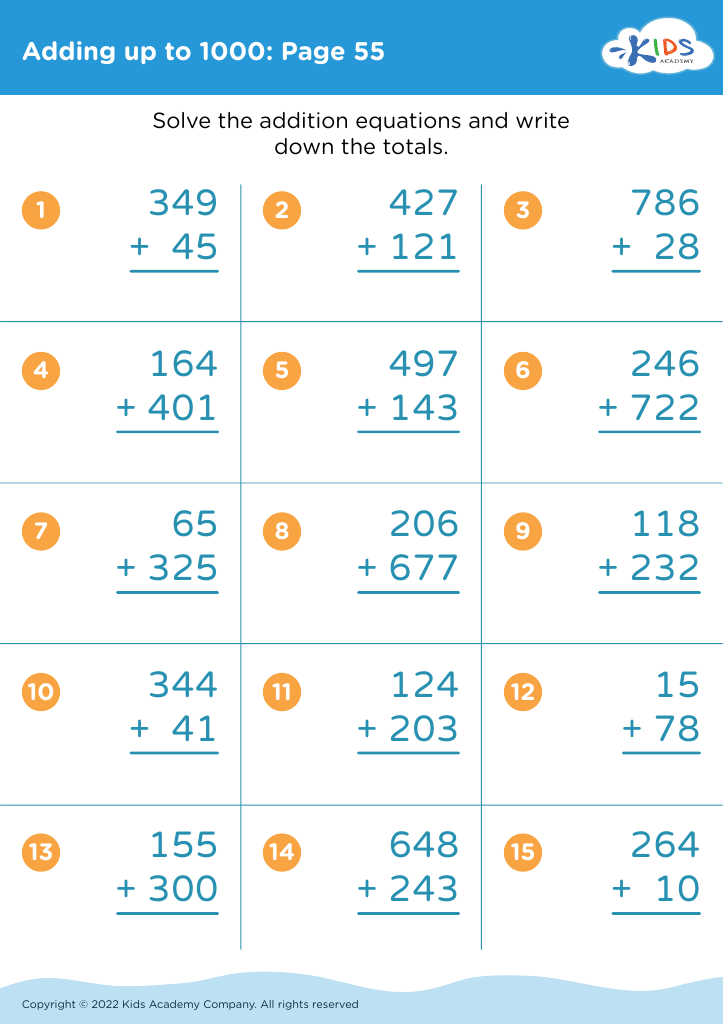
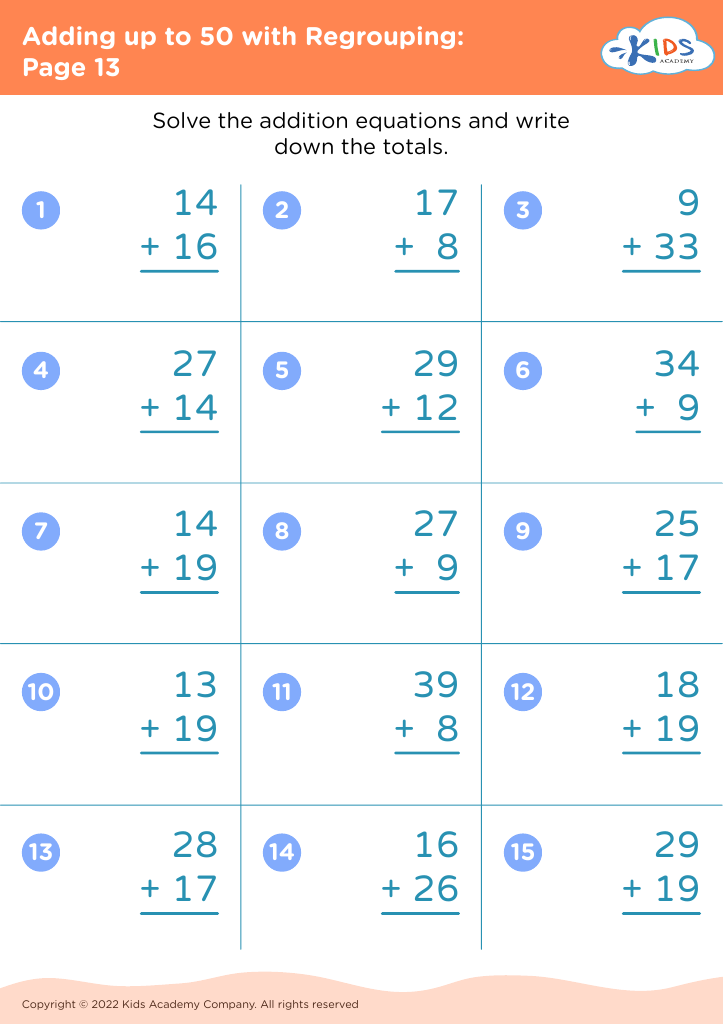








Understanding patterns and mastering addition and subtraction at the age of 8 is crucial for several key reasons. Firstly, it lays the foundation for future mathematical concepts and problem-solving skills. Arithmetic operations such as addition and subtraction are the building blocks of more complex math subjects, including multiplication, division, algebra, and geometry. Grasping these early ensures that children are well-prepared for higher-level math in subsequent grades.
Moreover, recognizing and understanding patterns enhances cognitive development. Patterns help children make sense of the world by identifying relationships and predicting future outcomes. This skill transcends mathematics and is essential in everyday life, from reading comprehension to science and even social interactions.
Additionally, being proficient in addition and subtraction builds confidence and academic self-esteem. Children who struggle with these basics may find future math daunting, leading to anxiety and a negative attitude toward the subject. On the other hand, early success fosters a positive outlook and willingness to tackle more challenging problems.
Furthermore, math skills are interconnected with other areas of learning such as language arts and logical reasoning. Developing these skills can boost overall academic performance. Thus, parents and teachers should prioritize and support the understanding of math patterns and basic operations in young learners to cultivate a solid educational foundation and a love for learning.








