Visual interpretation Addition & Subtraction Worksheets for 8-Year-Olds
4 filtered results
-
From - To
Enhance your child's math skills with our Visual Interpretation Addition & Subtraction Worksheets designed specifically for 8-year-olds. These engaging worksheets utilize colorful visuals and intuitive graphics to simplify complex addition and subtraction concepts. By integrating fun illustrations and practical examples, children can better understand mathematical relationships and develop their problem-solving abilities. Perfect for at-home practice or classroom use, each sheet supports Common Core standards ensuring educational enrichment. Encourage your child’s confidence in math while making learning enjoyable and interactive. Bring mathematics to life with our expertly crafted, age-appropriate worksheets that cater to various learning styles.
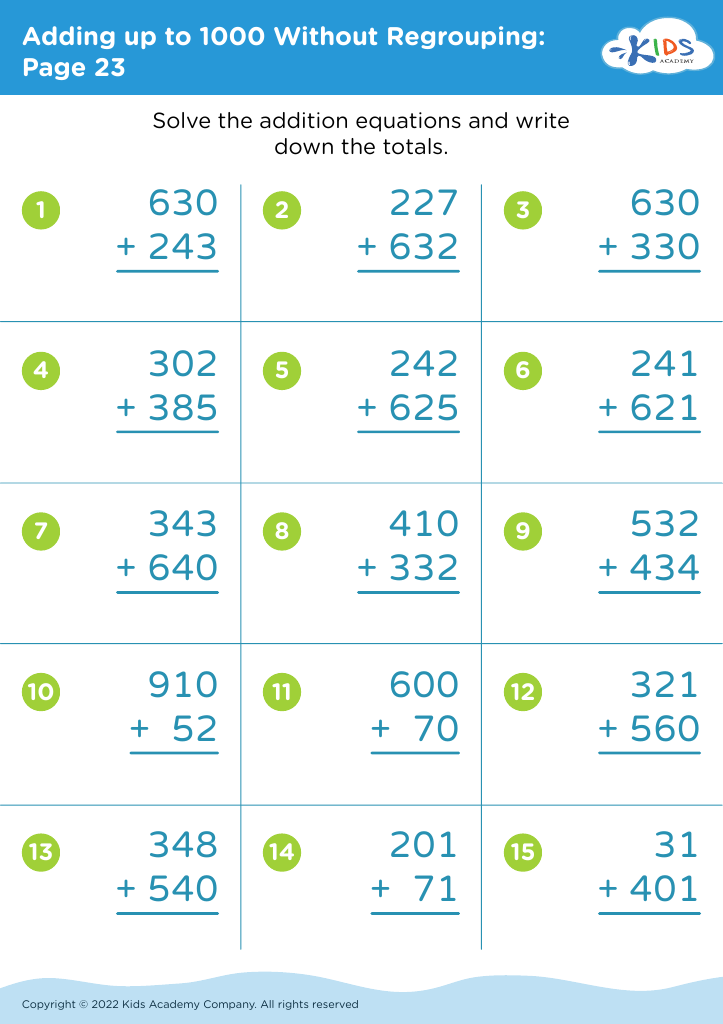
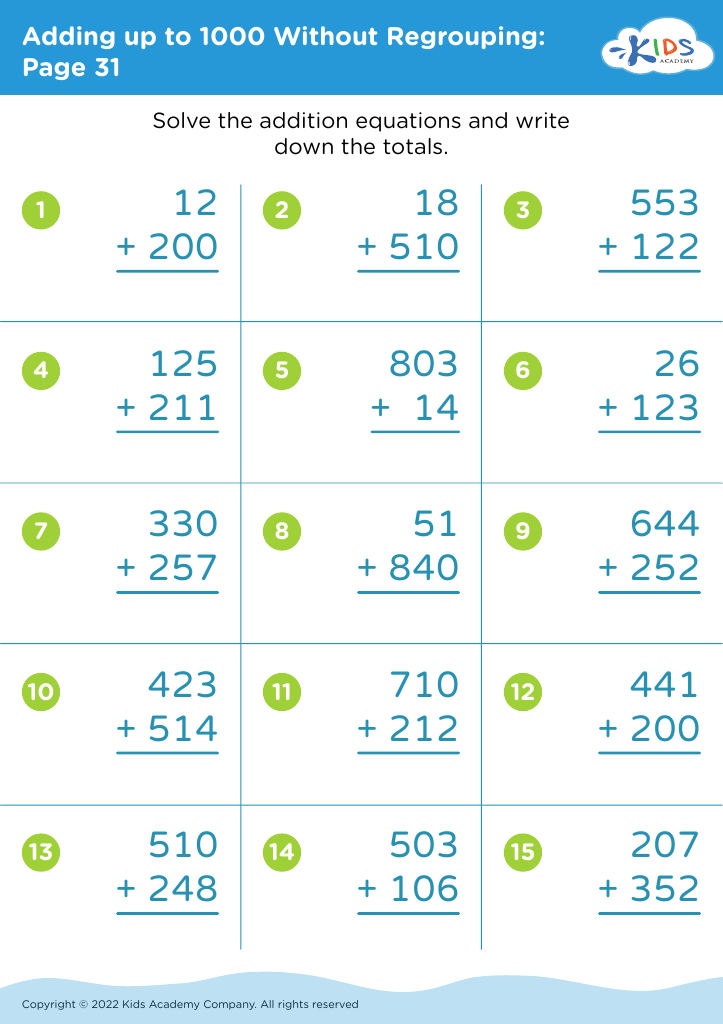
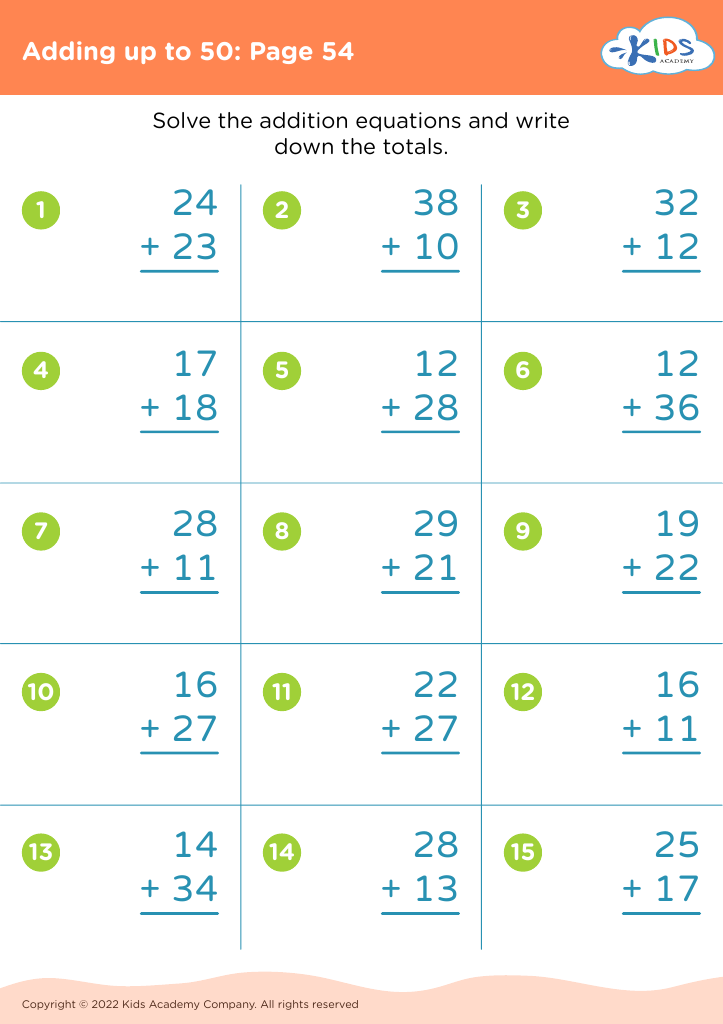
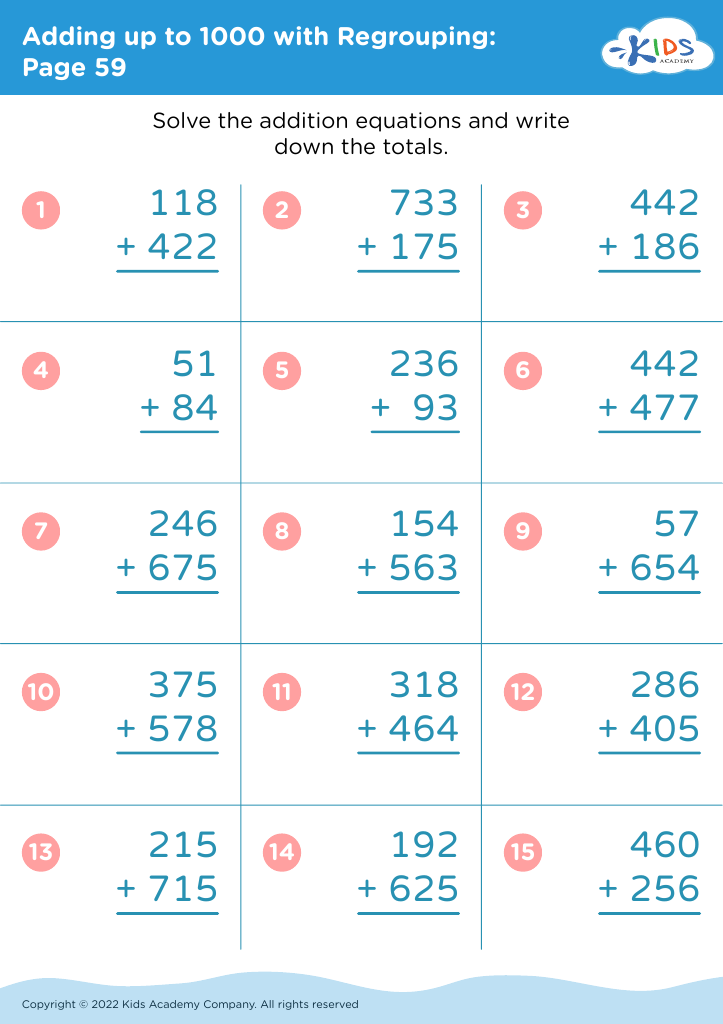








Visual interpretation of addition and subtraction is pivotal for 8-year-olds because it enhances their understanding and retention of mathematical concepts, setting a strong foundation for future learning. At this age, children transition from concrete to more abstract thinking, but they still benefit significantly from visual aids. Visual tools like number lines, counters, or pictorial representations help them grasp the meaning behind the numbers and operations.
Using visuals makes math engaging and less intimidating. It allows children to see the relationships between numbers, fostering a deeper comprehension. For instance, visually breaking down an addition problem into smaller, manageable parts can demystify the process. Similarly, visualizing subtraction as "taking away" helps them understand not just how, but why they arrive at a specific result.
Furthermore, visual interpretation supports diverse learning styles. Some children are more visual learners; by incorporating these methods, teachers and parents address varied educational needs, leading to more inclusive and effective learning experiences.
Incorporating visual methods promotes critical thinking and problem-solving skills. Visual aids encourage children to explore different strategies to arrive at an answer, enhancing their flexibility in thinking. As a result, these learners are better equipped to handle more complex mathematical concepts in future educational endeavors.








