Visual representation comprehension Addition & Subtraction Worksheets for 8-Year-Olds
5 filtered results
-
From - To
Elevate your child's mathematical understanding with our expertly crafted Visual Representation Comprehension Addition & Subtraction Worksheets, tailored for 8-year-olds. These engaging worksheets employ visual aids like number lines, bar models, and pictorial equations to simplify complex concepts. Perfect for fostering a deeper grasp of addition and subtraction, they transform abstract problems into easily comprehensible tasks, enhancing cognitive skills. Ideal for both classroom and home use, our worksheets offer interactive exercises that make learning math a fun, intuitive experience. Boost your child’s confidence and proficiency in math with our targeted, visually enriched learning tools.
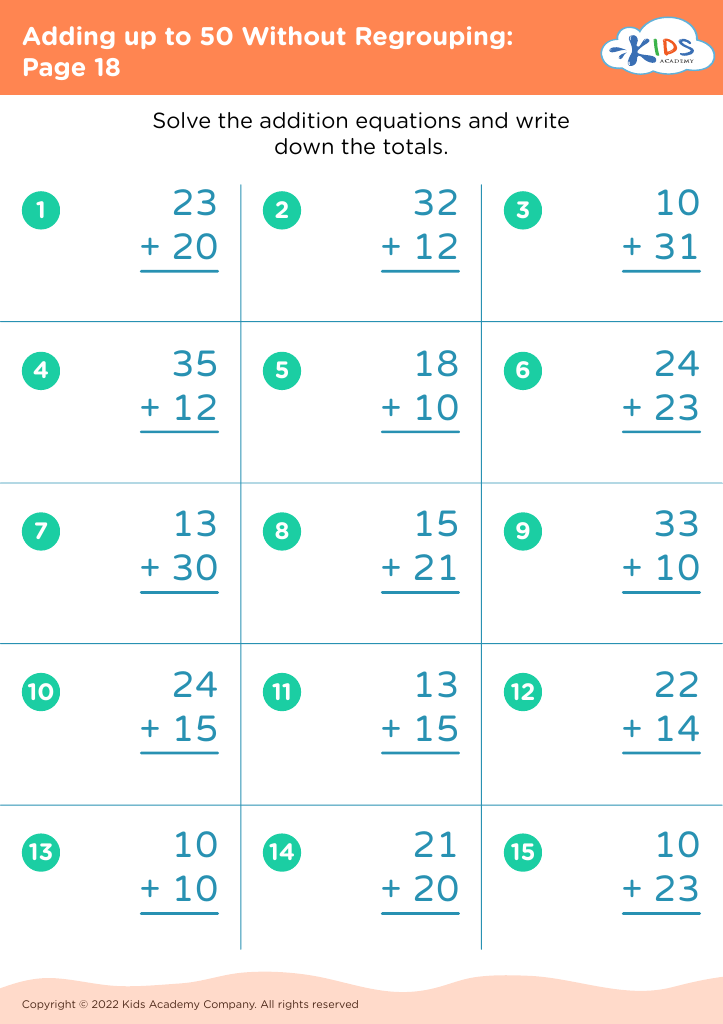
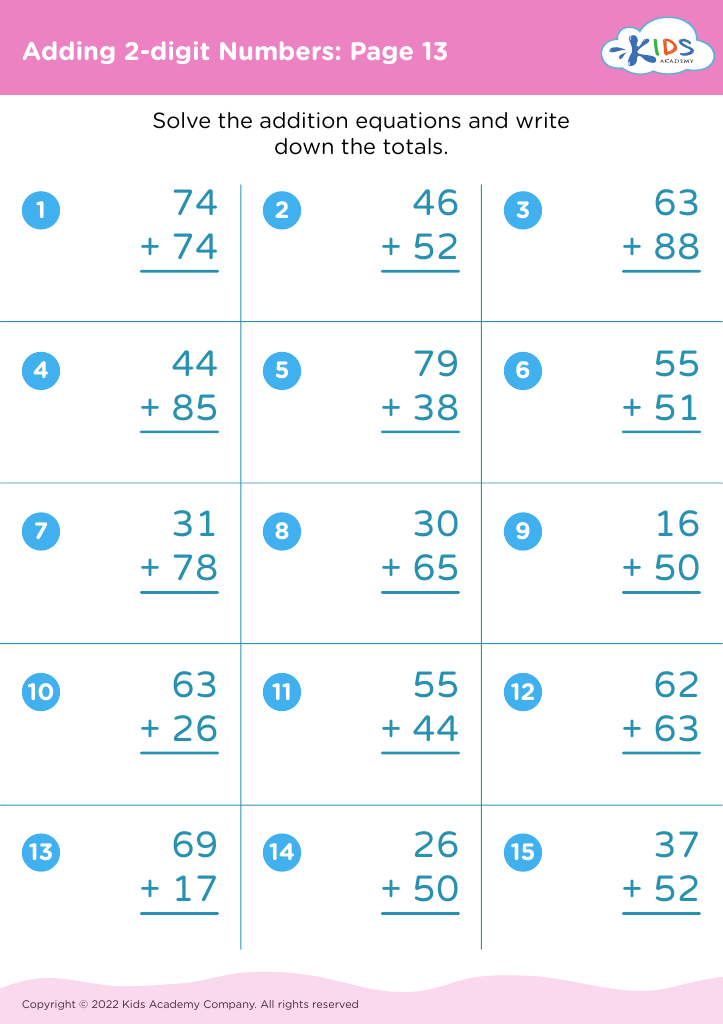
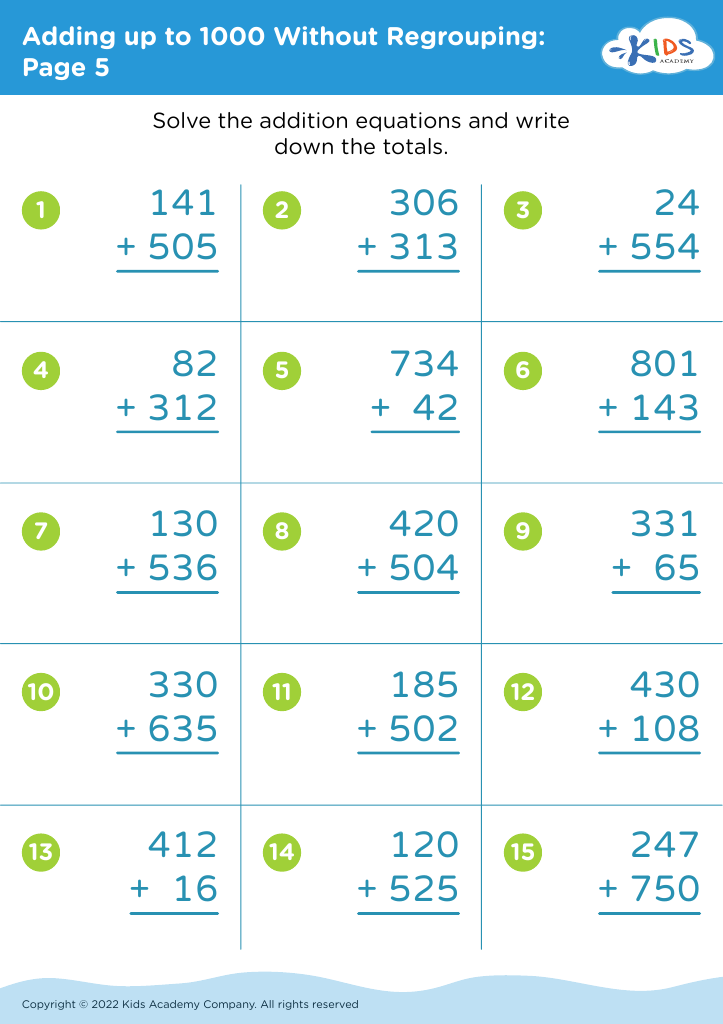
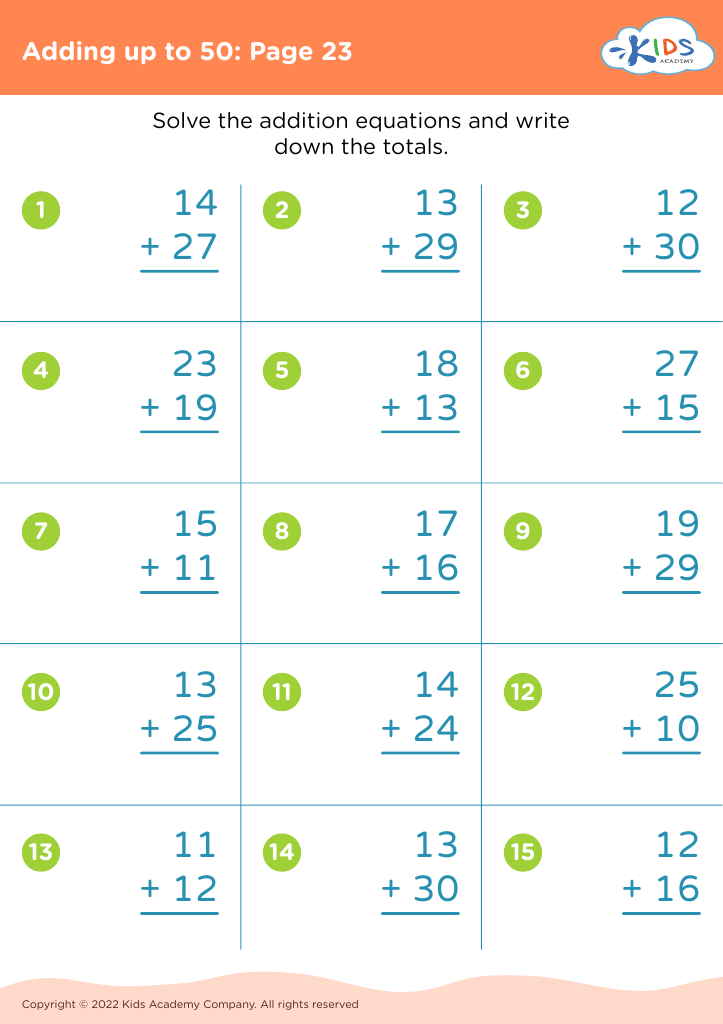
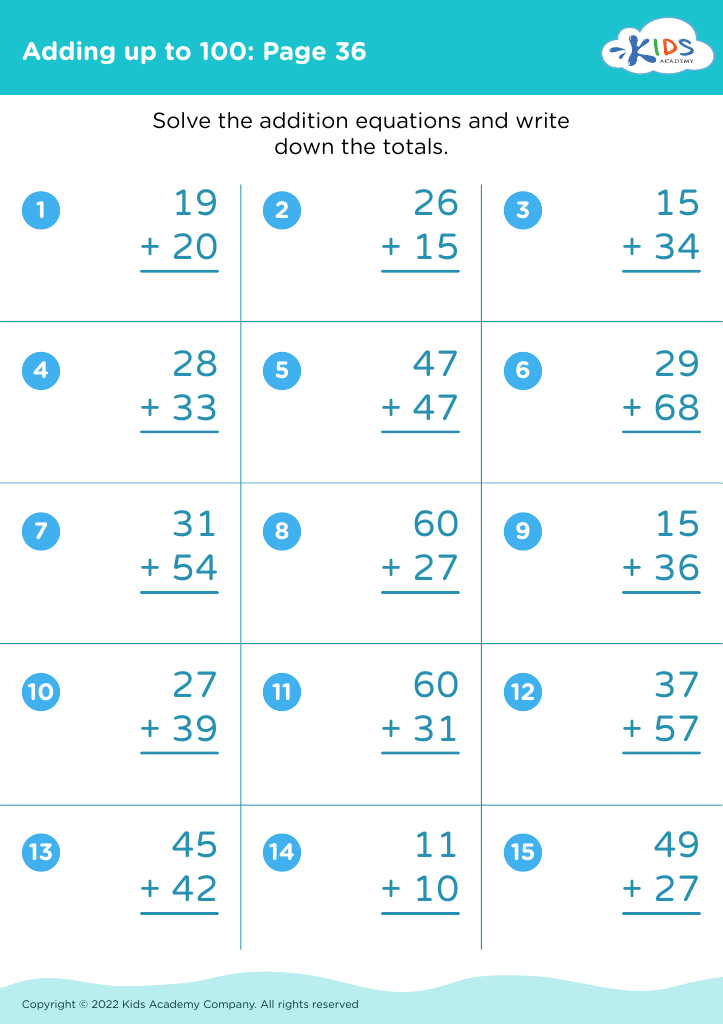








Visual representation comprehension in addition and subtraction is crucial for 8-year-olds for several important reasons that impact their overall mathematical development and problem-solving skills.
Firstly, visual aids like number lines, counters, or ten-frames can help young children grasp abstract concepts by making concrete connections. When they see how quantities are represented visually, they develop a stronger understanding of how numbers work. This is foundational for their later years of mathematics where abstract thinking plays a greater role.
Secondly, visual methods promote increased engagement and interest. Many children find pictures, symbols, and colors more engaging than plain numbers. This increased interest can lead to a deeper exploration of mathematical concepts, improving their attitudes toward math.
Thirdly, visual tools help in recognizing patterns and relationships between numbers. For instance, seeing a subtraction problem visually through objects can help children understand that subtraction is essentially "taking away."
Lastly, visual representation supports diverse learning styles. All children don’t process information the same way; some may comprehend better visually rather than verbally or textually.
Therefore, by nurturing visual representation comprehension in addition and subtraction early on, teachers and parents are equipping children with practical tools that build a stronger mathematical foundation and enhance their overall cognitive development.








