Cognitive Development Addition Worksheets for 8-Year-Olds
13 filtered results
-
From - To
Unlock your child’s potential with our Cognitive Development Addition Worksheets designed specifically for 8-year-olds! These engaging and colorful worksheets are tailored to enhance your child's cognitive abilities through fun addition problems. Each worksheet encourages critical thinking, problem-solving, and arithmetic skills, ensuring a comprehensive math learning experience. As young learners navigate through varied exercises, they’ll build confidence and a solid foundation in math. Perfect for both classroom and at-home practice, these worksheets are an excellent resource for parents and educators aiming to foster intellectual growth and a love for learning in children. Explore our collection and make math learning enjoyable today!
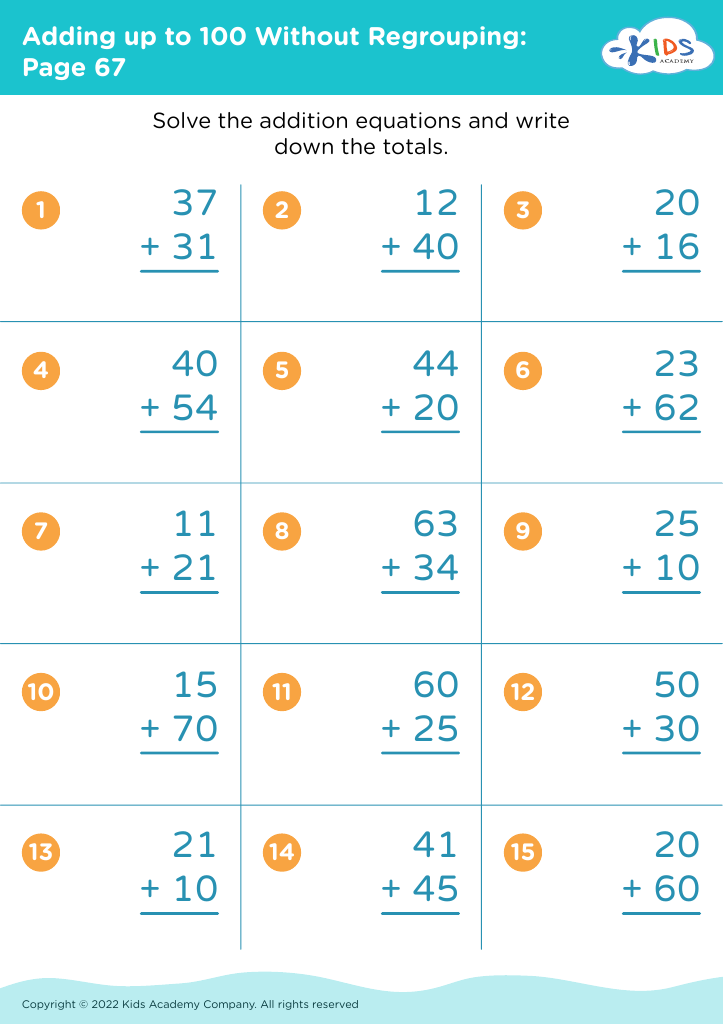
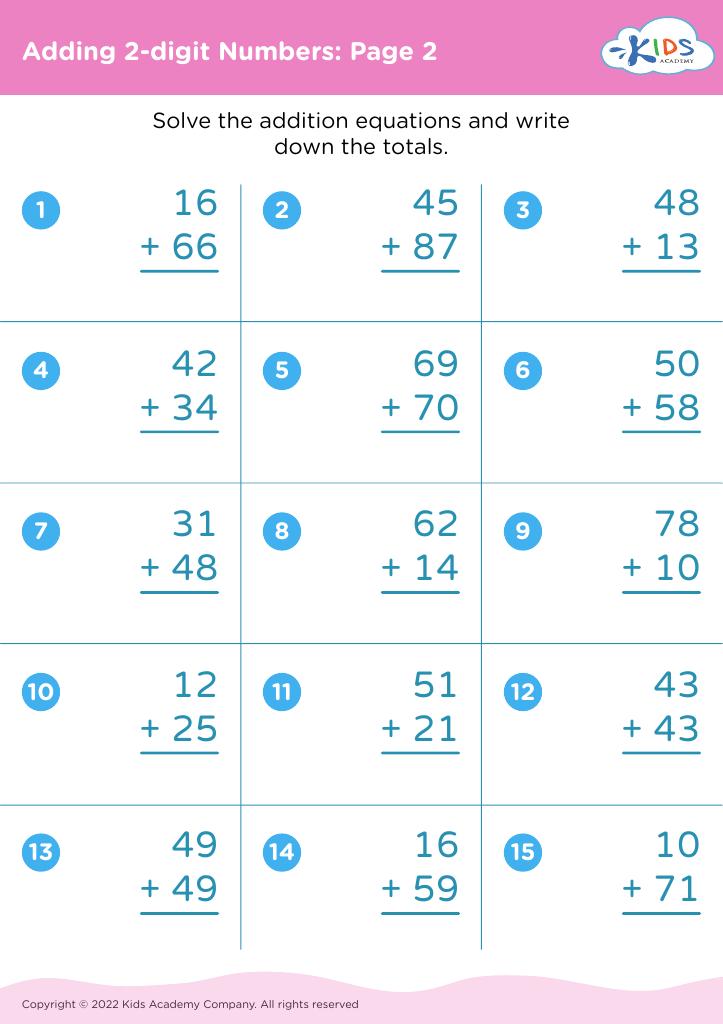
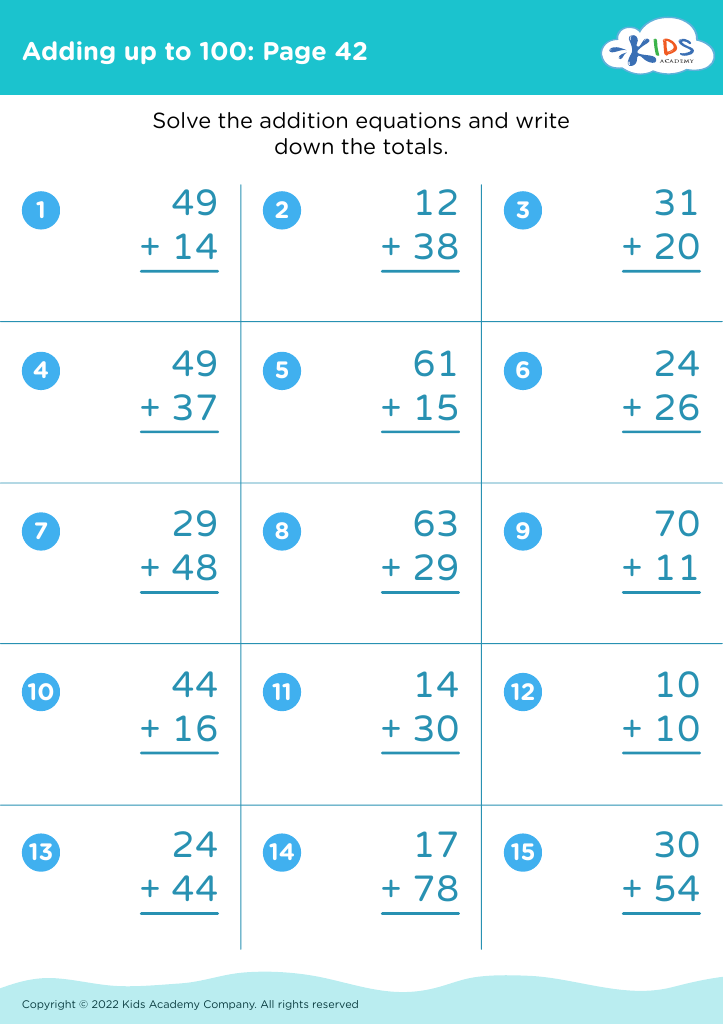
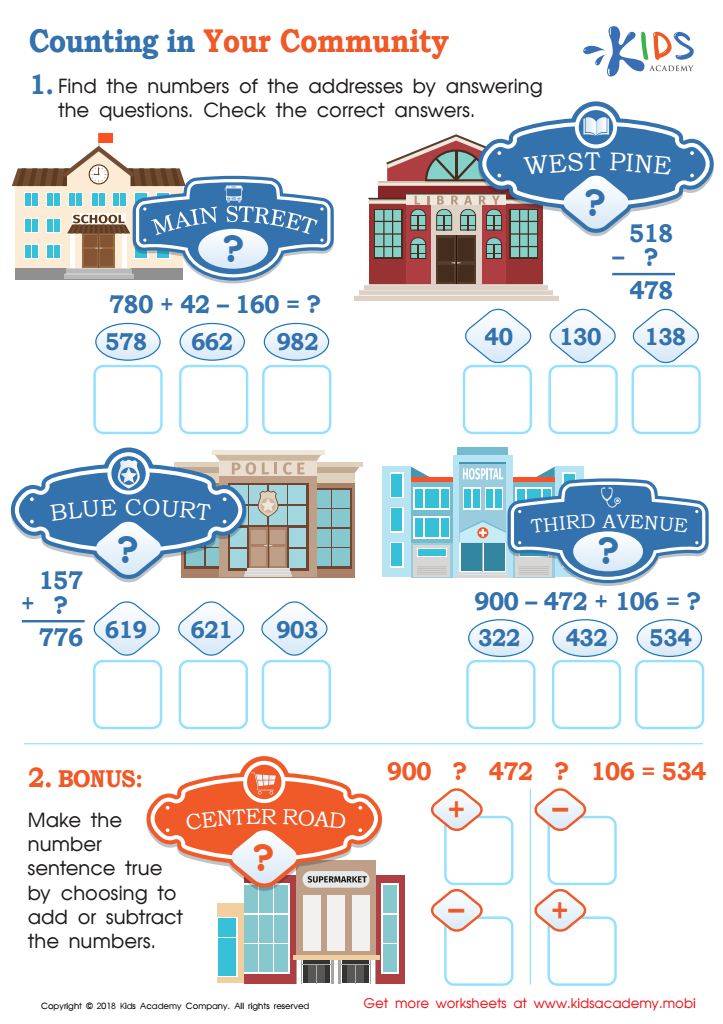
Counting in Your Community Worksheet
 Assign to My Students
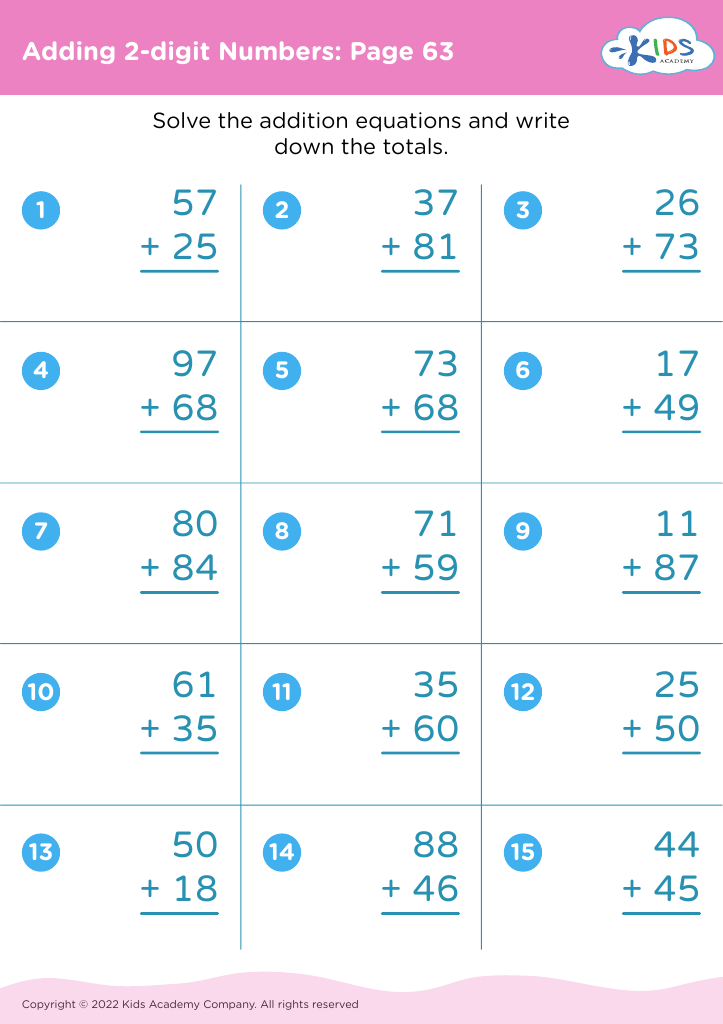
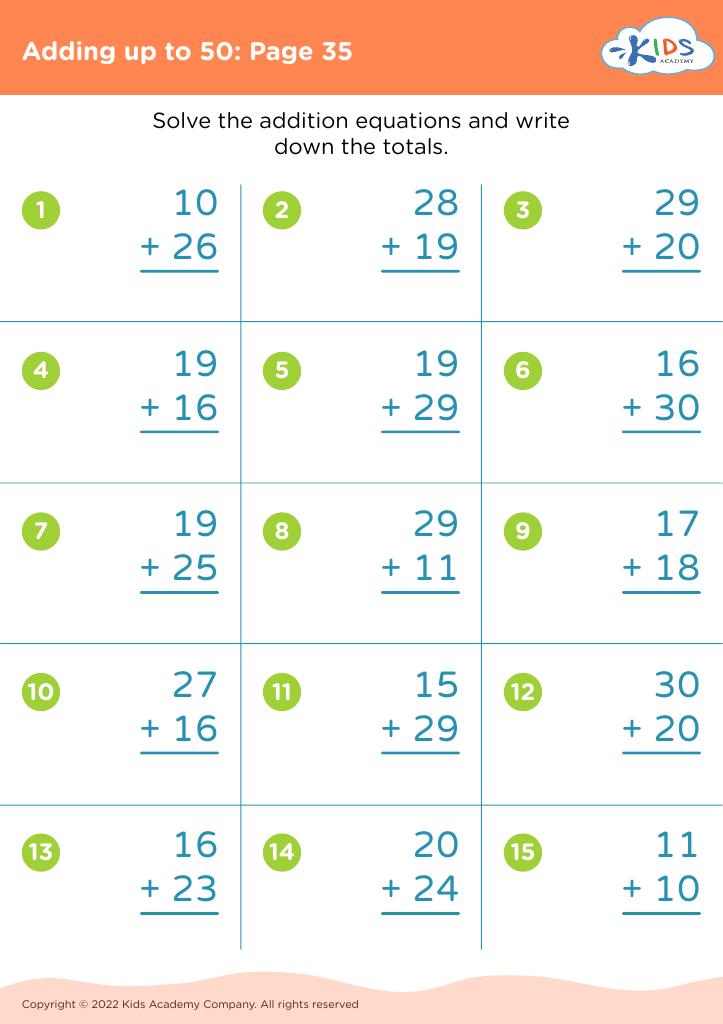
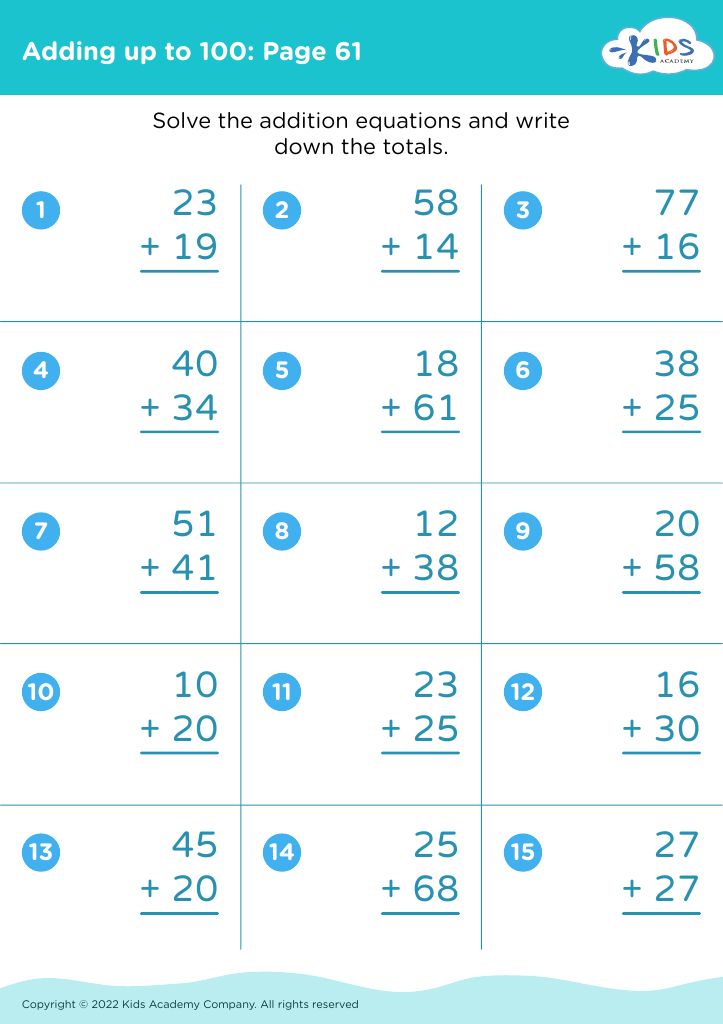
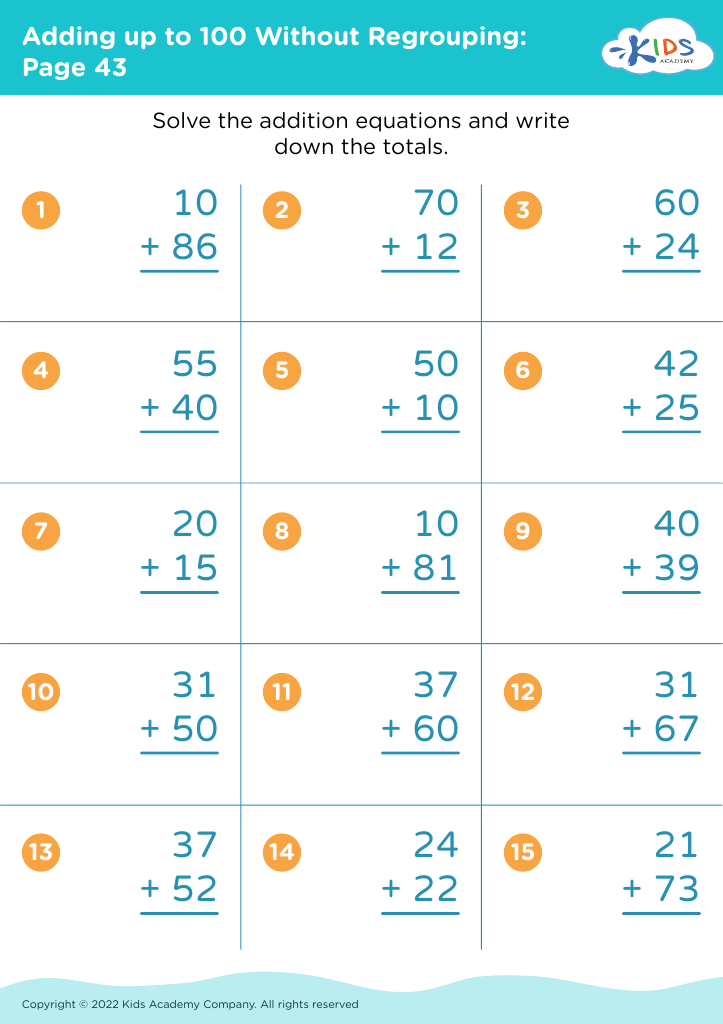
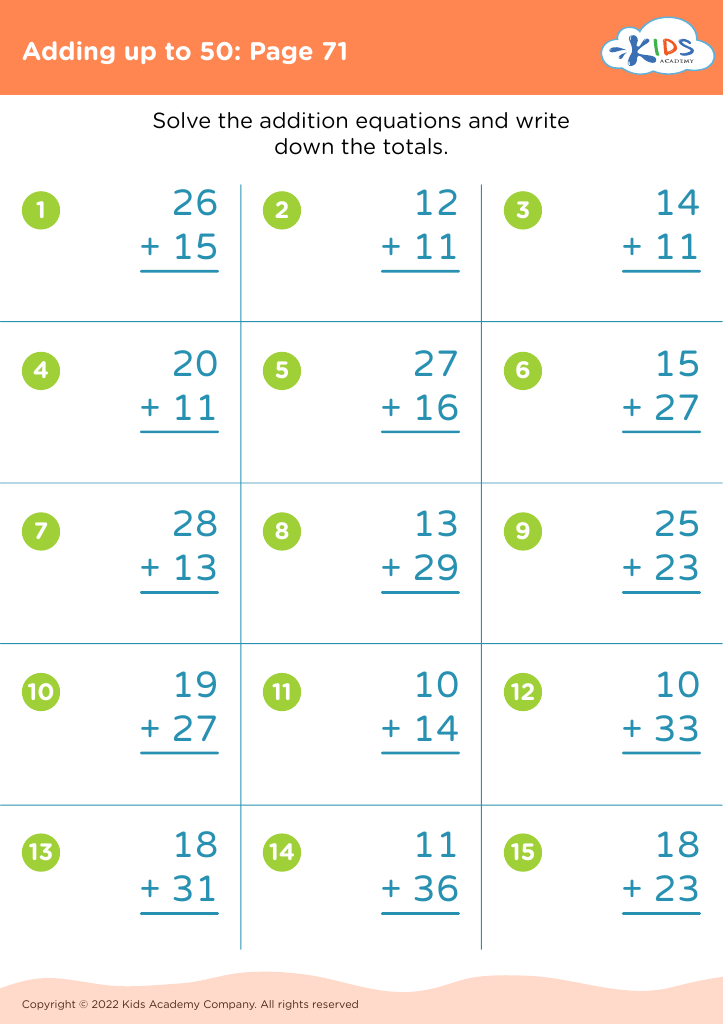
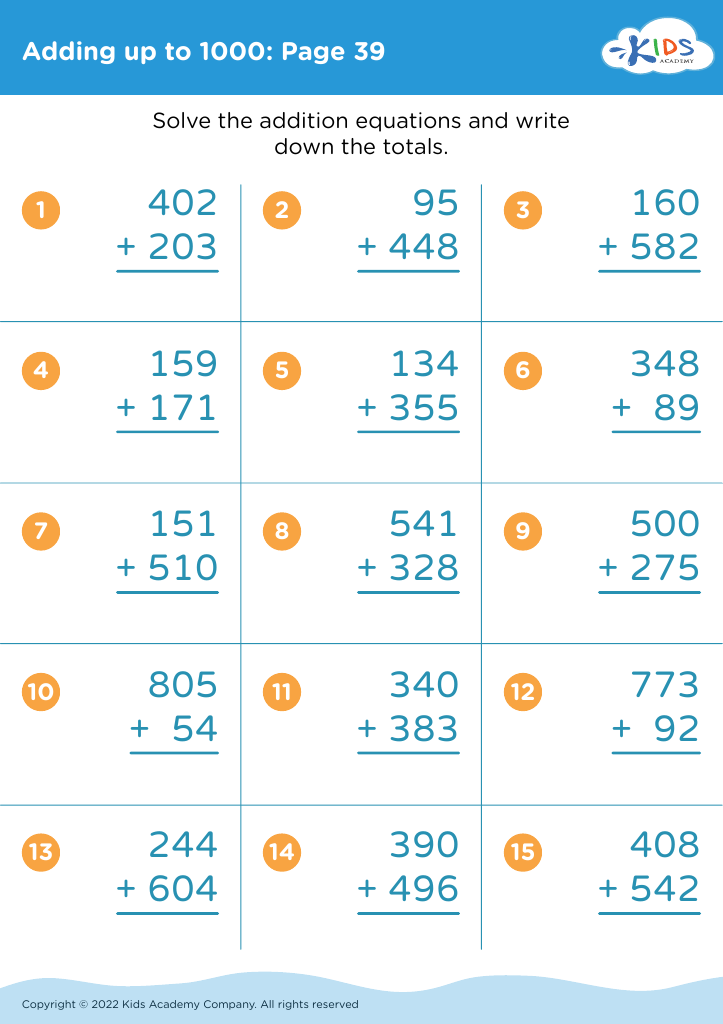
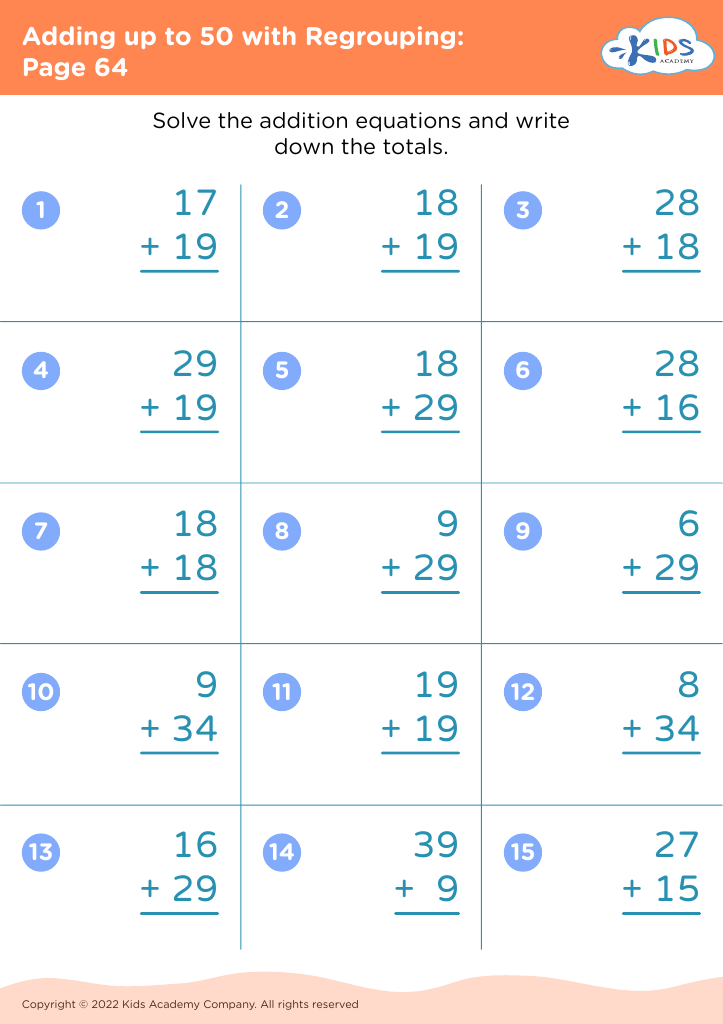
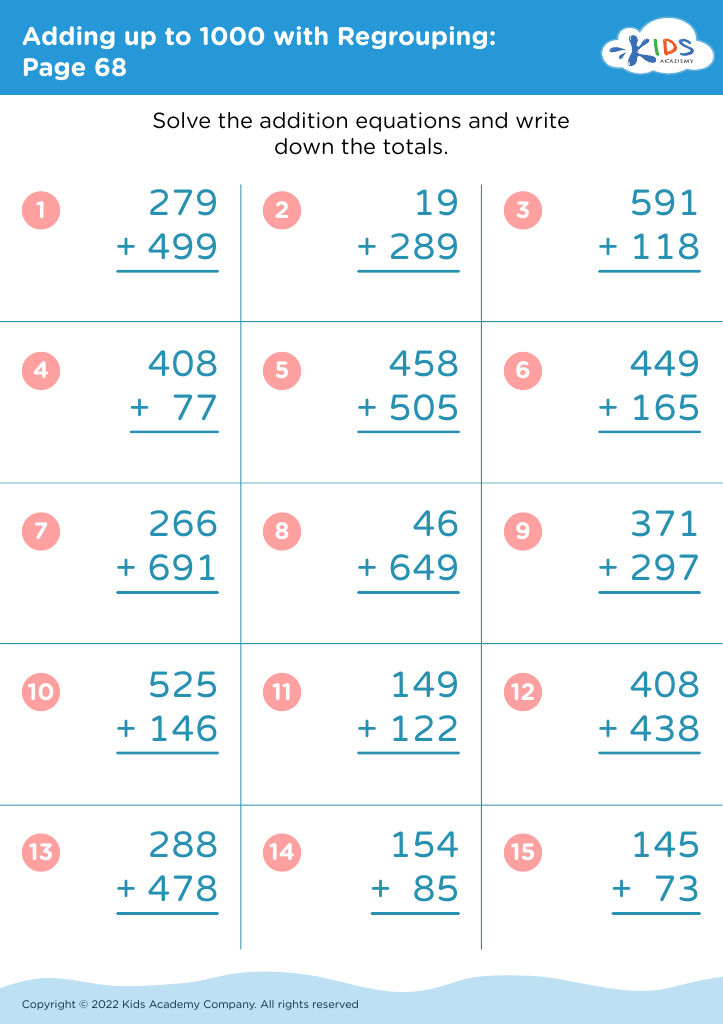
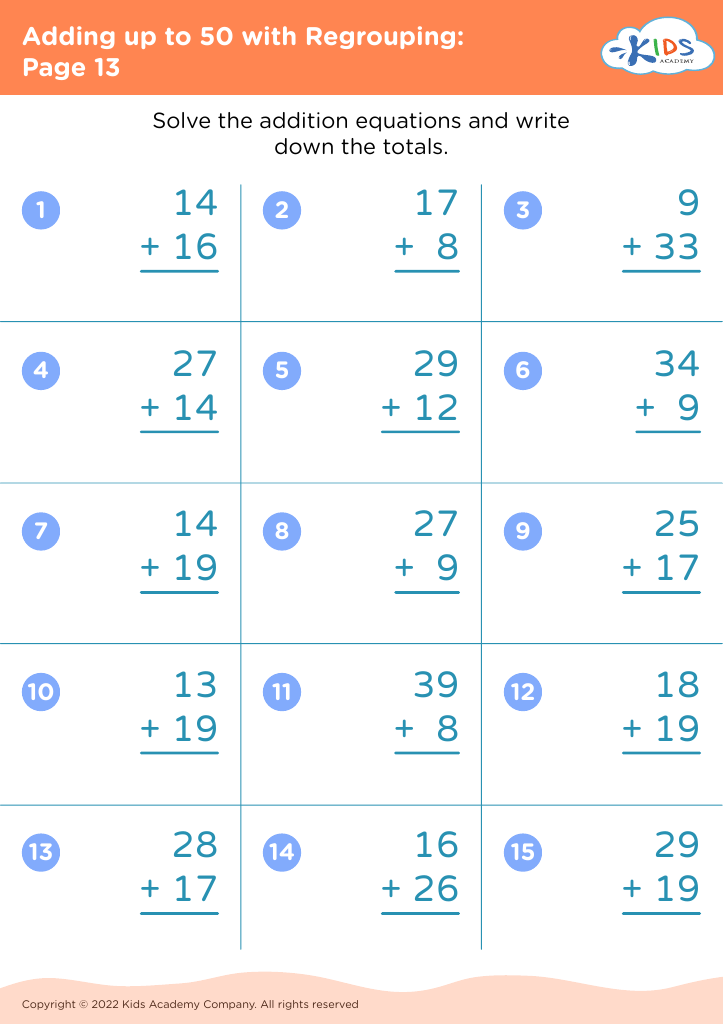








Cognitive development in 8-year-olds is crucial as it lays the foundational framework for critical thinking and problem-solving skills necessary for later stages of education and everyday life. At this stage, children transition from simple, concrete thoughts to more complex, abstract concepts. One pivotal area within this span is cognitive development in addition, which encompasses not just mathematical skill but also enhances logical reasoning and memory.
For parents and teachers, focused nurturing of these abilities proves significant. Strong addition skills are tied to a child’s future confidence in more complex math operations, setting a trajectory for success in STEM (Science, Technology, Engineering, and Mathematics) fields.
Moreover, cognitive tasks, such as performing addition, improve brain functions associated with attention, processing speed, and working memory. Enabling children to excel in these areas promotes better academic achievement and can have a profound impact on their self-esteem and motivation.
Ultimately, by prioritizing cognitive development in addition for 8-year-olds, parents and educators help ensure that children develop the necessary skills to face academic challenges confidently. They foster a growth mindset, important for lifelong learning and intellectual curiosity. This attention and support provide children with skills that are fundamental in navigating a more cognitively demanding future.








