Developing logical thinking Addition Worksheets for 8-Year-Olds
4 filtered results
-
From - To
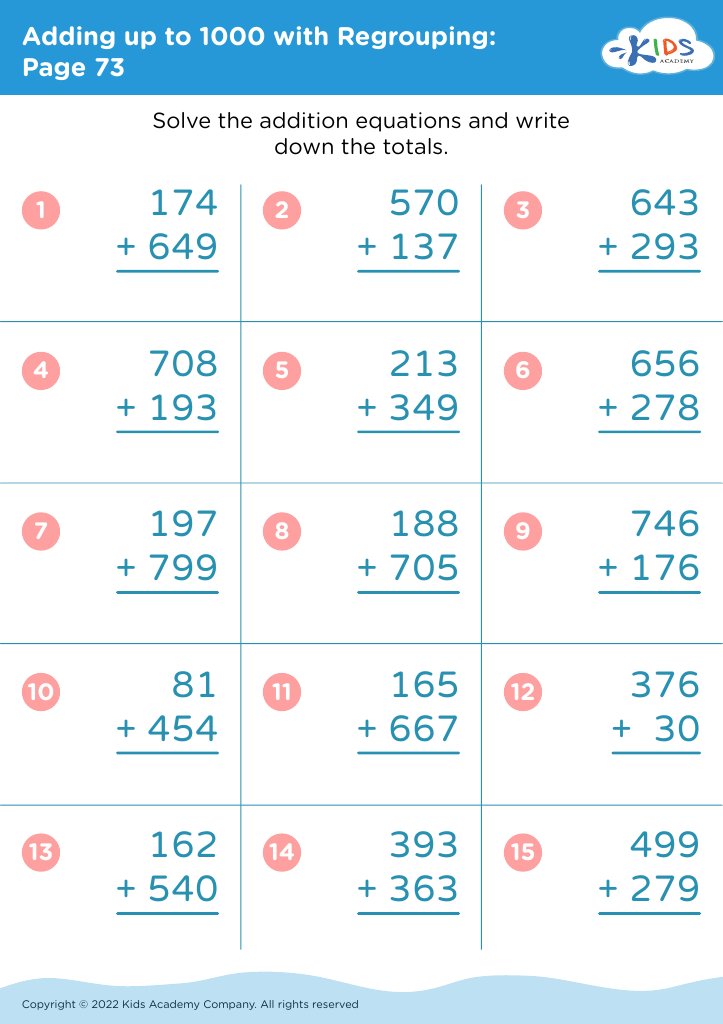
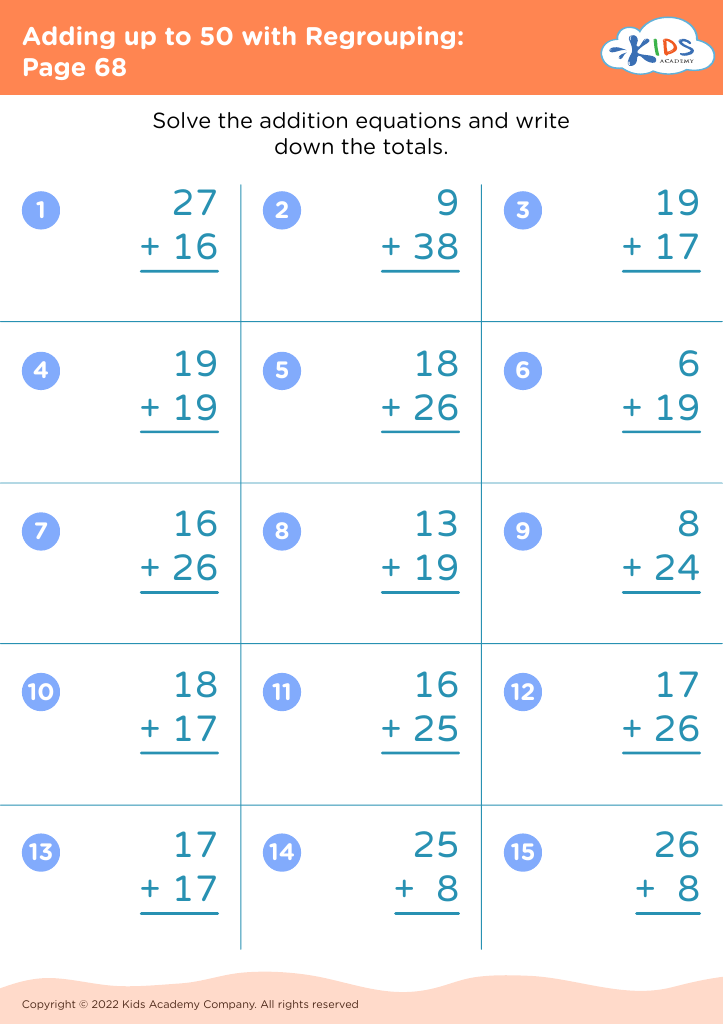
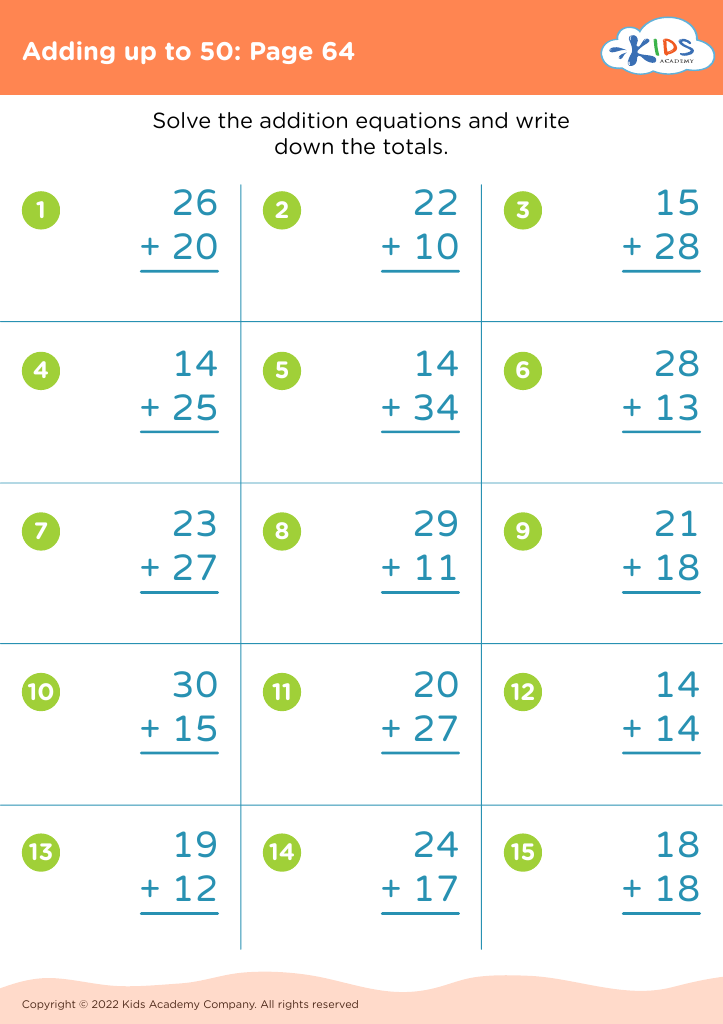
Welcome to our "Developing Logical Thinking Addition Worksheets" tailored for 8-year-olds! Our engaging and thoughtfully designed worksheets not only enhance mathematical skills but also foster critical thinking and problem-solving abilities. Each worksheet encourages students to apply logical reasoning in various addition scenarios, making math fun and interactive. From word problems to puzzles, these activities challenge young minds to think creatively while building a strong foundation in addition. Ideal for classroom use or home study, our worksheets support educators and parents in nurturing confident, capable learners. Start exploring our resources today and watch your child’s logical thinking skills soar!
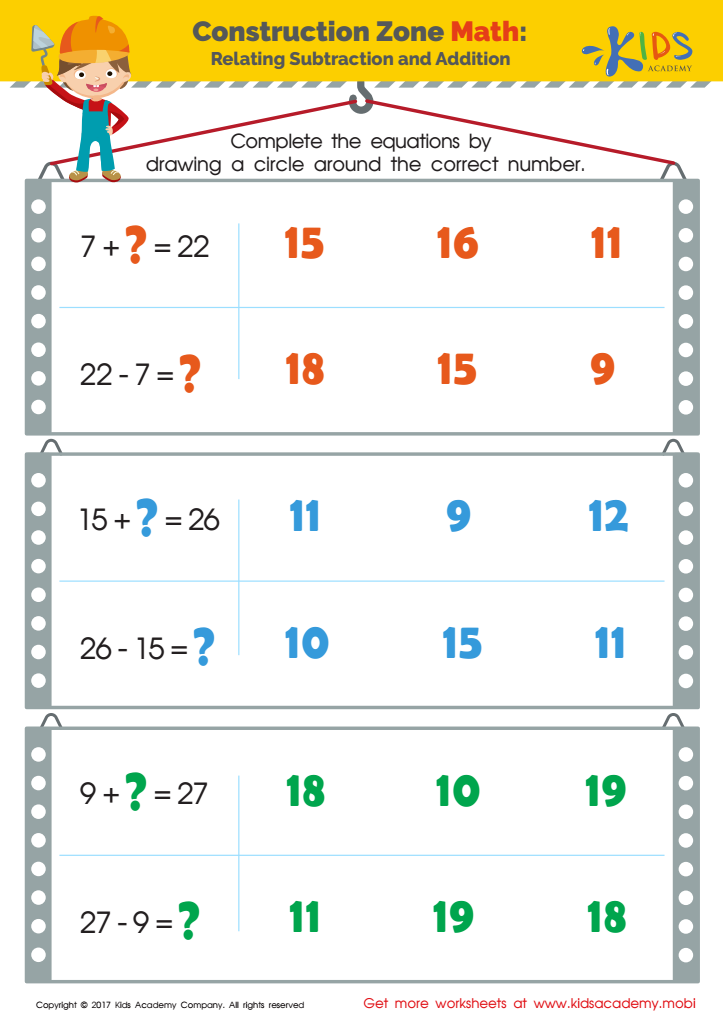
Related Addition and Subtraction Facts Worksheet
 Assign to My Students








Developing logical thinking skills in 8-year-olds through addition is crucial for several reasons. At this age, children are at a pivotal stage of cognitive development. Enhancing their logical reasoning allows them to understand mathematical concepts more deeply rather than merely memorizing facts. By engaging in logical thinking, children learn to analyze problems, recognize patterns, and devise strategies to solve them, empowering their overall academic performance.
Moreover, addition serves as a foundational skill for all future math concepts. Strengthening logical thinking in addition helps children grasp more complex operations, paving the way for success in higher math courses. It fosters an enjoyment of learning, as children experience the satisfaction of solving problems and seeing relationships among numbers.
Additionally, logical thinking in math promotes critical life skills like decision-making and problem-solving. Parents and teachers play a pivotal role in nurturing these skills through engaging activities such as puzzles, games, and challenging word problems. These approaches build confidence and encourage a growth mindset, essential for all aspects of life. Ultimately, fostering logical thinking through addition prepares children not just for standardized tests, but for real-world challenges, shaping them into knowledgeable, resilient learners.








