Fine motor skills (writing) Addition Worksheets for 8-Year-Olds
6 filtered results
-
From - To
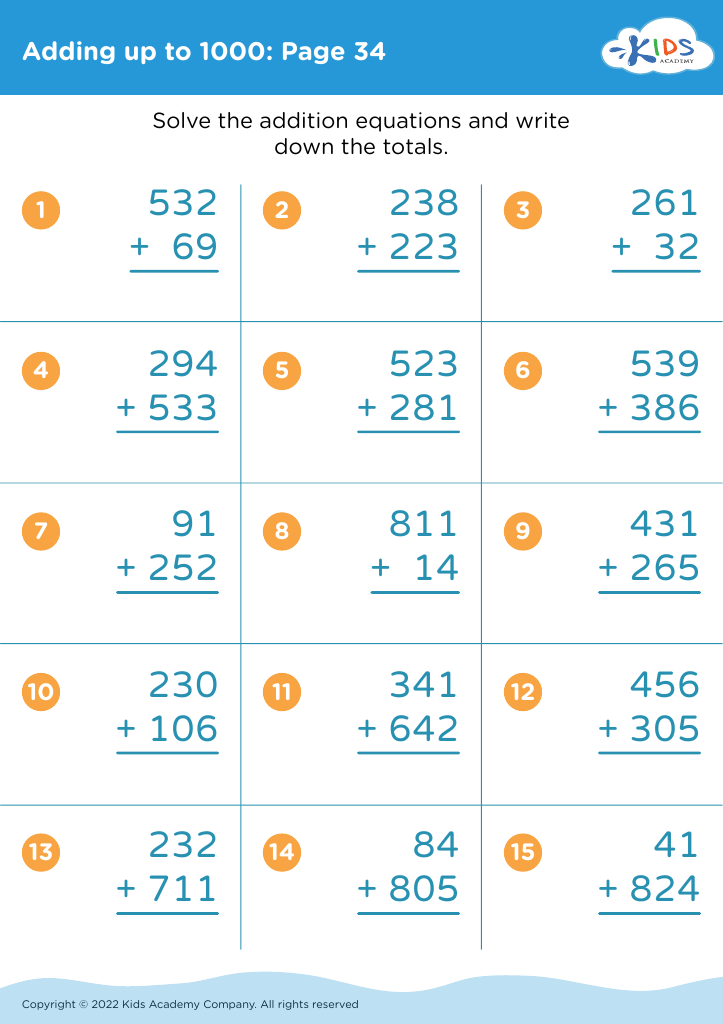
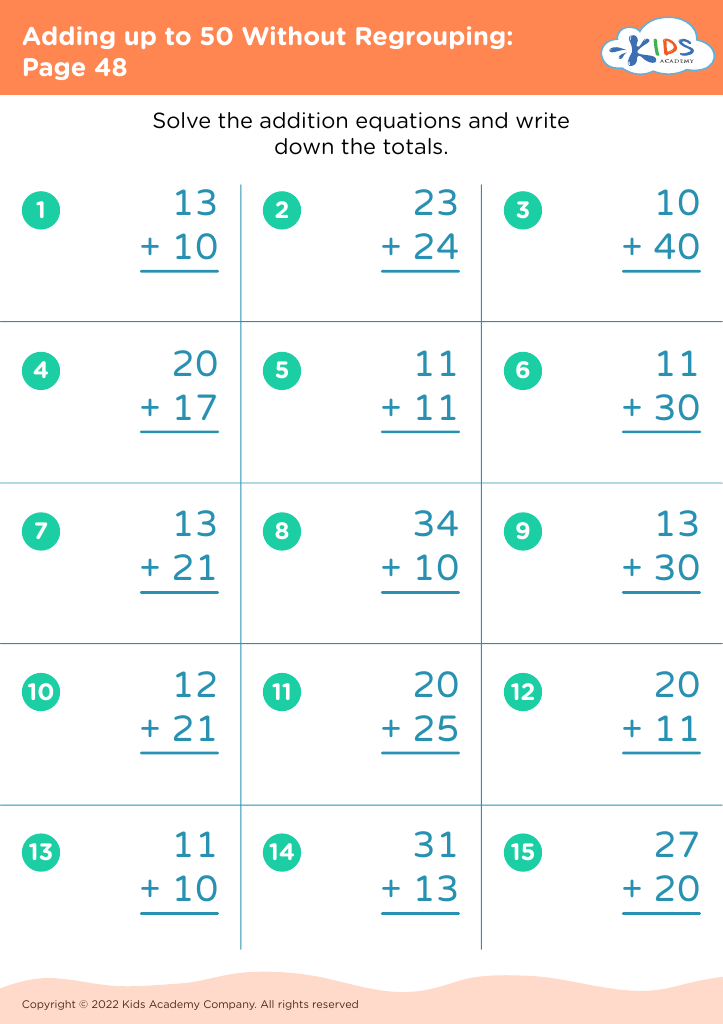
Enhance your child’s fine motor skills and writing abilities with our engaging Addition Worksheets for 8-year-olds! Designed specifically to combine improvement in writing with essential math concepts, these worksheets offer a fun and interactive way to practice addition. Children can develop their dexterity, hand-eye coordination, and grip while solving math problems. Our resources are perfect for strengthening pencil control and enhancing overall writing proficiency. With colorful graphics and playful designs, these worksheets transform learning into an enjoyable experience tailored for young learners. Download today to support your child's educational journey and foster both math and writing skills simultaneously!
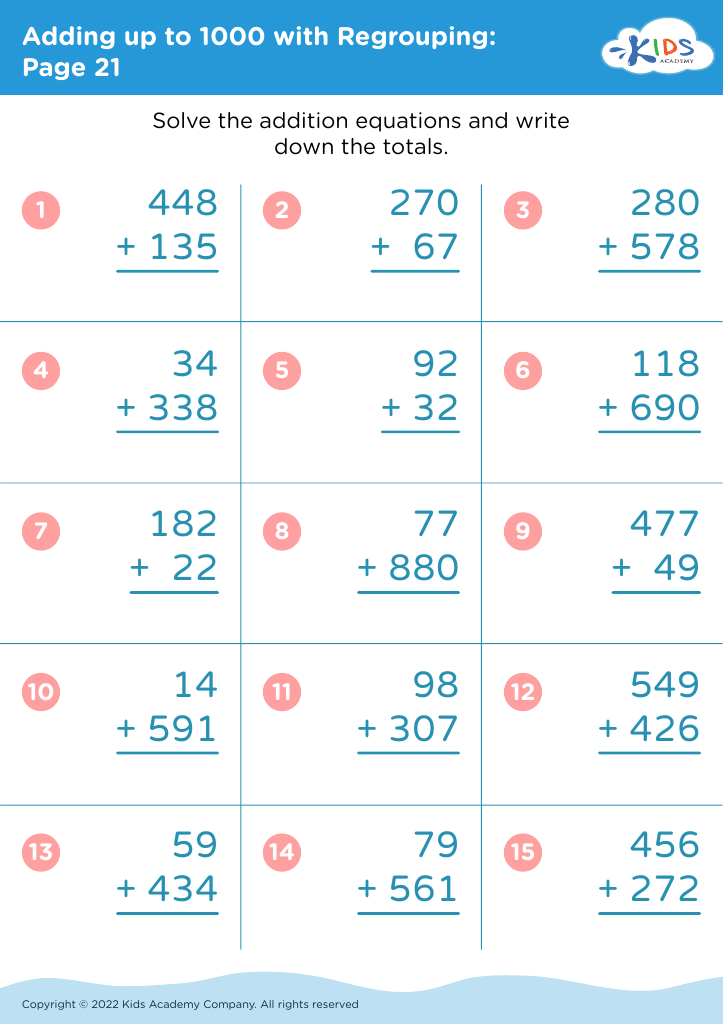
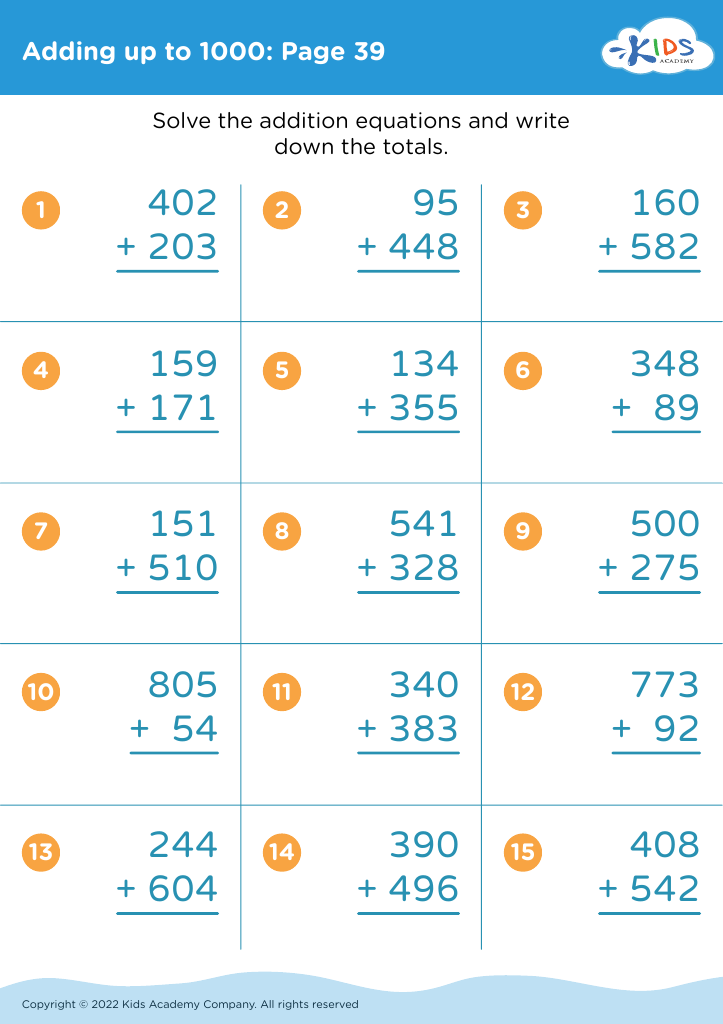
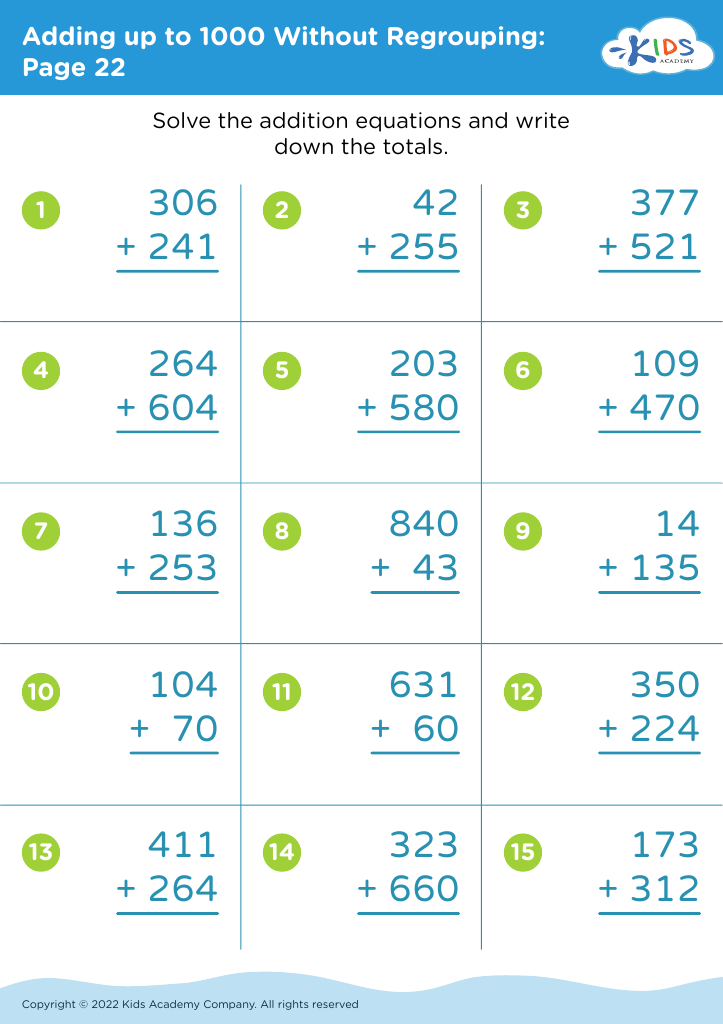
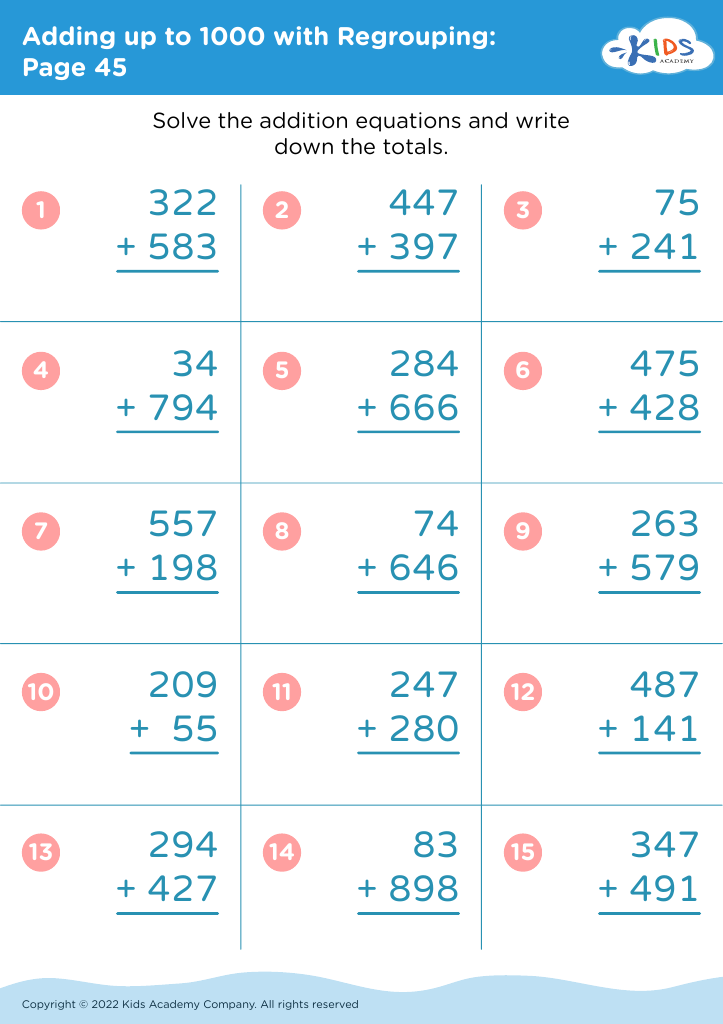








Fine motor skills, particularly in writing, are crucial for 8-year-olds as they are foundational to a child's overall development. At this age, children are transitioning from emerging handwriting techniques to more skilled writing abilities. Mastery of fine motor skills enhances their ability to write legibly, express thoughts clearly, and engage with academic tasks effectively.
Parents and teachers should prioritize these skills because they influence not only writing but also other activities such as drawing, playing musical instruments, and sports. Strong fine motor skills build confidence and encourage children to participate actively in classroom discussions and various activities, fostering their social development.
Moreover, the ability to write fluently impacts literacy and communication skills, which are vital for academic success. Children with strong writing skills often excel in expressing themselves and comprehending others' ideas, building a solid foundation for future educational pursuits.
Engaging in activities that promote fine motor skills—like crafts, puzzles, or finding educational games—can make learning enjoyable while ensuring children are well-prepared for more complex writing tasks ahead in their academic journeys. Consequently, investing time and resources in developing these skills set children up for success both in school and beyond.








