Identifying equivalent fractions Addition Worksheets for 8-Year-Olds
7 filtered results
-
From - To
Our "Identifying Equivalent Fractions Addition Worksheets" for 8-year-olds offer a fun and engaging way for young learners to master fractions. These printable worksheets are designed to help children recognize and create equivalent fractions through addition practice. By completing these exercises, kids improve their math skills, enhance their understanding of fractions, and build a solid foundation for future learning. Each worksheet is crafted to be both educational and enjoyable, ensuring that children remain motivated and confident while learning. Perfect for classroom use or at-home practice, these resources make fraction learning simple and effective.
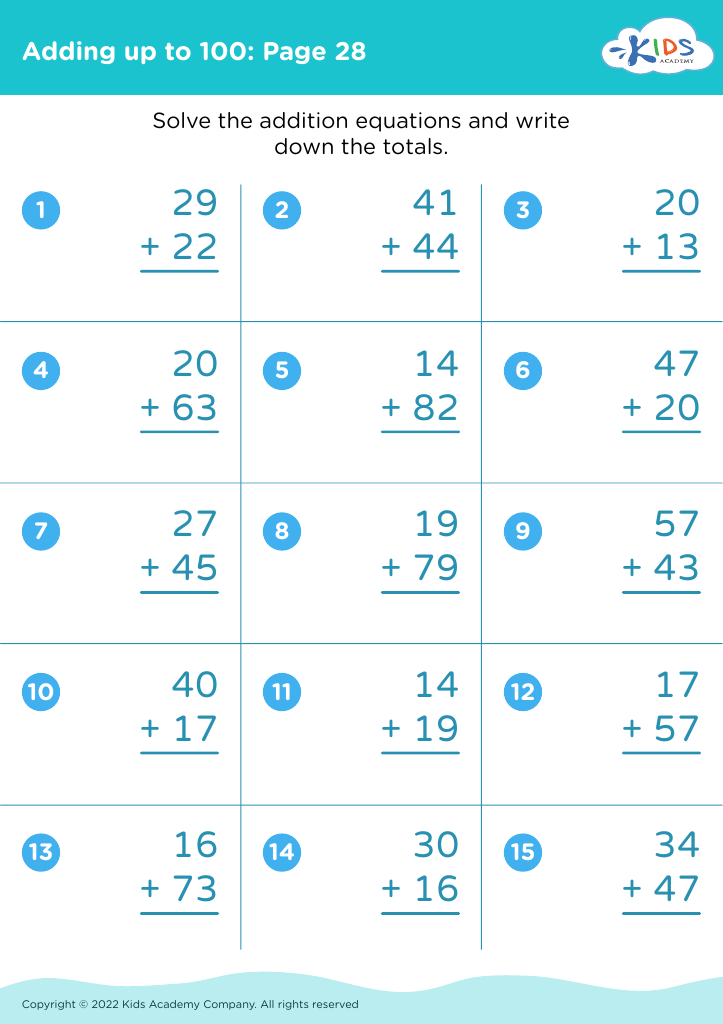
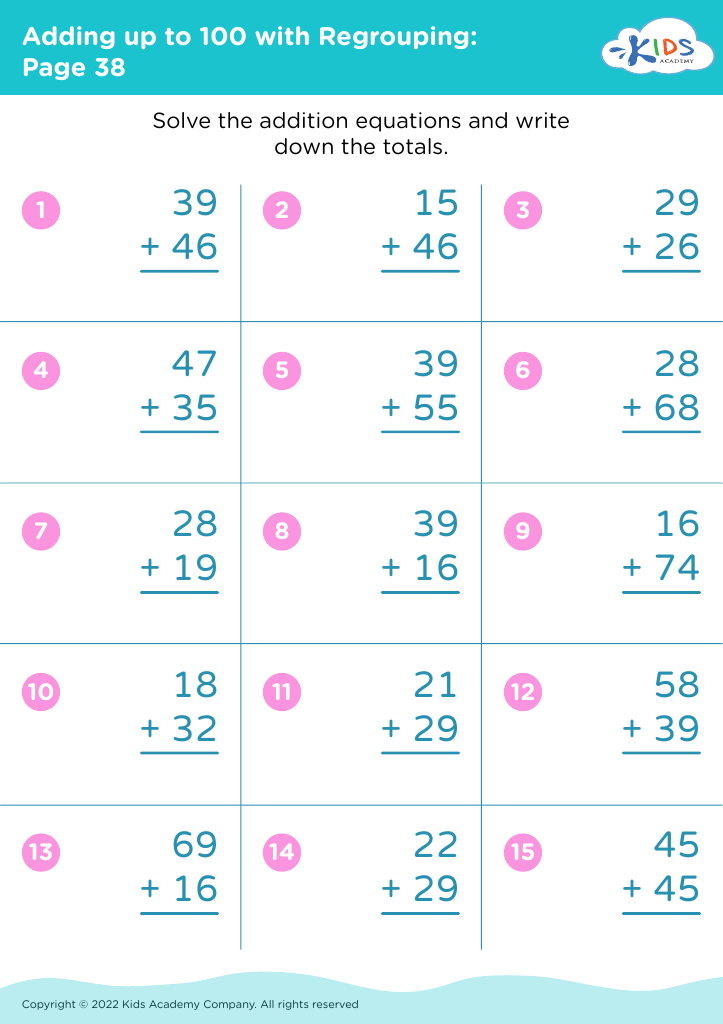
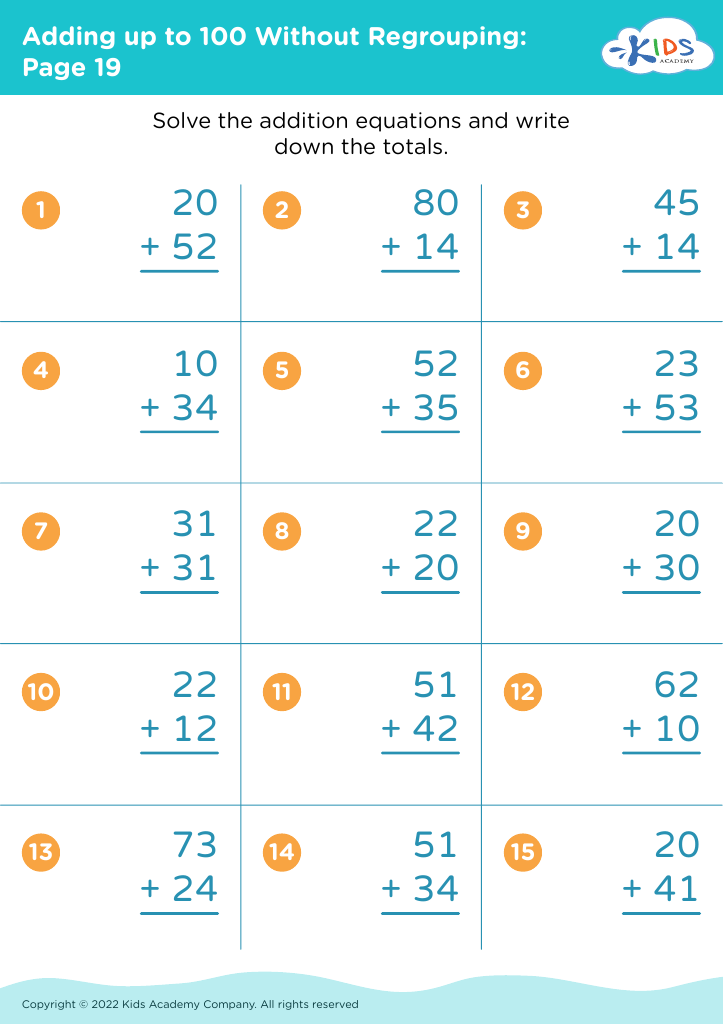
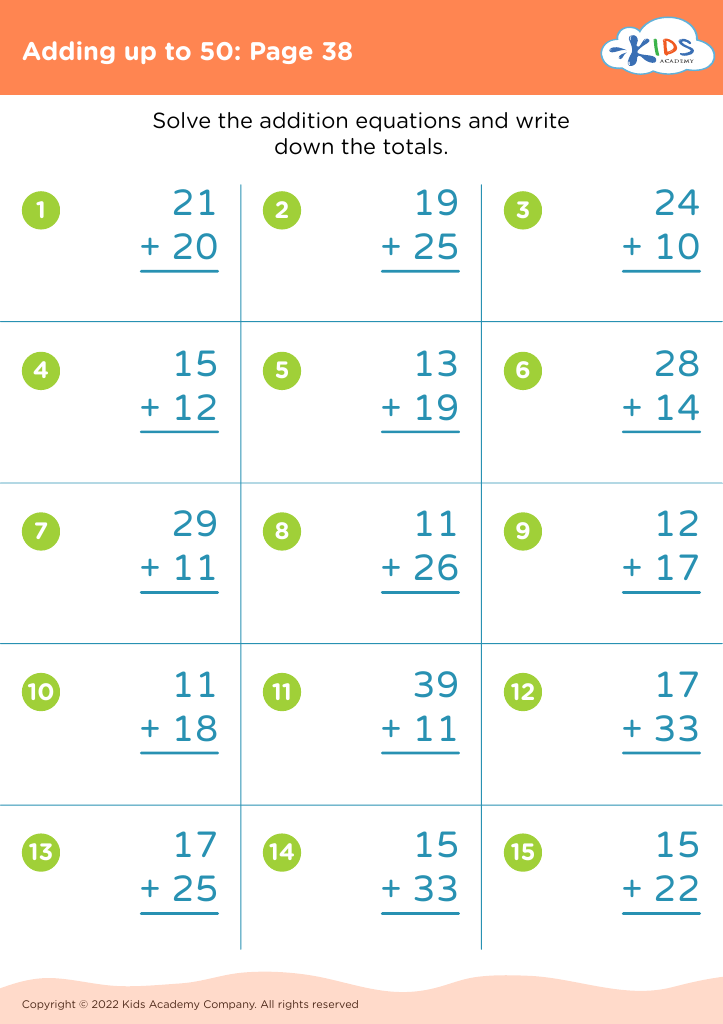
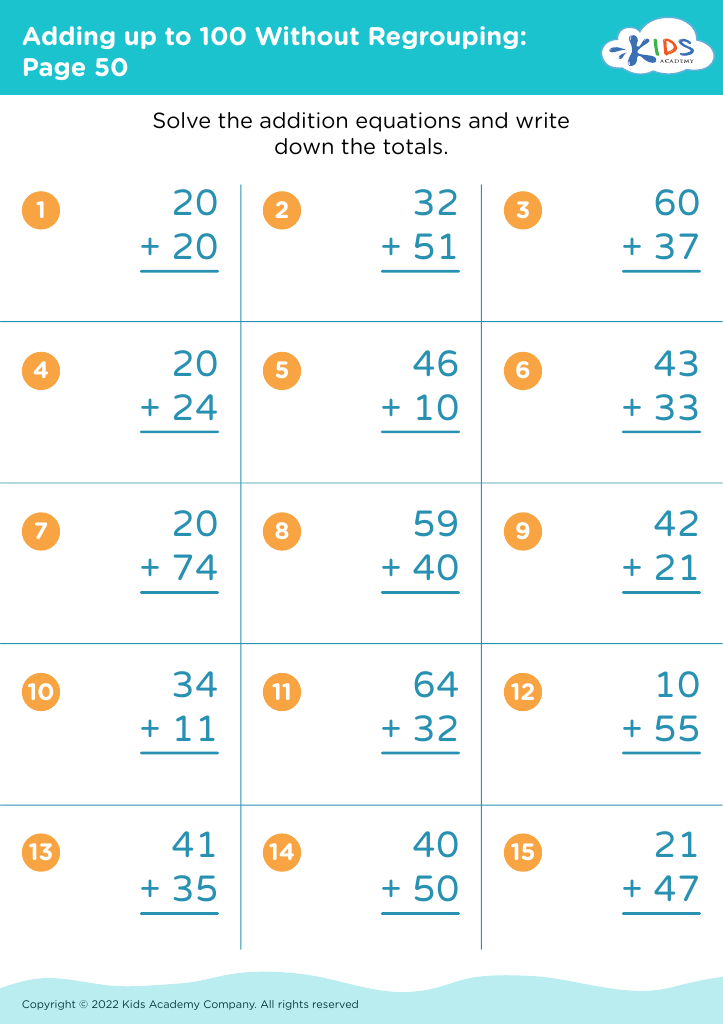
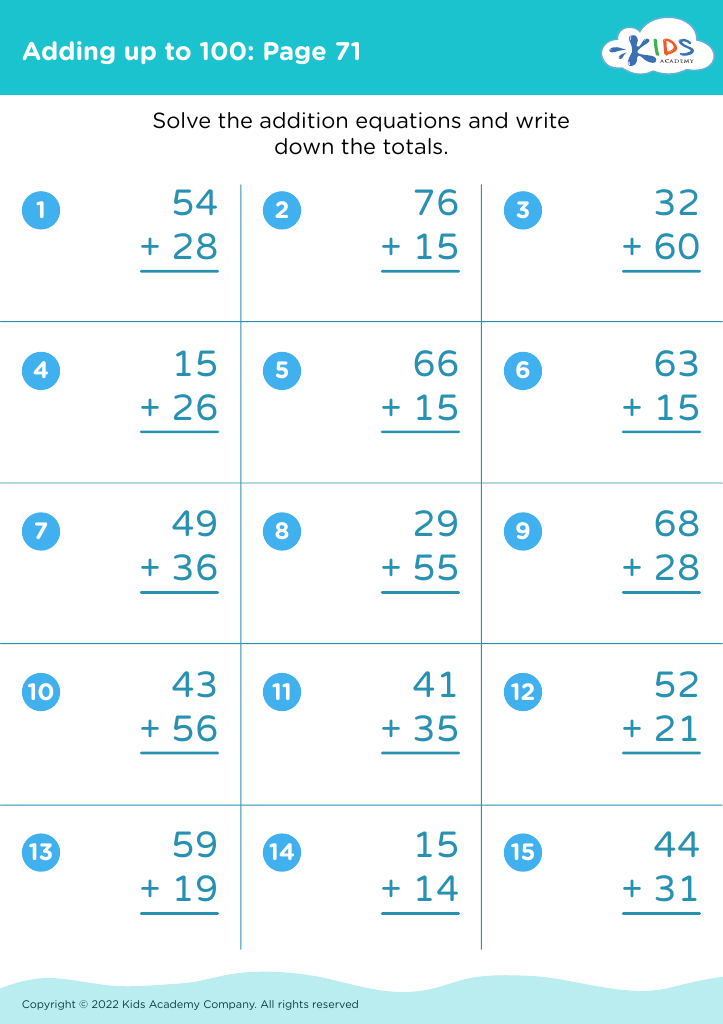
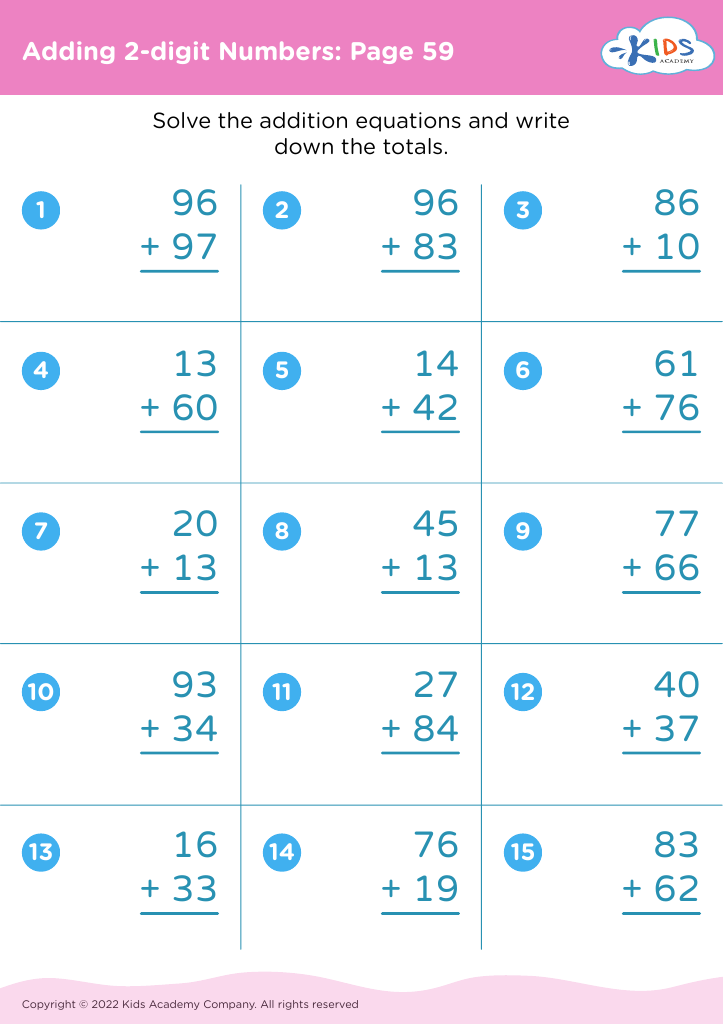








Teaching 8-year-olds about identifying equivalent fractions and addition is crucial for several reasons. Firstly, understanding equivalent fractions helps children grasp the idea that numbers can be expressed in different ways yet hold the same value. This concept encourages flexibility in thinking and enhances problem-solving skills because it encourages children to see beyond the surface of numbers and understand their underlying relationships.
Secondly, being proficient in fraction addition builds a strong foundation for more advanced mathematical concepts. Dozens of future math topics, including algebra and ratios, hinge on a deep understanding of fractions. By mastering these skills early, children are better prepared for the increasingly complex subjects they will encounter in higher grades.
Moreover, these math skills are essential in everyday life. From cooking, where ingredients need to be measured and sometimes converted, to budgeting and shopping, where maintaining a sense of proportion is required, fractions are all around us. Encouraging competence and confidence with fractions can foster a child’s ability to make sense of the world and handle practical tasks effectively.
Lastly, tackling fractions encourages students to practice perseverance and attention to detail. These are invaluable character traits that benefit all areas of learning, including reading, science, and even arts and humanities. Therefore, parents and teachers should prioritize teaching these foundational math skills to ensure children’s overall academic and everyday success.








