Improving mathematical skills Addition Worksheets for 8-Year-Olds
4 filtered results
-
From - To
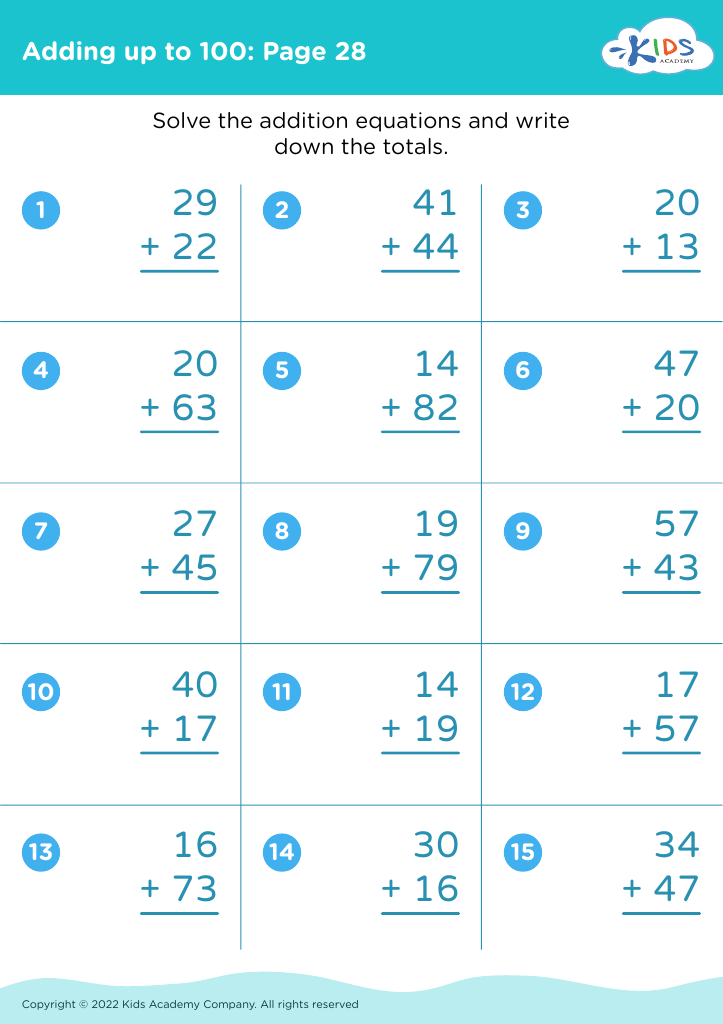
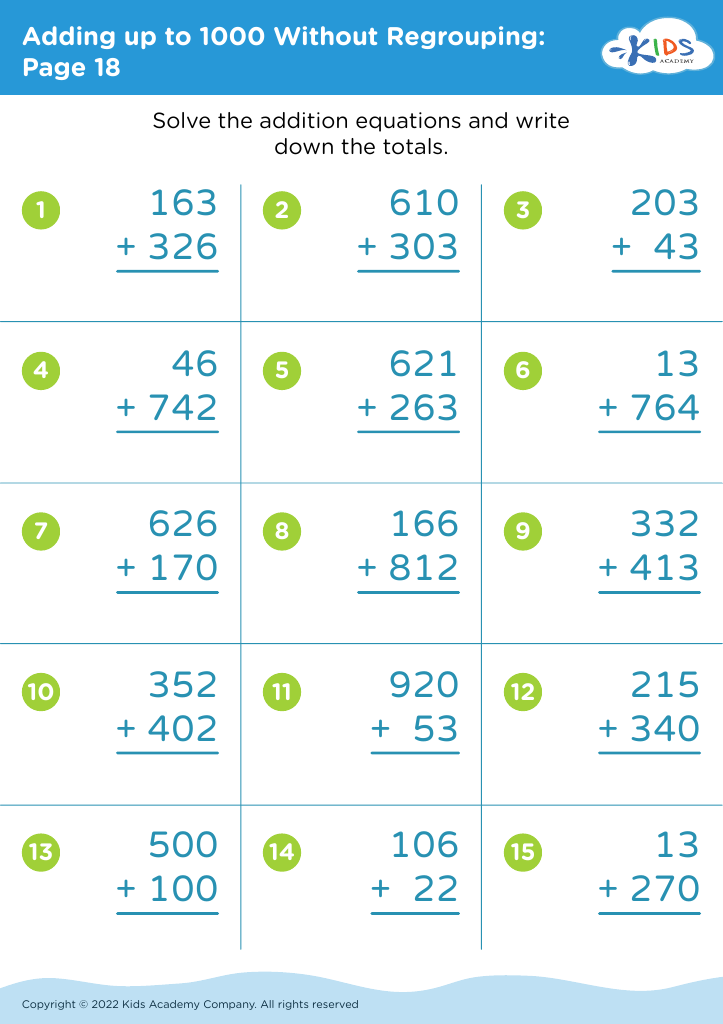
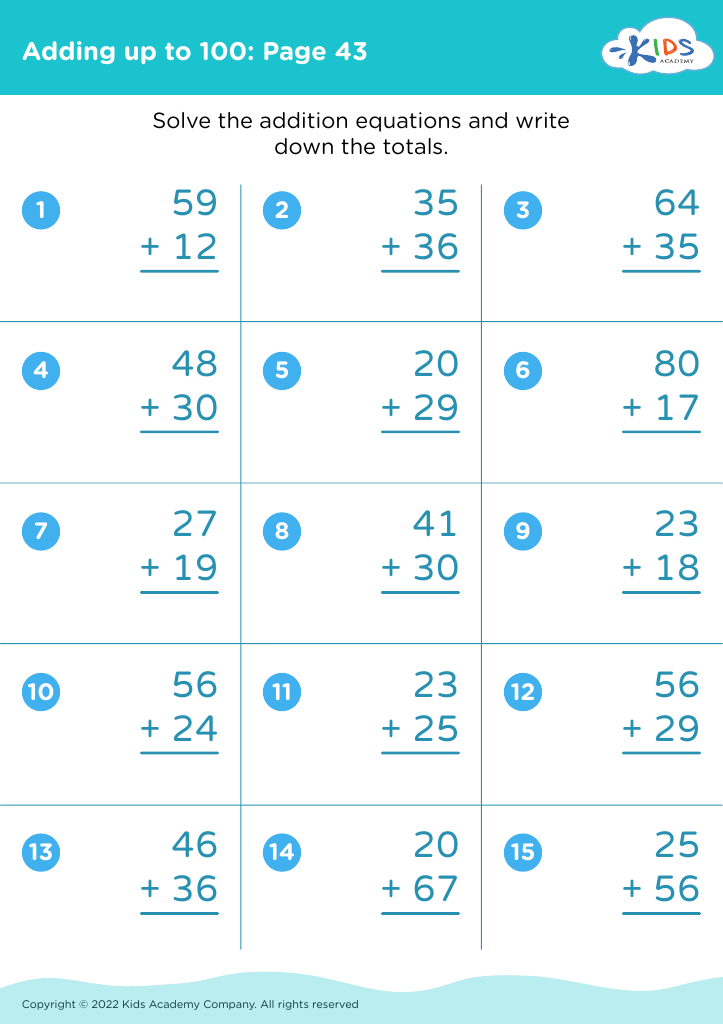
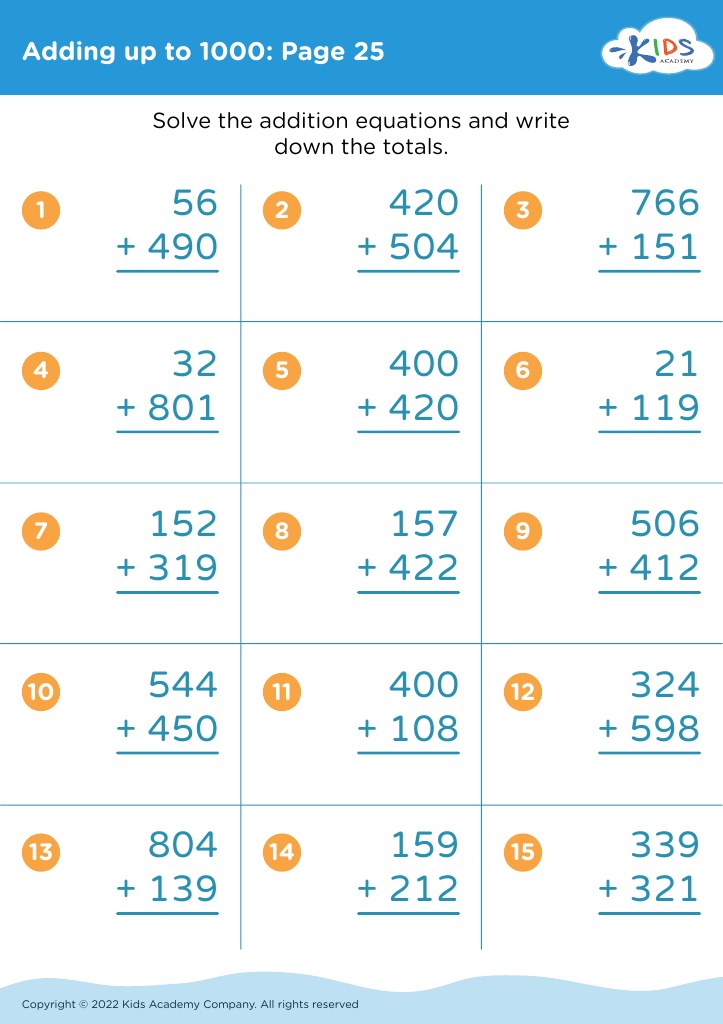
Enhance your child's mathematical abilities with our engaging Addition Worksheets designed specifically for 8-year-olds. These worksheets focus on improving crucial addition skills through various fun activities that cater to different learning styles. By incorporating visual aids, interactive exercises, and real-life problem-solving scenarios, your child will gain confidence and flexibility in their math skills. Our carefully curated resources will not only help reinforce concepts but also make learning enjoyable. With regular practice using these Addition Worksheets, your child will be better prepared for future math challenges. Discover the joy of math with our dedicated approach to nurturing young learners!








Improving mathematical skills, particularly in addition for 8-year-olds, is essential for several reasons. First, mastering addition serves as a foundational skill in mathematics, enabling children to understand more complex concepts like subtraction, multiplication, and division. A strong grasp of addition boosts confidence and promotes a positive attitude toward math, where early struggles can lead to long-term aversion.
Additionally, mathematical skills are critical for everyday problem solving. Adding numbers accurately is essential when handling money, measuring ingredients in cooking, or planning schedules, thus preparing children for real-life situations. As children progress in their education, their ability to perform mental math will take on more significance in both academic and practical contexts.
Teachers and parents play a crucial role in this developmental stage. By engaging in activities that encourage interactive and playful learning, both can cultivate a stimulating environment for improving these skills. Resources such as games, puzzles, and manipulatives can make addition enjoyable, fostering a love for math.
Moreover, improving mathematical skills can lead to better academic performance and create an advantage during future assessments. Prioritizing addition proficiency sets the stage for overall academic success and empowers children with essential tools for lifelong learning and problem-solving.








