Improving subtraction skills Addition Worksheets for 8-Year-Olds
3 filtered results
-
From - To
Welcome to our "Improving Subtraction Skills" addition worksheets for 8-year-olds! Designed to transform math learning into an engaging journey, our worksheets emphasize the relationship between addition and subtraction, helping children strengthen their subtraction skills through interactive practice. With a variety of exciting exercises, students will tackle real-life scenarios, develop problem-solving abilities, and boost their confidence in math. These resources are curated by educators to align with learning standards while ensuring that your child enjoys their practice. Dive in and discover how your child can master subtraction concepts while fortifying their overall math skills today!
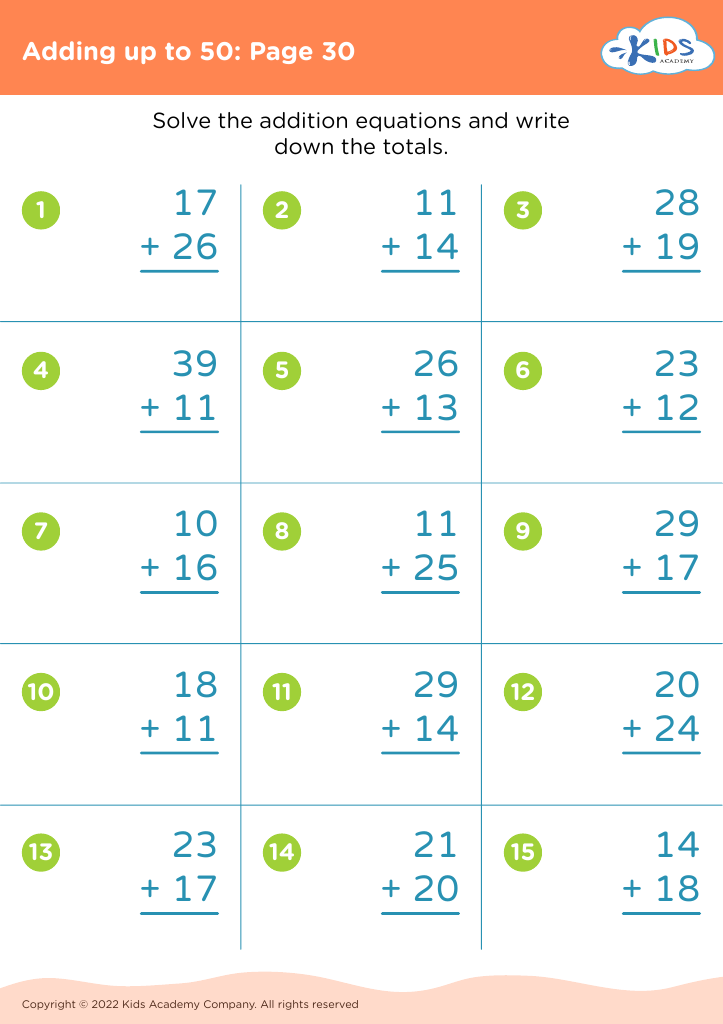
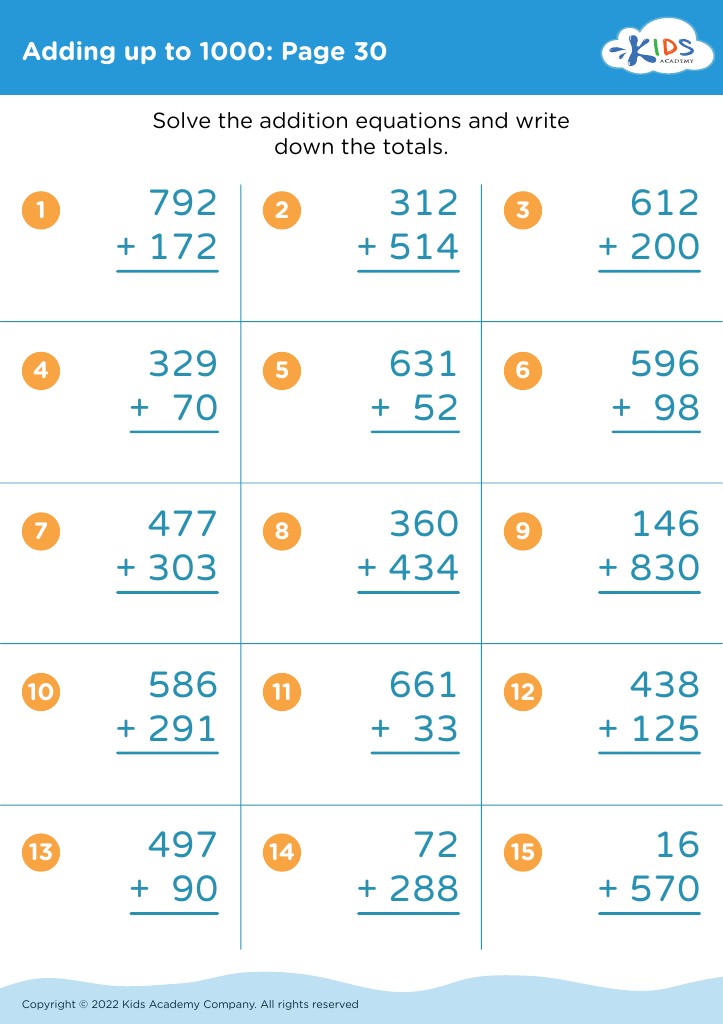
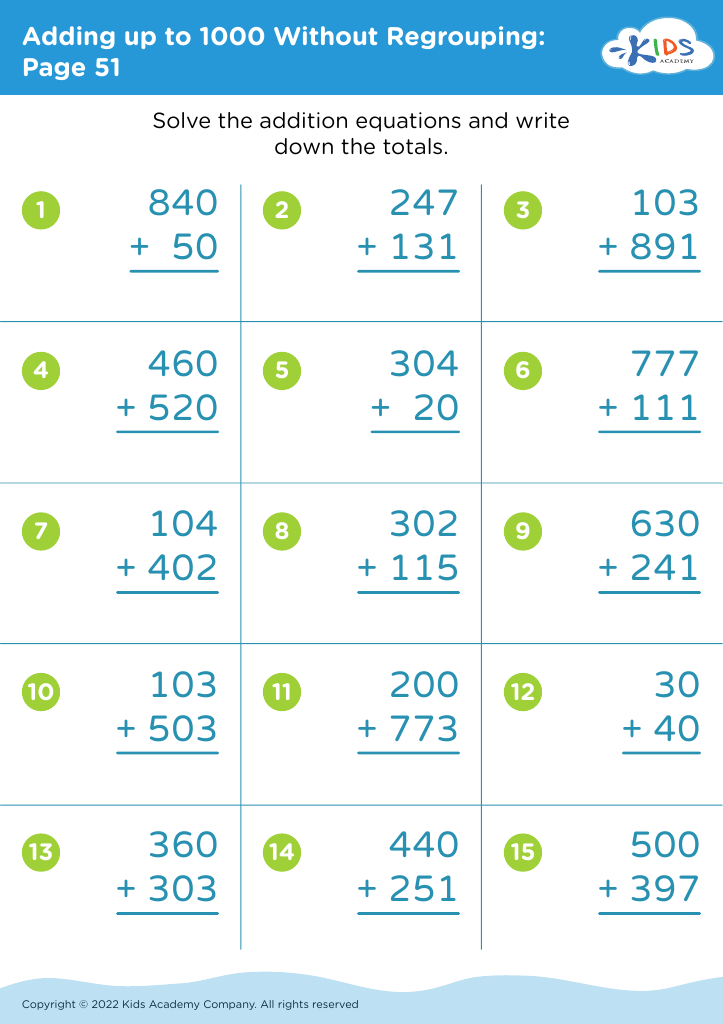








Improving subtraction skills is essential for 8-year-olds as it lays the foundation for more complex mathematical concepts. At this age, children are not only sharpening basic arithmetic but also developing critical thinking and problem-solving skills. Strong subtraction abilities enhance their comprehension of addition, as these operations are interconnected; understanding one helps with the other.
Furthermore, proficient subtraction skills promote self-confidence in young learners. Children who are comfortable with basic operations are more likely to participate in class, tackle challenging problems, and explore higher-level math concepts in the future. Additionally, everyday situations can involve subtraction—whether calculating change, measuring distances, or tracking scores in games. By grasping subtraction, children gain practical skills they can use outside the classroom.
Moreover, fostering these skills early on helps identify any potential learning gaps. Teachers and parents can collaboratively support children who struggle with mathematical concepts. Engaging in fun, hands-on subtraction activities can enhance motivation and make learning enjoyable. Overall, prioritizing the improvement of subtraction skills contributes to a child's overall academic success and lifelong learning journey, making it a key focus for both educators and parents.








