
Multiplication practice Addition Worksheets for 8-Year-Olds
3 filtered results
Difficulty Level
Grade
Age
-
From - To
Subject
Activity
Standards
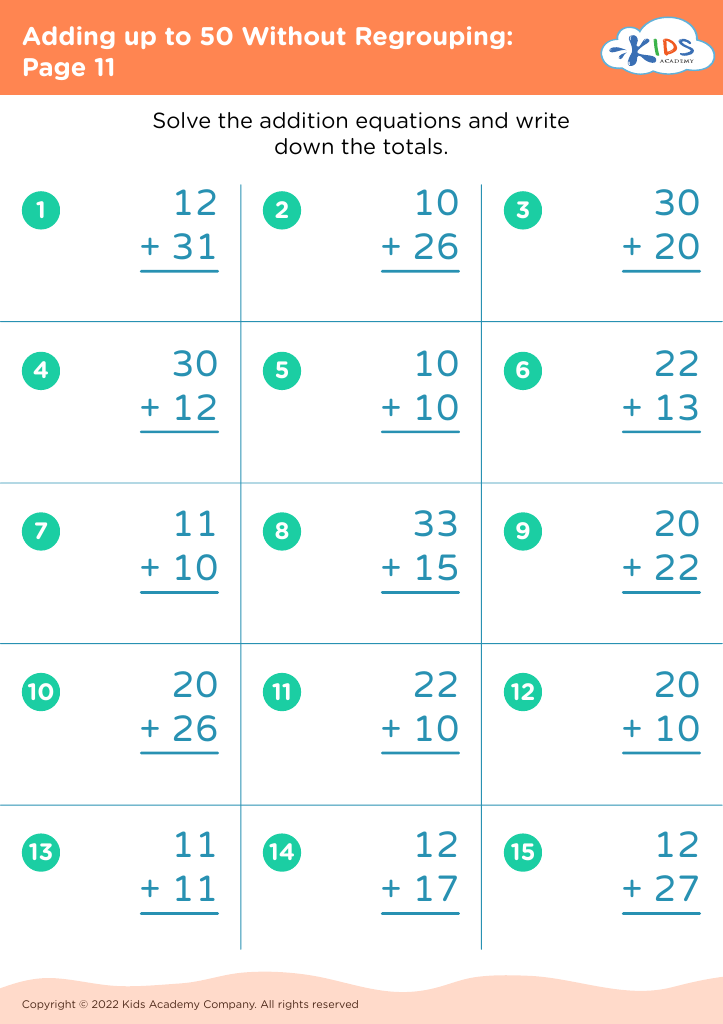
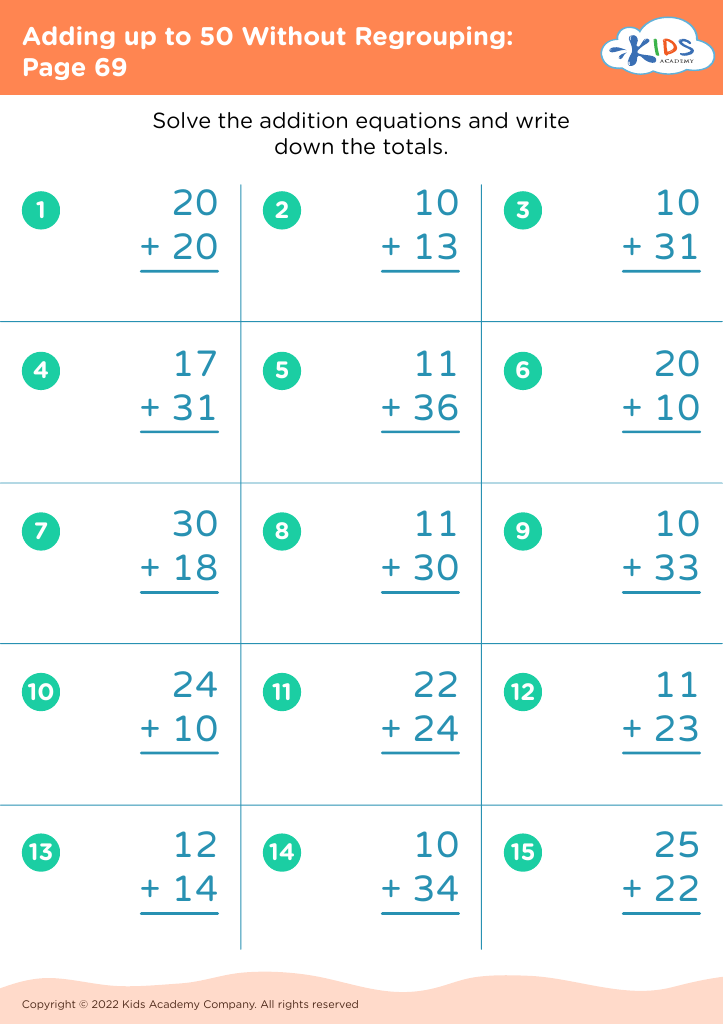
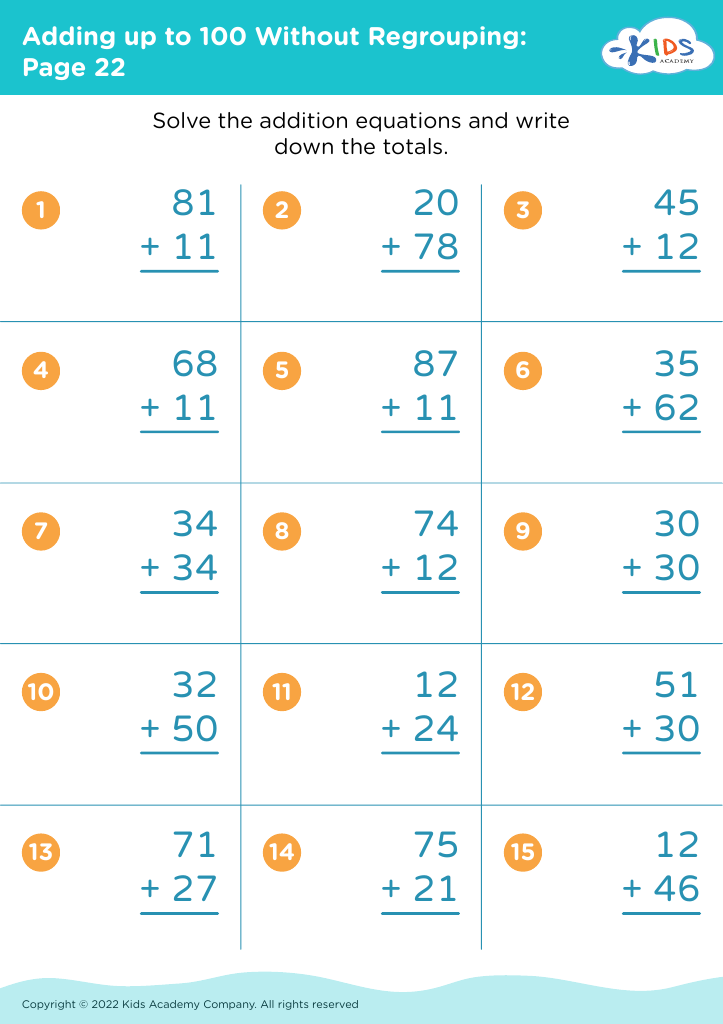
Boost your 8-year-old's arithmetic skills with our engaging "Multiplication Practice Addition Worksheets." Designed to reinforce addition knowledge while introducing multiplication concepts, these worksheets make math fun and accessible. Catering specifically to young learners, each sheet features exciting, colorful activities that help children grasp multiplication principles through familiar addition facts. With a systematic approach that blends practice and play, your child will build a strong math foundation in no time. Perfect for both classroom use and homeschooling, these printable worksheets provide a balanced blend of challenge and achievement. Jumpstart your child's math confidence today!
Favorites
With answer key
Interactive
Join Kids Academy for Free
Who is primarily going to use this learning content?








Multiplication practice in addition to basic arithmetic like addition is incredibly important for 8-year-olds and should be a priority for both parents and teachers. Firstly, it lays the foundation for higher-level math skills. When children grasp multiplication early, it becomes easier for them to understand more complex topics such as division, fractions, and algebra later on.
Secondly, regular multiplication practice improves cognitive skills such as memory, problem-solving, and logical thinking. Solving multiplication problems often requires children to engage in pattern recognition and mental calculations, activities that boost their overall intellectual abilities.
Moreover, multiplication is a key skill used in everyday life scenarios, from calculating expenses while shopping to dividing tasks evenly among friends, which emphasizes its practical application beyond classroom walls.
Continuous multiplication practice also builds confidence. Mastery of these skills instills a sense of accomplishment in children, encouraging a positive attitude towards math and education in general. This confidence is crucial in helping children tackle academic challenges throughout their schooling.
Finally, early mastery of basic multiplication ensures that kids are well-prepared for standardized testing, helping them meet or exceed educational benchmarks. This is essential for long-term academic success and opens doors to future opportunities. In summary, incorporating multiplication practice enriches a child's education, life skills, and confidence.








