Number Recognition Addition Worksheets for 8-Year-Olds - Page 6
129 filtered results
-
From - To
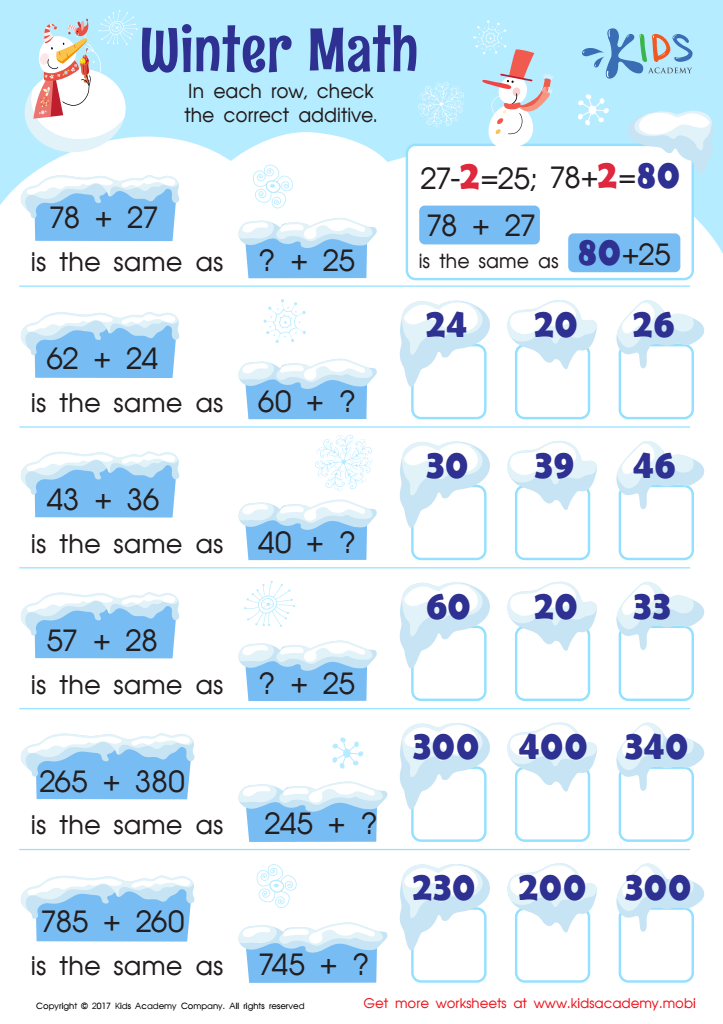
Free Addition Worksheet
 Assign to My Students
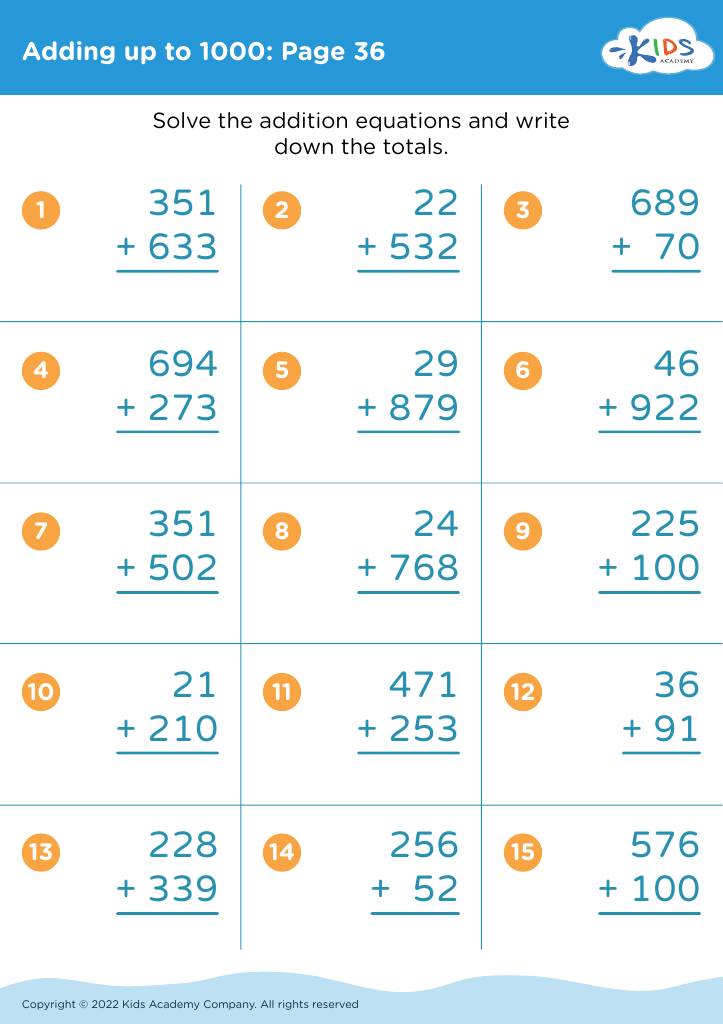
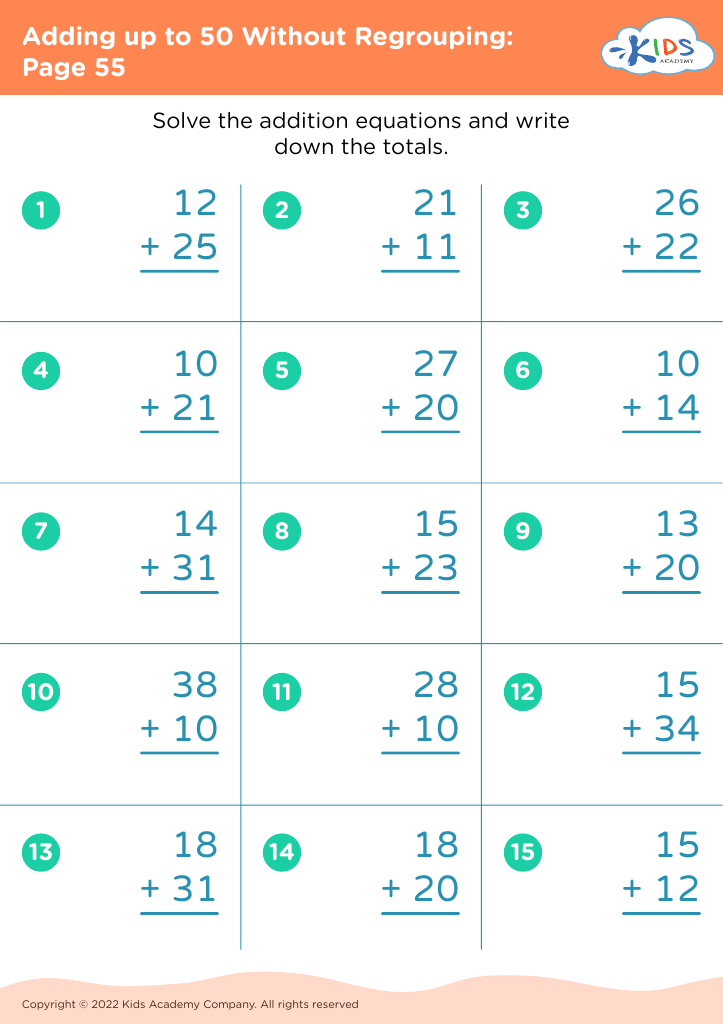
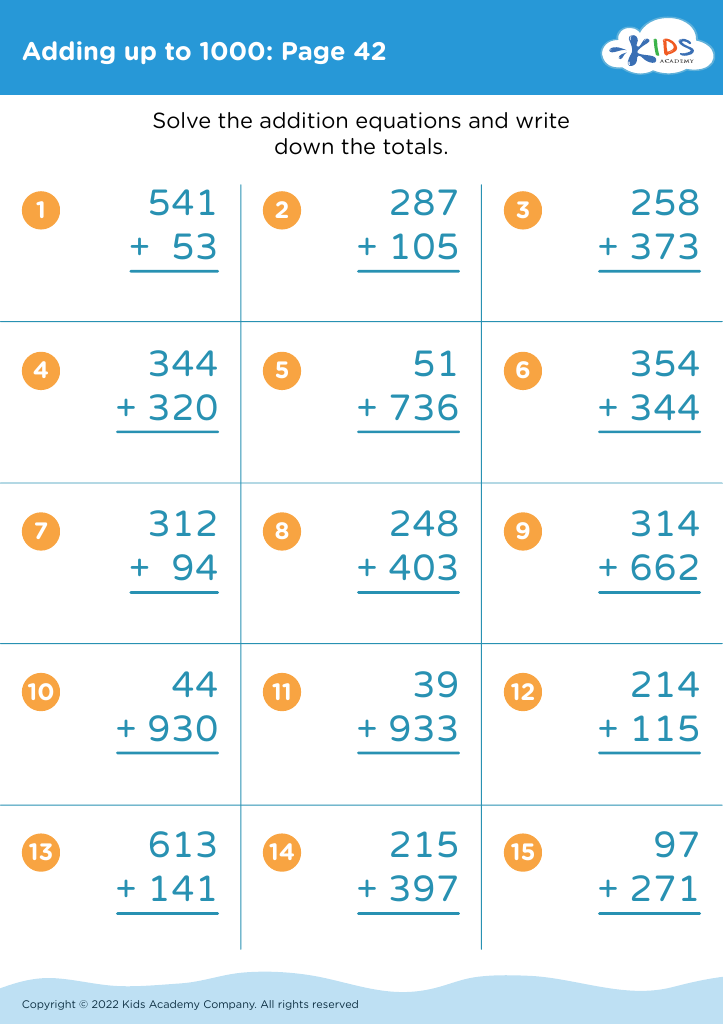
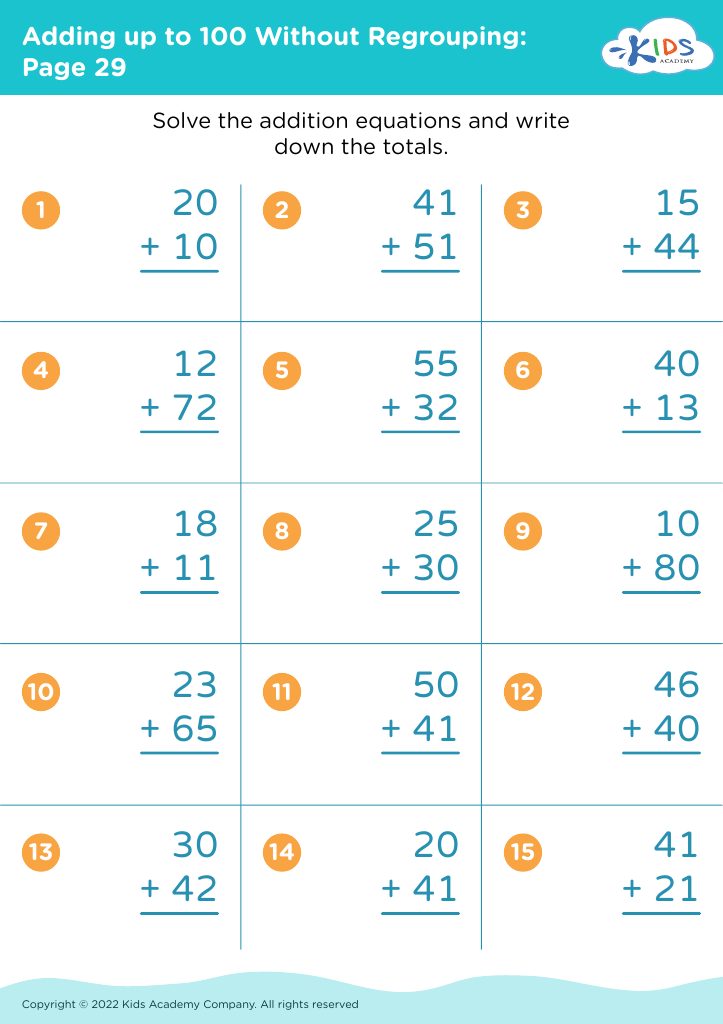
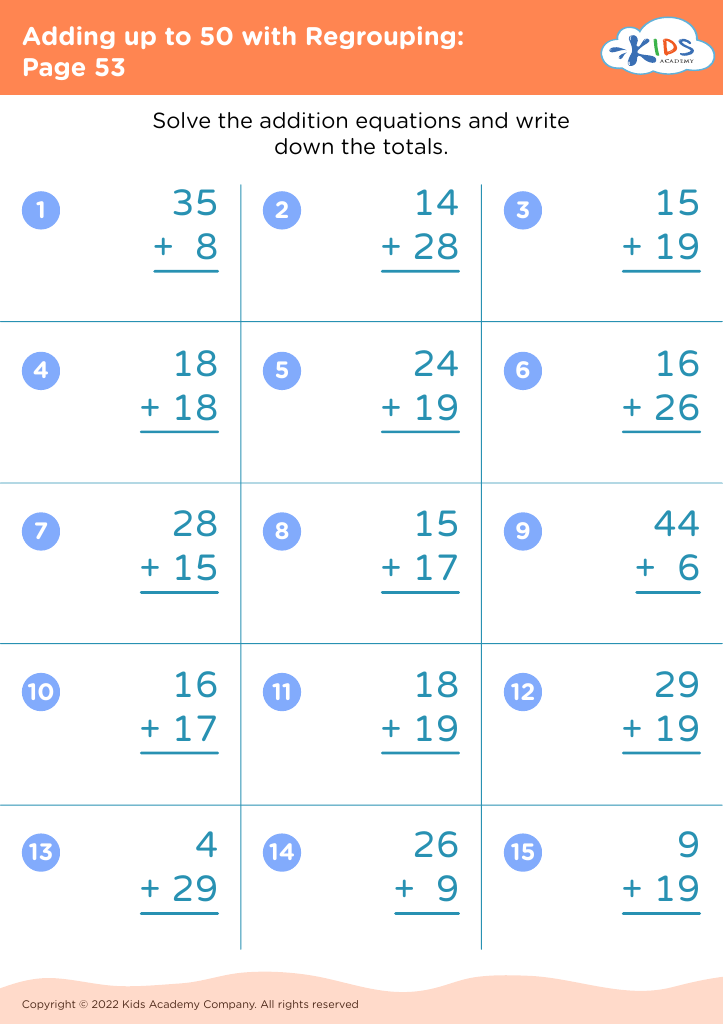
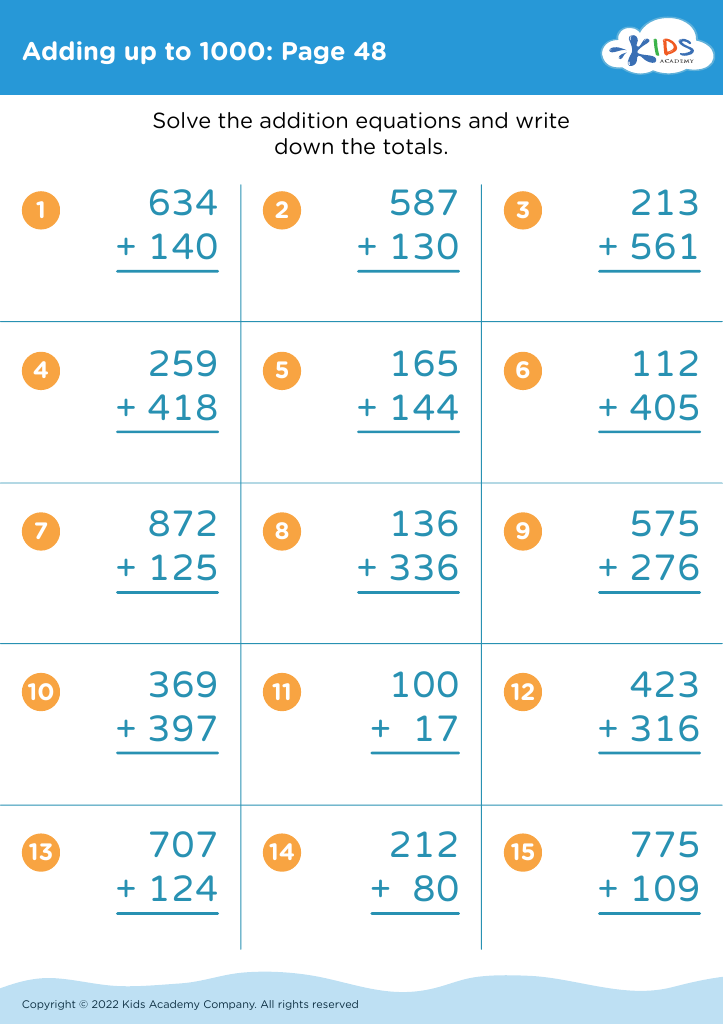
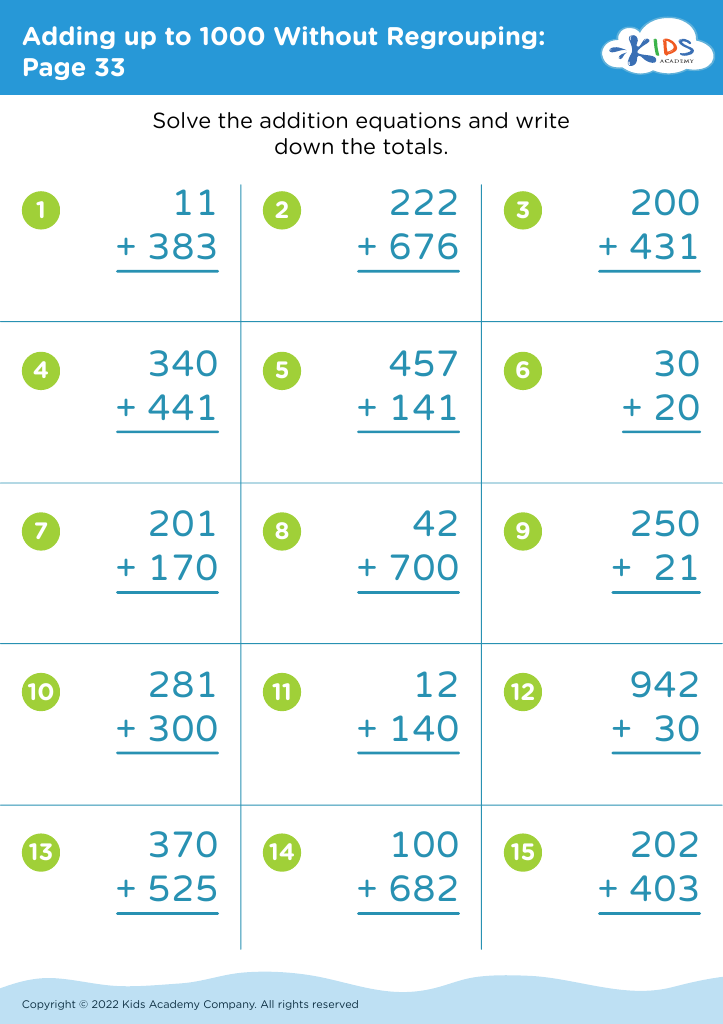
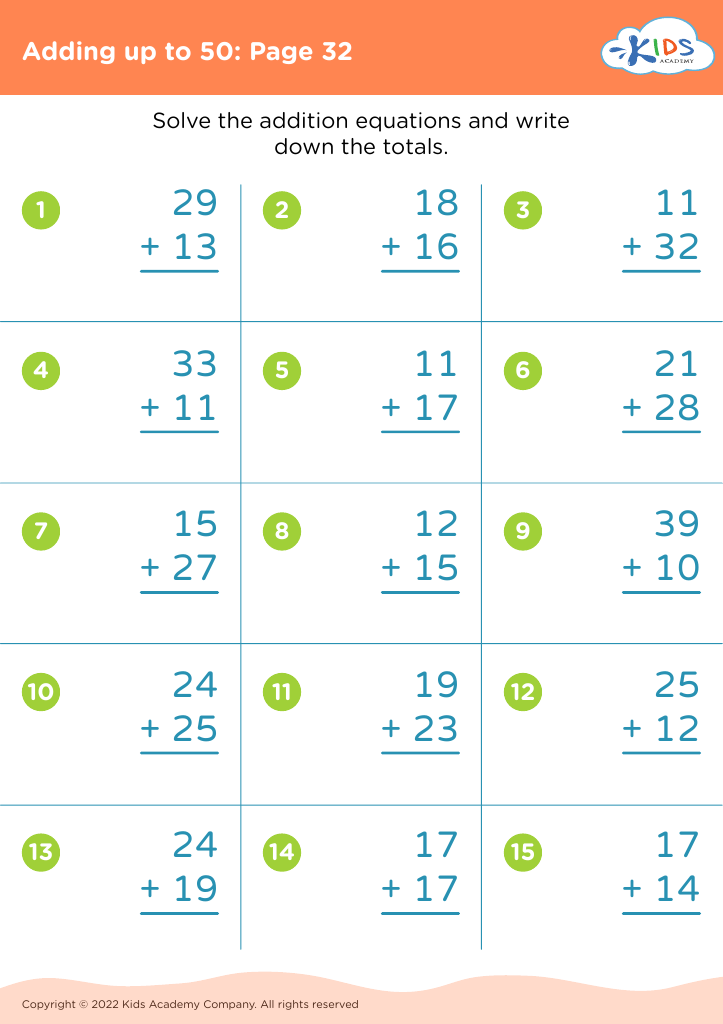








Number recognition and addition skills are fundamental building blocks in a child's mathematical development, especially for 8-year-olds who are typically in second or third grade. At this age, children transition from basic counting to more complex arithmetic operations, and a strong grasp on number recognition paves the way for success in addition and subsequent math concepts.
Parents and teachers should prioritize these skills for several reasons. First, number recognition allows children to understand the symbolic representation of numbers, which is essential for basic calculations and problem-solving. Without this foundation, children may struggle with more advanced math, affecting their confidence and academic performance.
Secondly, proficiency in addition helps develop logical thinking and reasoning abilities. As children practice adding numbers, they learn to recognize patterns, understand numerical relationships, and develop mental math strategies. These skills are not only vital for higher-level math but also for everyday life, such as managing money or time.
Moreover, early math skills have been linked to future academic success. Research suggests that children with strong early math skills perform better academically later on. Therefore, by ensuring children master number recognition and addition, parents and teachers set them up for long-term success.
Fostering a positive attitude toward math through engaging activities and supportive teaching methods can make learning enjoyable, ensuring children develop a lifelong appreciation for the subject.








