Problem-solving abilities Addition Worksheets for 8-Year-Olds
13 filtered results
-
From - To
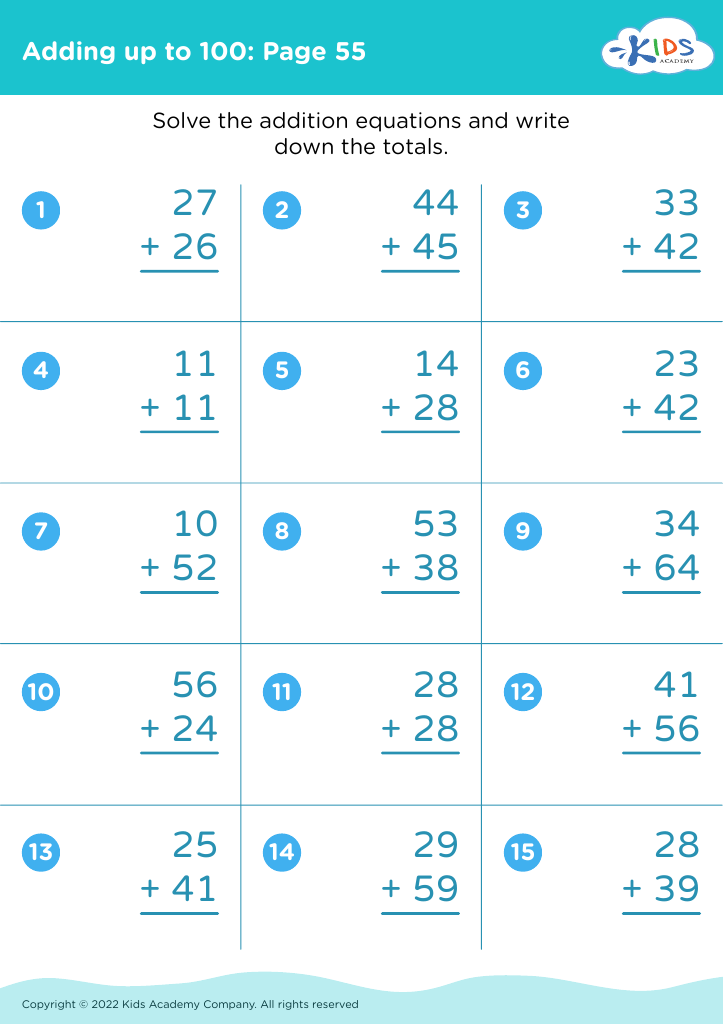
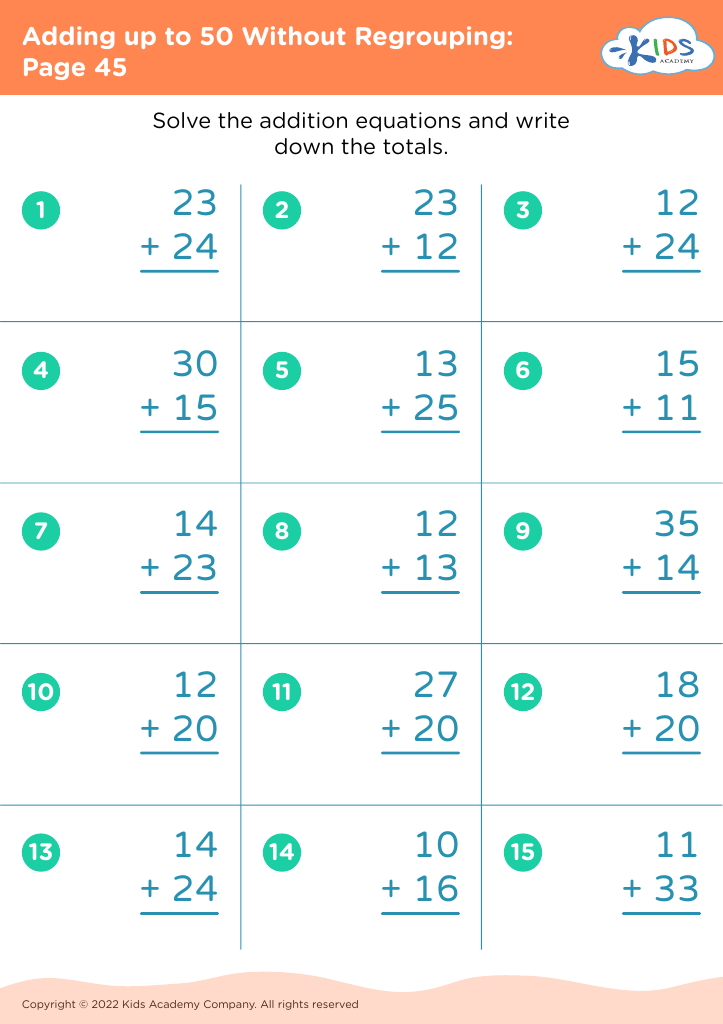
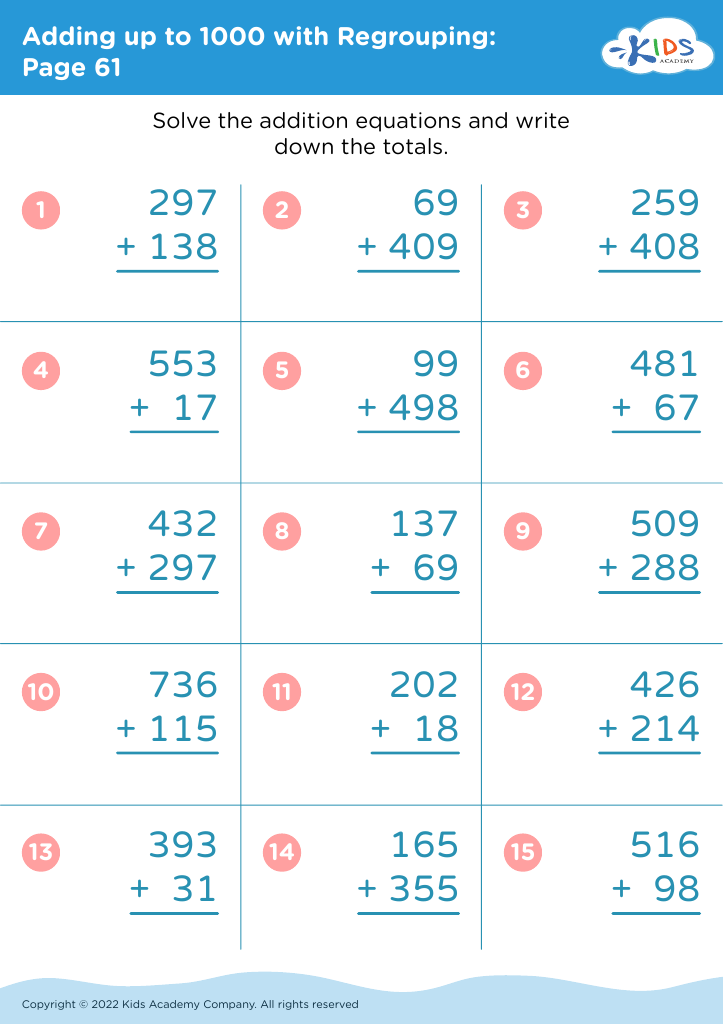
Discover our engaging Problem-Solving Abilities Addition Worksheets tailored specifically for 8-year-olds! These worksheets are designed to enhance critical thinking and mathematical reasoning through fun, interactive addition problems. Each exercise encourages students to apply their knowledge in real-life scenarios, developing their ability to analyze situations and solve problems effectively. Ideal for classroom use or home learning, our worksheets cater to varied skill levels, ensuring that every child can succeed. Watch young learners build confidence in their math skills while enjoying unique challenges that promote creativity and logical thinking. Equip your child with essential problem-solving strategies through our expertly crafted addition worksheets!
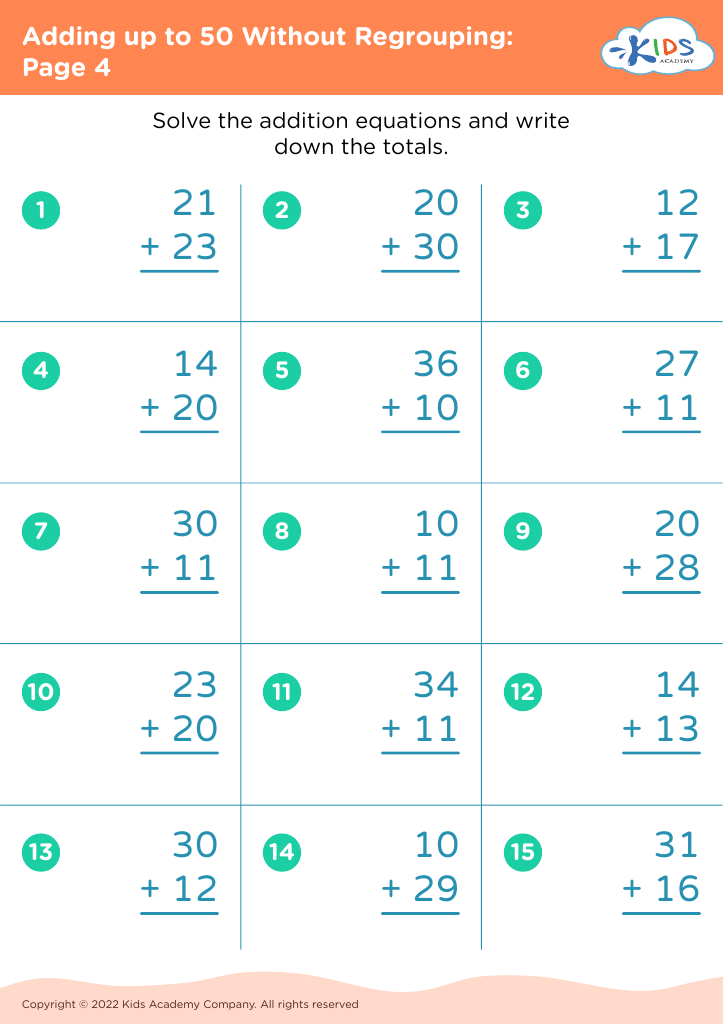
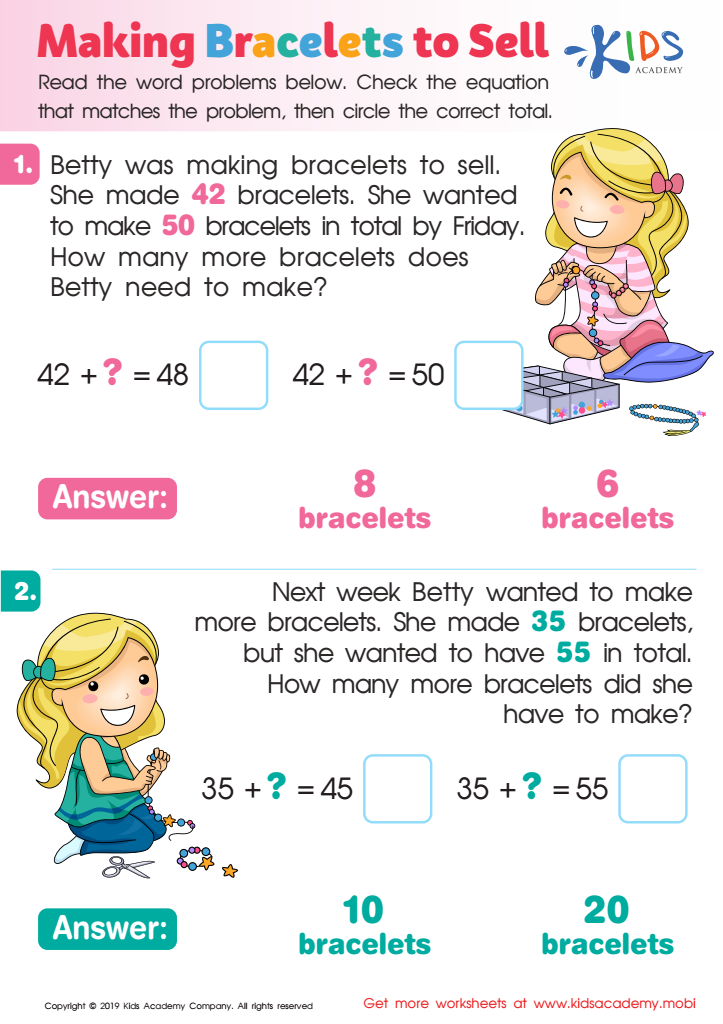
Making Bracelets to Sell Worksheet
 Assign to My Students
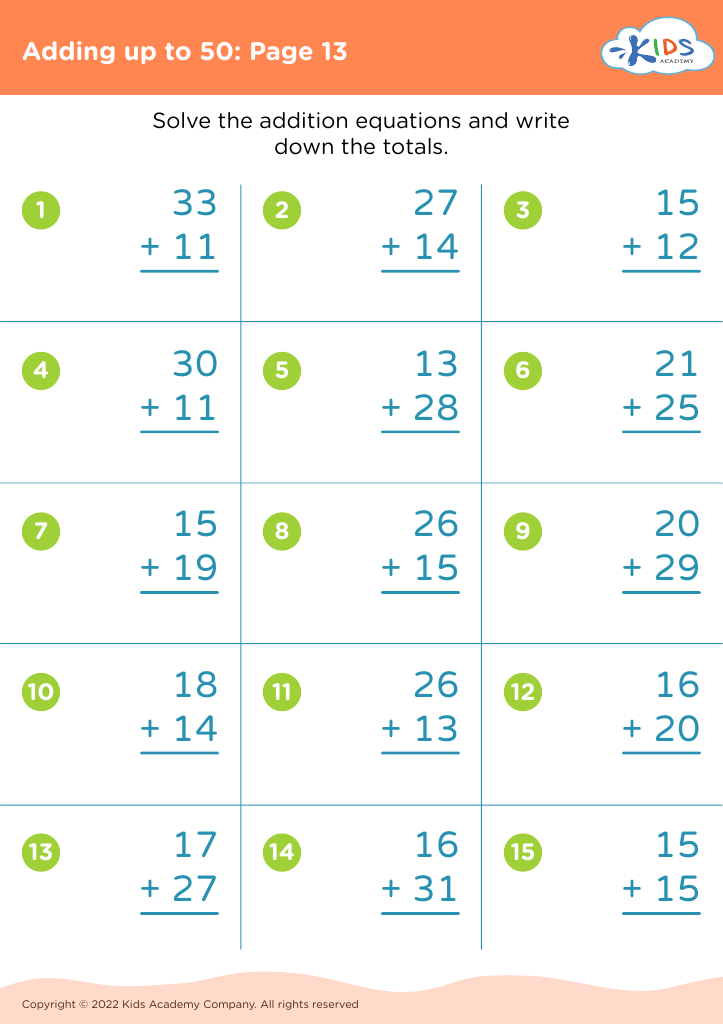
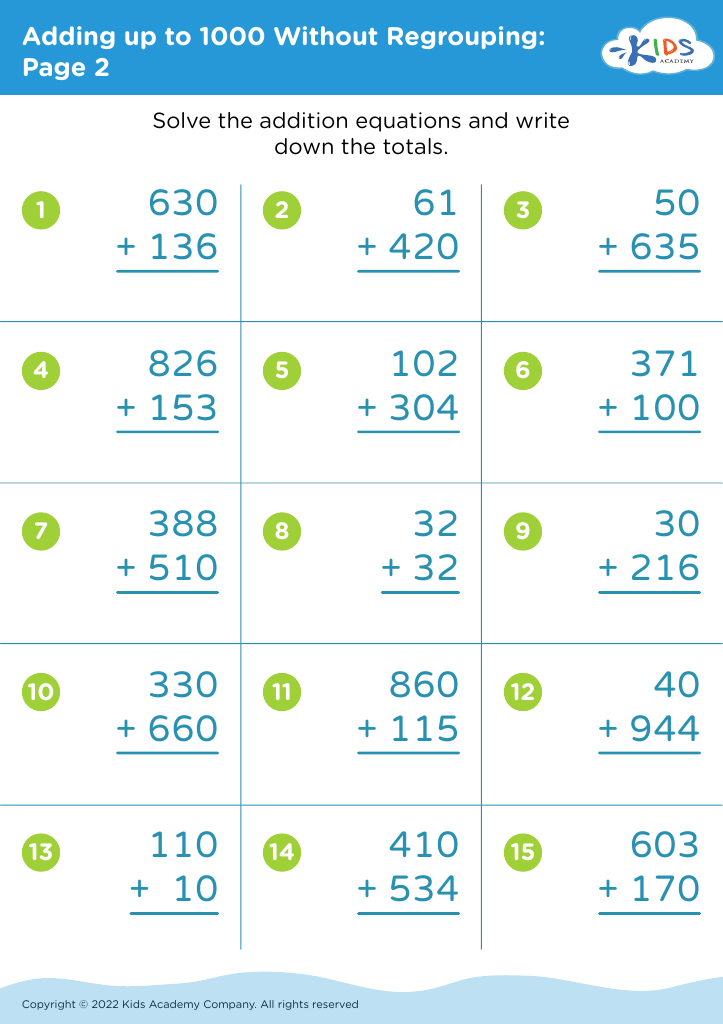
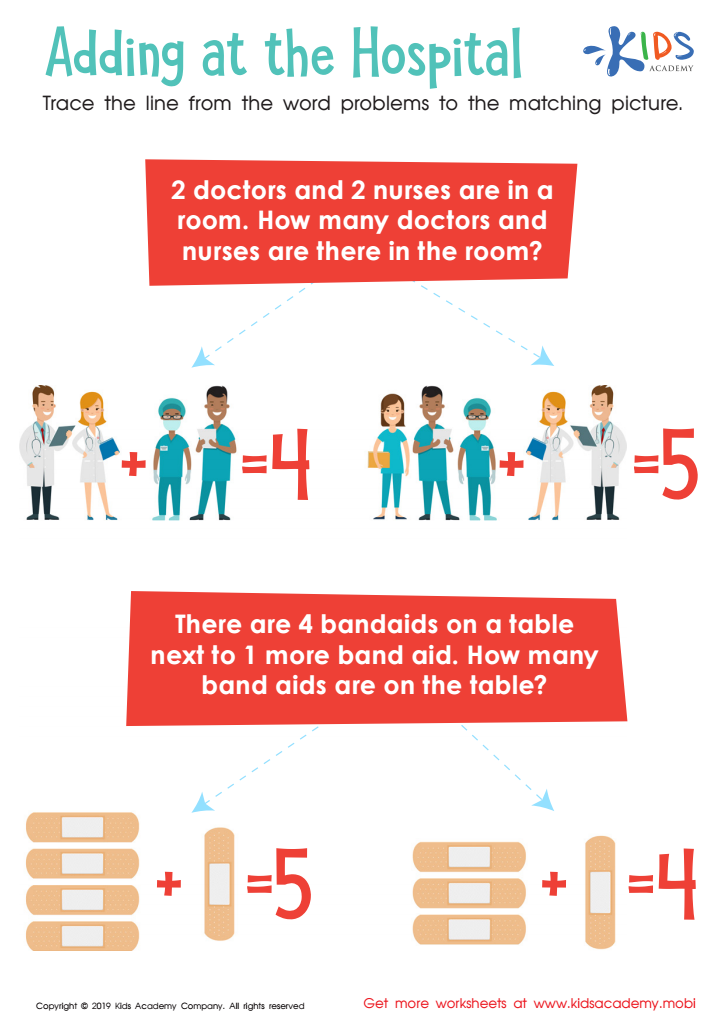
Adding at the Hospital Worksheet
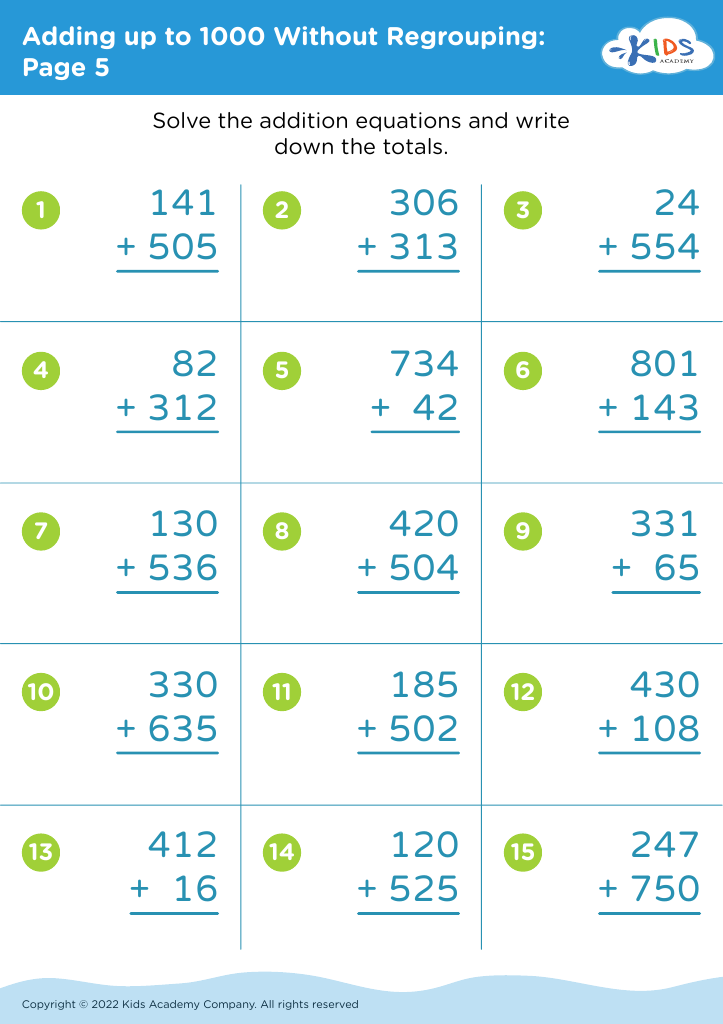
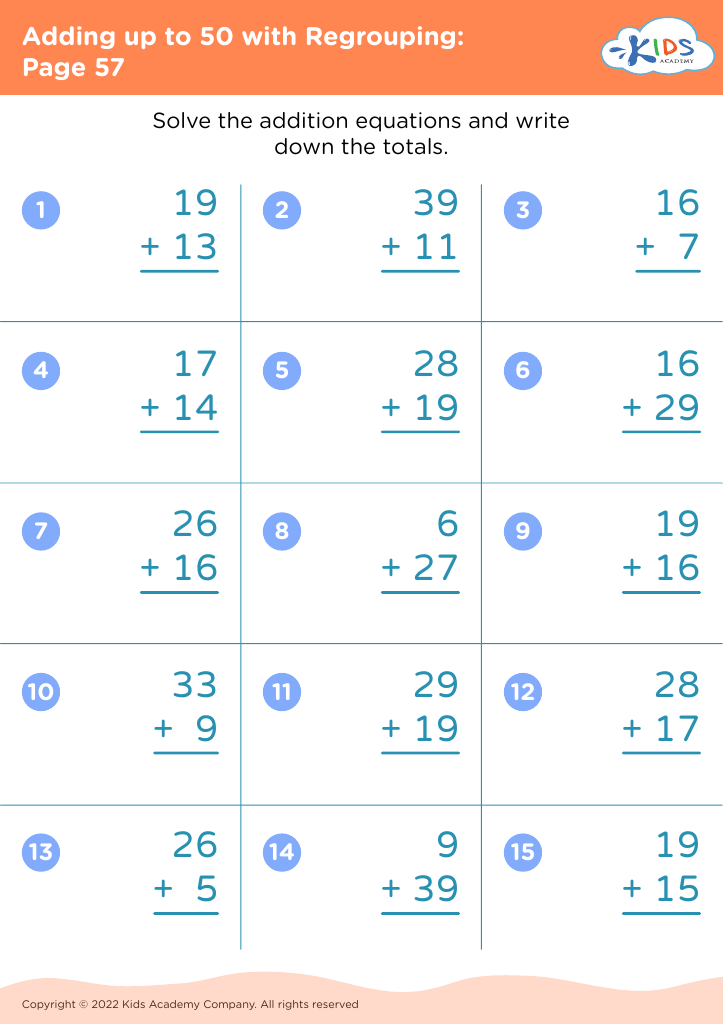
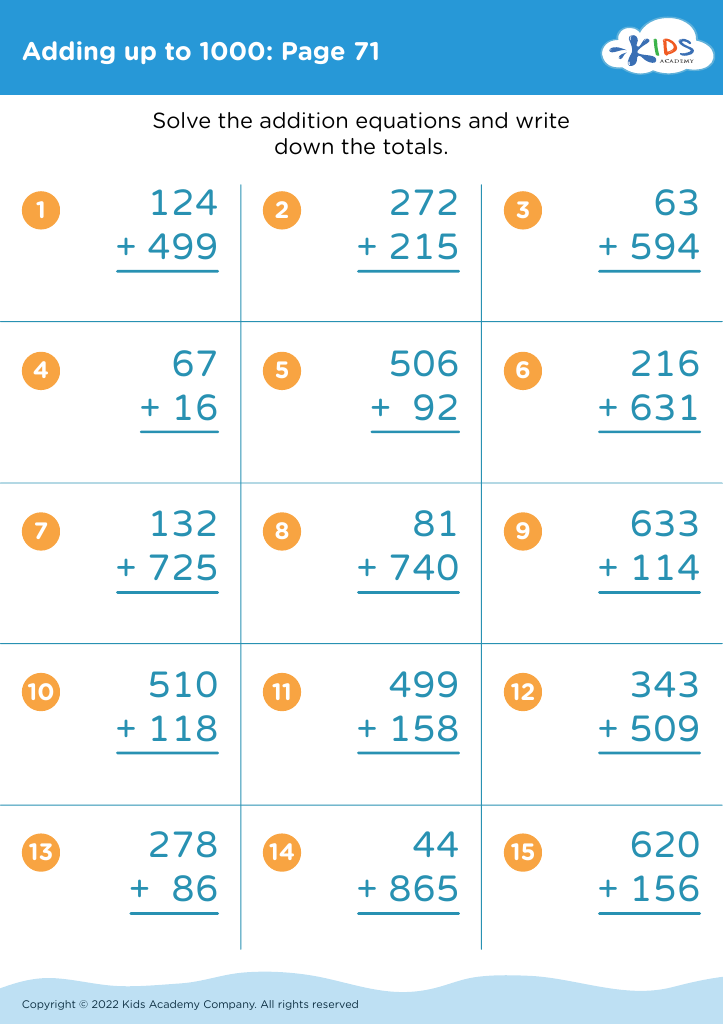
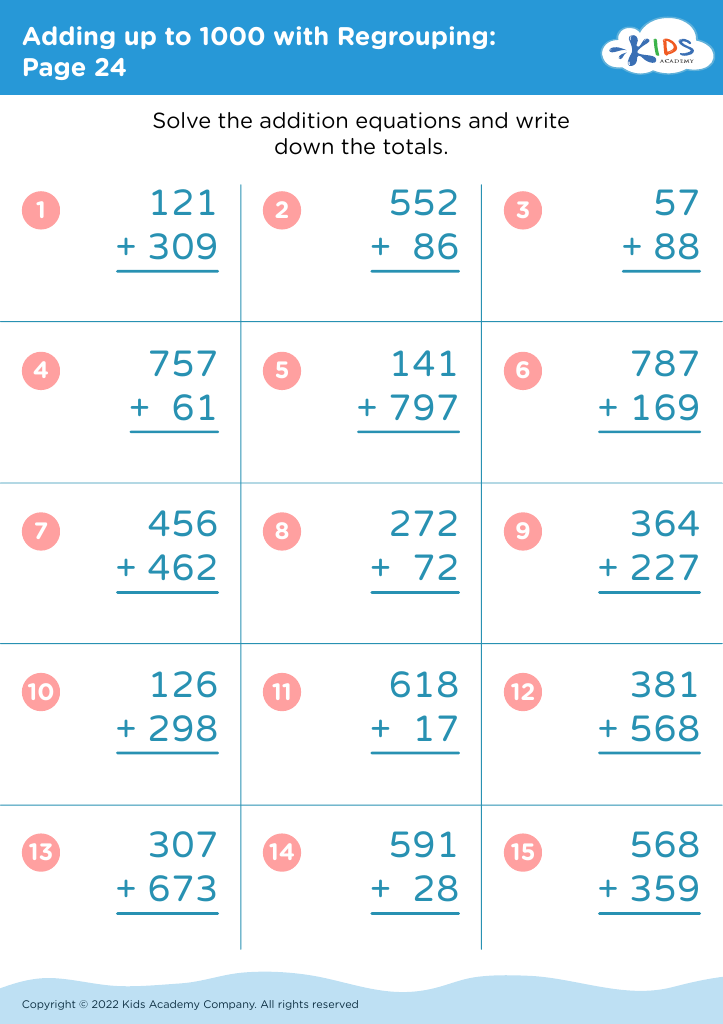
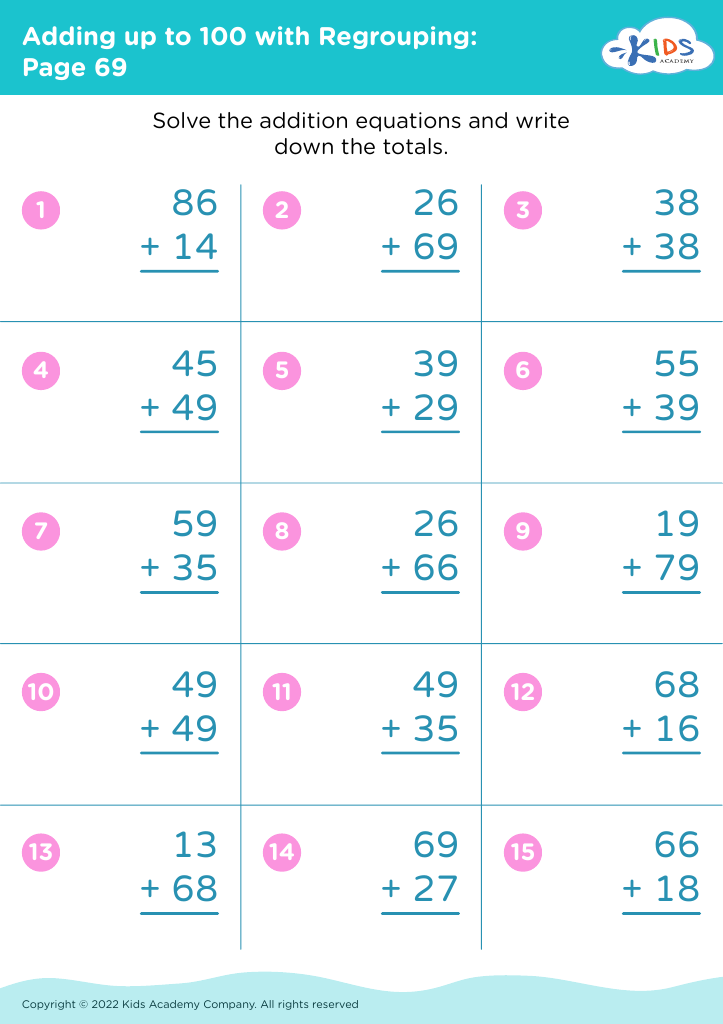








Problem-solving abilities in addition are crucial for 8-year-olds as they bridge the gap between basic arithmetic and real-world applications. At this age, children transition from simple computation to applying their math skills in everyday situations. Developing these abilities enhances their critical thinking and helps them understand numerical relationships, which is foundational for more advanced math concepts.
Parents and teachers should care about fostering these skills because they contribute significantly to a child's overall academic growth and confidence. When children learn to approach addition problems methodically, they cultivate perseverance and resilience in facing challenges, which are vital traits for lifelong learning.
Additionally, improving problem-solving abilities in addition facilitates better comprehension in areas beyond math, such as science and economics, where quantitative reasoning is essential. It empowers children to make informed decisions and develop logical reasoning skills that extend to everyday scenarios, like budgeting their allowance or sharing resources with friends.
Finally, strong problem-solving abilities cultivate a positive attitude towards learning, encouraging students to be curious and engaged. This foundational skill set not only prepares children for future academic endeavors but also equips them to navigate life with enhanced confidence and competence.








