Problem-solving practice Addition Worksheets for 8-Year-Olds
14 filtered results
-
From - To
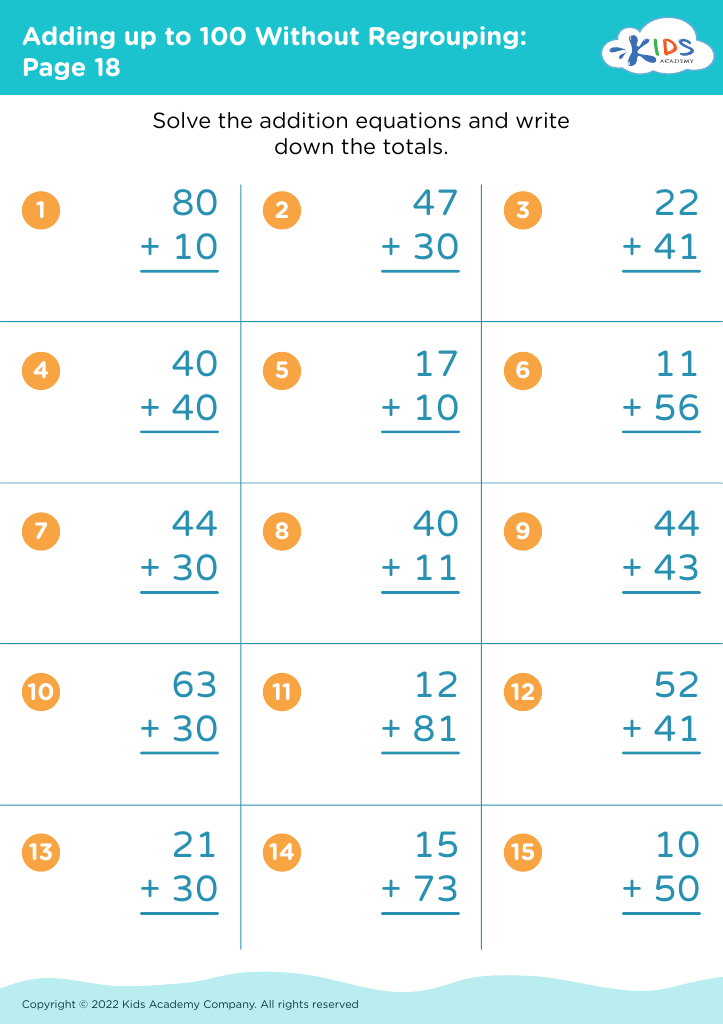
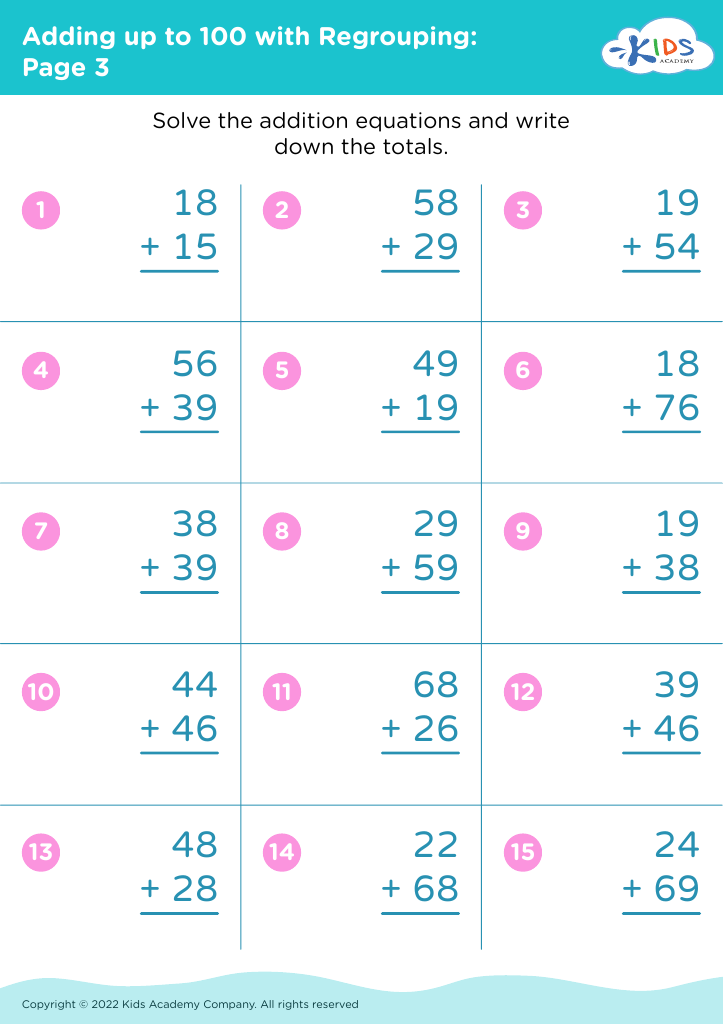
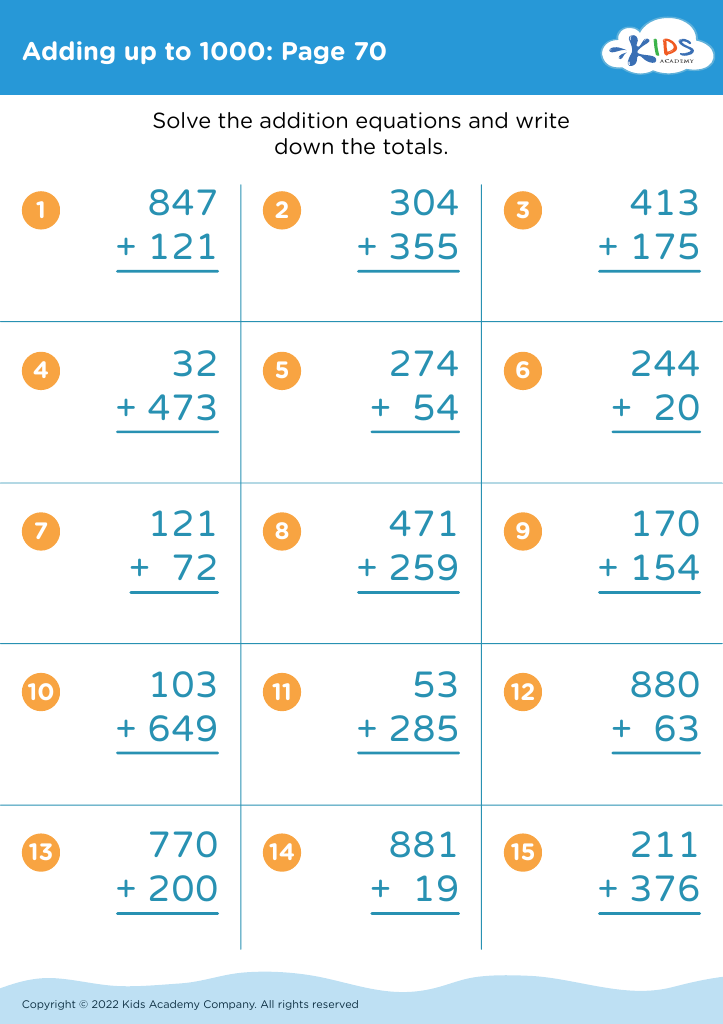
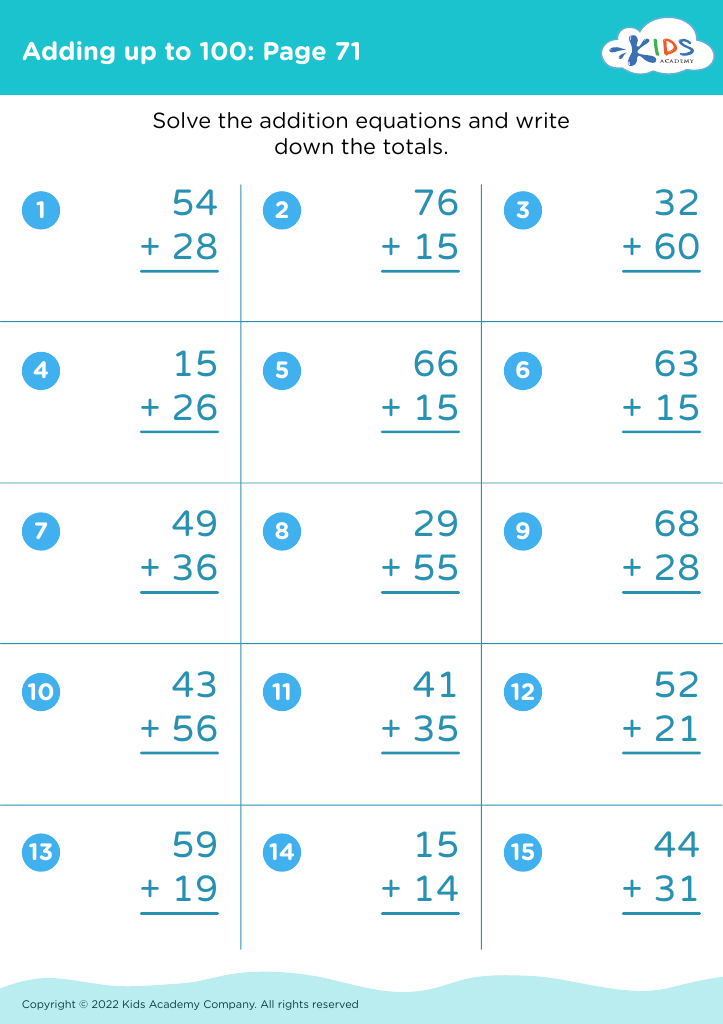
Our Problem-Solving Practice Addition Worksheets for 8-Year-Olds are designed to help young learners enhance their math skills in a fun and engaging way. These worksheets focus on developing critical thinking and problem-solving abilities by presenting various addition challenges suited to their age. Created by educational experts, each worksheet offers diverse exercises that not only improve addition fluency but also boost confidence in math. By incorporating real-world scenarios, these activities ensure that students grasp essential concepts while having fun. Perfect for reinforcing classroom learning or extra practice at home, our worksheets are a valuable resource for any child's math journey.
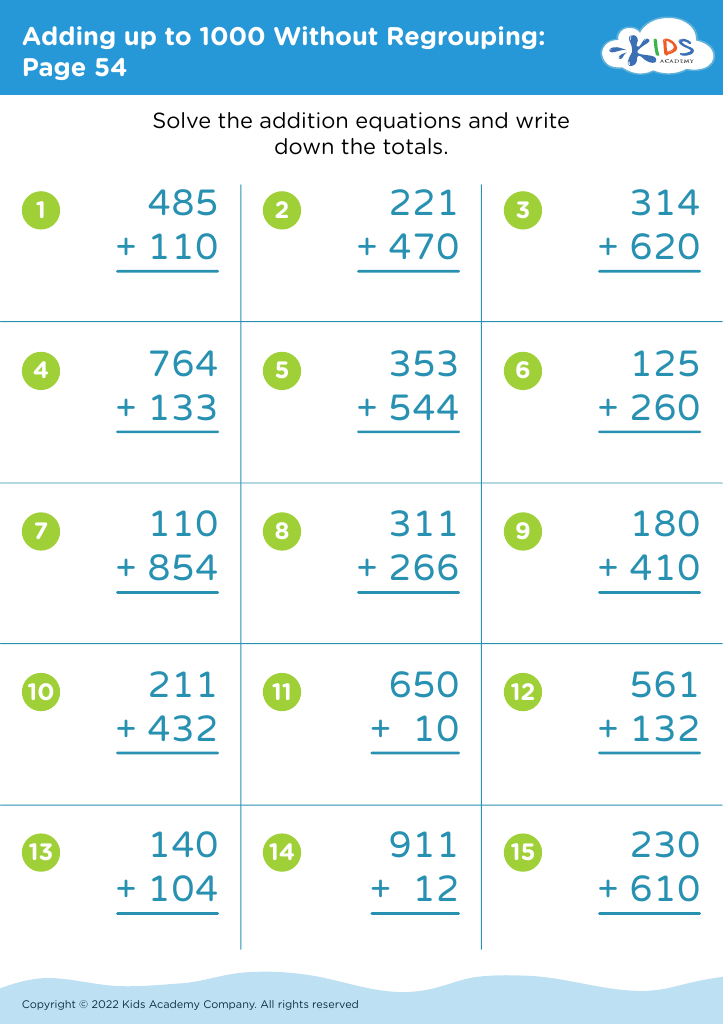
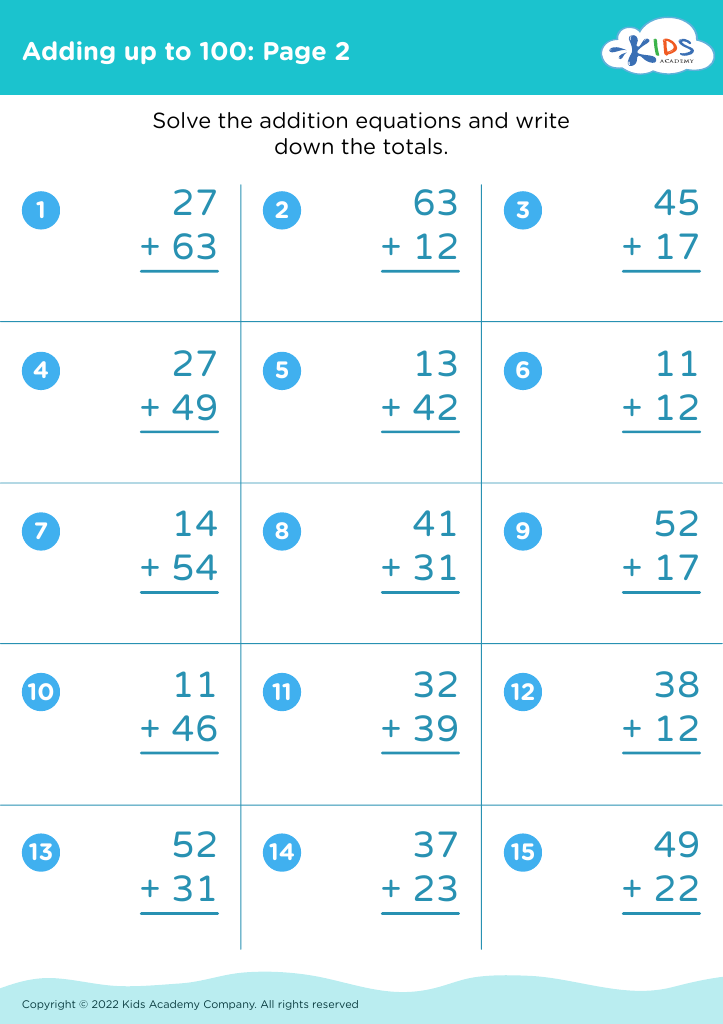
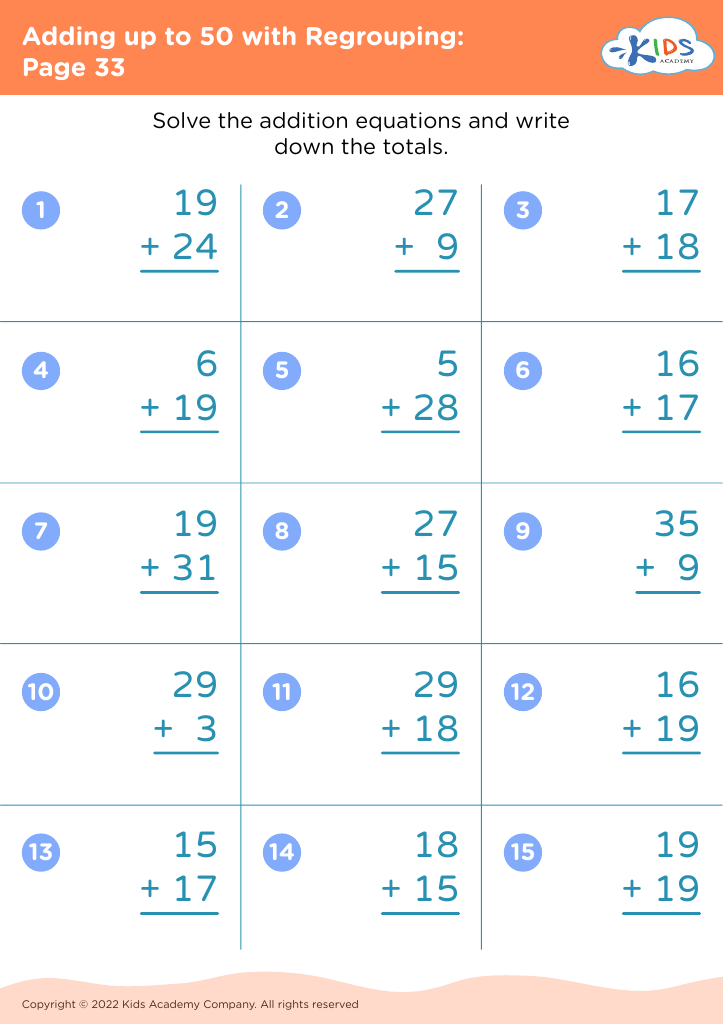
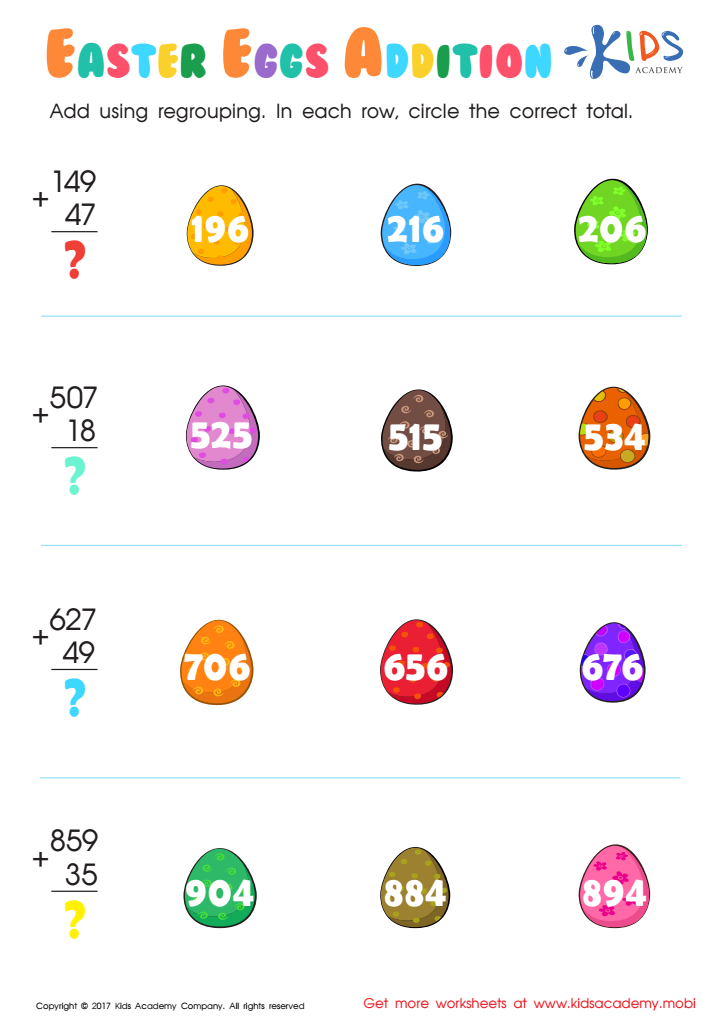
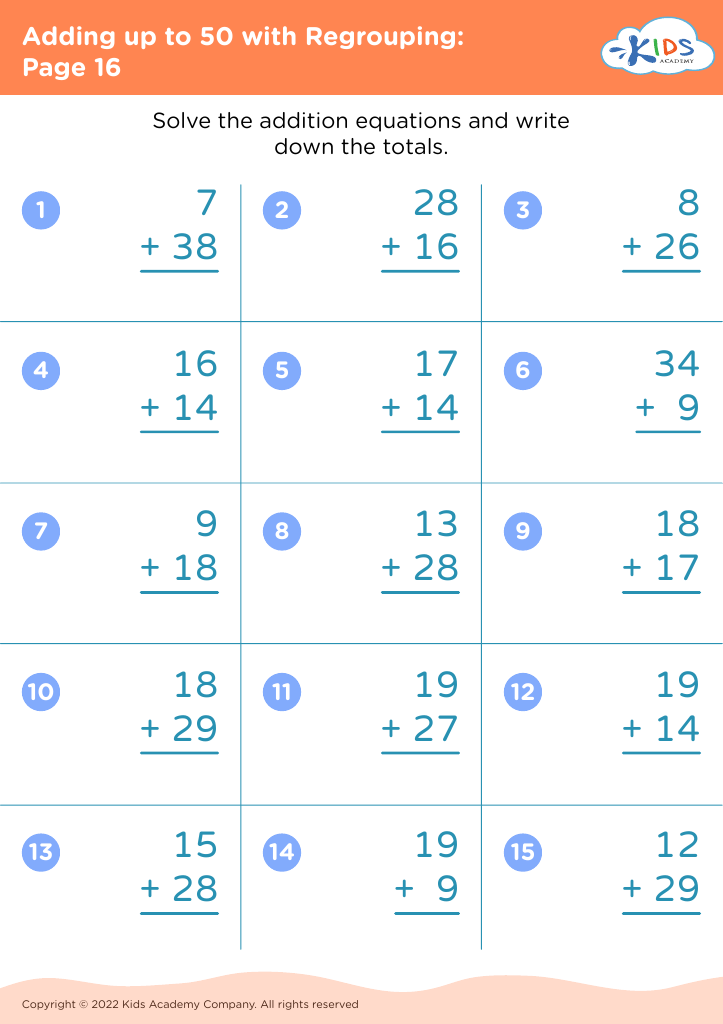
Addition with Regrouping Worksheet
 Assign to My Students
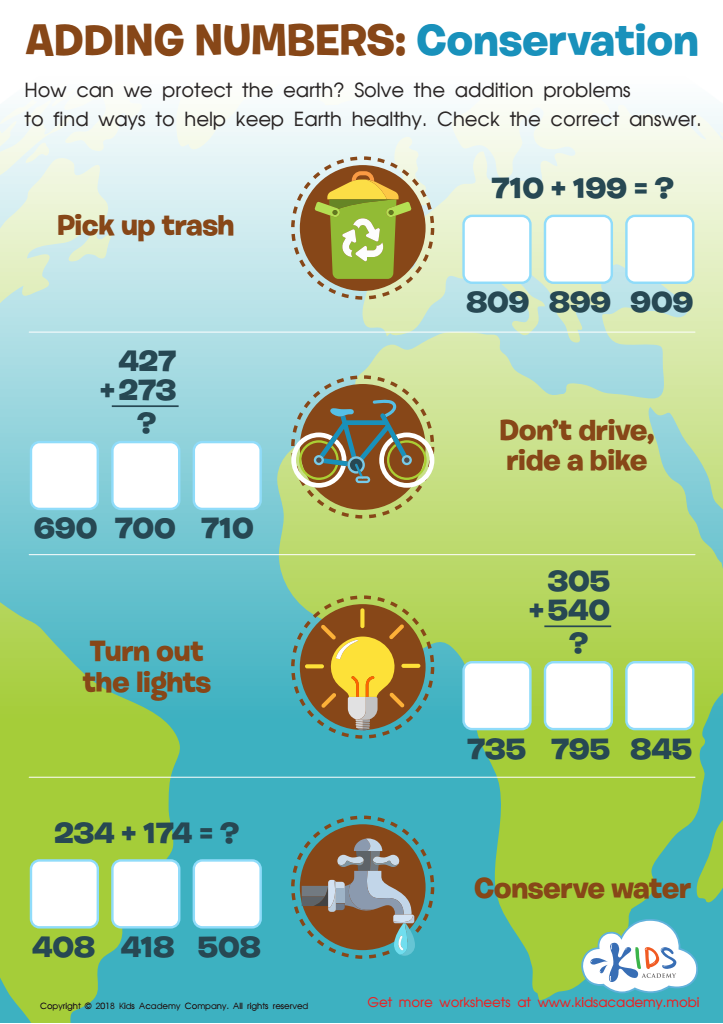
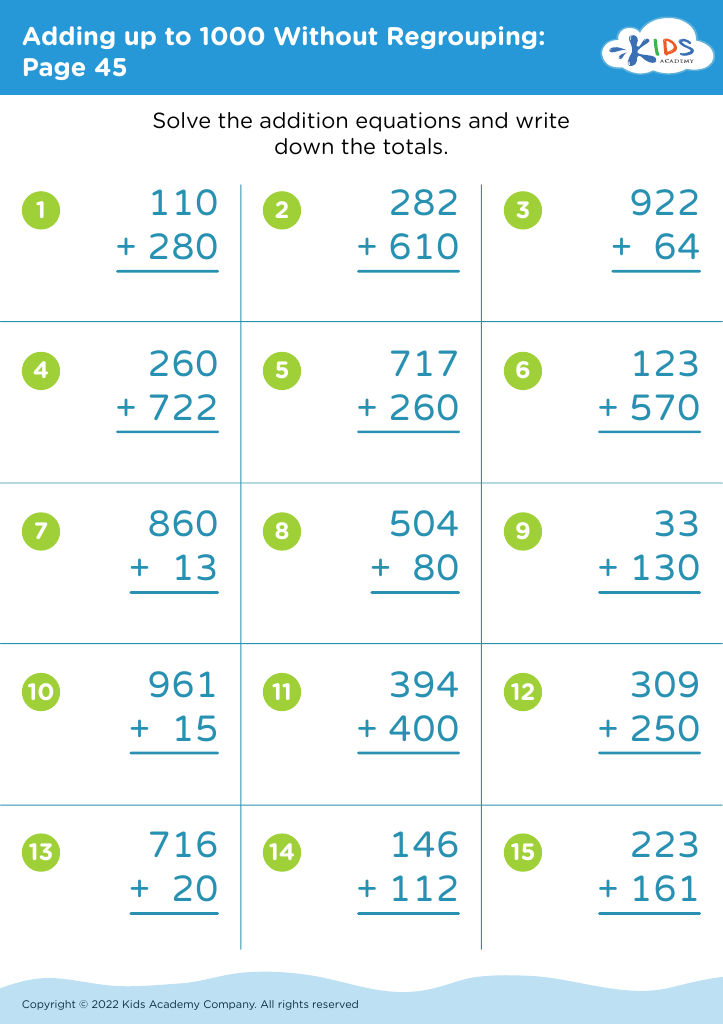
Adding Numbers: Conservation Worksheet
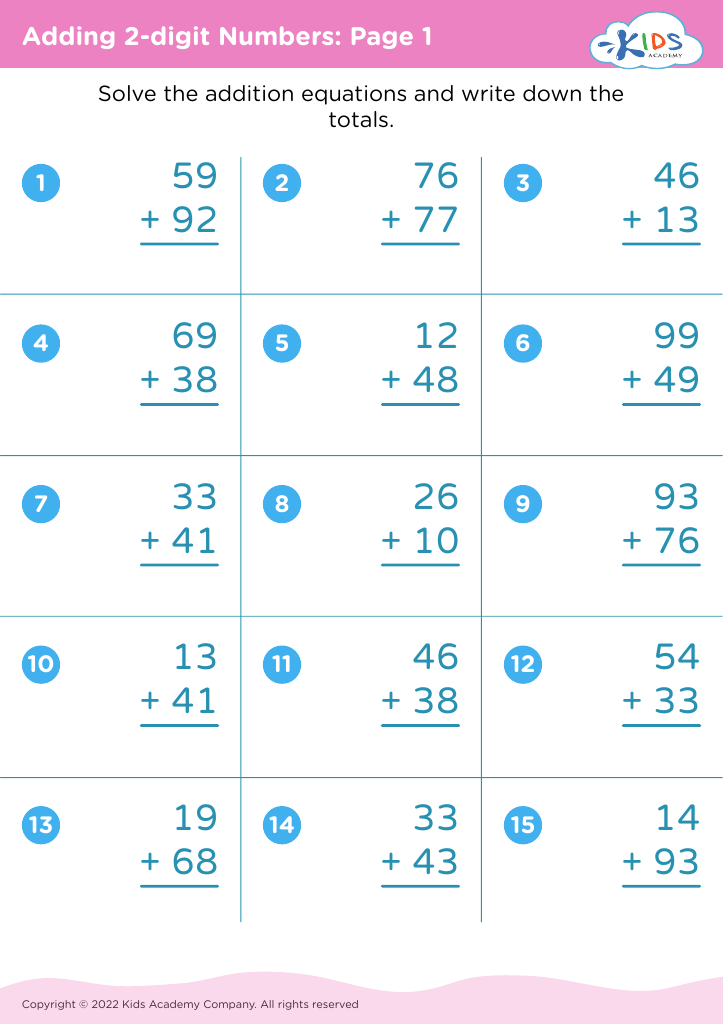
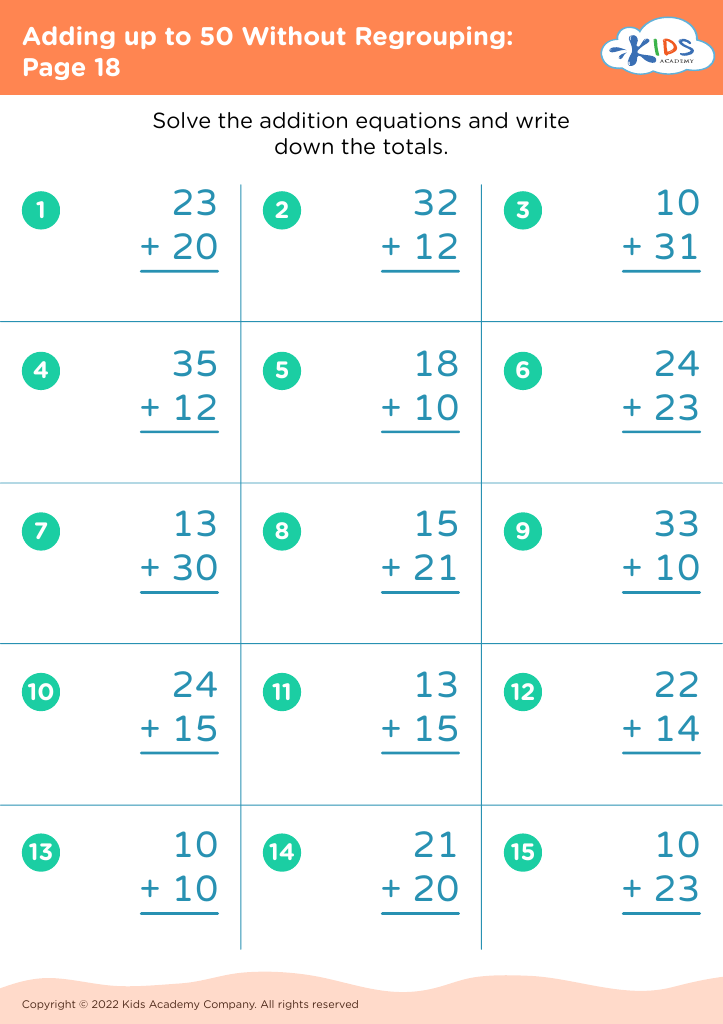
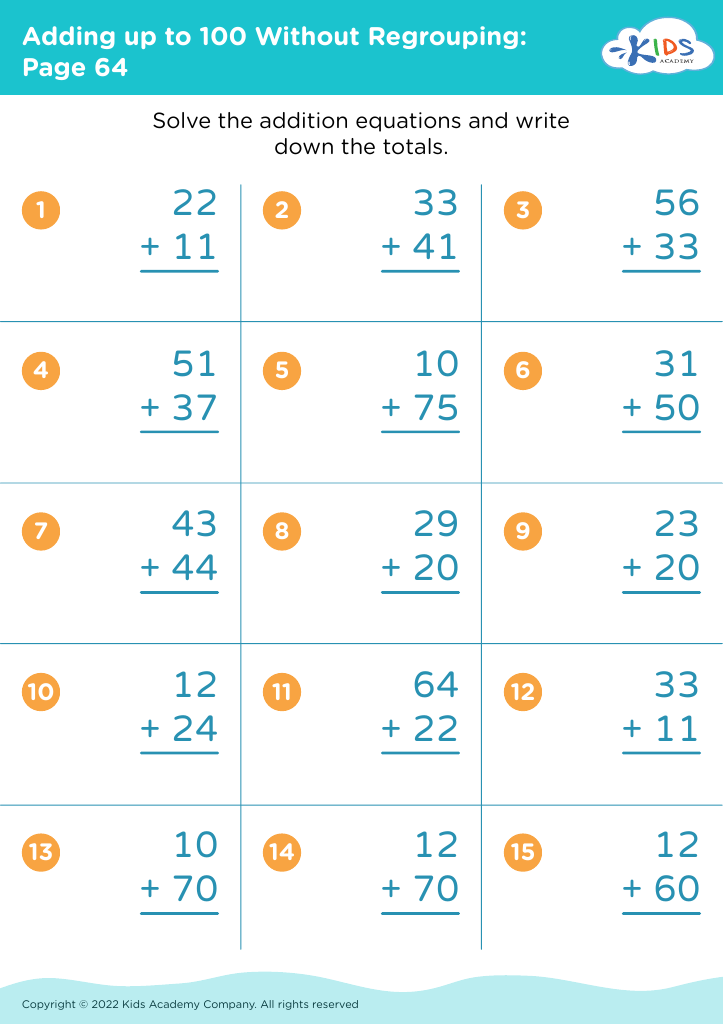




.jpg)



For 8-year-olds, mastering problem-solving skills in addition is crucial as it lays the foundation for more advanced mathematical concepts and promotes logical thinking. At this age, children are transitioning from basic arithmetic to more complex operations, understanding multi-step problems. Engaging in problem-solving practice helps them develop critical thinking and resilience in overcoming challenges, skills essential throughout their lives.
When parents and teachers emphasize addition problem-solving, they encourage children to think beyond rote memorization. This deeper understanding fosters numerical fluency, enabling quicker grasping of new concepts like multiplication and division. Moreover, tackling problems builds confidence; children learn that persistence and analysis lead to solutions, improving their overall academic attitude.
Practicing addition through real-world problems integrates cognitive abilities, making learning relevant and exciting. For instance, calculating the total of items during grocery shopping or adding scores in a game demonstrates practical application, enhancing grasp and retention. Additionally, collaborative problem-solving activities in classrooms promote teamwork and communication skills, essential for their holistic development.
In summary, parents and teachers should value problem-solving practice in addition for 8-year-olds because it develops essential cognitive skills, instills confidence, and establishes a strong mathematical foundation, paving the way for future academic success and practical life competencies.








