Problem-Solving Skills Addition Worksheets for 8-Year-Olds - Page 3
96 filtered results
-
From - To
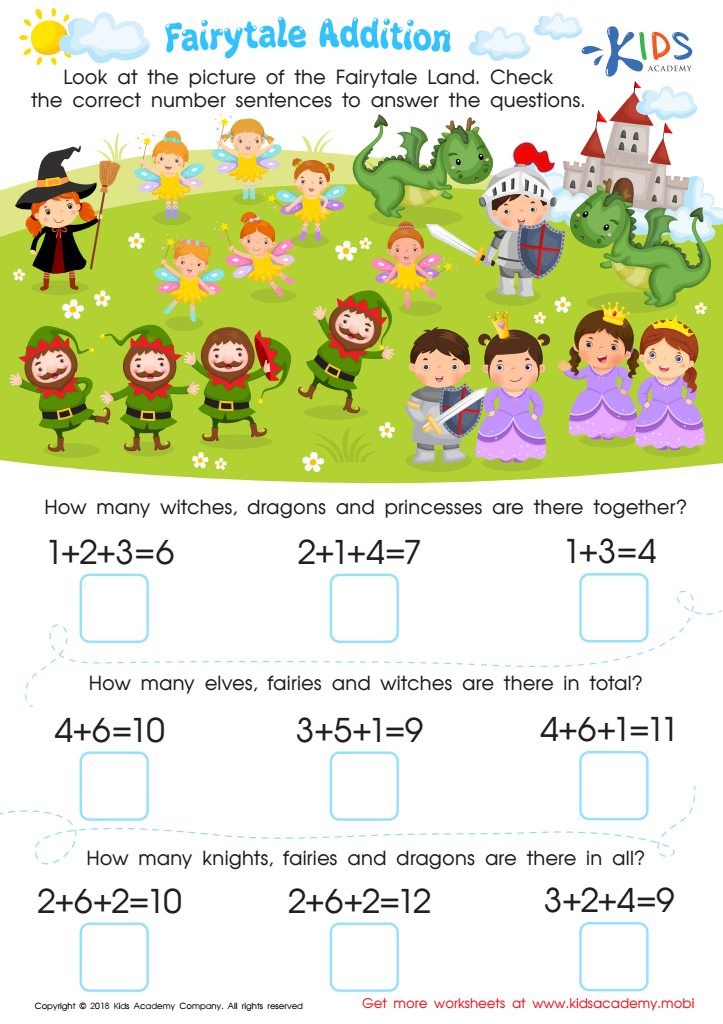
Fairytale Addition Worksheet
 Assign to My Students
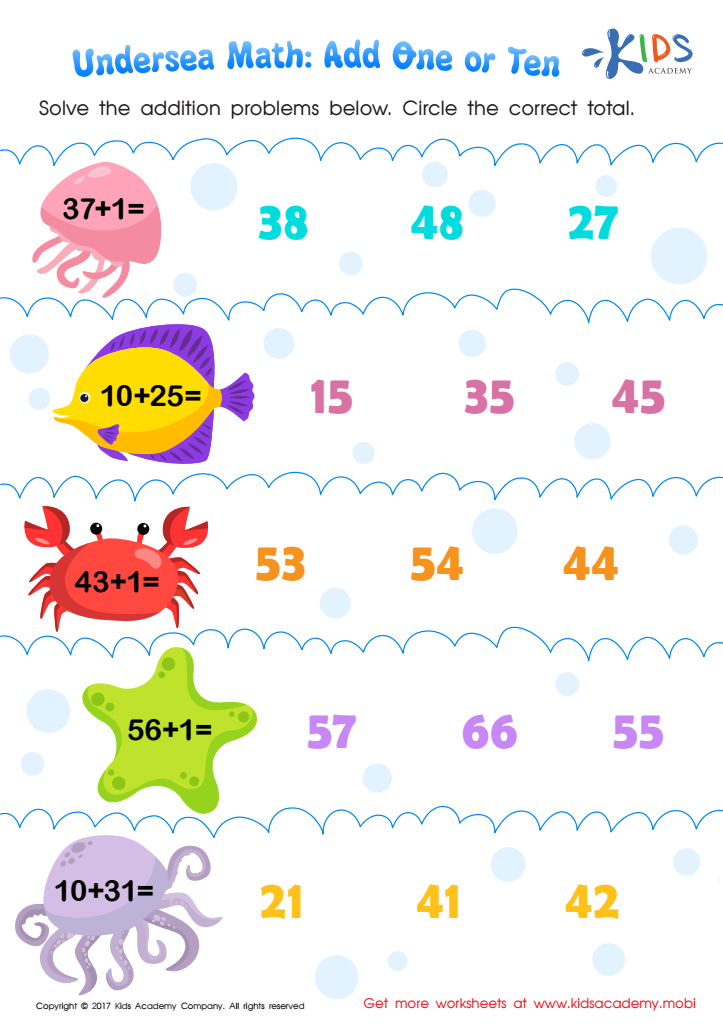
Undersea Math Worksheet
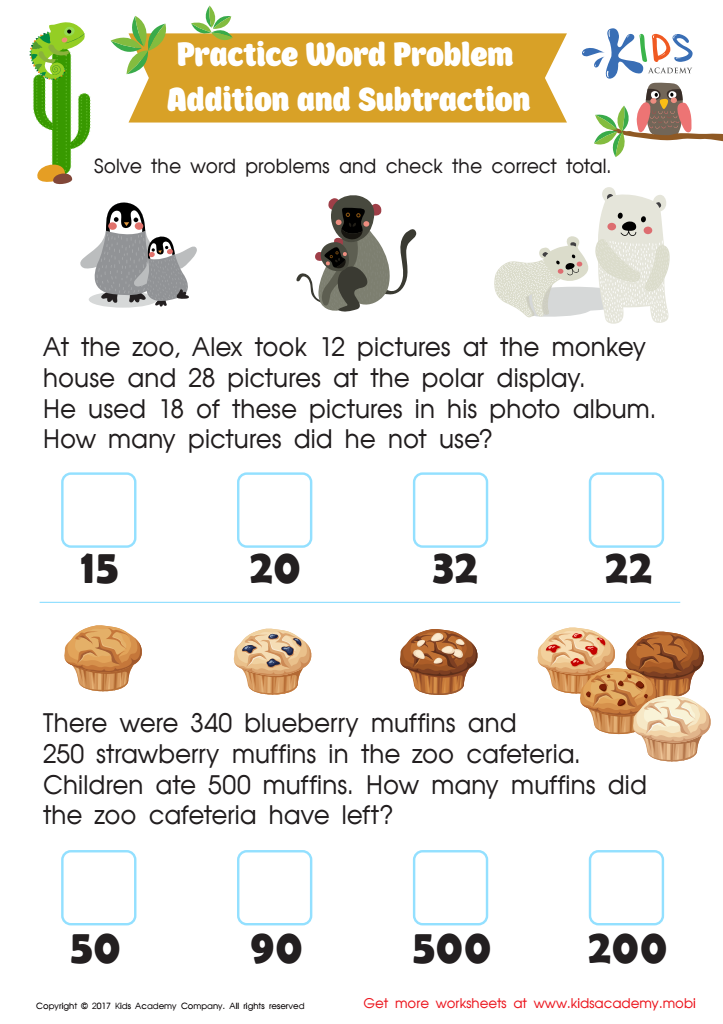
Addition and Subtraction: Word Problems Worksheet
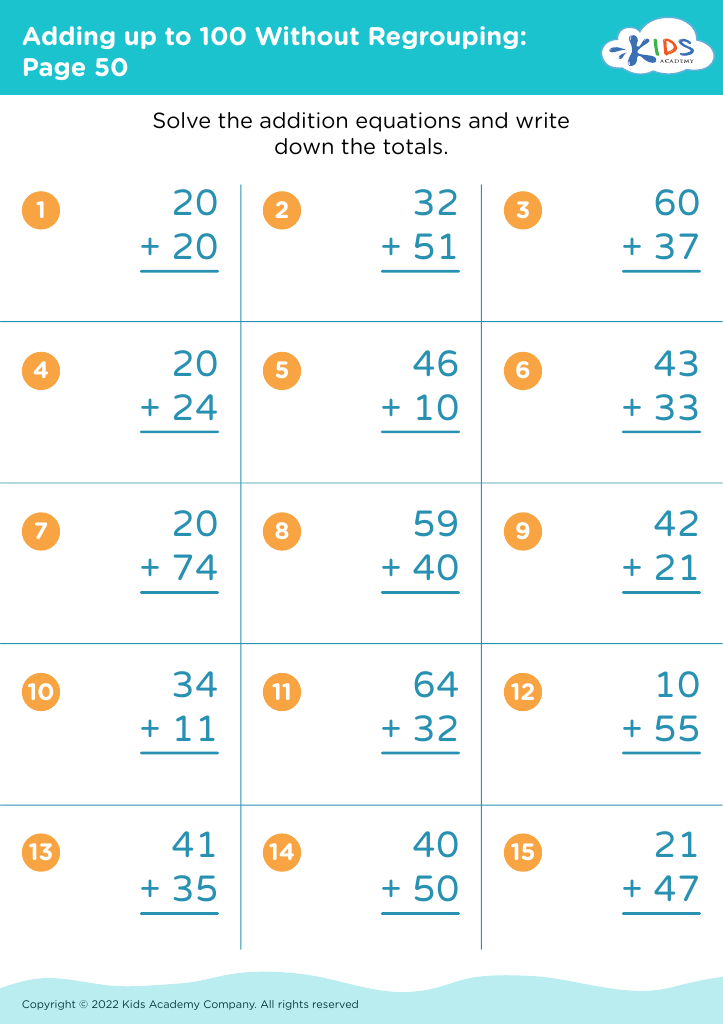
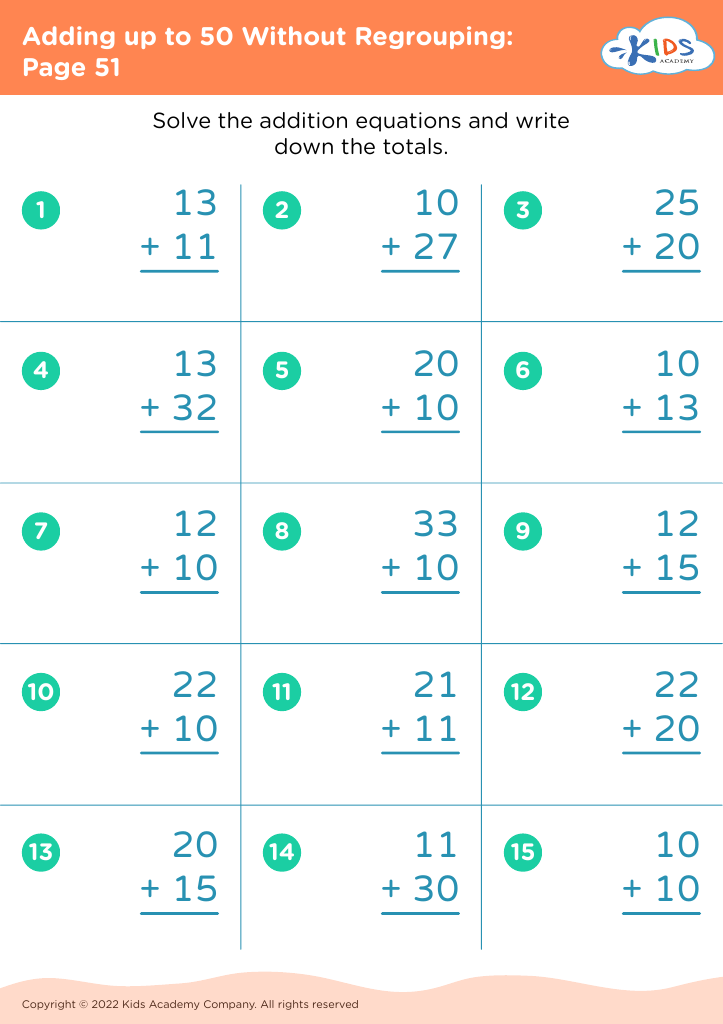
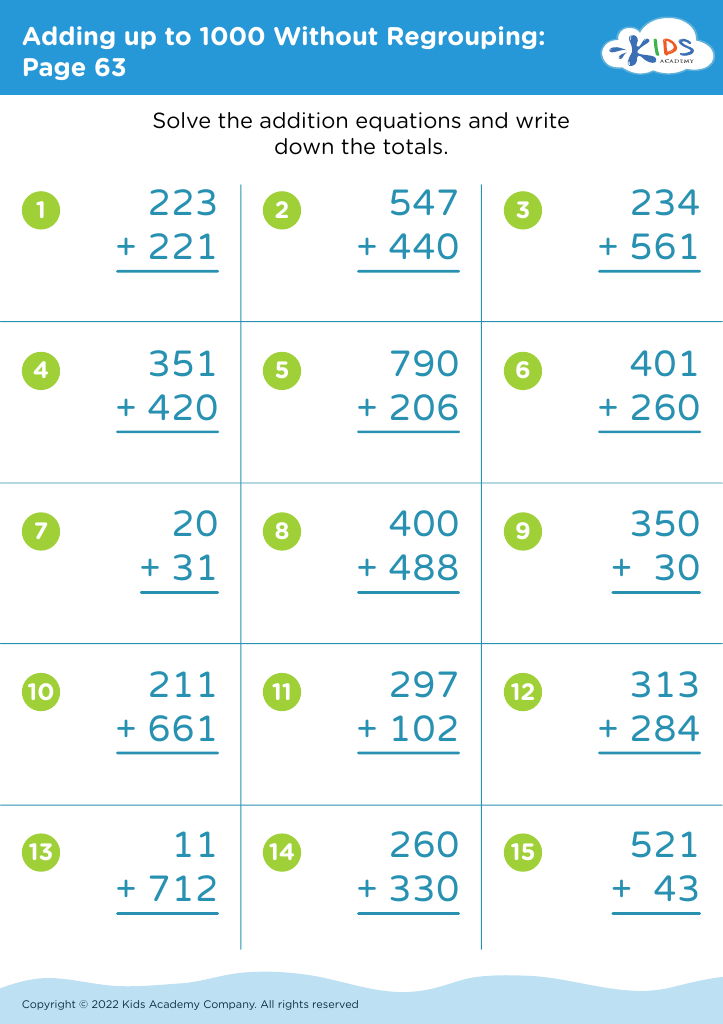
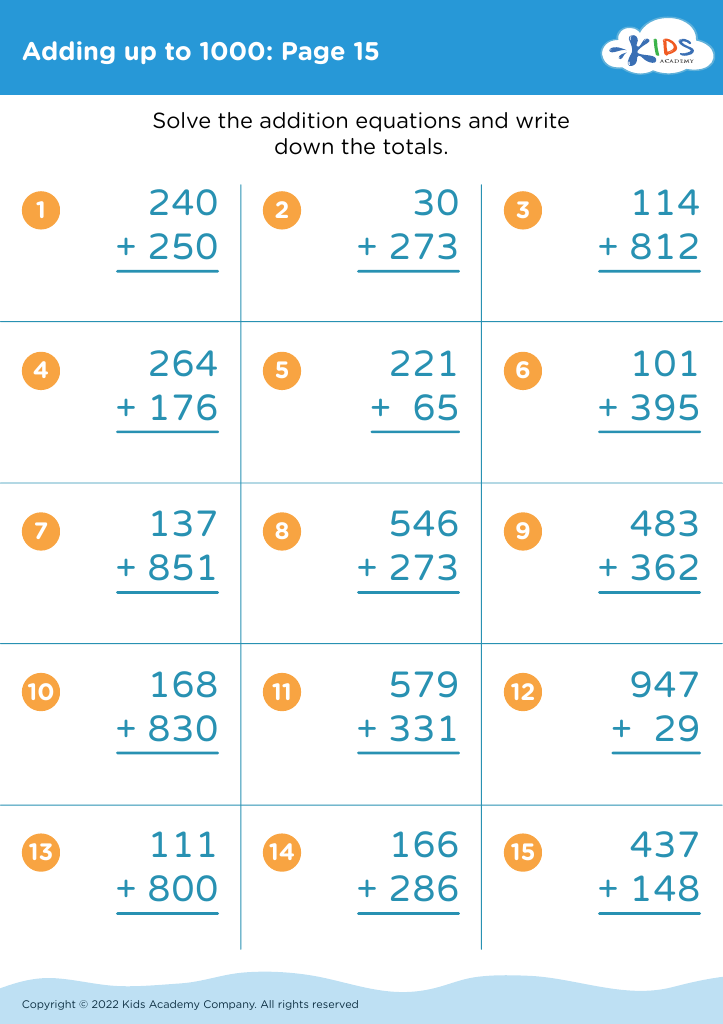








Problem-solving skills, especially in math like addition, are crucial for 8-year-olds as they lay the foundation for critical thinking and resilience. At this age, children transition from basic addition to more complex concepts, making it imperative for parents and teachers to support this development.
Firstly, strong problem-solving abilities enhance confidence. When children successfully tackle addition problems, they develop a sense of achievement that encourages them to take on more challenging tasks. This confidence spills over into other subjects and daily life situations.
Secondly, problem-solving skills foster analytical thinking. Learning how to approach addition problems methodically helps children break down larger, real-world problems into manageable parts. This critical thinking skill is essential, as children encounter increasingly complex math and other subjects as they progress through school.
Furthermore, these skills emphasize perseverance. Learning that not every problem has an immediate solution teaches children the value of patience and effort, qualities that are beneficial throughout life.
Finally, building problem-solving skills in addition respects diverse learning styles. Engaging through games, puzzles, and collaborative activities can make learning enjoyable and relevant, ensuring that children develop a love for learning. Overall, nurturing these skills in young learners enhances their educational journey and future problem-solving capabilities.








