Sorting skills Addition Worksheets for 8-Year-Olds
3 filtered results
-
From - To
Enhance your child's mathematical abilities with our engaging Sorting Skills Addition Worksheets for 8-year-olds. Specifically crafted to combine fun and learning, these worksheets help kids practice addition while honing their sorting skills. Each printable is designed to stimulate critical thinking and improve number sense through interactive, hands-on activities. Perfect for school or home use, they offer an enjoyable way for kids to build essential math foundations. Kids will enjoy solving puzzles and challenges, making addition practice a delightful experience. Visit Kid's Academy to explore our full range of educational resources and watch your child excel in math.
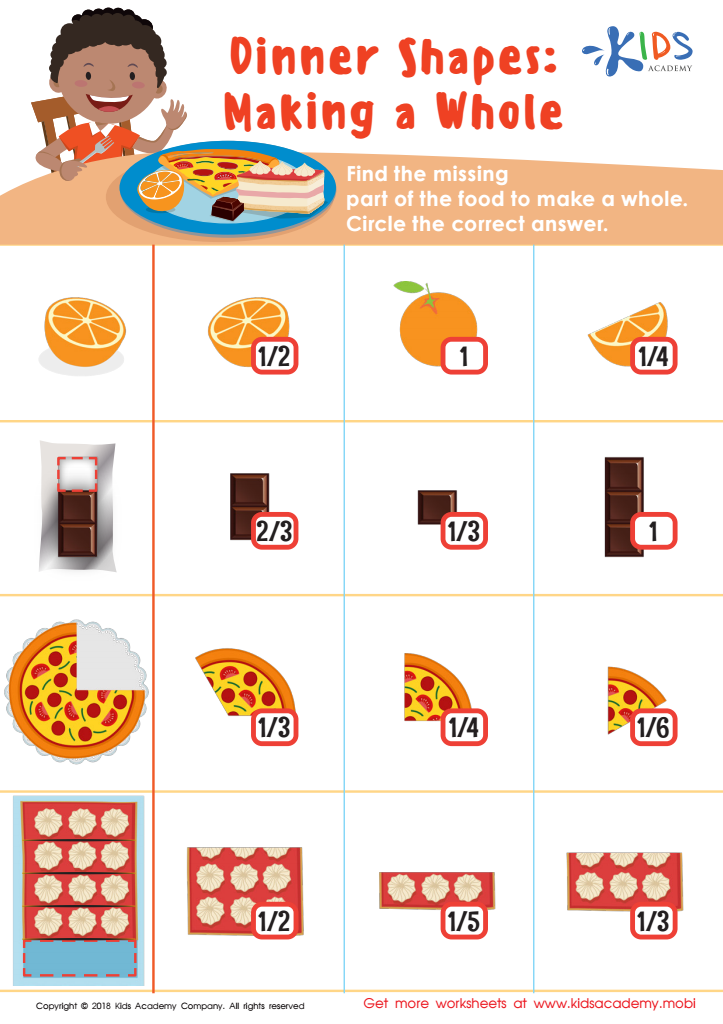
Dinner Shapes: Making a Whole Worksheet
 Assign to My Students
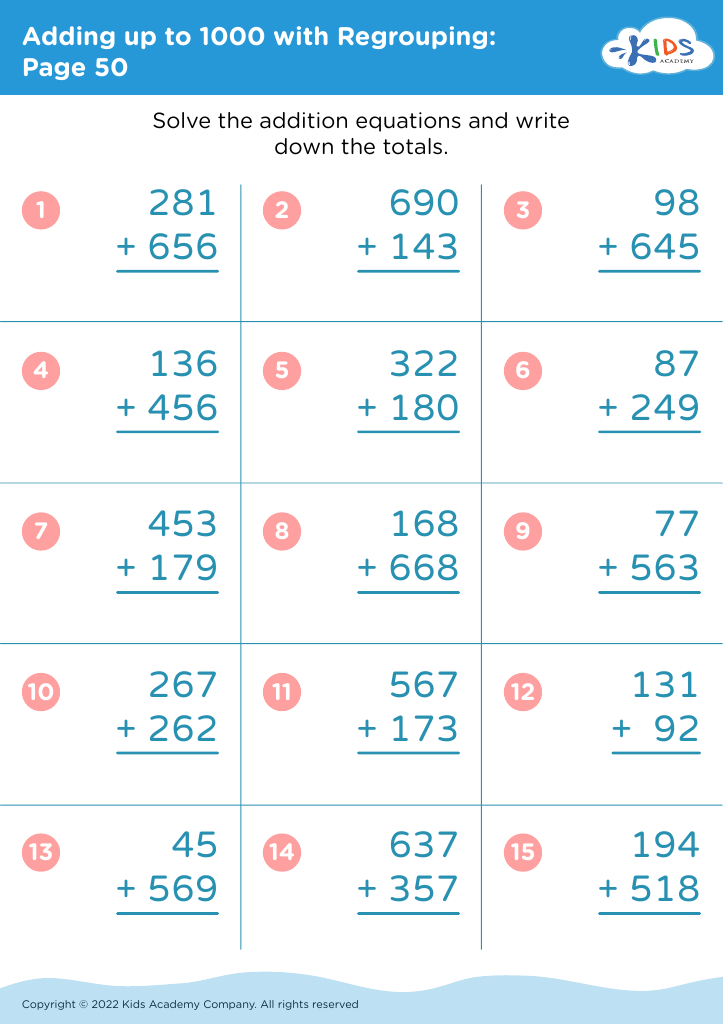
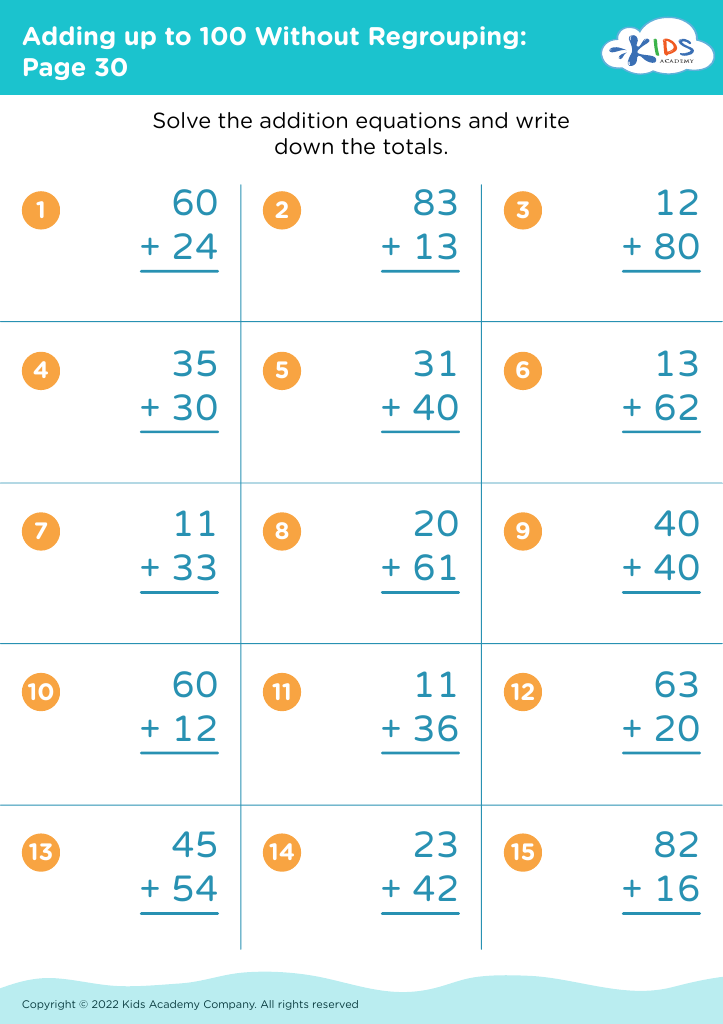






.jpg)

Sorting skills and addition are foundational mathematics skills that are crucial for 8-year-olds as they build a strong base for future learning. Parents and teachers should care about these skills because they play an essential role in cognitive development. Sorting helps children recognize patterns, categorize objects, and understand relationships between different sets. This leads to enhanced problem-solving skills and logical reasoning, which are critical in math and science subjects and in everyday decision-making.
Addition, on the other hand, is the cornerstone of arithmetic. Mastery of basic addition facts ensures that a child can progress to more complex mathematical concepts with ease. It fosters numerical fluency, which means they can compute sums quickly and accurately, boosting their confidence and participation in the classroom. Moreover, addition is integral to understanding money, time, measurement, and data, making it indispensable for functional daily living.
Teaching these skills early on also encourages persistence and patience, as children learn techniques for tackling challenges and validating their answers. This dual focus of developing sorting skills and addition competence equips children not only for academic success but also provides them with a strategic framework for critical thinking and overcoming obstacles both in and out of school.








