Understand patterns Addition Worksheets for 8-Year-Olds
6 filtered results
-
From - To
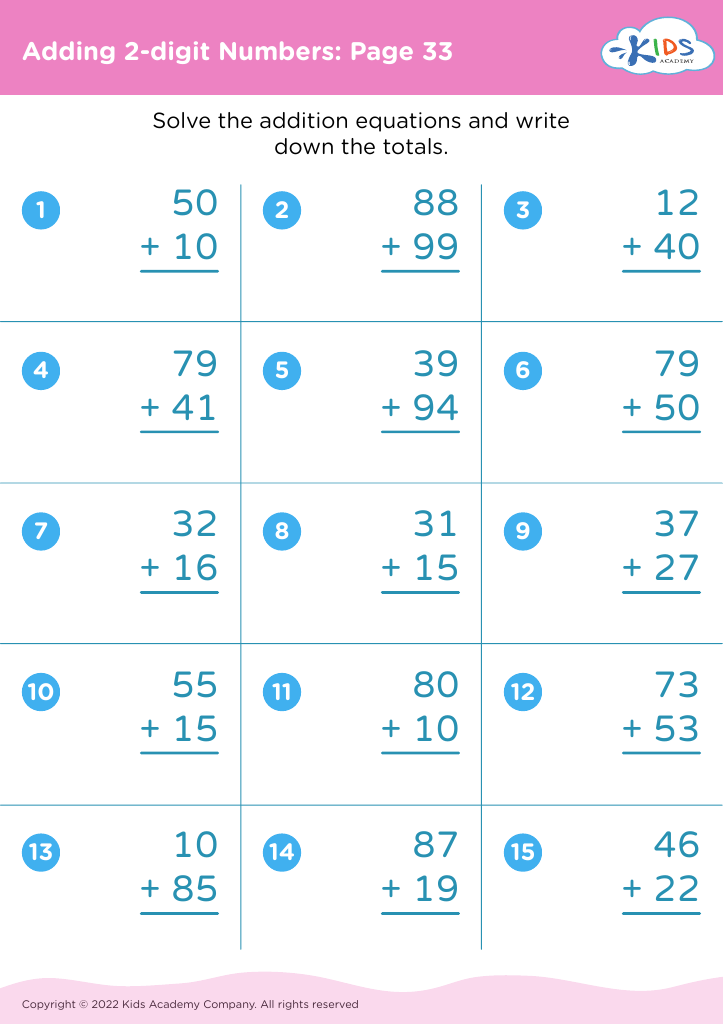
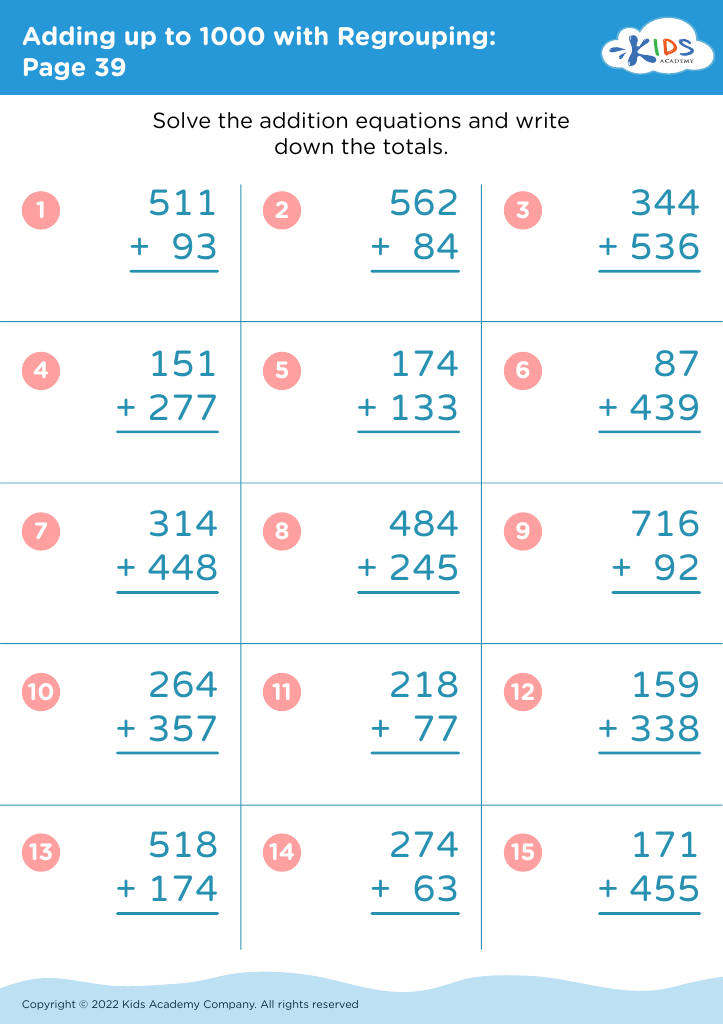
Unlock your child’s mathematical potential with our "Understand Patterns Addition Worksheets" designed specifically for 8-year-olds. These engaging, interactive worksheets help children recognize and explore addition patterns, enhancing their problem-solving skills and numerical fluency. Each worksheet features fun exercises that promote critical thinking, enabling kids to see the relationships between numbers and develop a strong foundation in mathematics. Our resources cater to different learning styles, making it easy for every child to grasp essential addition concepts. Perfect for classroom use or home learning, these worksheets are a valuable tool to boost confidence and proficiency in math. Start your child's learning journey today!
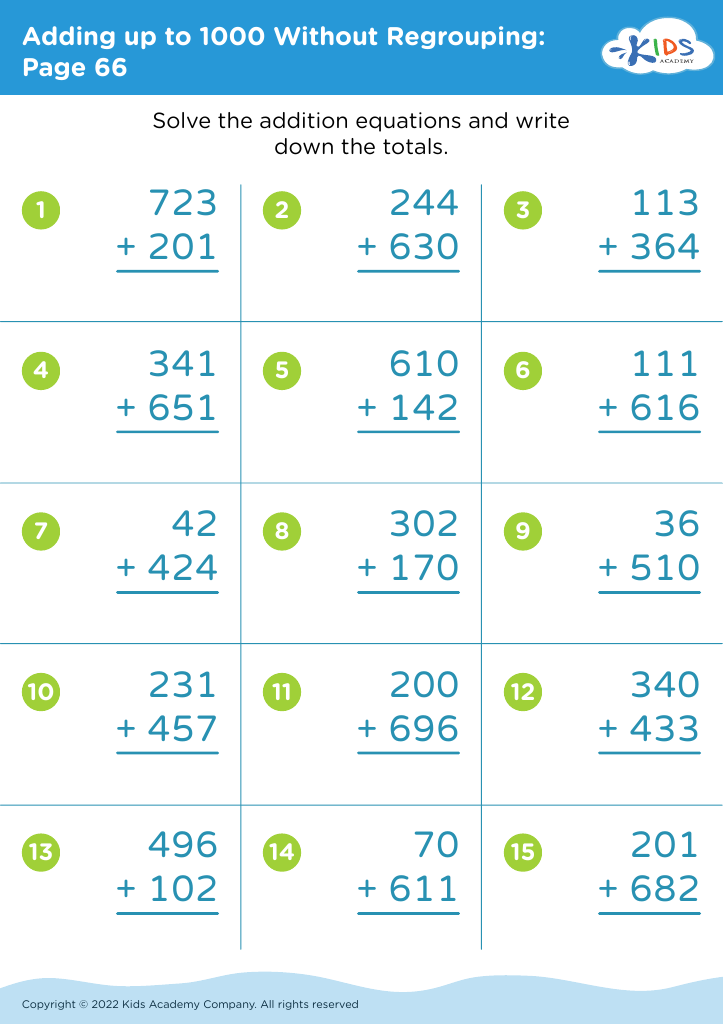
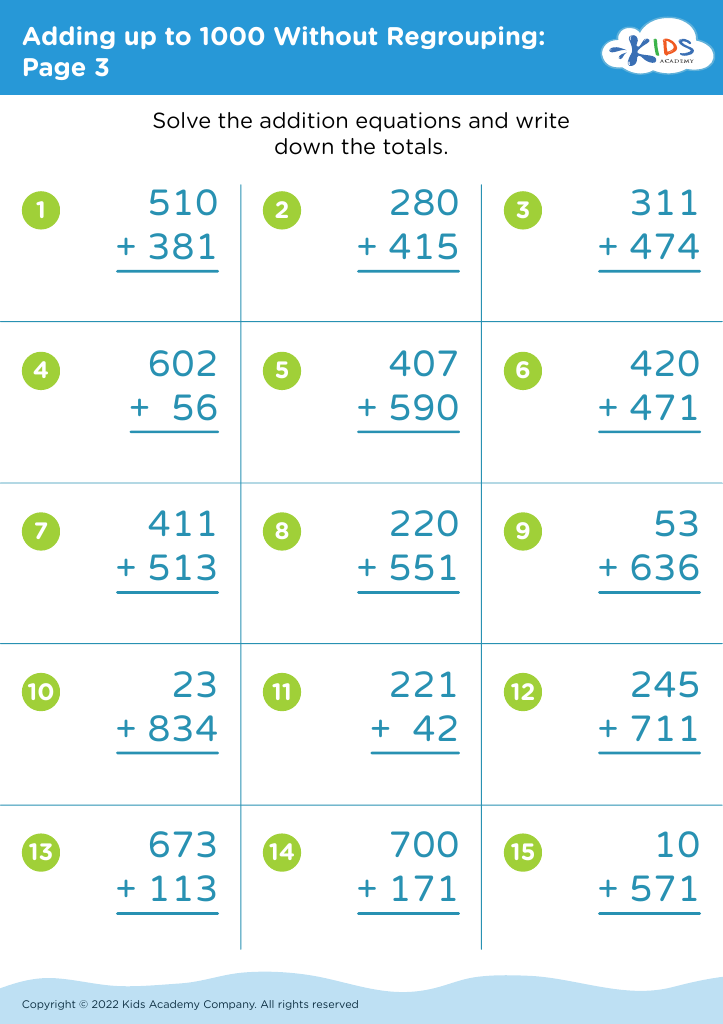
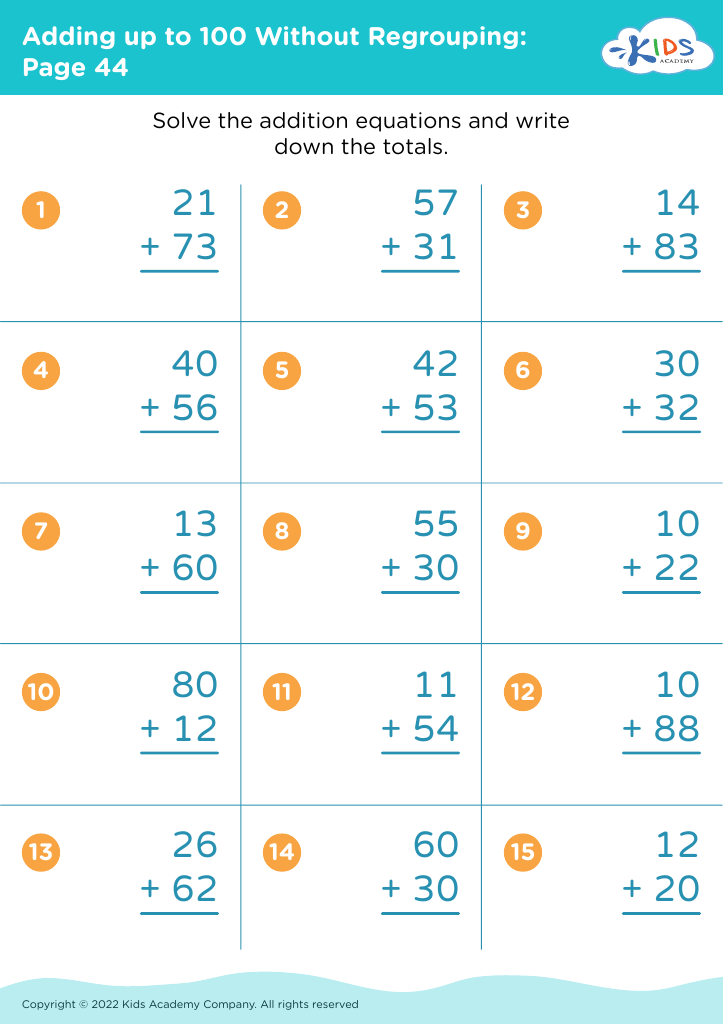
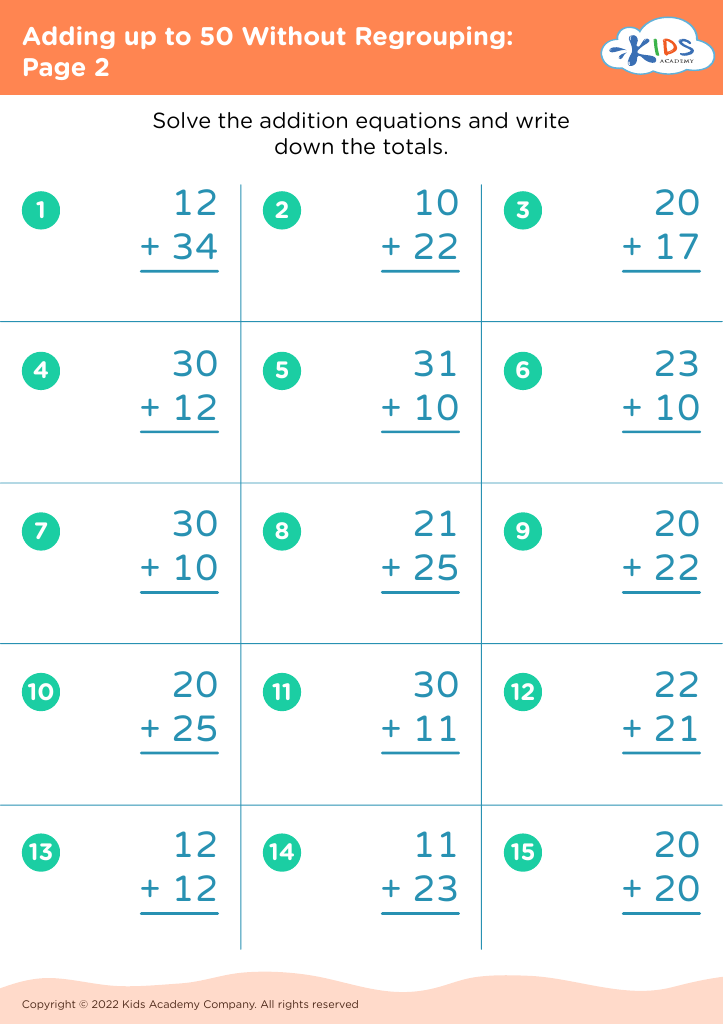







Understanding patterns in addition is crucial for 8-year-olds as it lays the foundation for their mathematical competence. At this age, children are transitioning from basic arithmetic to more complex mathematical concepts. Recognizing patterns helps them understand how numbers work together, enhancing their mental math skills and fostering number sense.
When students identify patterns, such as the commutative property (e.g., 3 + 5 is the same as 5 + 3) or adding in clusters (e.g., 2 + 2 + 2 being the same as 3 + 3), they can solve problems more efficiently. This skill not only improves their speed in calculations but also builds confidence in their abilities. Moreover, understanding patterns encourages problem-solving skills and critical thinking, as children start to recognize relationships among numbers rather than just memorize facts.
Parents and teachers who emphasize this understanding are equipping children with tools that promote a deeper comprehension of math concepts. This could lead to greater success in higher grades, as pattern recognition is also fundamental in algebra and geometry. Ultimately, nurturing this foundational skill helps foster a positive attitude towards mathematics, setting the stage for lifelong learning and enthusiasm in the subject.








