Understanding addition Addition Worksheets for 8-Year-Olds
5 filtered results
-
From - To
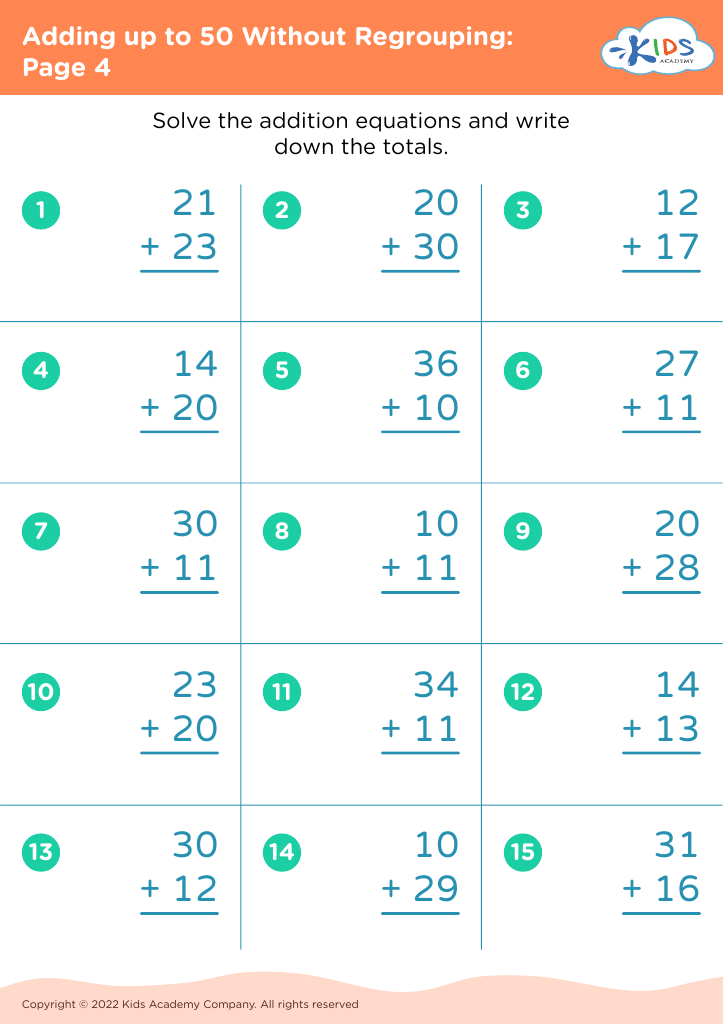
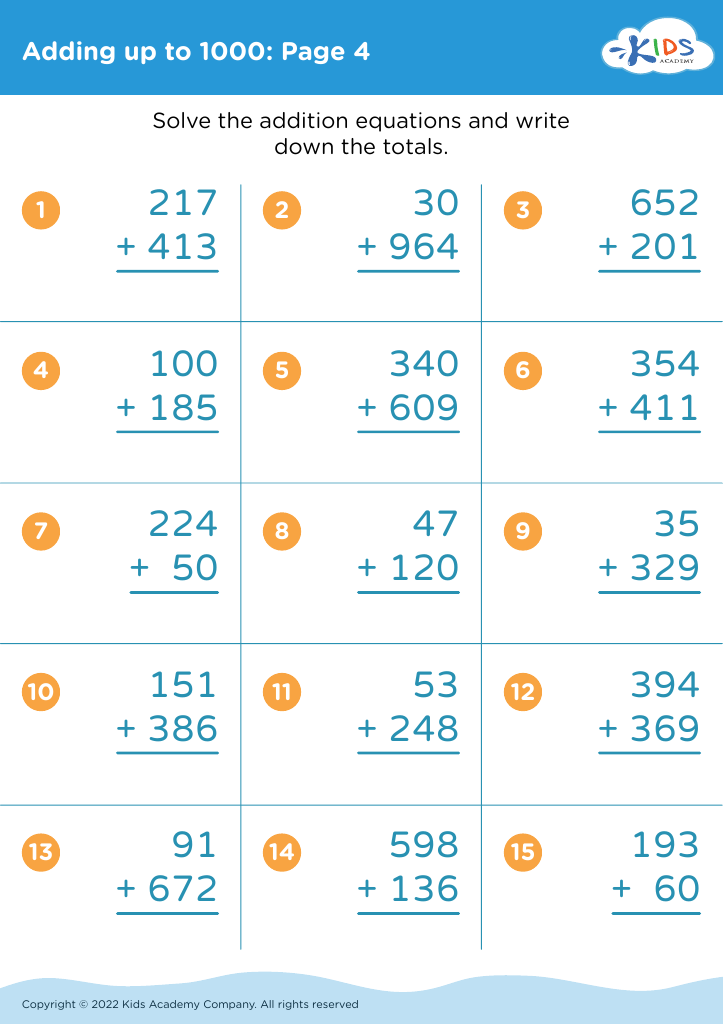
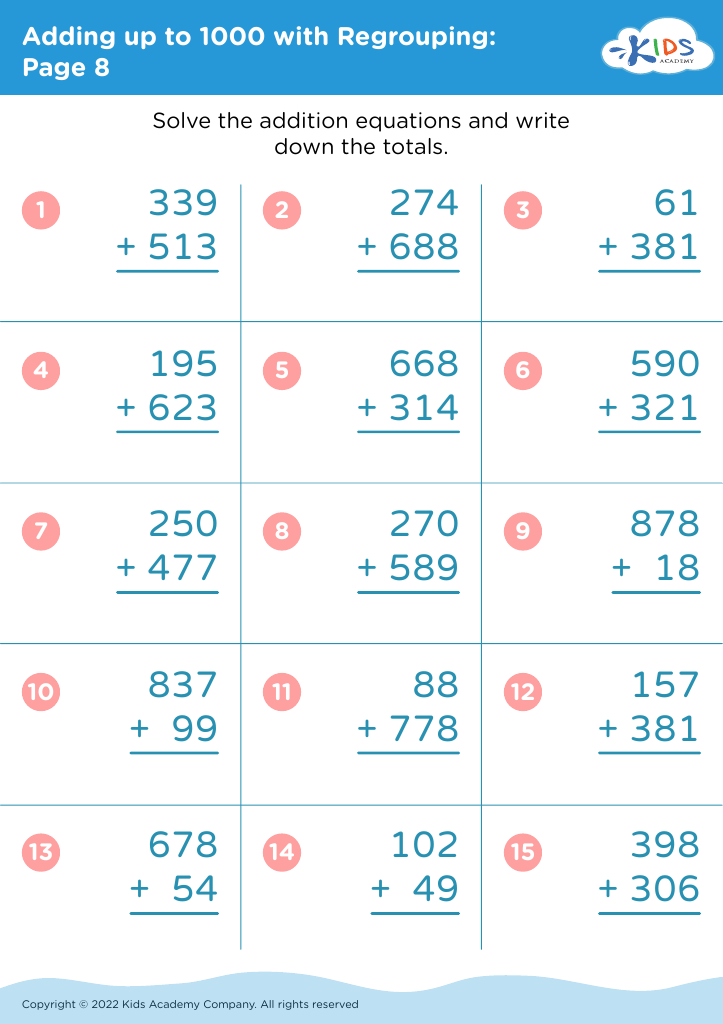
Unlock your child's math potential with our 'Understanding Addition' worksheets tailored for 8-year-olds! These engaging resources help young learners grasp the fundamentals of addition, incorporating fun visuals and relevant real-world scenarios. Each worksheet is designed to deepen comprehension through practice, allowing students to master adding numbers, solving basic word problems, and developing their mental math skills. Perfect for reinforcing classroom learning or providing extra challenges at home, our worksheets encourage critical thinking and boost confidence. Explore a variety of interactive exercises that make learning addition enjoyable and effective. Start building strong mathematical skills today!
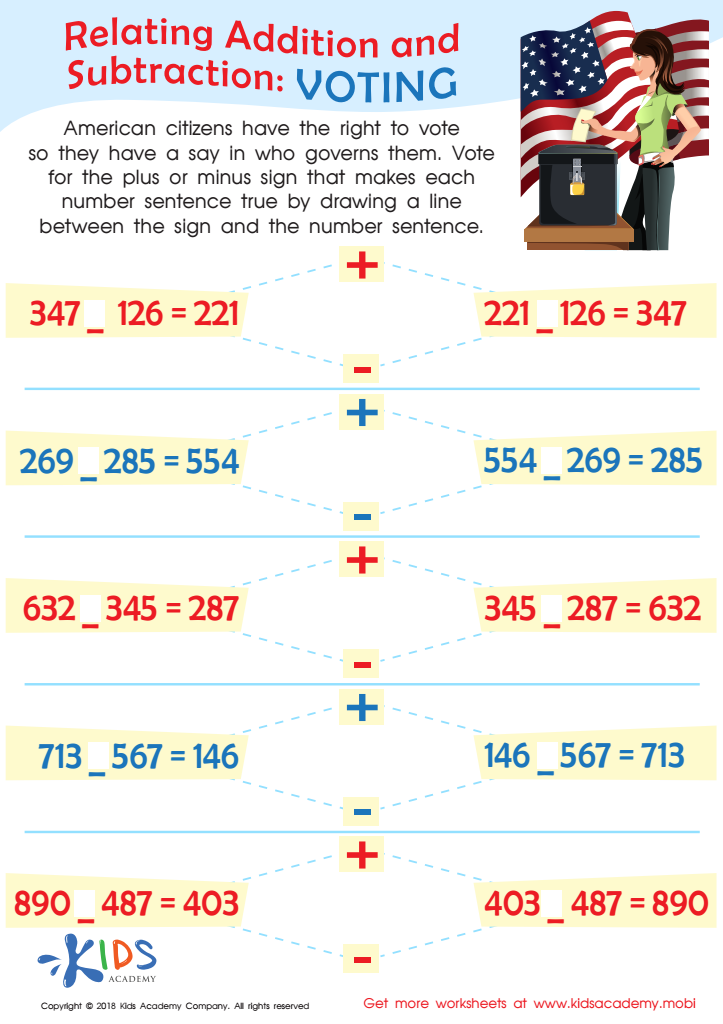
Voting Worksheet
 Assign to My Students
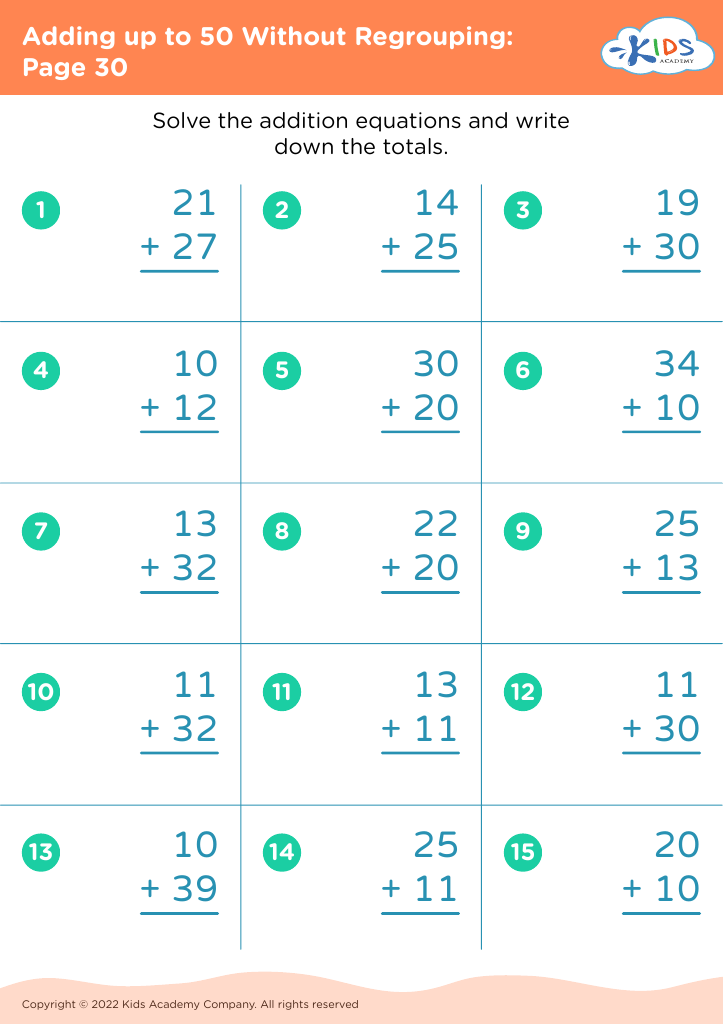








Understanding addition is crucial for 8-year-olds, as it lays the foundation for their overall mathematical development. At this age, children typically transition from simple arithmetic to more complex mathematical concepts, such as subtraction, multiplication, and even basic division. When parents and teachers actively engage with children in understanding addition, they help promote not only numerical fluency but also critical thinking skills.
Moreover, a solid grasp of addition enhances a child's confidence in their abilities, encouraging a positive attitude toward mathematics. As children become adept at adding numbers, they can tackle word problems, participate in real-life math applications (like budgeting or measuring), and develop problem-solving skills that will benefit them in future academic endeavors.
Additionally, early mastery of addition instills in children the ability to recognize patterns and relationships between numbers. This cognitive development is vital for successful learning in subjects beyond math, including science and engineering. For parents and teachers, fostering a robust understanding of addition is an investment in a child's educational journey, potentially leading to greater academic achievement and lifelong skills in critical reasoning and numeracy. By prioritizing addition learning in this key stage, adults help set the stage for a successful, confident learner.








