Understanding directions Addition Worksheets for 8-Year-Olds
3 filtered results
-
From - To
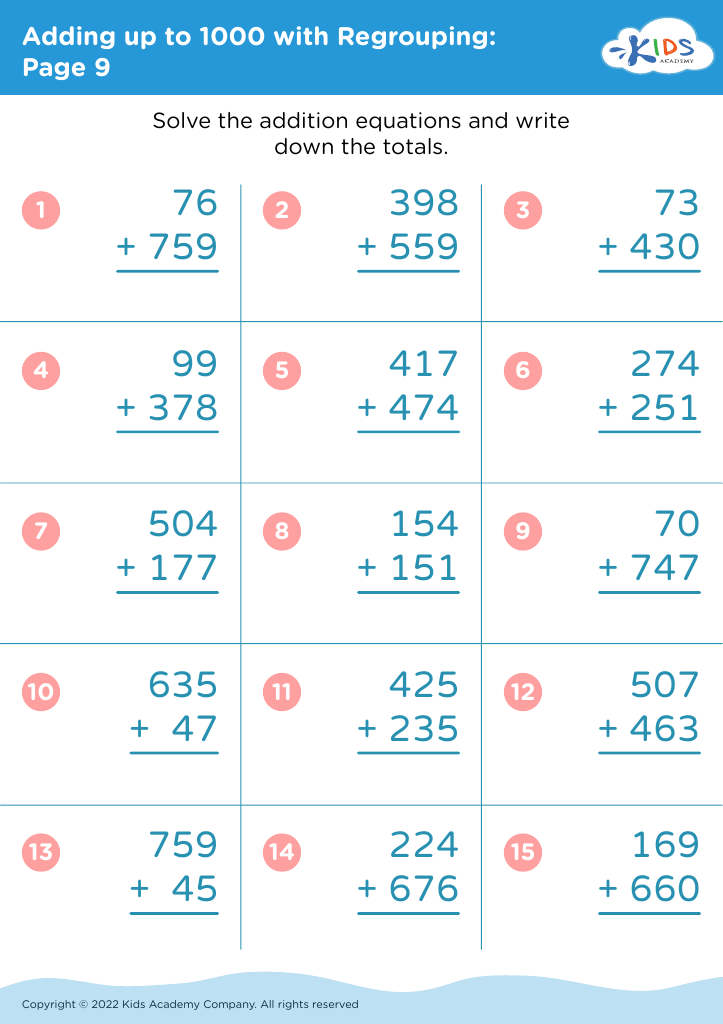
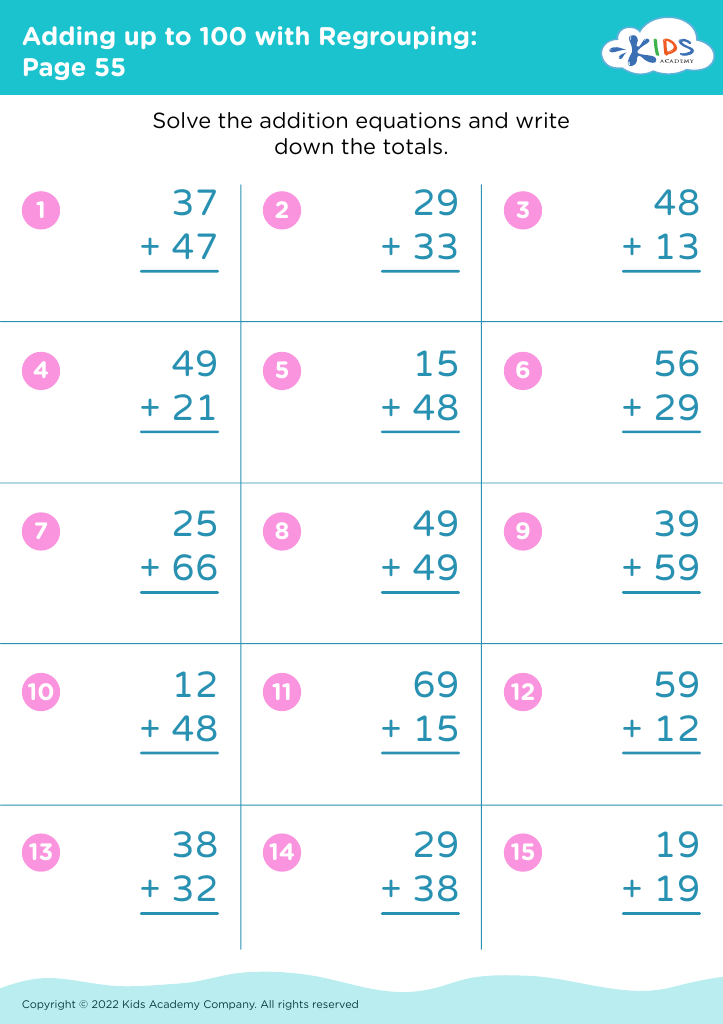
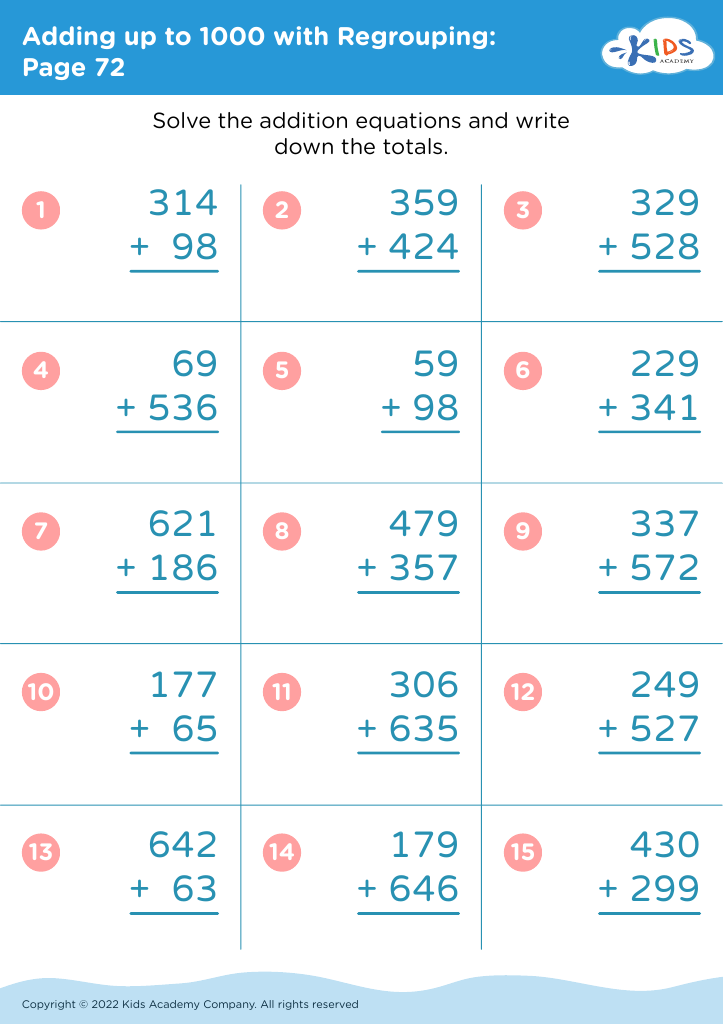
Help your 8-year-old master addition with our "Understanding Directions Addition Worksheets"! These engaging worksheets are designed to enhance mathematical skills while emphasizing the importance of following instructions accurately. Each activity encourages students to practice addition through a variety of tasks, including word problems and interactive exercises. By learning to interpret directions effectively, children develop critical thinking and problem-solving abilities that are essential for future academic success. Our worksheets are suitable for both classroom and home use, providing a fun and productive way for children to reinforce their math skills. Download now and support your child’s educational journey!








Understanding directions in addition is crucial for 8-year-olds, as it lays foundational skills for mathematical proficiency and critical thinking. At this age, children typically transition from simple counting to more complex problem-solving. By comprehending verbal and written directions, they enhance their ability to follow multi-step instructions, which are vital in both mathematics and daily life.
Parents and teachers should concern themselves with developing these skills since early support fosters confidence and independence in learning. When children clearly understand addition directions, they’re better equipped to tackle challenges, improving their overall academic performance. This skill also fosters greater communication, as children learn to articulate their understanding and intent.
In addition, grasping directions contributes to cooperative learning. Children often collaborate in group activities; thus, good directional comprehension allows them to navigate tasks more effectively with peers. Such skills extend beyond math, impacting reading, science, and social studies, all of which require close attention to instructions.
Ultimately, caring about understanding directions in addition empowers children to become strategic thinkers, enhancing their ability to problem-solve in various contexts. This foundational skill is essential for building a positive attitude towards learning and success in future educational pursuits.








