Understanding division Addition Worksheets for 8-Year-Olds
5 filtered results
-
From - To
Dive into the world of math with our "Understanding Division Addition Worksheets for 8-Year-Olds." These engaging worksheets are thoughtfully designed to help young learners grasp the fundamentals of division and addition. With colorful visuals and fun activities, children will eagerly practice their skills, turning math into an exciting adventure. Each worksheet aims to build essential problem-solving abilities, boost confidence, and enhance mathematical understanding. Perfect for classroom use or at-home practice, our worksheets support learners at every stage of their journey, laying a solid foundation for future success in math. Get started today and watch your 8-year-old's math skills soar!
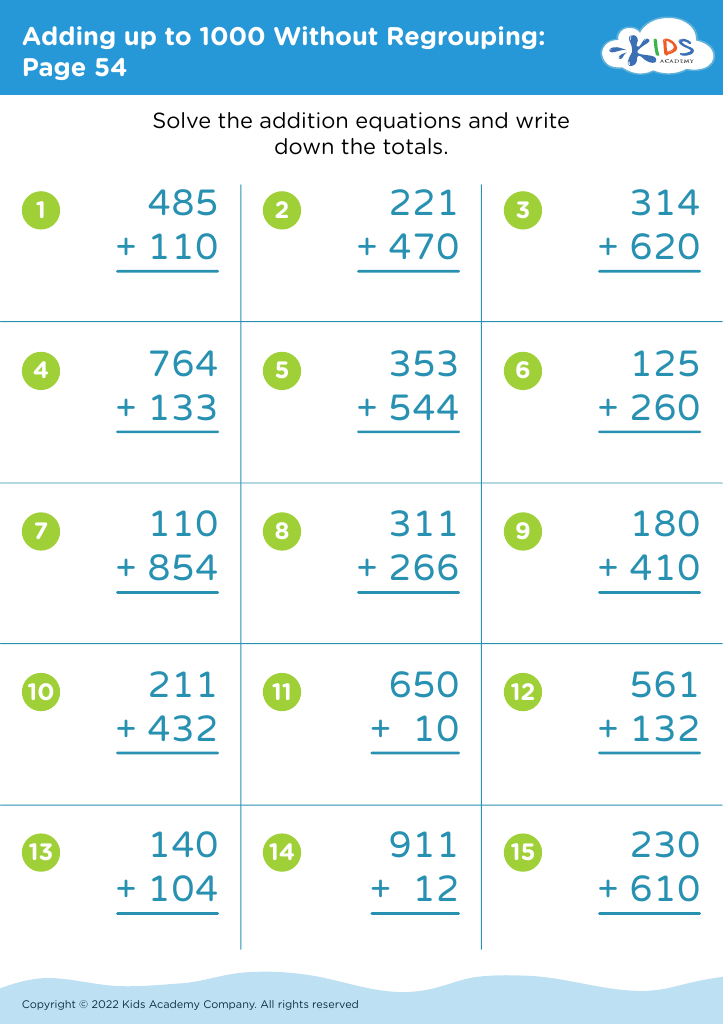
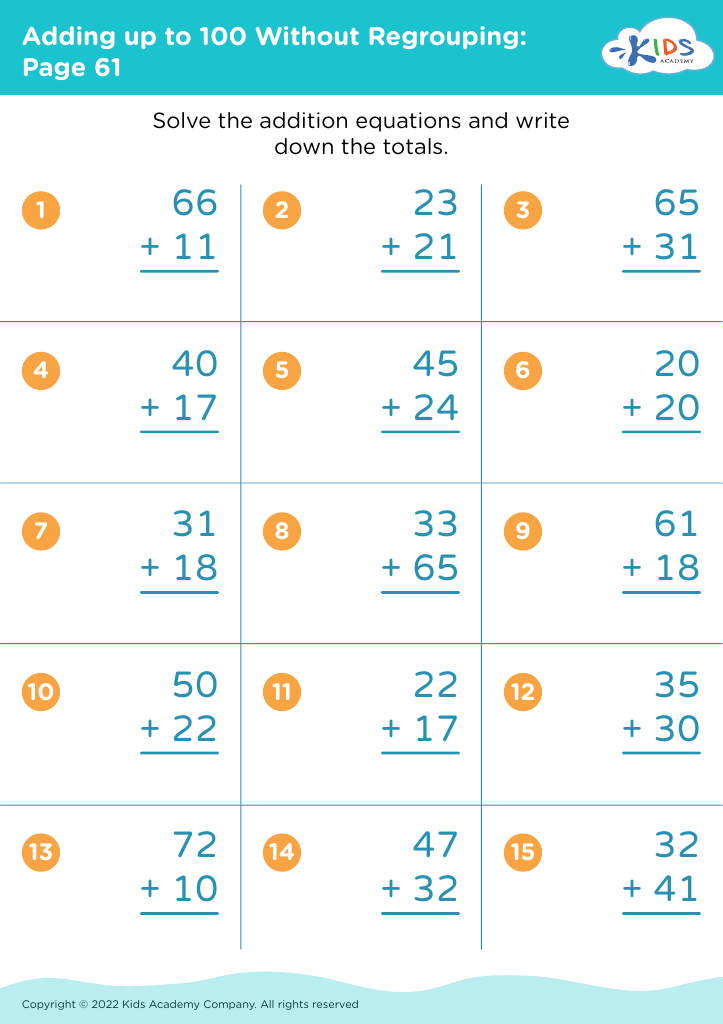
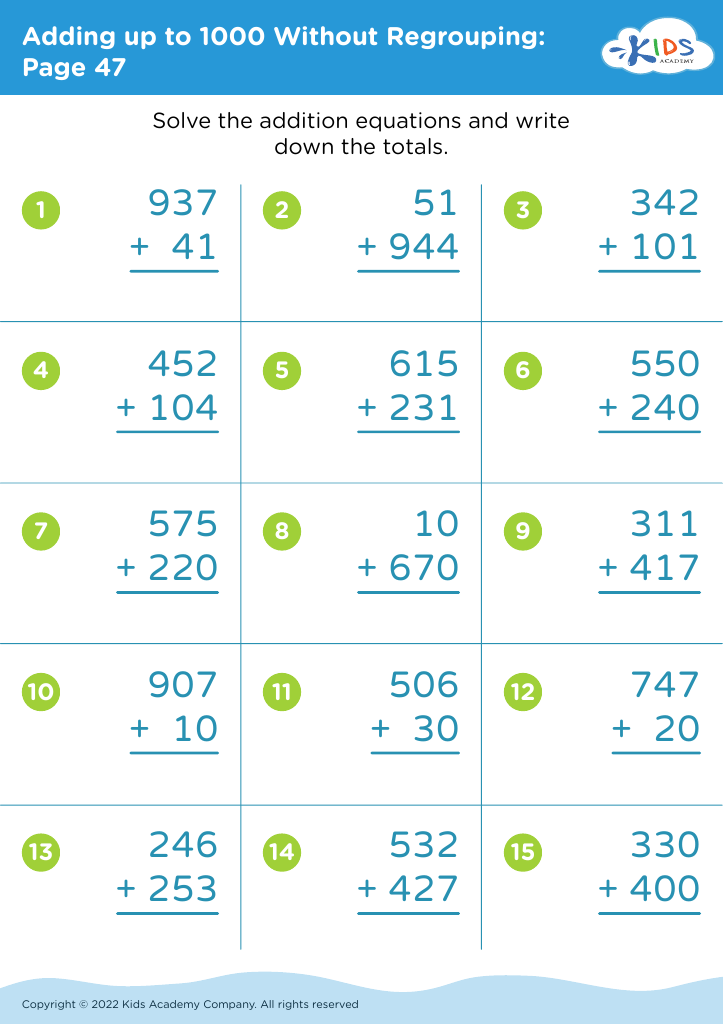
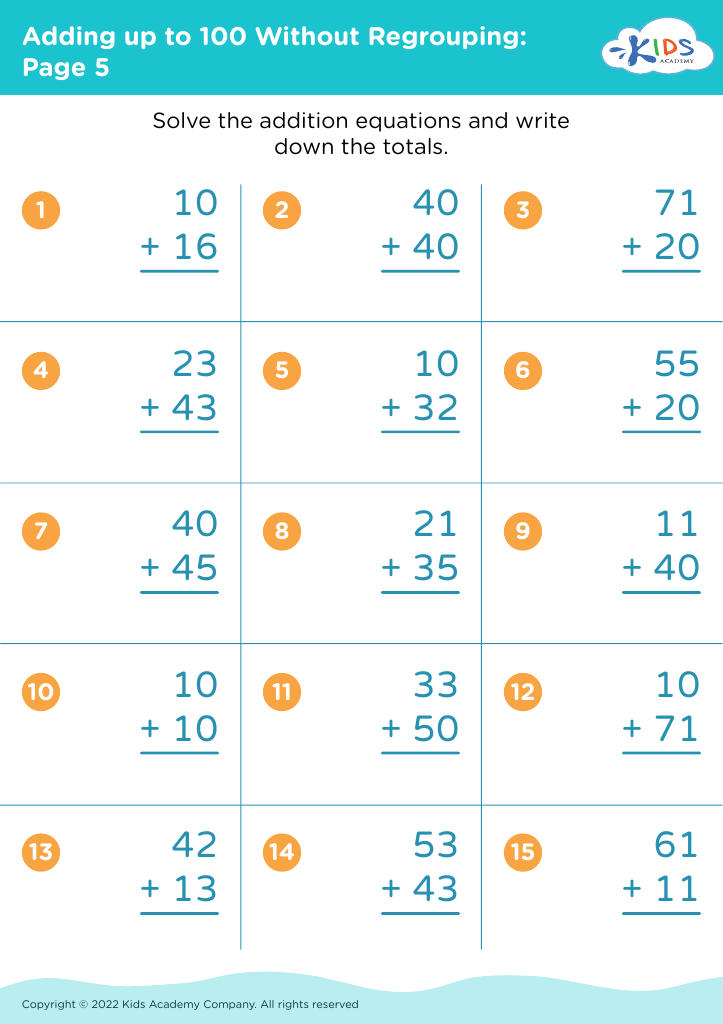
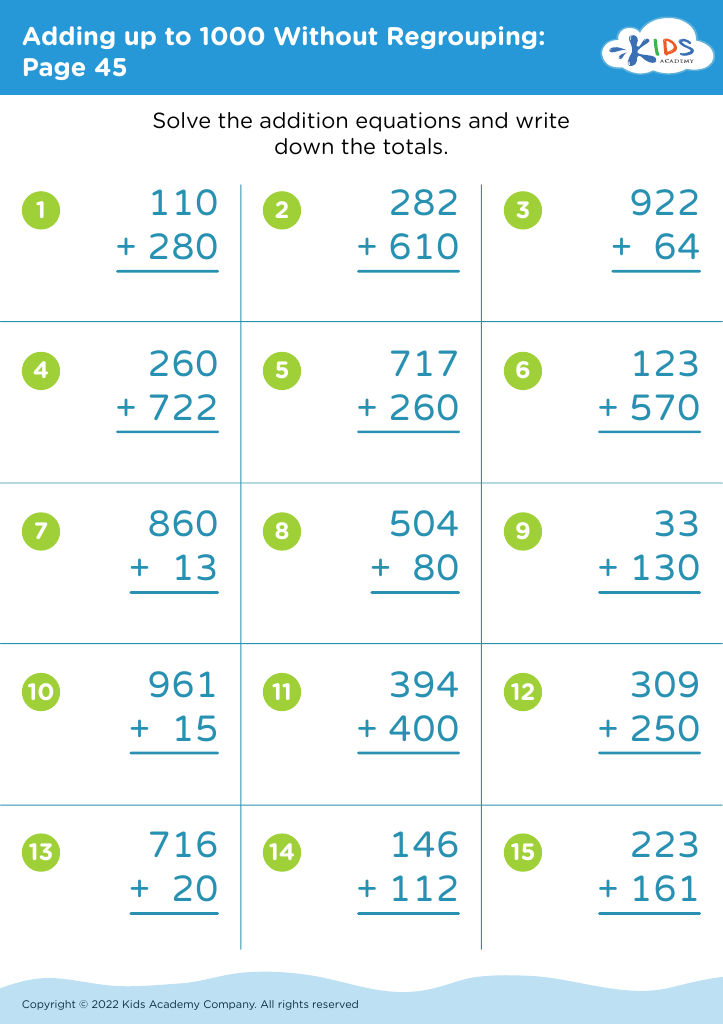








Understanding division and addition is crucial for 8-year-olds as these concepts build the foundation for higher-level mathematics and problem-solving abilities. At this age, children are transitioning from basic arithmetic to more complex operations, and a solid grasp of division and addition helps them develop critical thinking skills. Mastering these concepts enhances their ability to see relationships between numbers, which is fundamental for understanding fractions, ratios, decimals, and other advanced mathematical topics they will encounter later in their education.
For parents and teachers, investing time in ensuring children understand division and addition equates to nurturing their overall academic growth. These mathematical principles are not only essential for math classes but also play a crucial role in everyday life, such as in managing money, cooking, or even playing games. By focusing on these foundational skills, we empower children to approach both academic and real-world situations with confidence.
Encouraging a strong competence in division and addition at an early age also helps foster a positive attitude towards mathematics. Children who feel confident in their math abilities are more likely to engage actively and sustain their interest in the subject over time, which can lead to better performance in school and increased opportunities in STEM-related fields later in life. Thus, understanding division and addition is vital for both educational foundations and long-term success.








