Understanding patterns Addition Worksheets for 8-Year-Olds
28 filtered results
-
From - To
Unlock your child's mathematical potential with our "Understanding Patterns Addition Worksheets" for 8-year-olds! These engaging worksheets are designed to help young learners recognize and analyze patterns in addition, enhancing their problem-solving skills and number sense. Tailored for children at this crucial learning stage, our resources focus on fostering critical thinking through fun, interactive exercises. Each worksheet incorporates a variety of pattern-based addition problems, ensuring kids remain motivated and challenged. By mastering these skills, children will build a strong foundation in mathematics, making future concepts easier to grasp. Discover the joy of learning through patterns and watch your child's confidence grow!
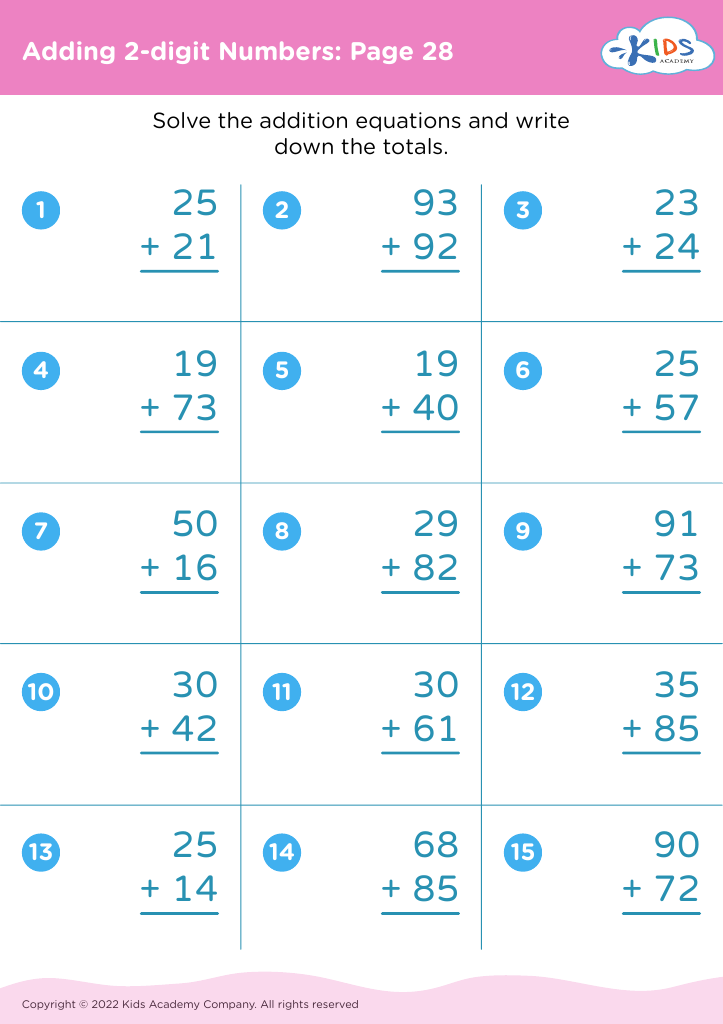
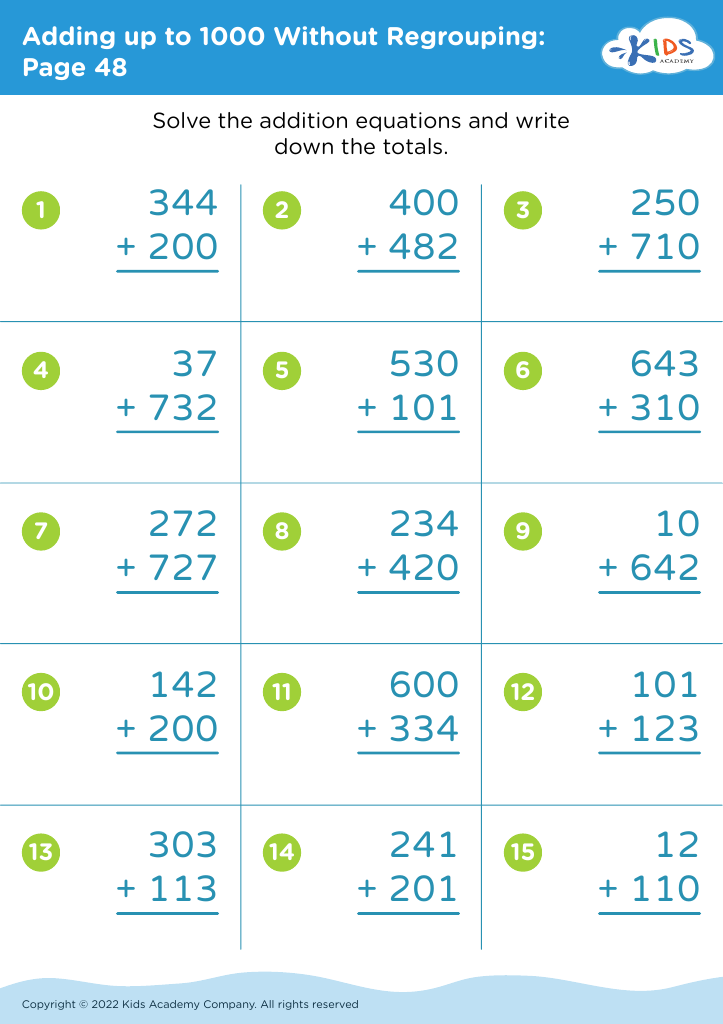
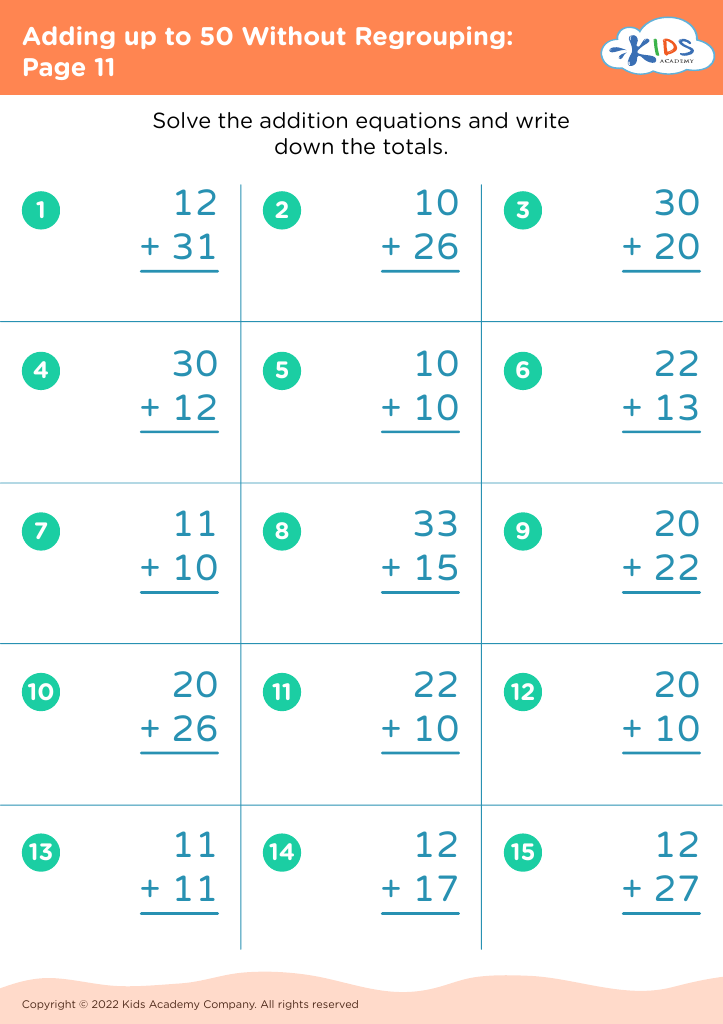
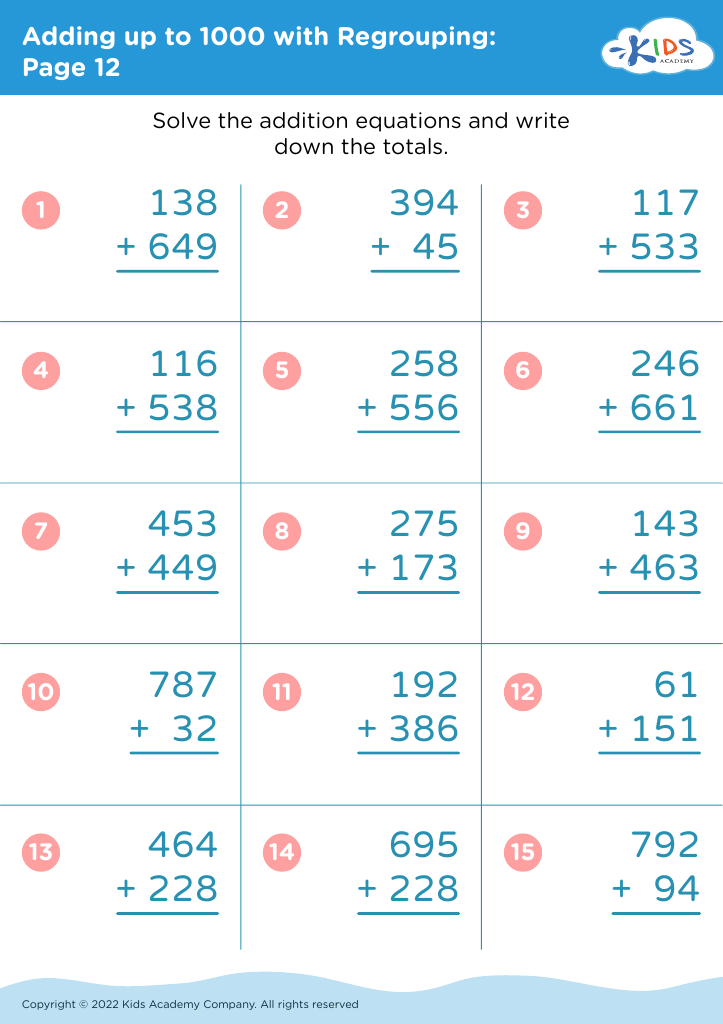
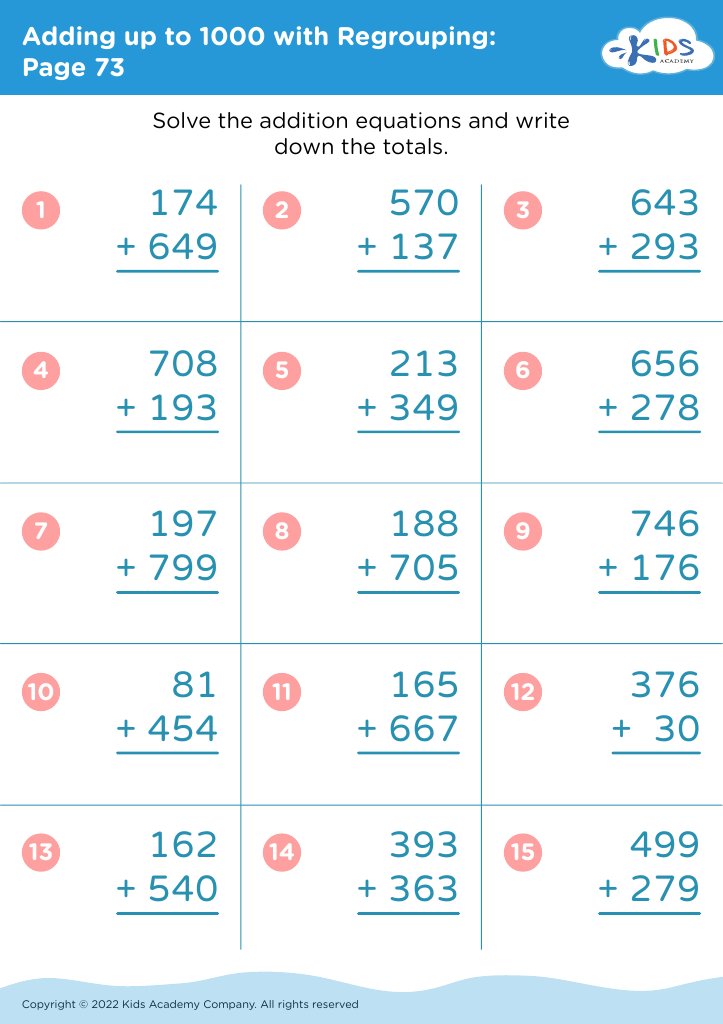
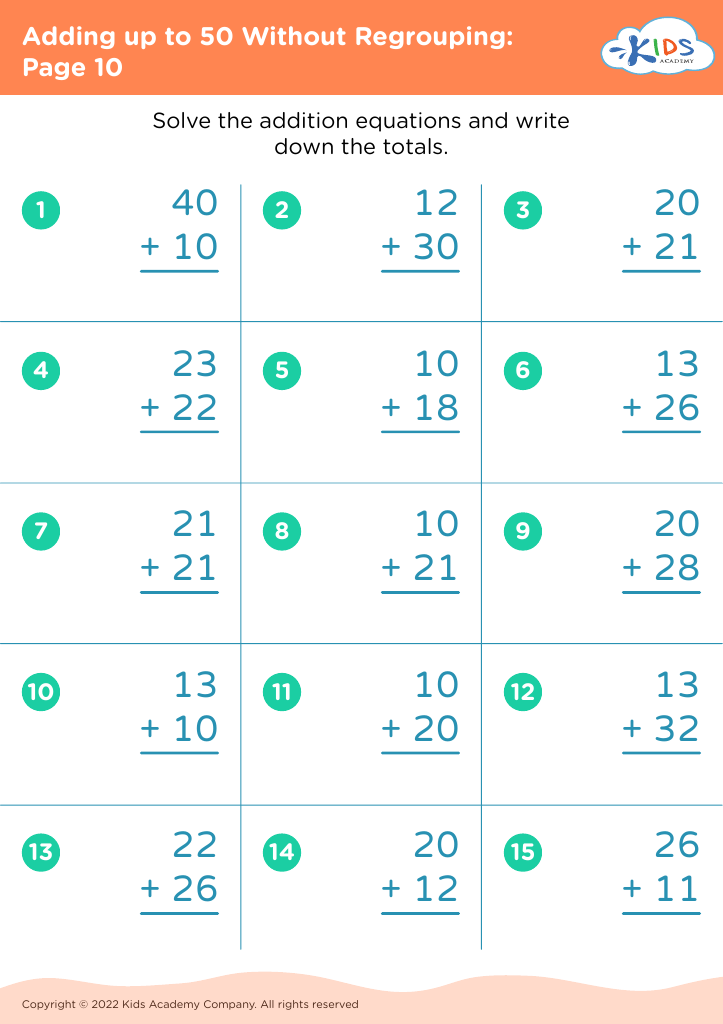
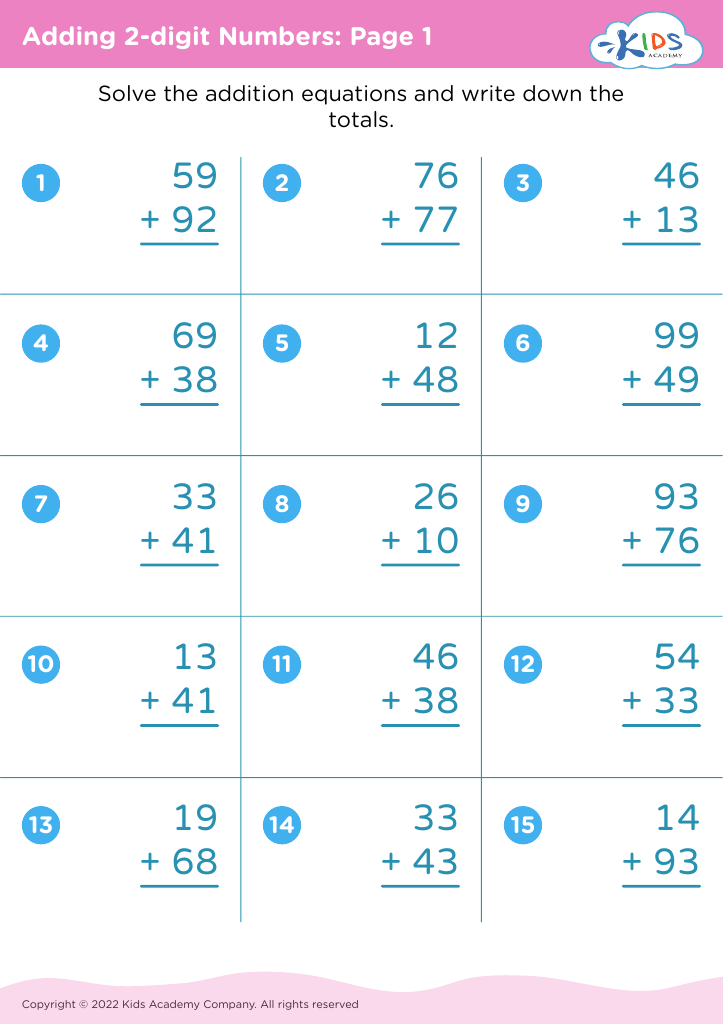
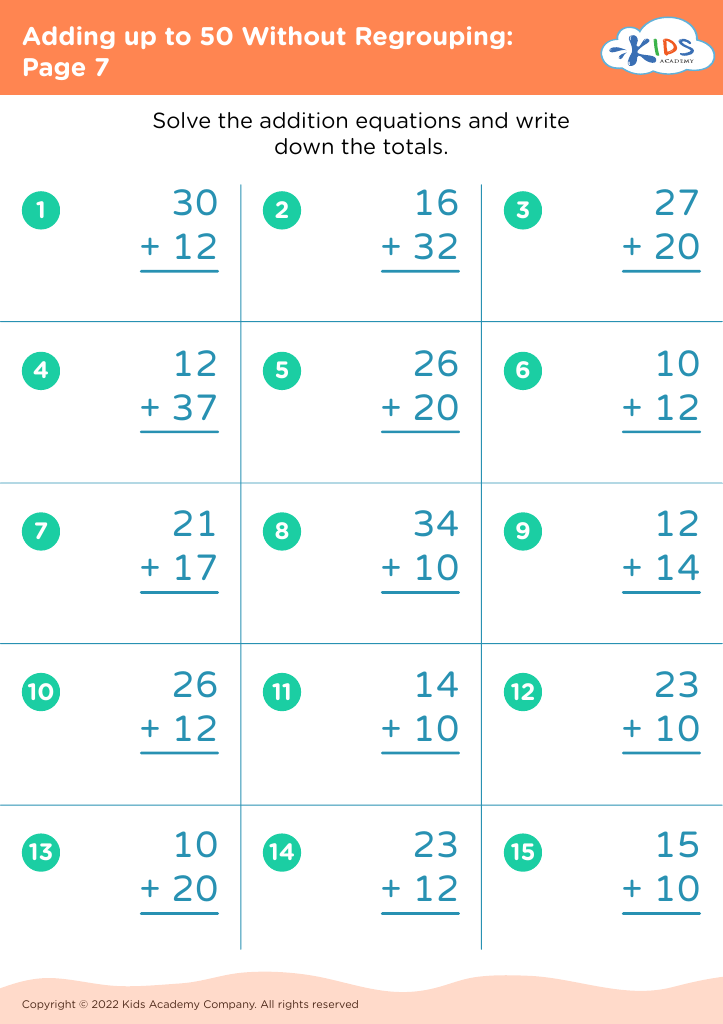
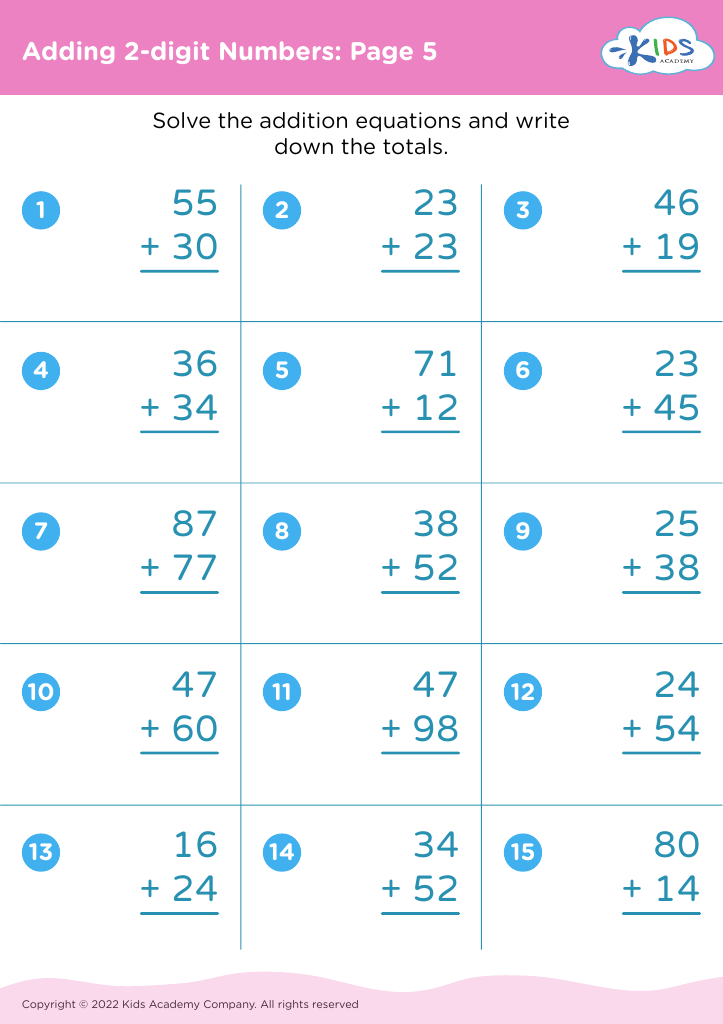
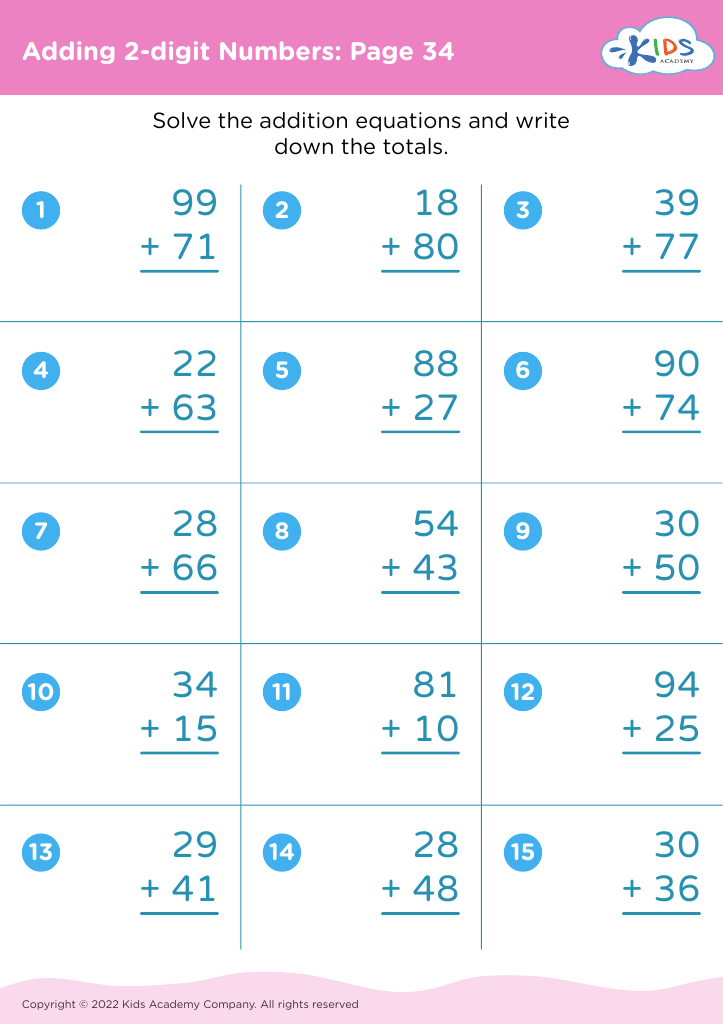
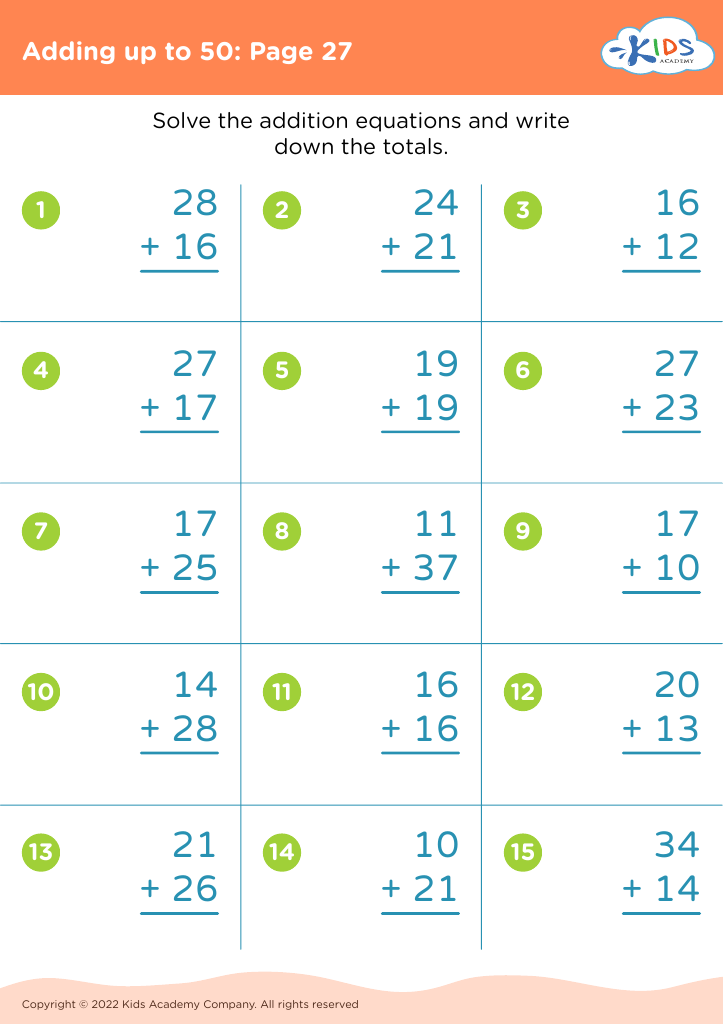
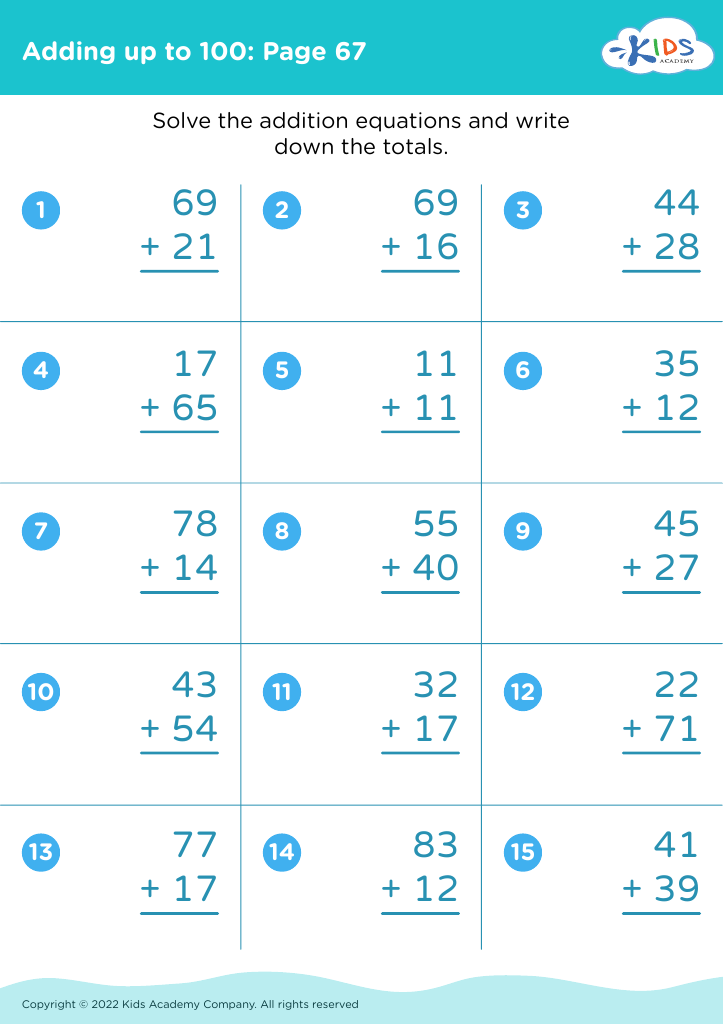
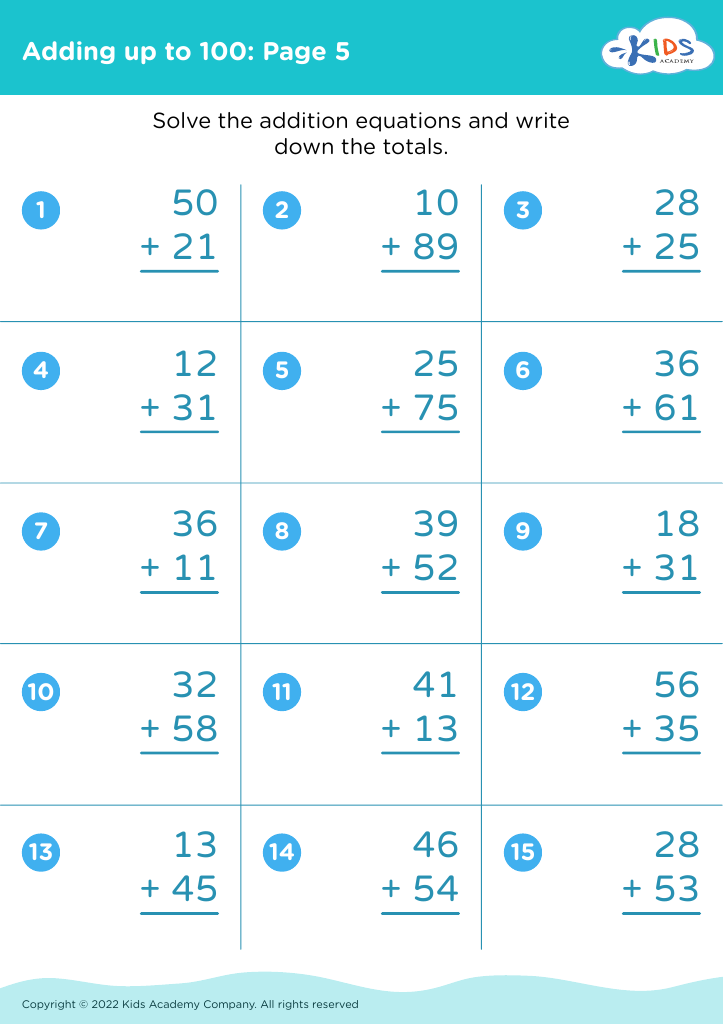
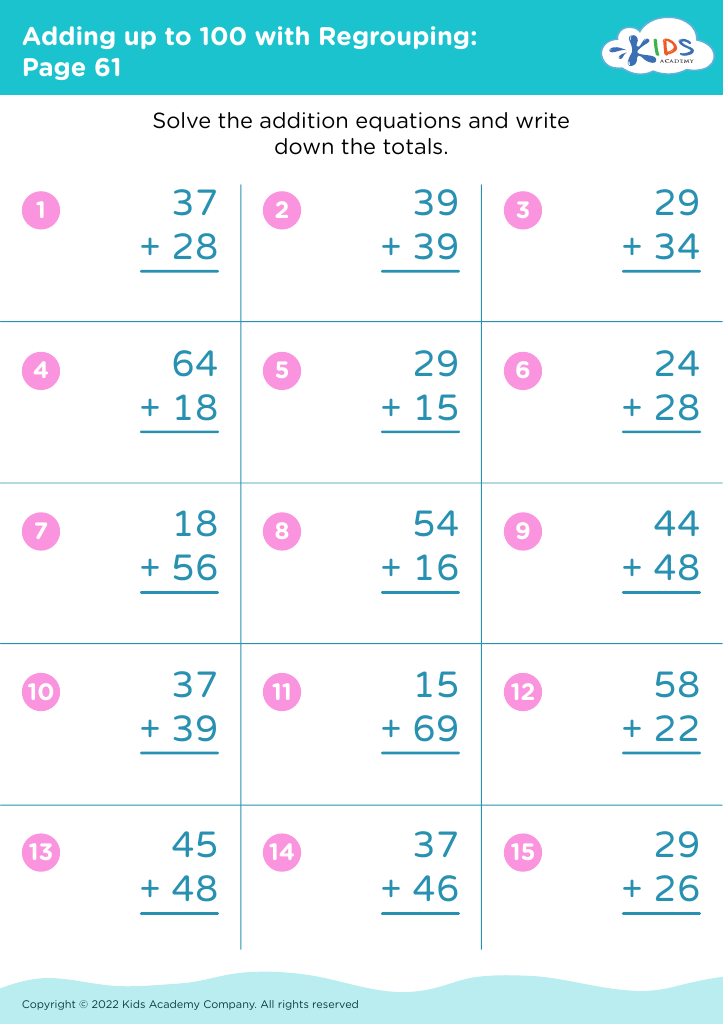
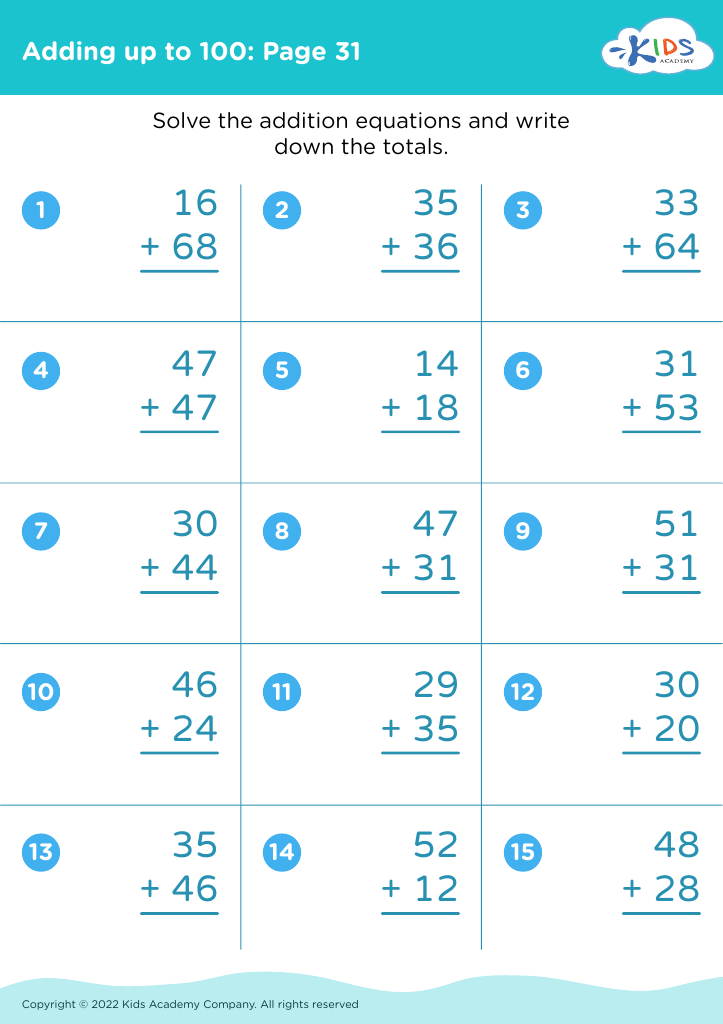
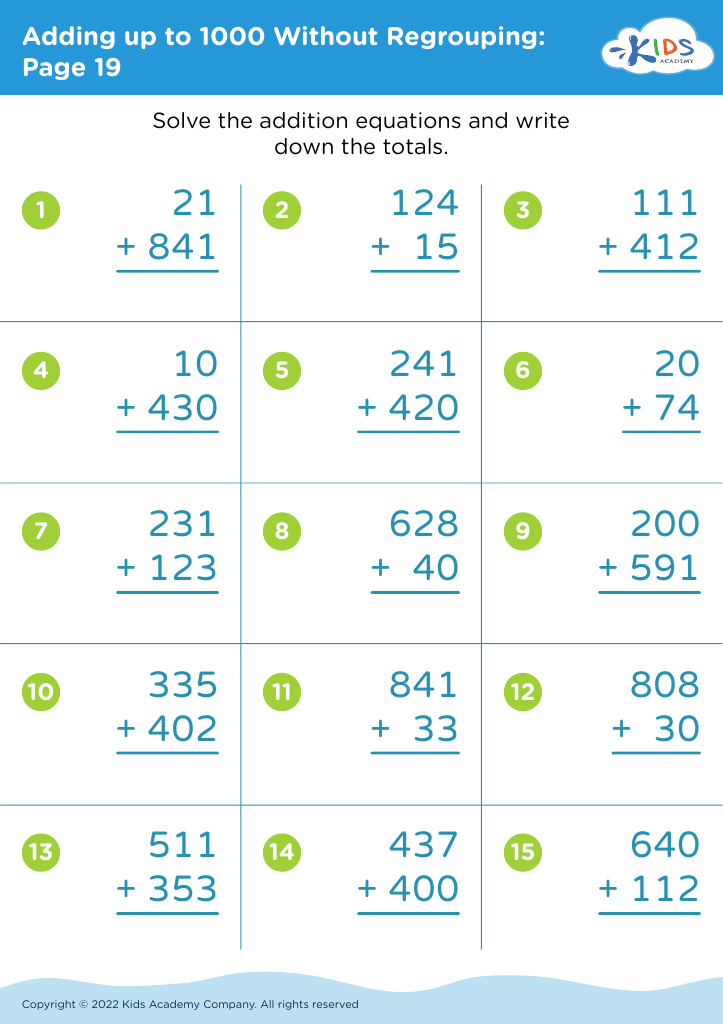
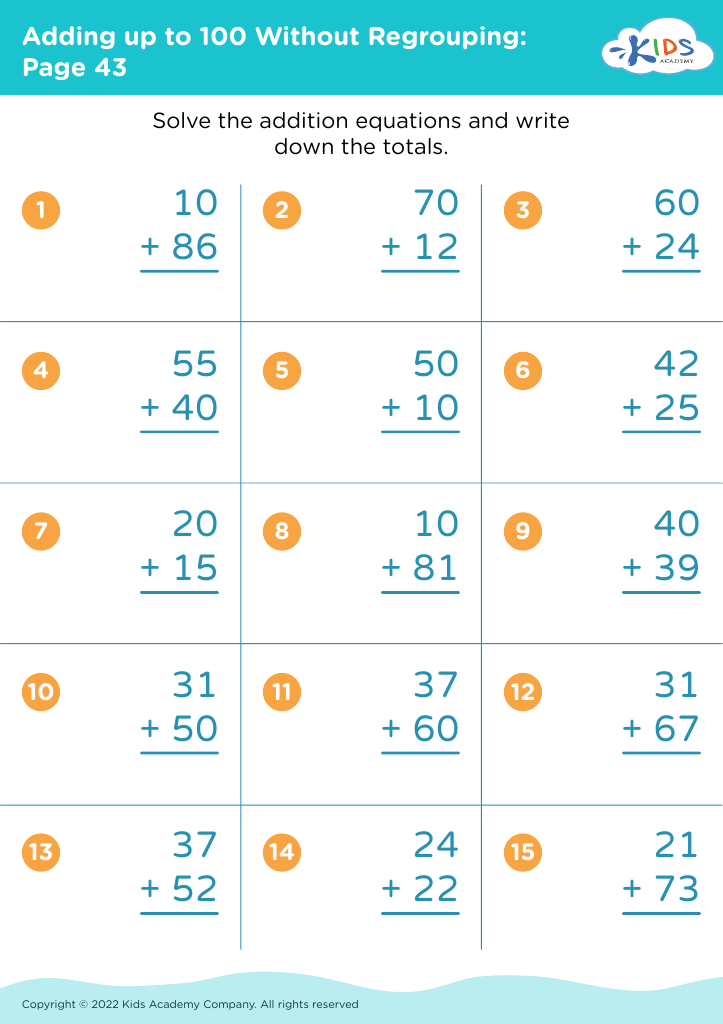
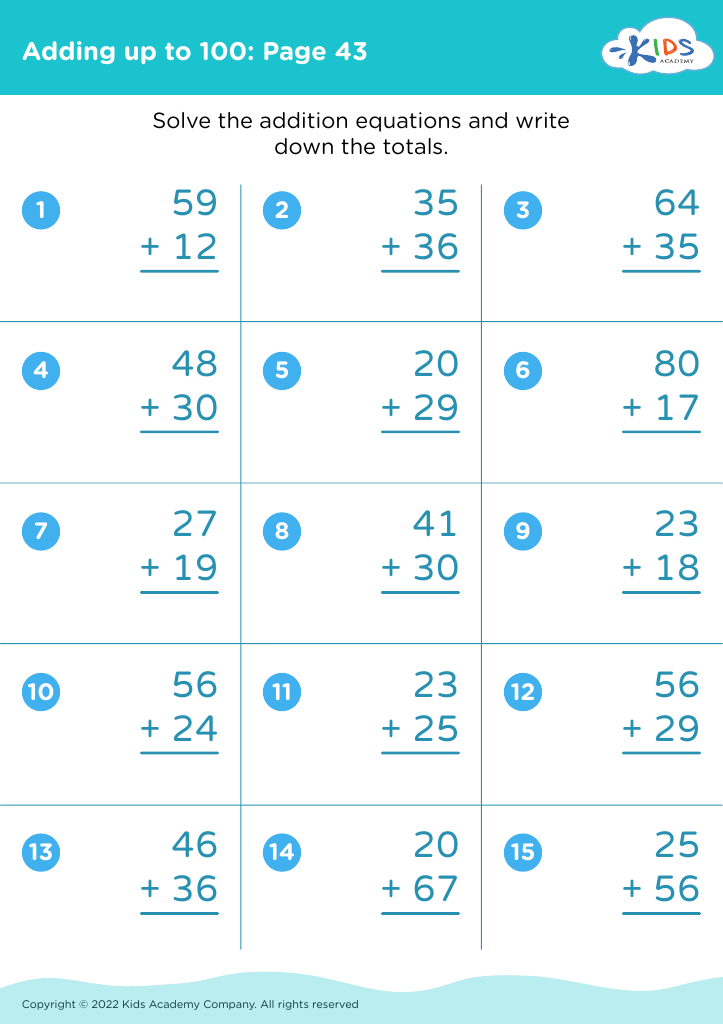
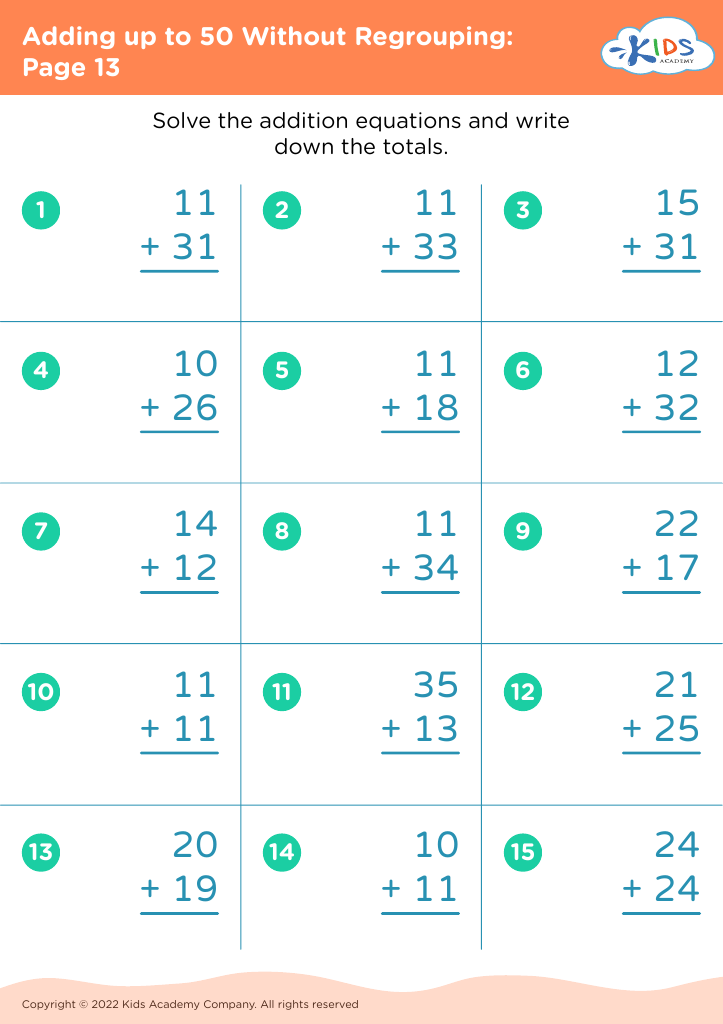
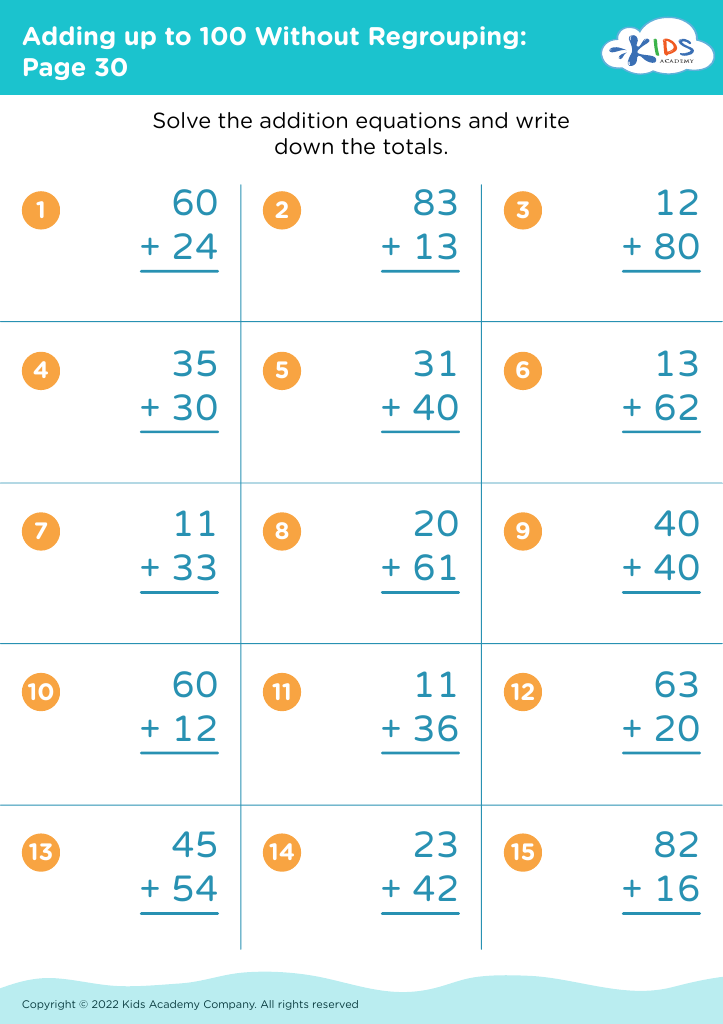








Understanding patterns in addition is crucial for 8-year-olds, as it lays the foundation for more complex mathematical concepts. When children recognize patterns, they develop critical thinking and problem-solving skills, which are essential for their academic growth. Patterns in addition, such as number sequences or the properties of addition (commutative and associative), help children comprehend the relationships between numbers rather than merely memorizing facts.
Parents and teachers should care because this understanding enhances children’s confidence in math. When students recognize and apply patterns, they can perform mental calculations more effectively and handle larger numbers with ease. This not only fosters a positive attitude towards mathematics but also encourages persistence when facing challenging problems.
Furthermore, patterns are ubiquitous in everyday life—from understanding schedules to recognizing numerical data. By grasping addition patterns, children can apply these skills outside the classroom, preparing them for real-world scenarios. Ultimately, helping children understand these concepts ensures they are well-equipped for future learning in mathematics and beyond, making it a critical focus for parents and teachers alike. Emphasizing the importance of patterns in addition helps nurture mathematically literate individuals prepared for academic and everyday success.








