Understanding time Addition Worksheets for 8-Year-Olds
6 filtered results
-
From - To
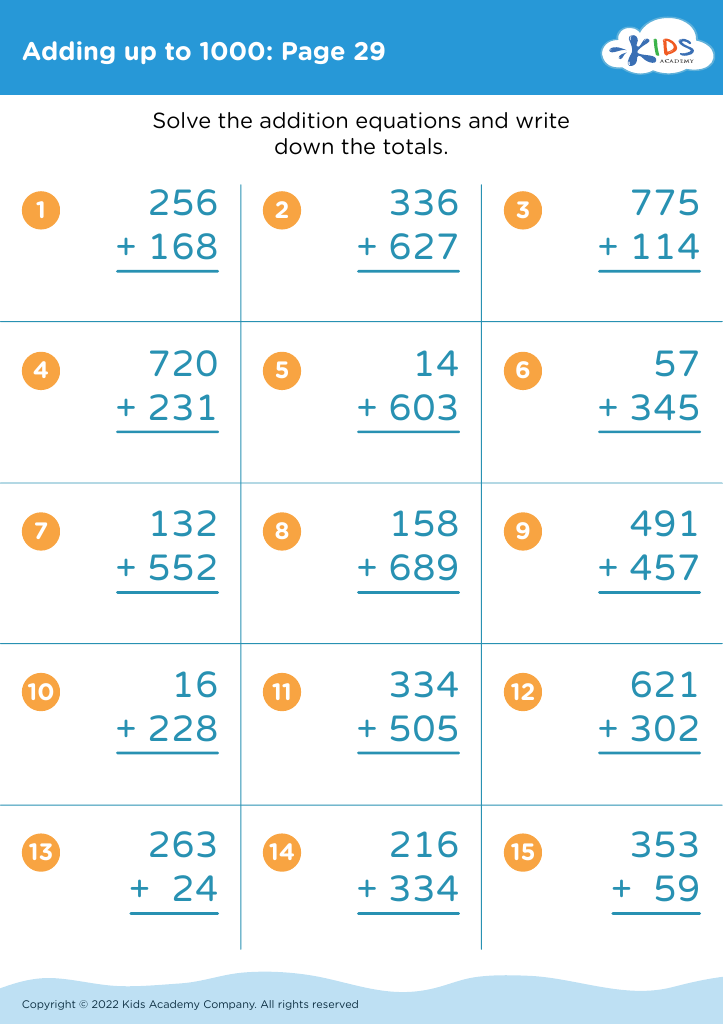
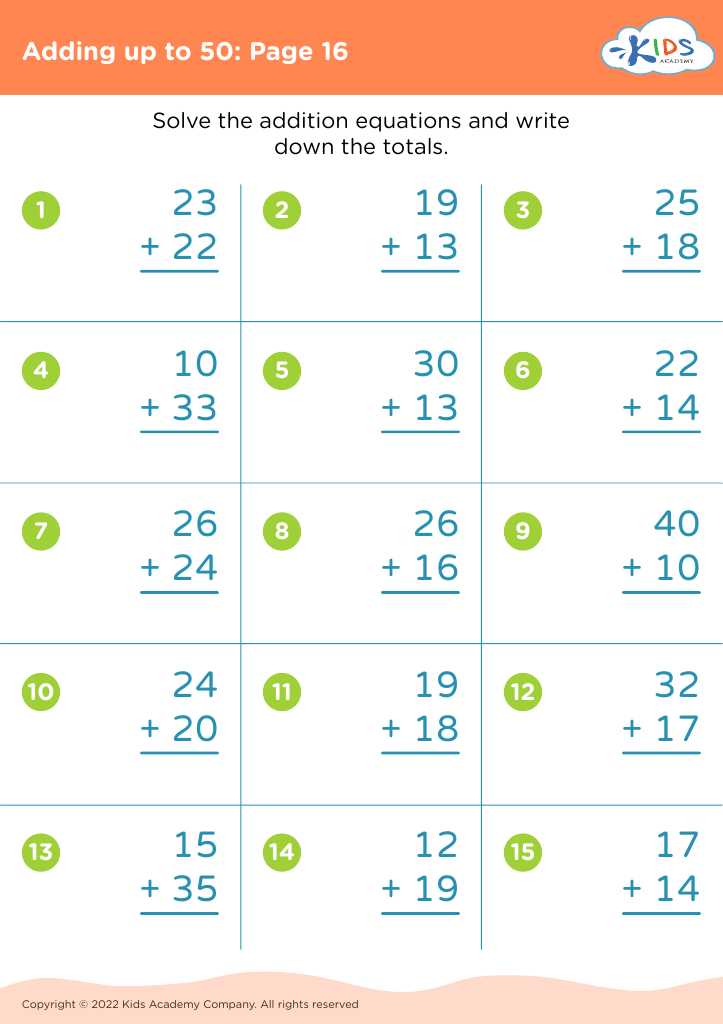
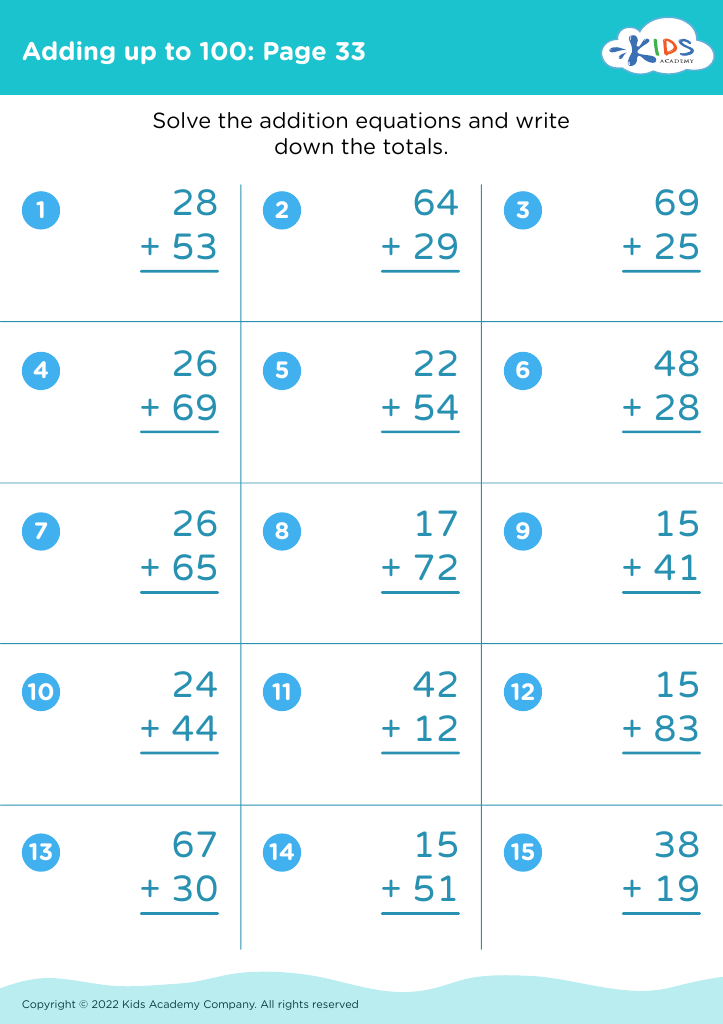
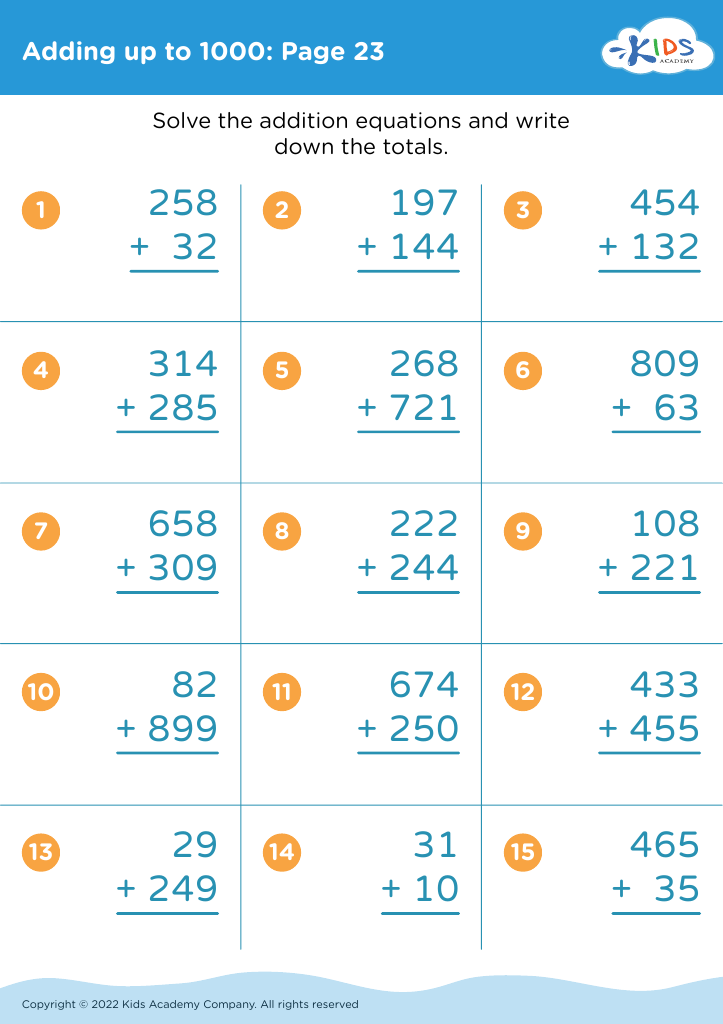
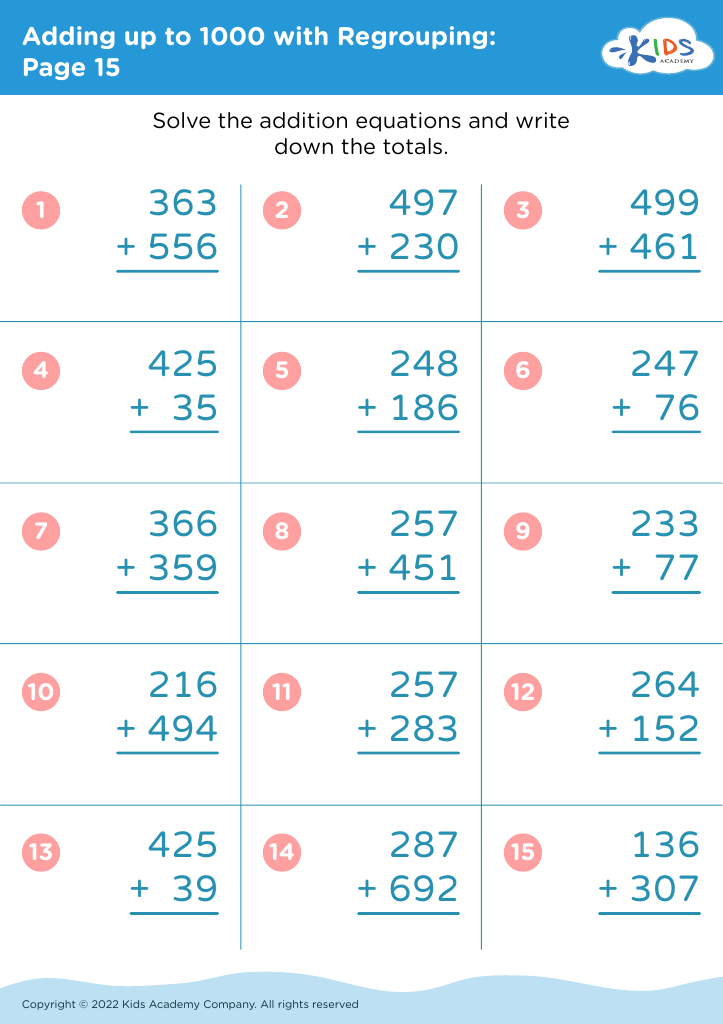
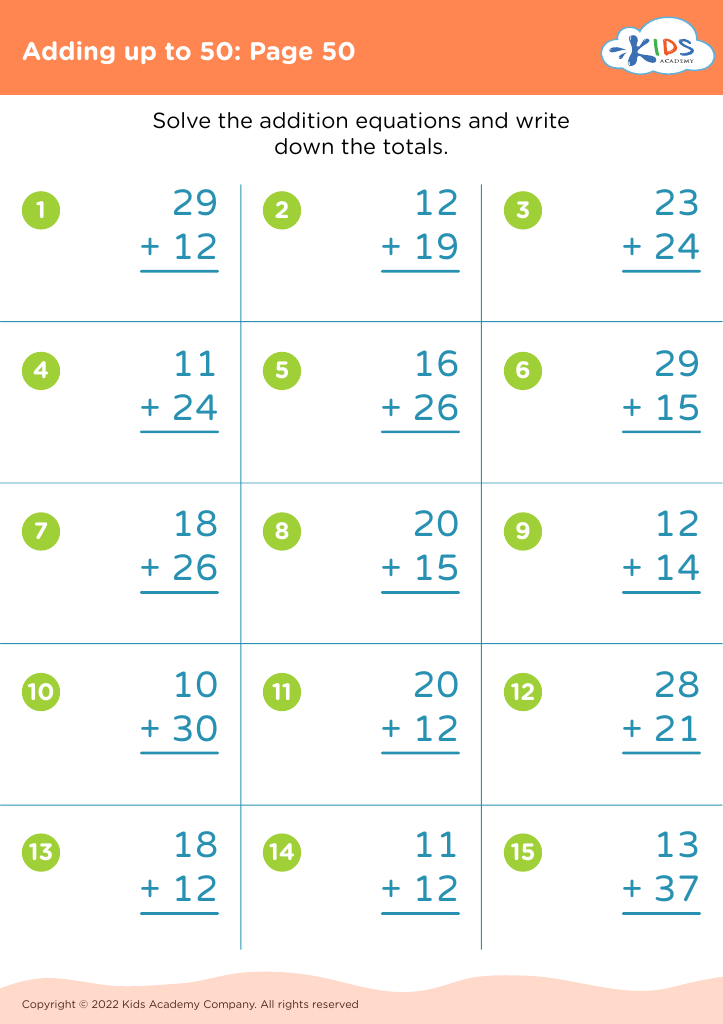
"Understanding Time Addition Worksheets for 8-Year-Olds" offer young learners engaging exercises to practice adding hours and minutes. These worksheets are specially designed for third graders to enhance their time-reading and math skills simultaneously. Each worksheet features diverse, colorful, and age-appropriate problems, ensuring kids find learning enjoyable and challenging. By solving these problems, children will improve their ability to calculate time intervals and better grasp daily time-keeping, an essential life skill. Perfect for both classroom and at-home practice, these worksheets build confidence and competence in handling time-based arithmetic. Explore our collection to make learning time fun and effective for your child!








Understanding time addition is essential for 8-year-olds, and parents and teachers should prioritize this skill for several key reasons. Firstly, time addition forms a foundation for effective time management and daily planning. When children learn to add minutes and hours, they become more adept at organizing their schedules, whether it's for school routines, extracurricular activities, or bedtime. This fosters discipline and independence.
Secondly, proficient time addition enhances mathematical reasoning and problem-solving abilities. It strengthens mental arithmetic skills which are crucial for progressing in more complex math topics later on. Being able to quickly compute elapsed time also aids in understanding concepts like duration and sequencing, which are vital in both academic and real-world contexts.
Furthermore, understanding time promotes a sense of responsibility and punctuality. Children who can accurately add time intervals are more likely to respect deadlines and understand the importance of being on time. This translates into better academic performance and positive social interactions.
Finally, time-related activities, such as determining how long it will take to complete a task, integrate math into daily life, making learning relatable and engaging. Overall, focusing on time addition equips 8-year-olds with practical skills that extend beyond mathematics, embedding a sense of order and discipline indispensable for lifelong success.








