Historical Knowledge Arrays Worksheets for 8-Year-Olds
4 filtered results
-
From - To
Introducing our engaging Historical Knowledge Arrays Worksheets for 8-Year-Olds! Designed to spark curiosity and enhance learning, these worksheets offer a unique approach to understanding significant historical events and figures through the lens of arrays. Students will explore key moments in history while developing essential math skills, such as multiplication and pattern recognition. Each worksheet combines fun visuals and interesting facts, making learning both enjoyable and informative. Perfect for home or classroom use, these resources foster critical thinking and creativity in young learners. Unlock the past while sharpening math abilities with our thoughtfully crafted worksheets! Explore history in a whole new way!
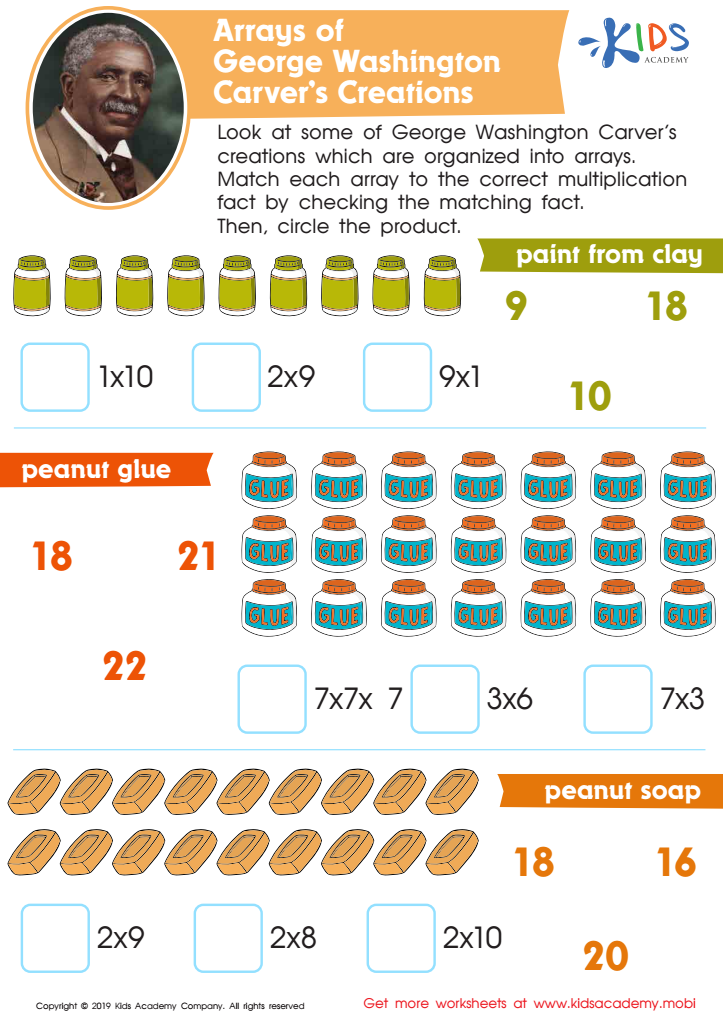
Arrays of George Washington Carver’s Creations Worksheet
 Assign to My Students
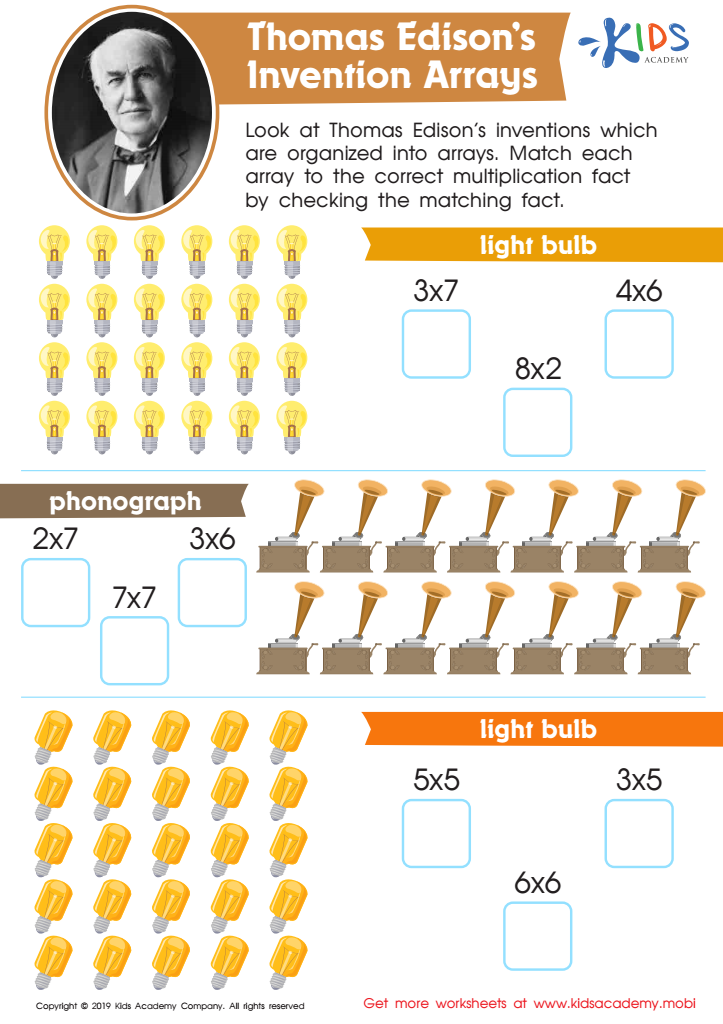
Thomas Edison’s Invention Arrays Worksheet
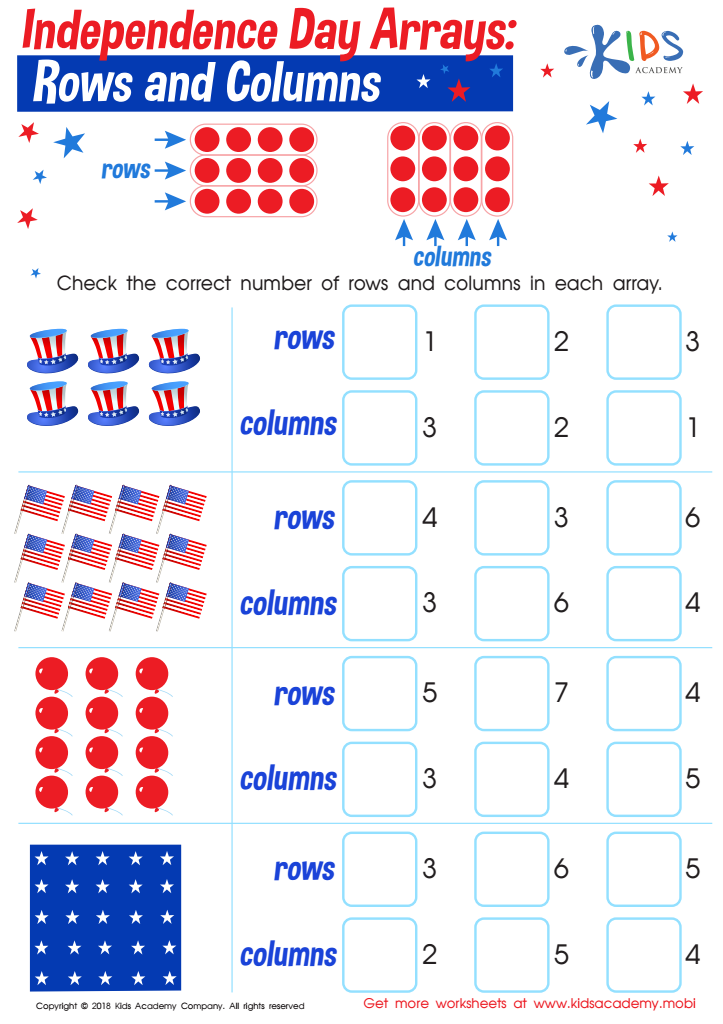
Independence Day Arrays: Rows and Columns Worksheet
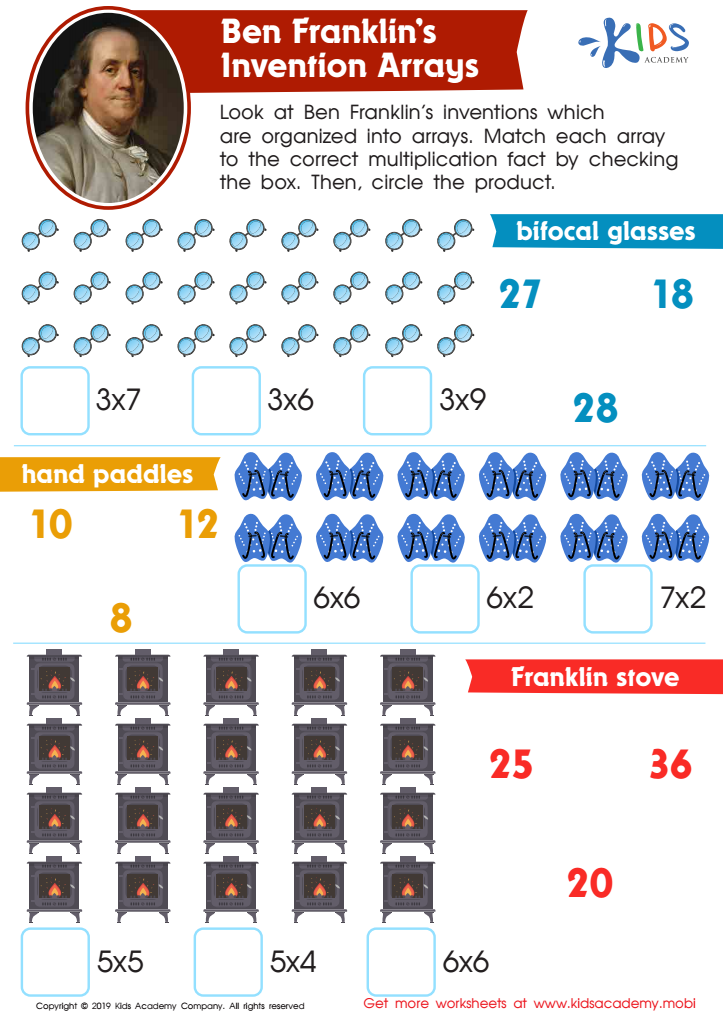
Ben Franklin’s Invention Arrays Worksheet








Historical Knowledge Arrays are essential tools for helping eight-year-olds develop a foundational understanding of history in a structured and engaging manner. For parents and teachers, fostering historical knowledge is crucial as it contributes to critical thinking skills, helps cultivate empathy, and enhances societal awareness in young learners.
At this age, children are naturally curious, and equipping them with a coherent array of historical facts, events, and figures allows them to make meaningful connections to their world. By organizing information chronologically or thematically, Historical Knowledge Arrays can facilitate easier comprehension and recall. More than rote memorization, such frameworks encourage children to explore cause-and-effect relationships, thereby honing their analytical skills early on.
Additionally, an awareness of historical contexts can promote a sense of identity and belonging among children. Understanding their heritage and the experiences of others enables them to appreciate diversity and develop social competencies. As future citizens, this knowledge lays the groundwork for responsible and informed participation in society. By prioritizing historical education, parents and teachers can collaboratively foster a generation that values history, thrives on critical inquiry, and approaches the complexities of the modern world with insight and empathy.








