Multiplication practice Arrays Worksheets for 8-Year-Olds
4 filtered results
-
From - To
Introducing our Multiplication Practice Arrays Worksheets tailored for 8-year-olds! Designed to build foundational math skills, these engaging worksheets make learning multiplication fun and easy. With colorful arrays and a variety of exercises, children practice multiplying in a visual and interactive way. Each worksheet focuses on helping young learners understand and master multiplication through structured array patterns. Perfect for classroom activities or homework assignments, our resources support both teachers and parents in reinforcing math concepts. Boost your child's confidence and proficiency in multiplication today with these essential practice sheets! Explore, learn, and excel in math with Kids Academy’s trusted materials.
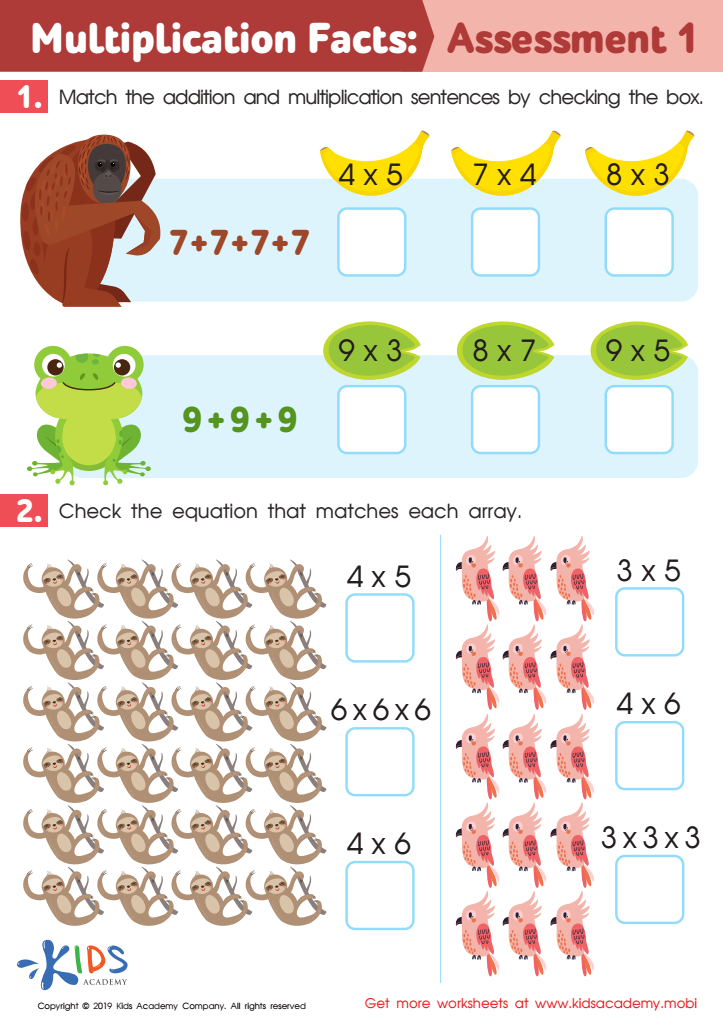
Multiplication Facts: Assessment 1 Worksheet
 Assign to My Students
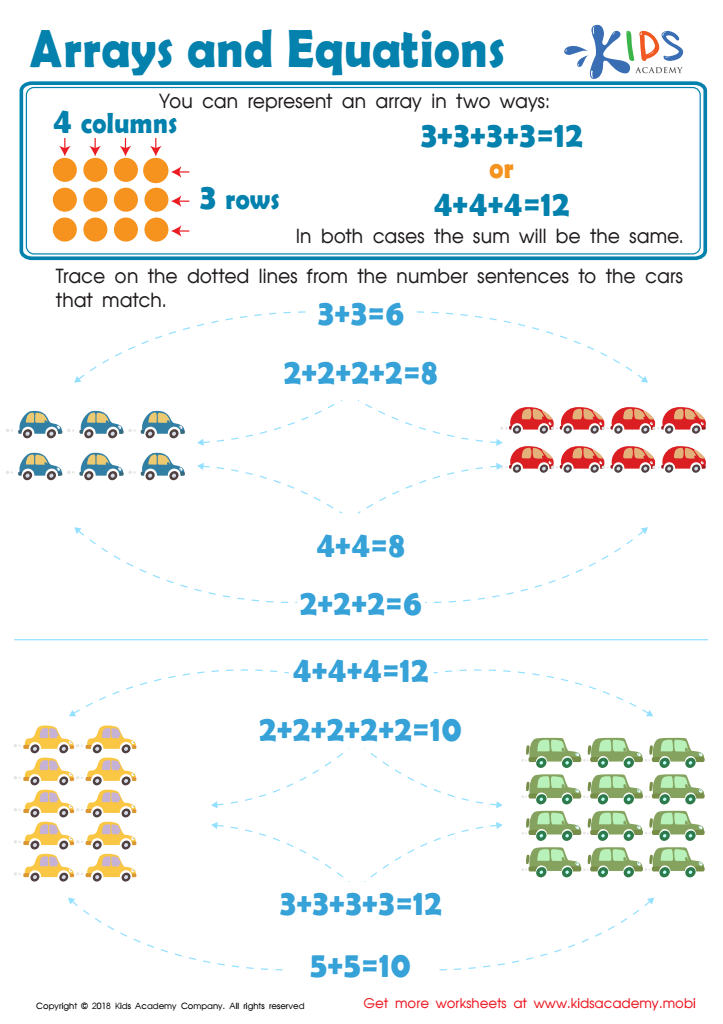
Arrays and Equations Worksheet
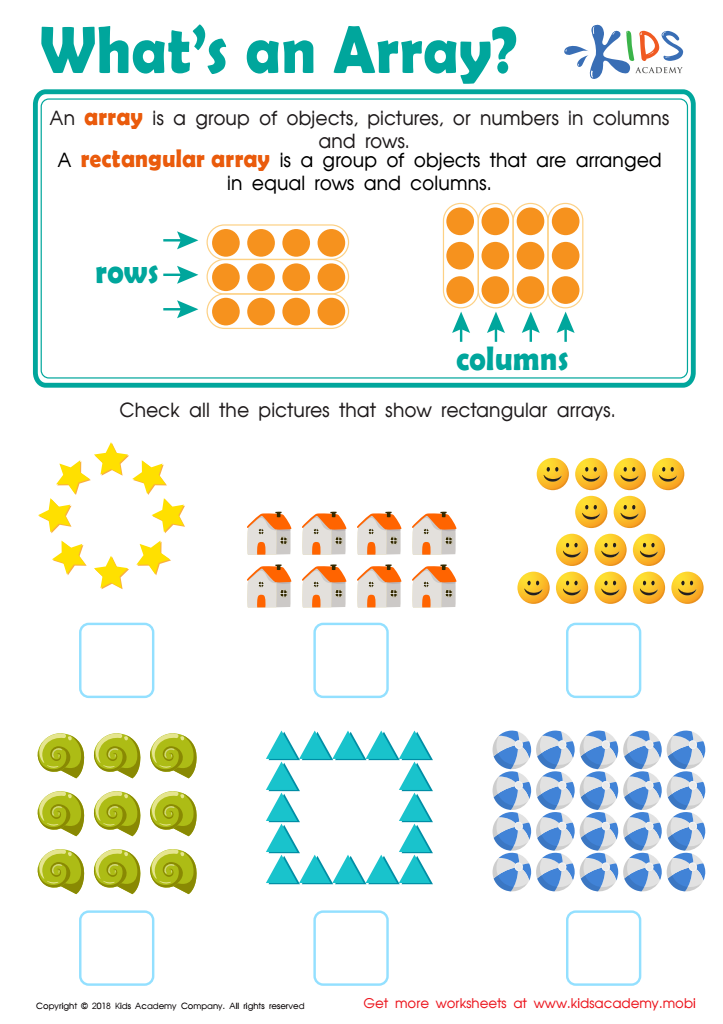
What's an Array? Worksheet
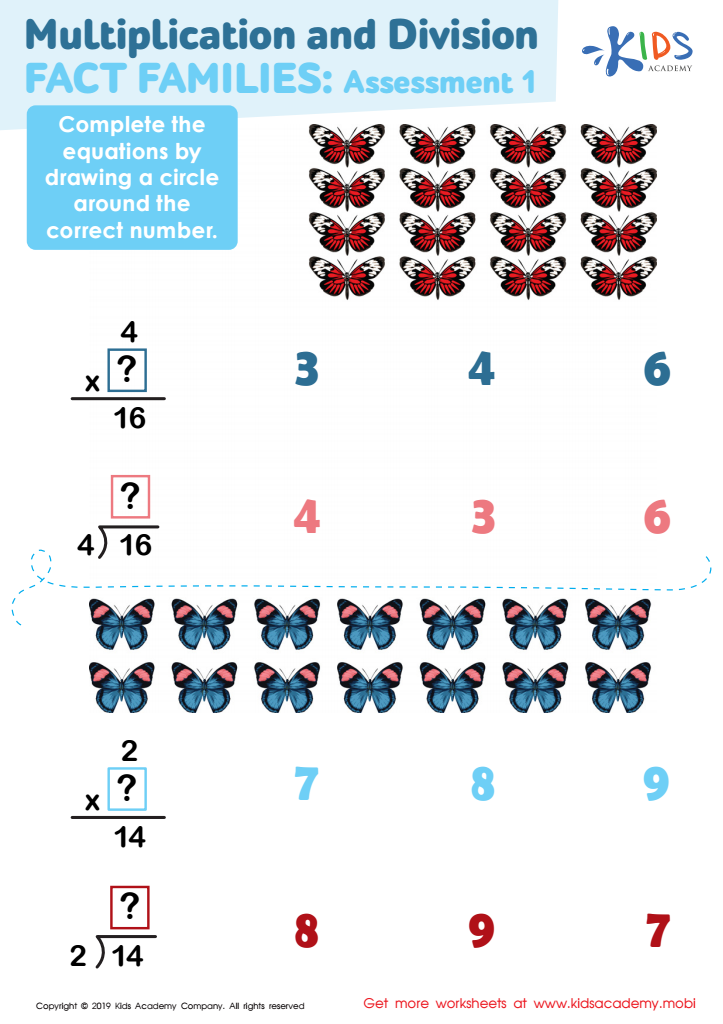
Multiplication and Division Fact Families Assessment 1 Worksheet








Multiplication practice using arrays is essential for 8-year-olds as it lays a strong foundation for their mathematical understanding. Arrays, which are visual representations using rows and columns, make abstract multiplication concepts concrete and tangible. This visual explanation helps children grasp the idea that multiplication is essentially repeated addition, embedding comprehensive numerical understanding.
Parents and teachers should value these practices because they facilitate cognitive development and foster confidence in math skills. Using arrays, children can visually and physically manipulate objects, which aids in better retention and comprehension compared to memorization alone. This hands-on experience is crucial for young learners, encouraging active engagement and making learning enjoyable.
Additionally, proficiency in multiplication is a cornerstone for more complex mathematics subjects, including division, fractions, and algebra. Establishing these skills early sets students up for future academic success by ensuring they are not intimidated by more advanced mathematical concepts.
Moreover, arrays cultivate problem-solving skills and logical thinking by teaching kids different ways to break down numbers and approach problems systematically. They help children understand multiple strategies to find solutions, promoting flexibility in thinking.
Ultimately, prioritizing multiplication practice with arrays equips 8-year-olds with essential math skills, boosting their confidence and creating a positive learning experience that sets the stage for lifelong numerical competence.








