Understanding patterns Basic Times Tables up to 12 Worksheets for 8-Year-Olds
3 filtered results
-
From - To
Unlock the power of multiplication with our engaging "Understanding Patterns in Basic Times Tables up to 12" worksheets, designed specifically for 8-year-olds! These worksheets help young learners identify patterns within multiplication tables, making it easier to grasp fundamental math concepts. Through fun exercises and visual aids, students will discover how numbers repeat and build upon each other, enhancing their computational skills. Perfect for both classroom use and home practice, these resources promote critical thinking and encourage self-paced learning. Empower your child’s math journey and lay a strong foundation for future success with our comprehensive and child-friendly materials!
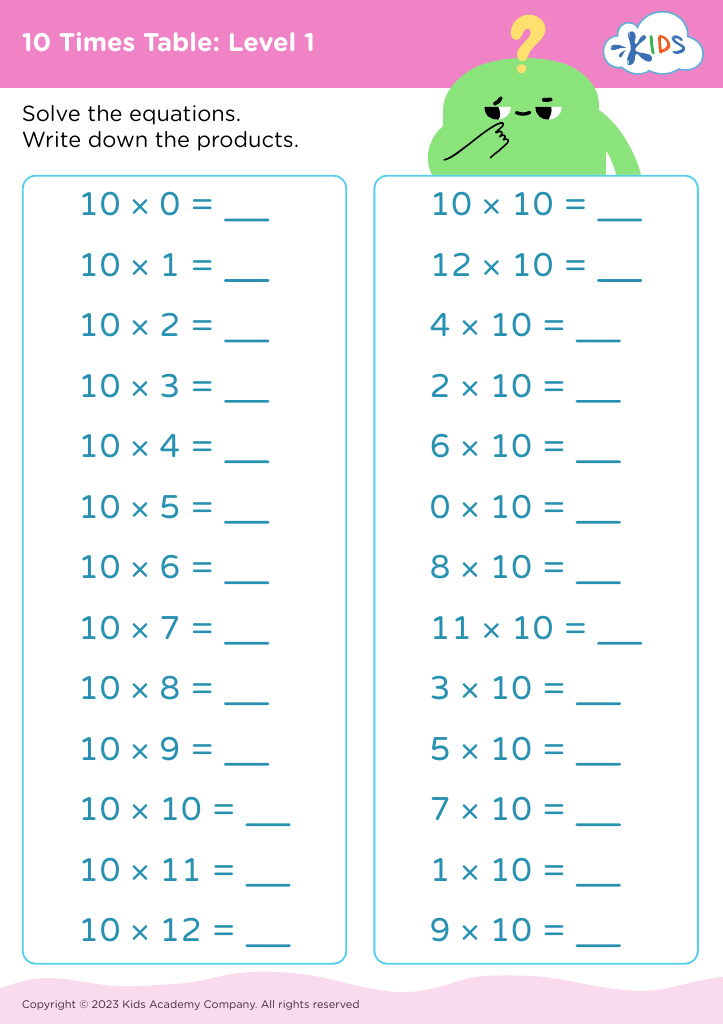
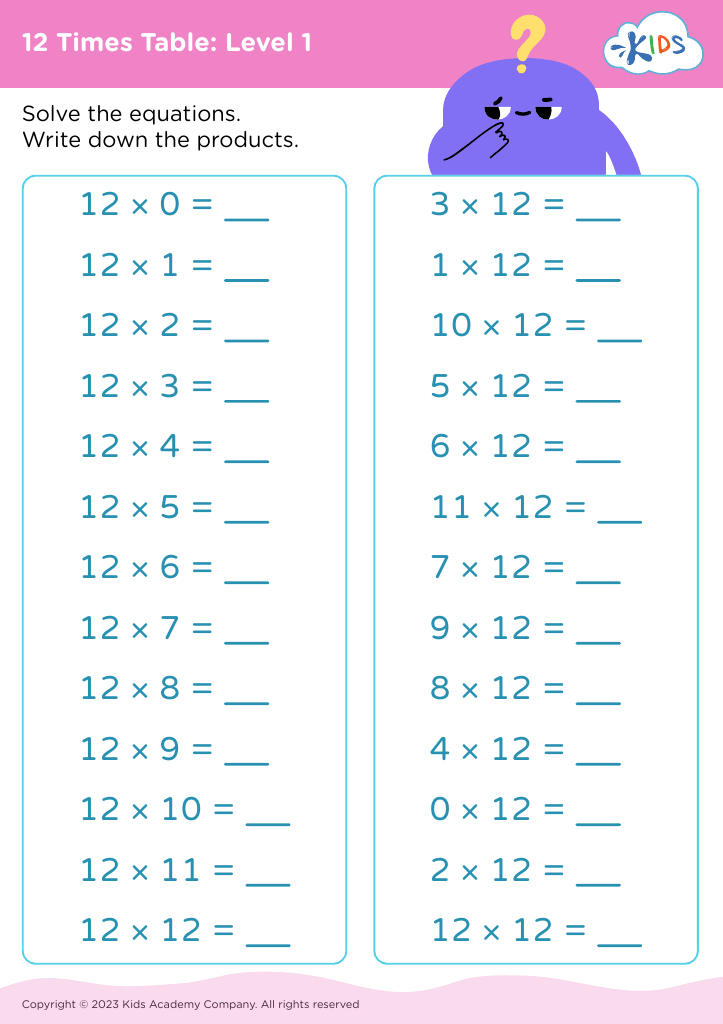
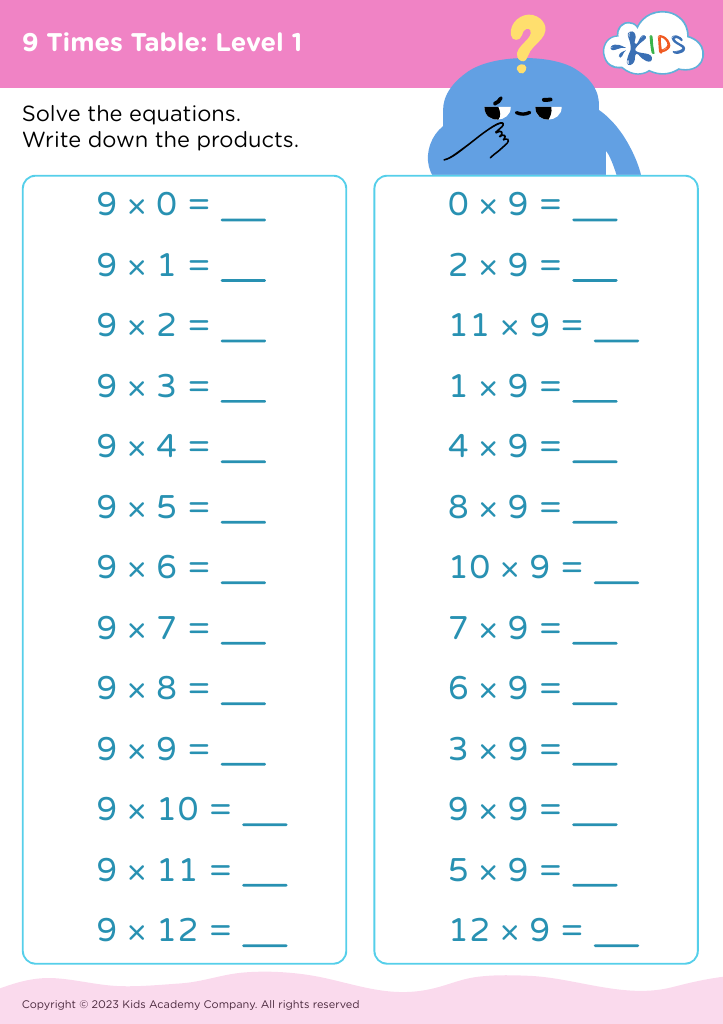


Understanding patterns in basic times tables is essential for 8-year-olds as it builds a strong mathematical foundation. At this stage, children are naturally curious and capable of recognizing patterns, making it an ideal time to explore multiplication concepts. By grasping the patterns in times tables, such as the consistency of results in multiplication by 2, 5, and 10, children do not only memorize numbers but also develop critical thinking and problem-solving skills.
Moreover, mastering the times tables up to 12 enhances children's confidence in math. It helps them tackle more complex arithmetic operations, such as division, fractions, and word problems in later grades. This understanding creates a bridge to more advanced concepts, allowing children to visualize relationships between numbers.
Furthermore, parents and teachers can incorporate practical applications of these patterns in everyday situations, making learning engaging and relevant. This relevance can motivate students to appreciate math beyond the classroom. In summary, fostering an understanding of times table patterns empowers children with essential skills for academic success, boosts their confidence, and provides a crucial stepping stone for future mathematical learning.








