Categorization skills Geometry Worksheets for 8-Year-Olds
3 filtered results
-
From - To
Enhance your child's geometry knowledge with our engaging Categorization Skills Geometry Worksheets for 8-year-olds. These thoughtfully designed worksheets help young learners identify and categorize various geometric shapes, promoting critical thinking and organizational skills. Perfect for home or classroom use, each worksheet is tailored to reinforce concepts such as shape recognition, sorting, and classification. With colorful visuals and interactive exercises, kids will enjoy building their understanding of geometry while developing essential categorization skills. Our worksheets provide a fun and effective way to support your child's learning journey in mathematics. Explore our collection today and empower your child’s geometric abilities!
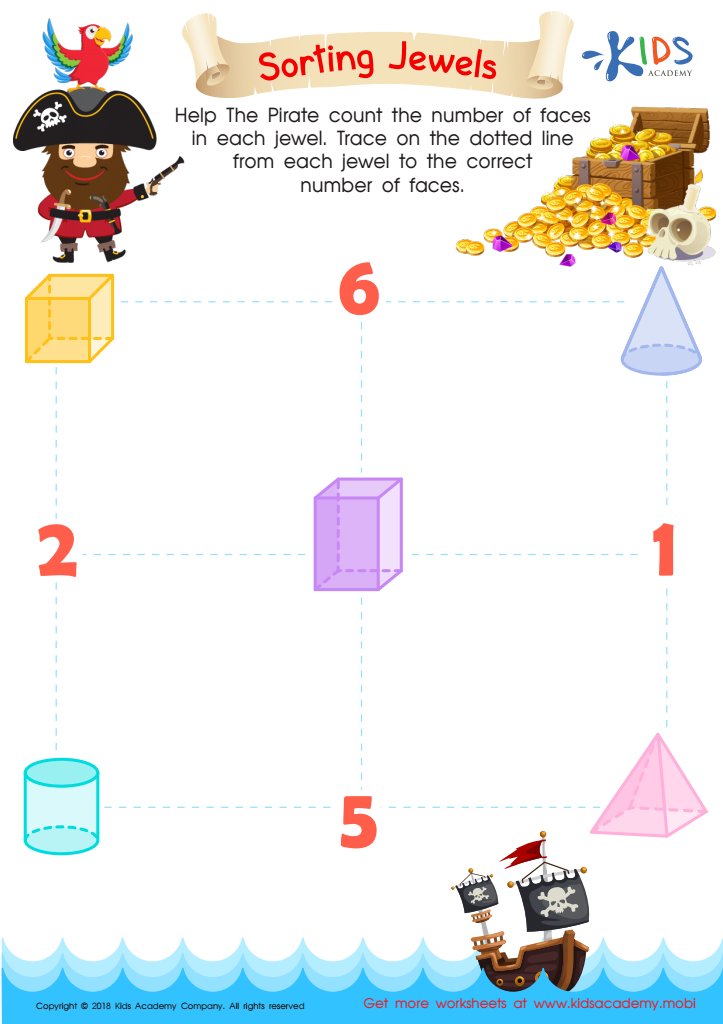
Sorting Jewels Worksheet
 Assign to My Students











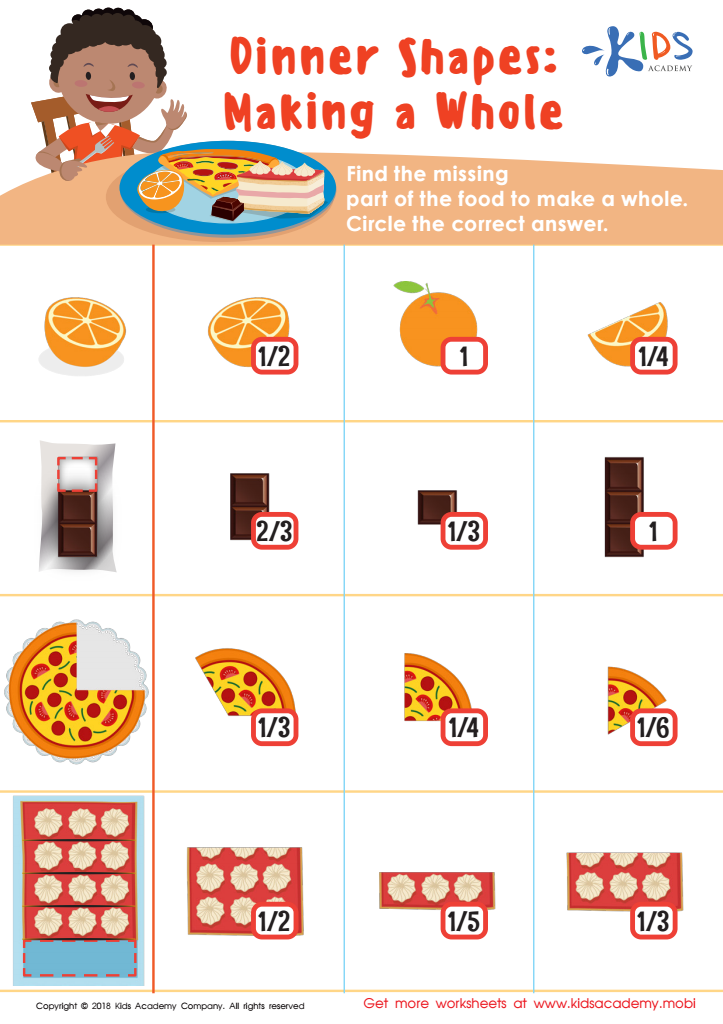
Dinner Shapes: Making a Whole Worksheet
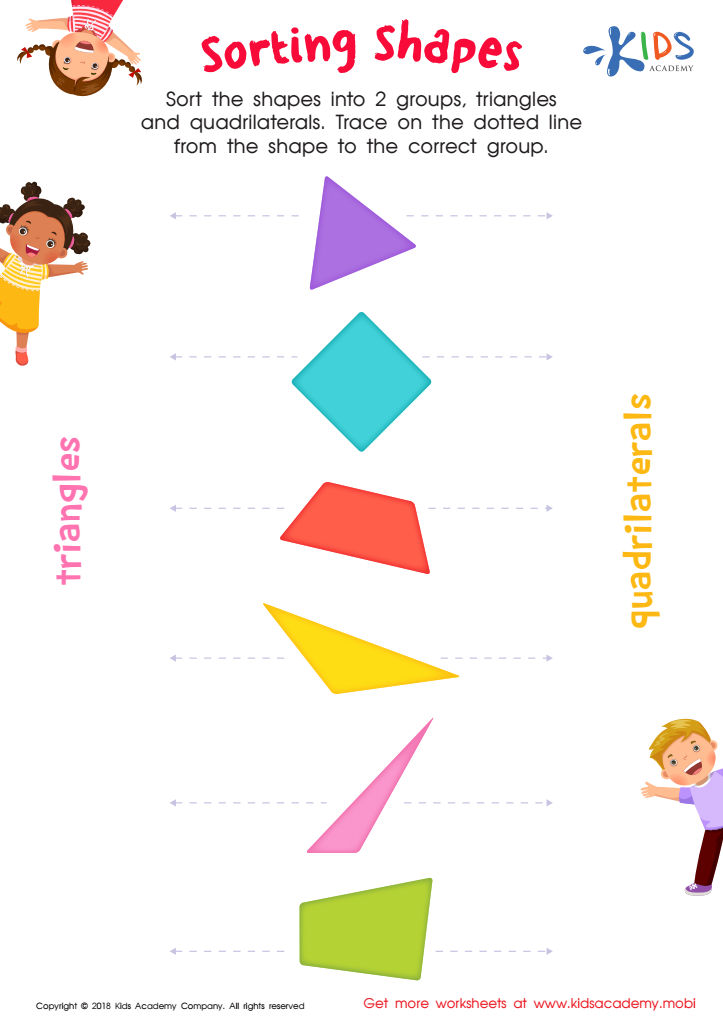
Sorting Shapes Worksheet








Categorization skills in geometry are crucial for 8-year-olds as they lay the foundation for mathematical understanding and cognitive development. At this stage, children begin to recognize shapes and their properties, fostering their ability to sort and classify objects based on multiple attributes, such as size, shape, color, and orientation. This not only enhances their geometric reasoning but also promotes critical thinking skills.
Parents and teachers should care about these skills because strong categorization abilities support a child's overall academic success. Geometry forms the bedrock for more advanced mathematical concepts. Recognizing relationships between different shapes and understanding spatial reasoning are essential for subjects like algebra and even science. Furthermore, these skills encourage problem-solving abilities, as children learn to analyze and approach complex tasks systematically.
Encouraging categorization is also beneficial for everyday life. It fosters organizational skills, aiding children in sorting and prioritizing tasks. Additionally, linking geometry to real-world contexts, such as identifying shapes in architecture or nature, makes learning engaging and relevant. By nurturing these skills, parents and teachers help children develop a robust foundation for future learning and enhance their ability to navigate their surroundings effectively.








