Recognizing shapes Geometry Worksheets for 8-Year-Olds
5 filtered results
-
From - To
Discover our engaging "Recognizing Shapes Geometry Worksheets for 8-Year-Olds," designed to enhance your child's understanding of basic geometric shapes. These printable worksheets provide fun and interactive activities that encourage young learners to identify and differentiate between a variety of shapes, such as circles, squares, triangles, and more. With colorful illustrations and simple instructions, children will enjoy mastering essential geometry skills while improving their critical thinking and recognition abilities. Perfect for classroom use or at-home learning, our worksheets ensure that kids develop a strong foundation in geometry, making math both enjoyable and educational. Start shaping your child's math journey today!
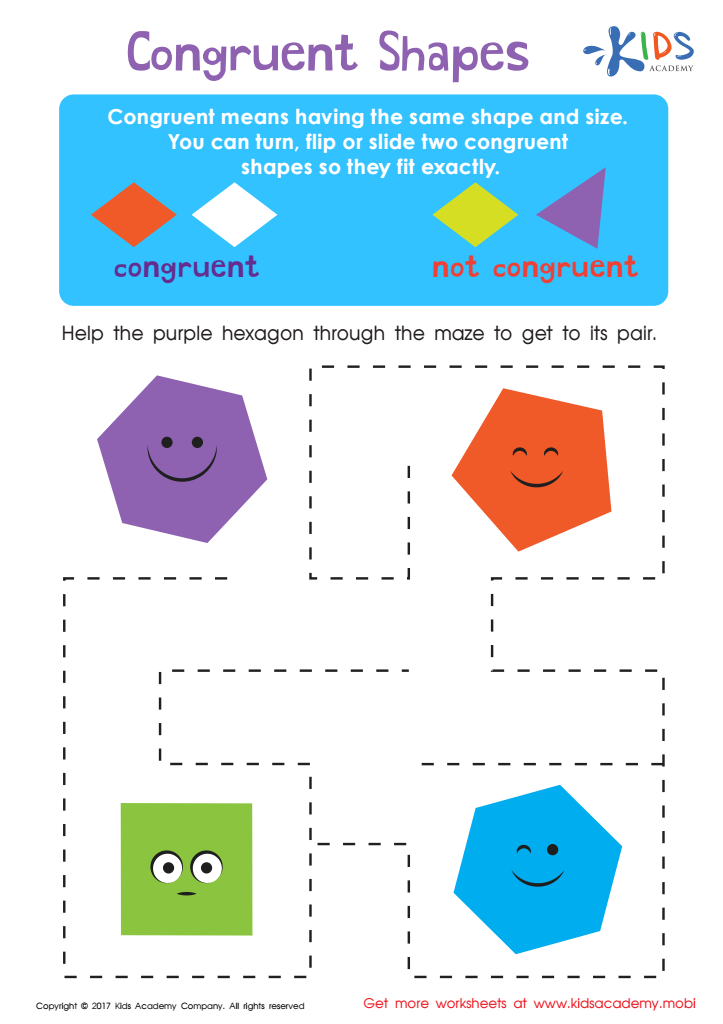
Congruent Shapes Worksheet
 Assign to My Students











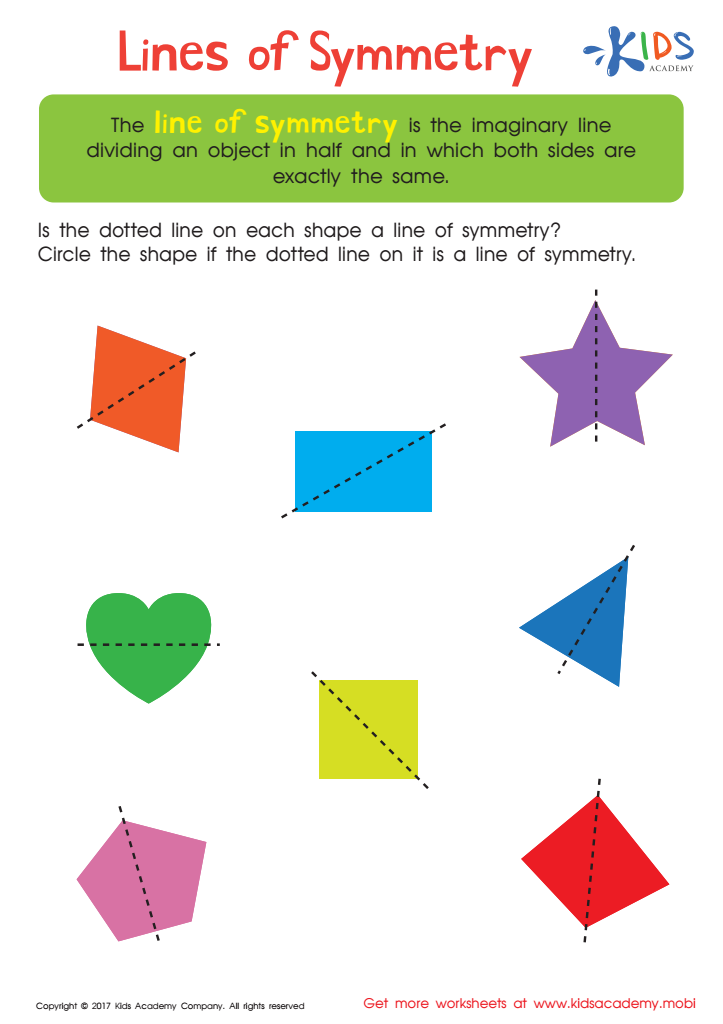
Lines of Symmetry Printable
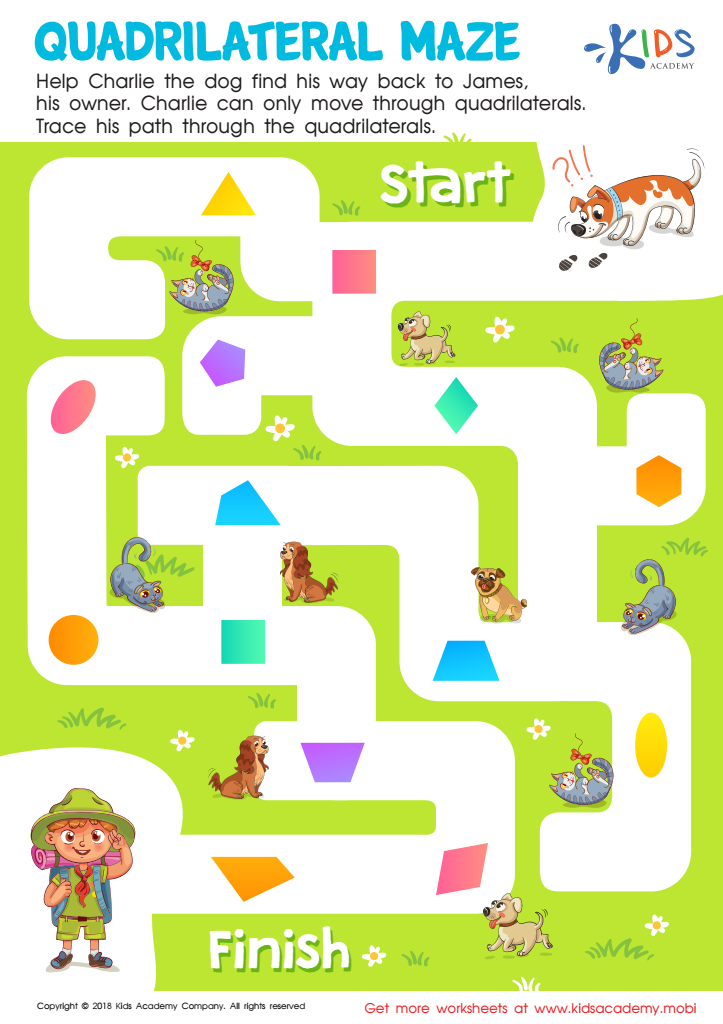
Quadrilateral Maze Worksheet
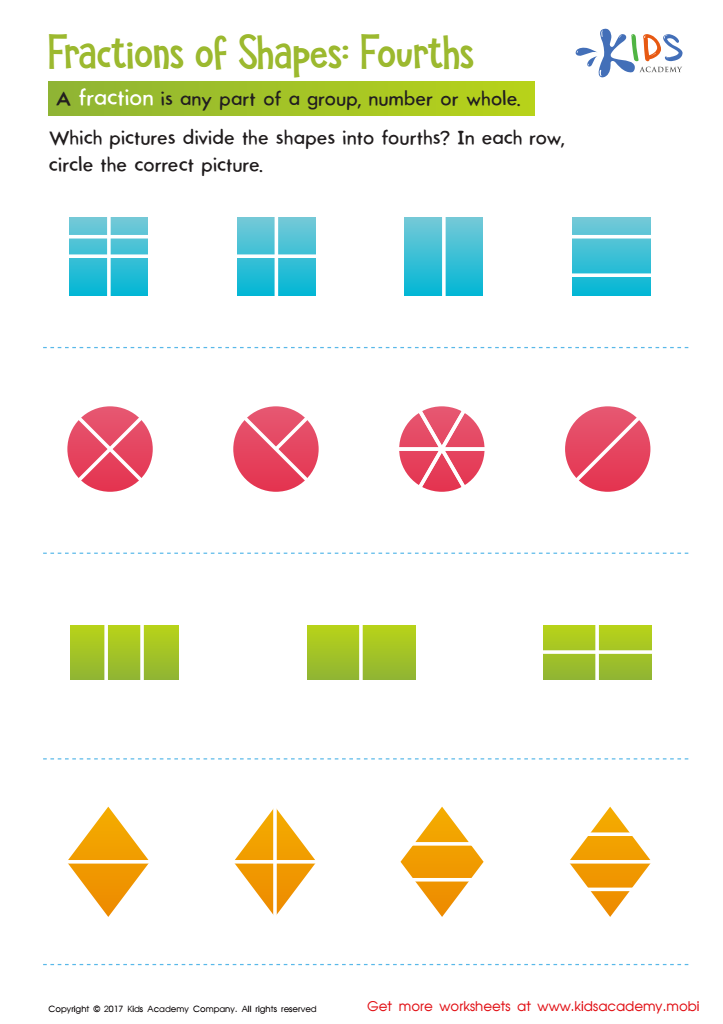
Fractions of Shapes Worksheet
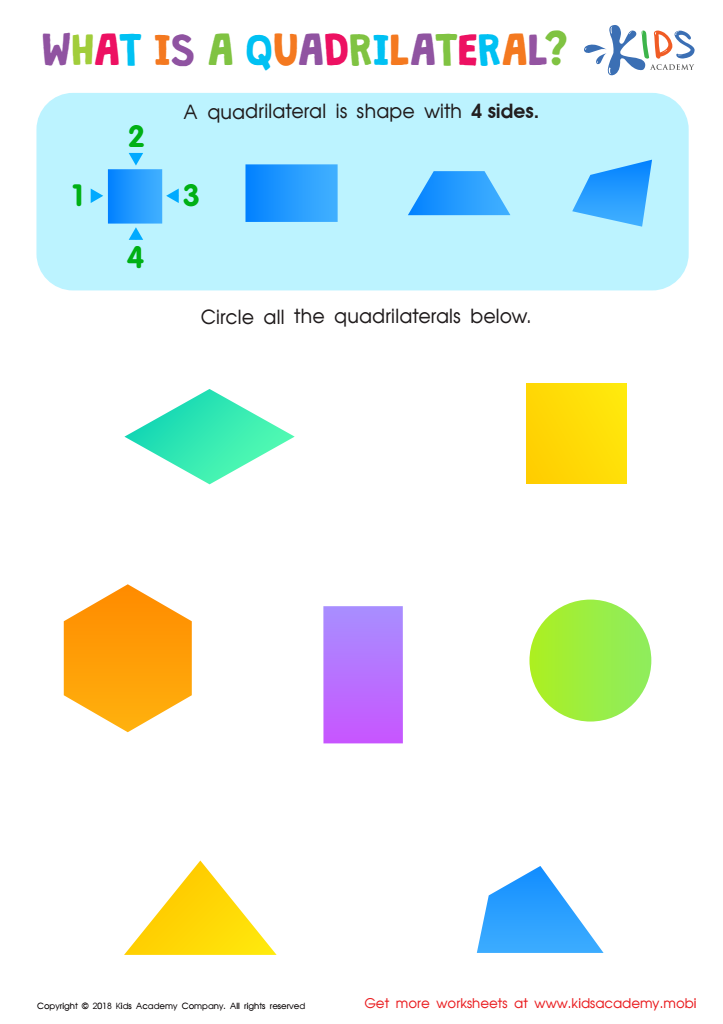
What Is a Quadrilateral? Worksheet








Recognizing shapes is a fundamental aspect of geometry that plays a crucial role in the cognitive development of 8-year-olds. At this age, children are not only developing critical thinking and problem-solving skills, but they are also building a foundation for more complex mathematical concepts. Understanding shapes helps students to categorize and organize the world around them, enhancing their observational skills.
Parents and teachers should care about this because geometric recognition goes beyond math. It enhances spatial awareness, an important skill that translates into everyday tasks such as reading maps, understanding graphs, and engaging in activities like art and design. Recognizing shapes also fosters creativity, as children learn to identify patterns and relationships between different forms.
Additionally, knowledge of geometry aids in developing language skills. When children describe shapes—discussing attributes like sides, angles, and symmetry—they enhance their vocabulary and communication abilities. This foundational knowledge prepares them for future mathematical studies and relates directly to a wider understanding of science, engineering, and technology.
Fostering shape recognition not only nurtures mathematical competencies but also contributes to holistic learning, essential for their overall growth and future success in various domains. Engaging in these learning opportunities can significantly enrich their educational experience.








