Comparison Skills Math Worksheets for 8-Year-Olds
5 filtered results
-
From - To
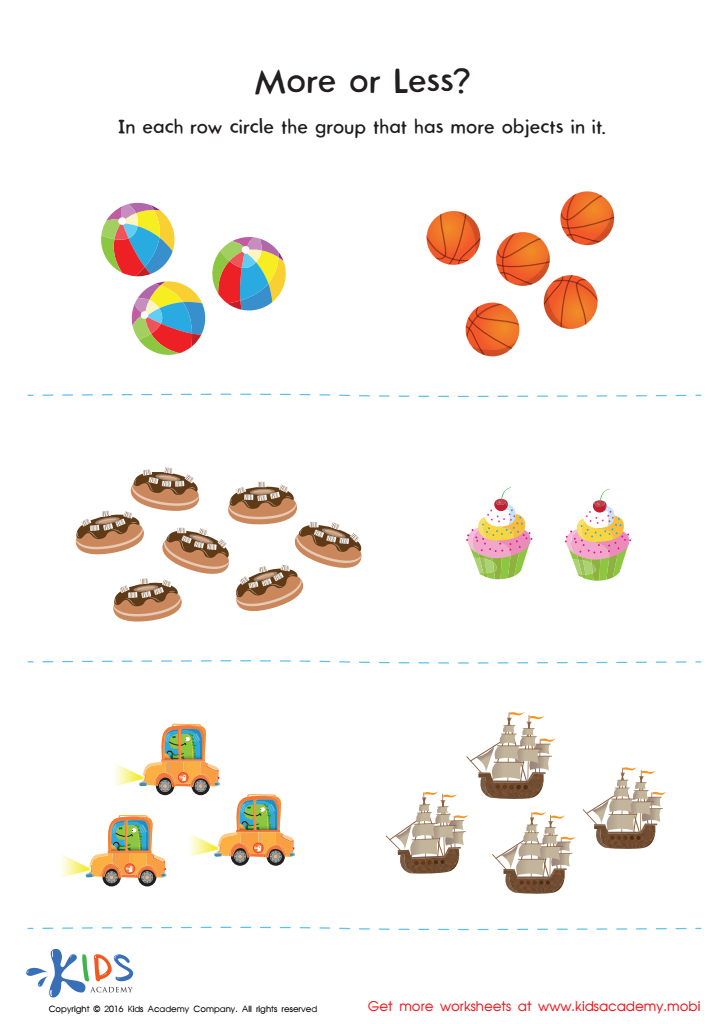
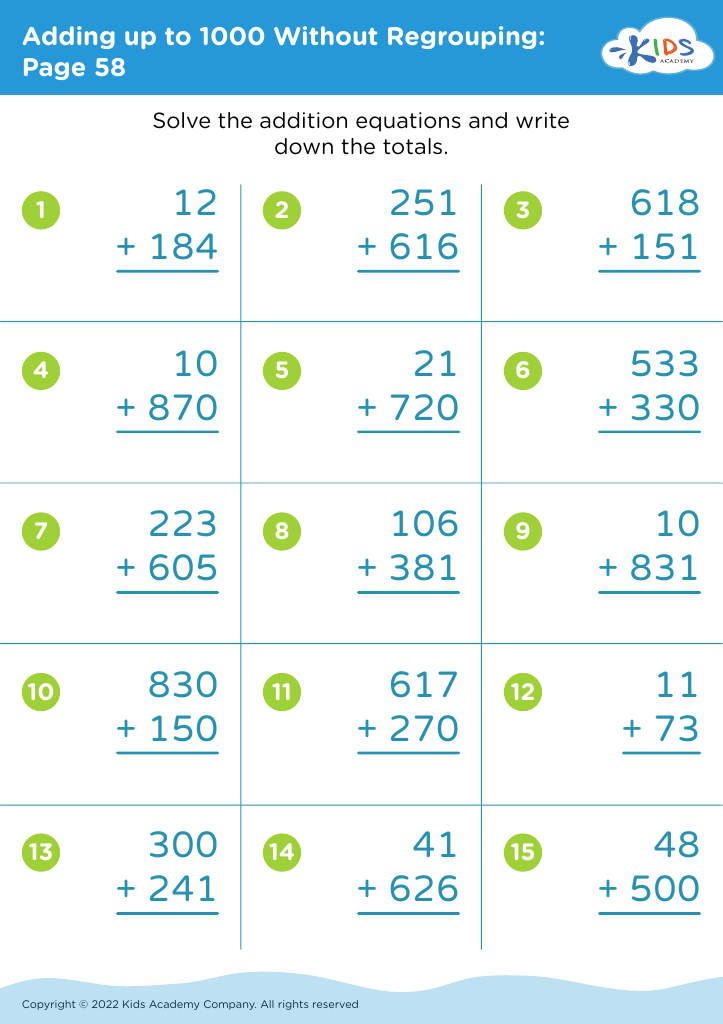
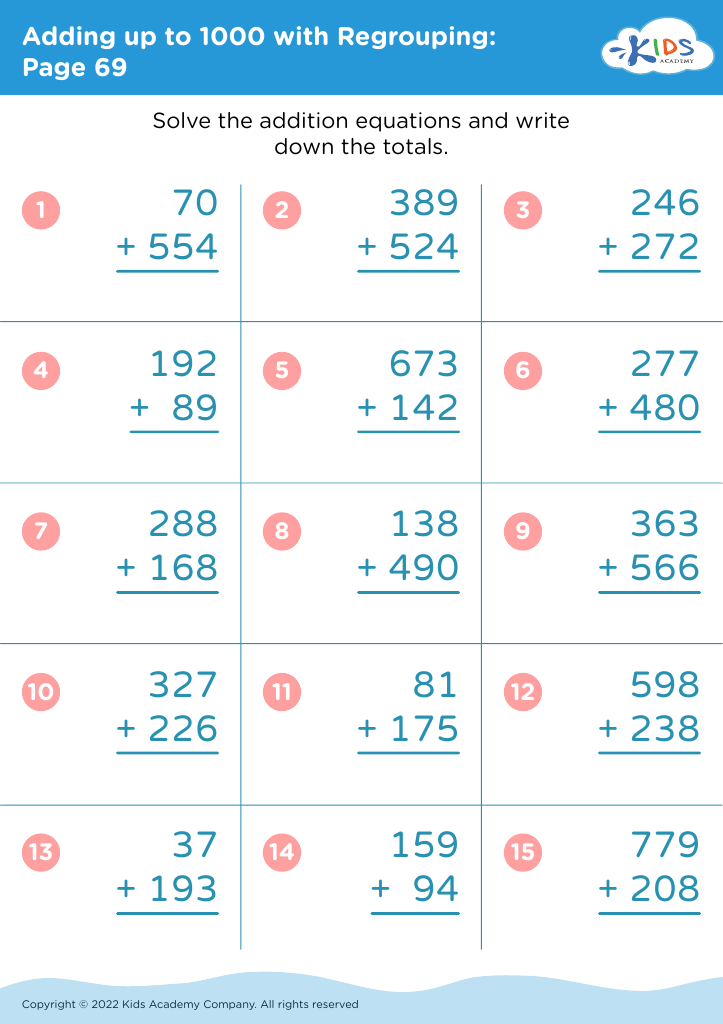
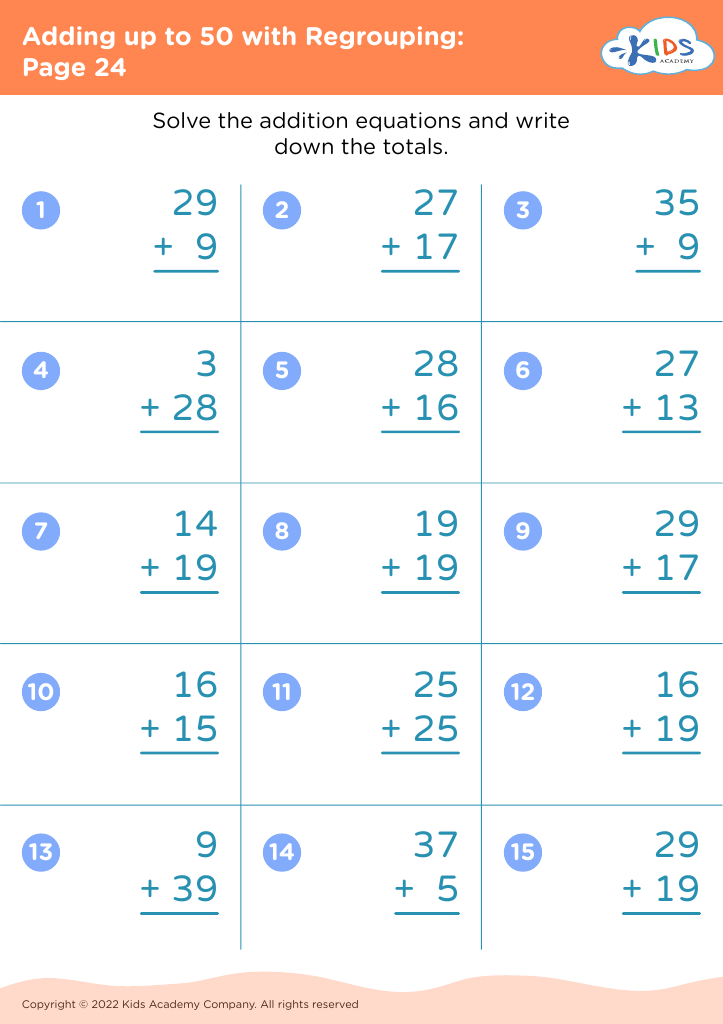
Boost your child's mathematical abilities with our specialized Comparison Skills Math Worksheets, designed specifically for 8-year-olds. These engaging and educational worksheets help kids understand and practice comparing numbers, quantities, and values, fostering essential problem-solving and critical-thinking skills. Each printable worksheet is tailored to align with age-appropriate learning objectives, ensuring a fun and effective learning experience. Through a variety of exercises, children will develop key competencies that are foundational for advanced math concepts. Visit our page at Kids Academy to download high-quality, free worksheets that make mastering comparison skills a delightful journey.
 Assign to My Students
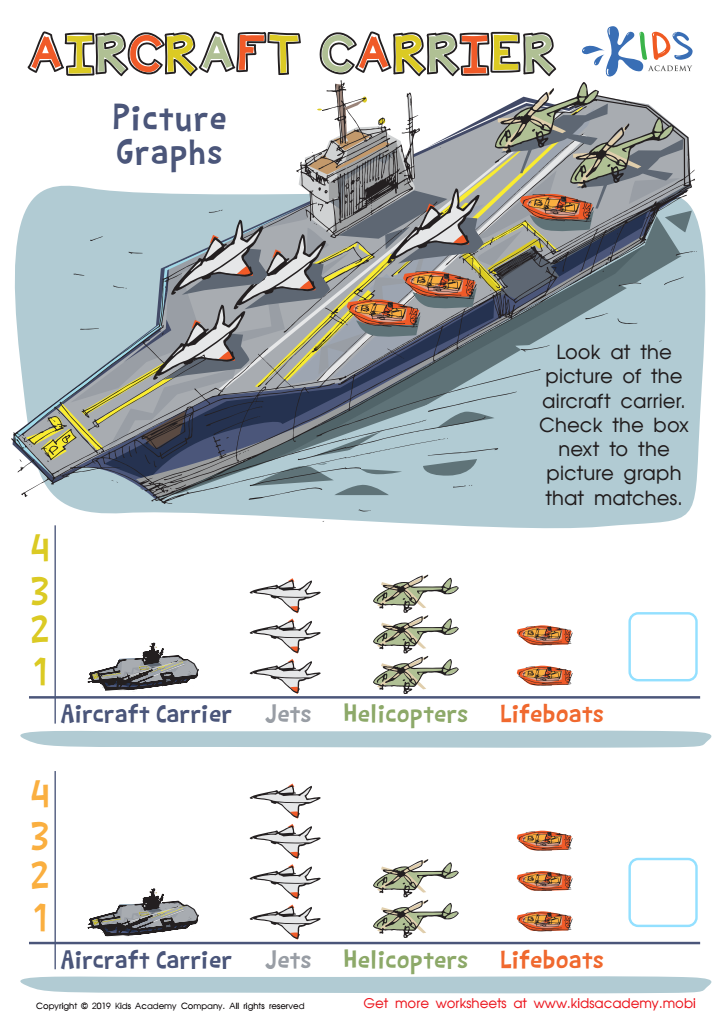
Aircraft Carrier Picture Graphs Worksheet








Comparison skills in math are fundamental for 8-year-olds as they lay the groundwork for more advanced mathematical reasoning and real-world problem-solving. For parents and teachers, fostering these skills is crucial for several reasons.
First, comparison skills help children understand relationships between numbers, such as greater-than, less-than, and equal-to concepts. This basic knowledge is essential for mastering other arithmetic operations like addition, subtraction, multiplication, and division. Without a solid grasp of comparisons, students may struggle with these more complex tasks.
Moreover, comparison skills enhance critical thinking. When children compare numbers, shapes, or measurements, they learn to analyze and make judgments based on observed differences and similarities. This methodical thinking extends beyond math, aiding in tasks that require logical reasoning such as science and coding activities.
Additionally, proficiency in comparison is useful in everyday situations. Whether interpreting scores in sports, managing allowances, or understanding time, children use these skills to make informed decisions. Encouraging these abilities boosts a child's confidence and independence.
Therefore, investing in teaching comparison skills from a young age not only nurtures a love for math but also equips children with vital tools to navigate their academic journey and everyday life successfully. Parents and teachers play a pivotal role in this developmental stage by providing support through engaging, relatable activities.








