Developing fine motor skills Math Worksheets for 8-Year-Olds
3 filtered results
-
From - To
Enhance your child's fine motor skills with our engaging math worksheets designed specifically for 8-year-olds. These worksheets combine fun activities with essential math concepts, allowing kids to practice writing numbers, counting, and basic calculations while improving their hand-eye coordination and dexterity. Each activity is thoughtfully crafted to keep young learners motivated and enthusiastic about math. With colorful designs and interactive exercises, your child will have fun mastering fine motor skills alongside critical math skills. Perfect for at-home or classroom use, our collection supports your child's development and helps pave the way for their future academic success. Explore these worksheets today!
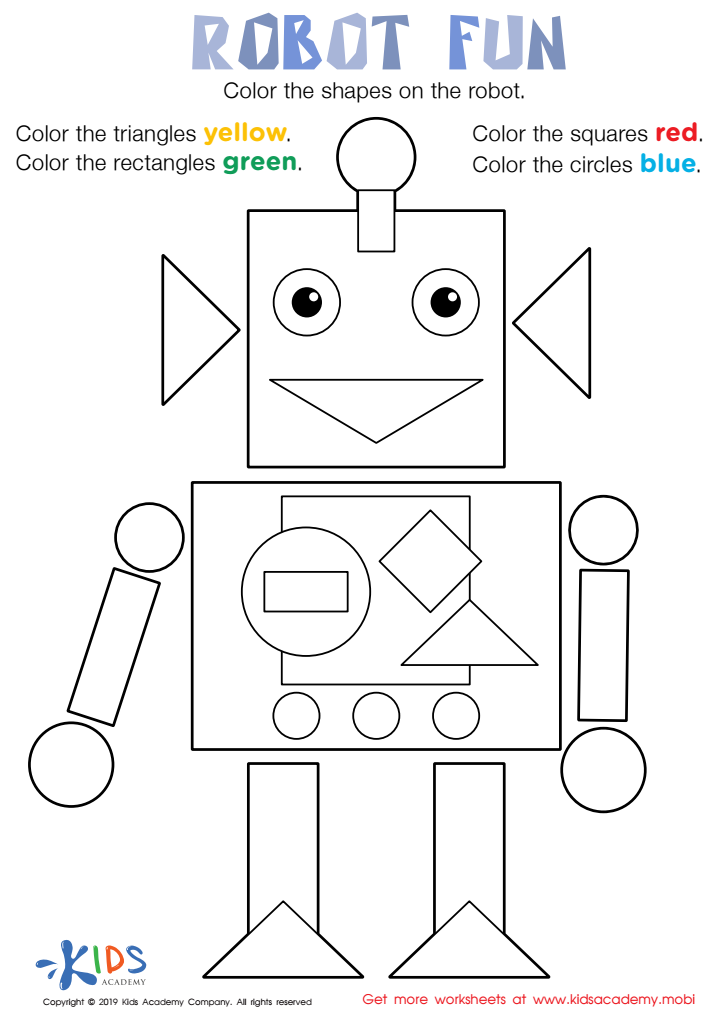
Robot Fun Worksheet
 Assign to My Students







Developing fine motor skills in 8-year-olds is crucial for their overall learning and growth, particularly in mathematics. Fine motor skills involve the use of small muscles in the hands and fingers, which are essential for tasks such as writing, manipulating tools, and engaging with hands-on math activities. As children learn math concepts, they often need to execute precise movements, such as drawing shapes, measuring objects, or organizing materials for problem-solving.
When parents or teachers focus on enhancing a child’s fine motor skills, they are effectively laying a foundation for mathematical competence. Kids with well-developed fine motor abilities can better engage with activities involving number manipulation, geometry, and measurement, leading to improved confidence and creativity in their mathematical thinking.
Additionally, strong fine motor skills contribute to the development of spatial awareness and visual perception, essential components of math reasoning. Poor fine motor control can hinder a child's ability to articulate their understanding of math concepts, including reasoning and problem-solving. By nurturing these skills, educators and parents not only boost math proficiency but also support a child’s overall cognitive and physical development, thus instilling a lasting enthusiasm for learning.








