Drawing skills Math Worksheets for 8-Year-Olds
6 filtered results
-
From - To
Enhance your 8-year-old's math experience with our engaging Drawing Skills Math Worksheets! These innovative worksheets seamlessly combine creativity and mathematics, helping young learners visualize problems while developing essential drawing skills. Each activity encourages children to interpret mathematical concepts through illustration, making learning interactive and fun. From geometry to spatial awareness, these worksheets are designed to strengthen critical thinking and problem-solving abilities. Ideal for home or classroom use, our worksheets promote independent learning and boost confidence in young mathematicians. Download now and watch your child thrive in both math and art as they explore the world of numbers through drawing!
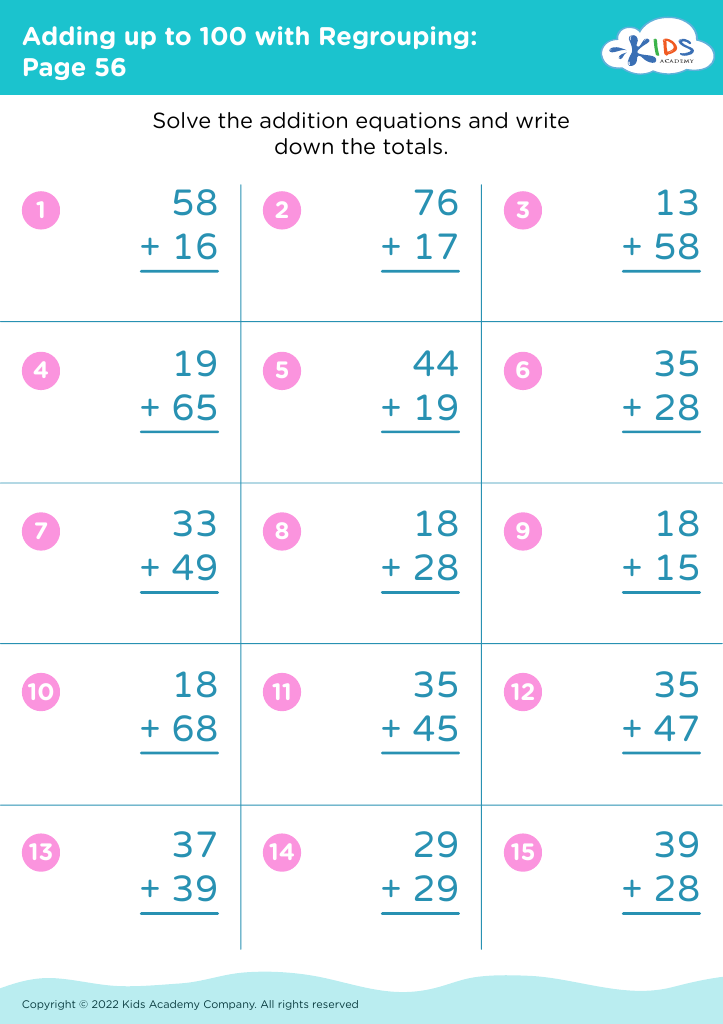
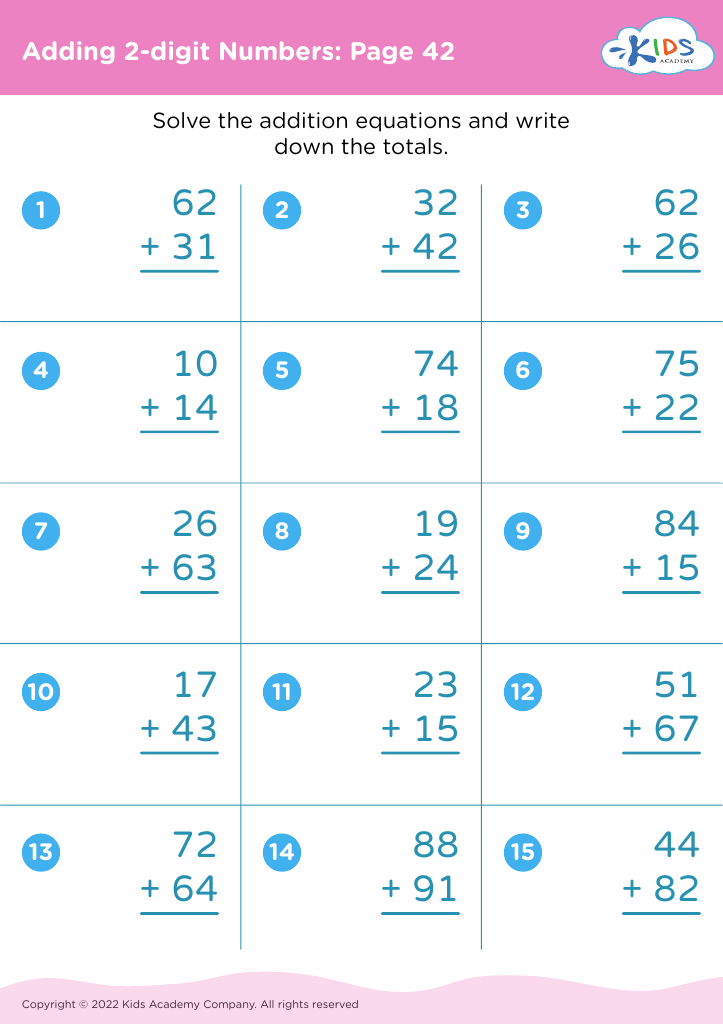








Parents and teachers should care about drawing skills in relation to mathematics for 8-year-olds because these skills play a crucial role in enhancing children's understanding of mathematical concepts. At this age, children are beginning to grasp more complex ideas, and drawing serves as a visual representation that can make these concepts more accessible. For instance, when children draw shapes, graphs, or even word problems, they are able to visualize relationships and spatial reasoning, which solidifies their understanding of concepts like geometry or data interpretation.
Additionally, drawing encourages creativity and critical thinking, essential skills that can enhance problem-solving in math. Children who can express mathematical ideas through illustrations often find it easier to communicate their thought processes, allowing teachers and parents to assess their understanding more effectively. Furthermore, integrating drawing with math can foster a positive attitude towards the subject, making math feel less intimidating and more engaging. As children develop their drawing skills alongside their mathematical abilities, they benefit from a holistic learning experience that nurtures both artistic and analytical capabilities. Ultimately, fostering drawing skills in young learners prepares them for future academic challenges and nurtures a well-rounded educational experience.








