Financial literacy Math Worksheets for 8-Year-Olds
4 filtered results
-
From - To
Our Financial Literacy Math Worksheets for 8-Year-Olds offer engaging, age-appropriate activities to build essential money management skills. These worksheets cover fundamental concepts like adding and subtracting money, understanding value, making change, and budgeting, all in a fun and interactive way. Designed to fit seamlessly into classroom or home learning, they feature vibrant illustrations and relatable scenarios to keep young minds motivated. Empower your child with the basic tools they need for a lifetime of financial stability, all while strengthening their math skills. Perfect for parents and educators seeking to instill smart financial habits early on.
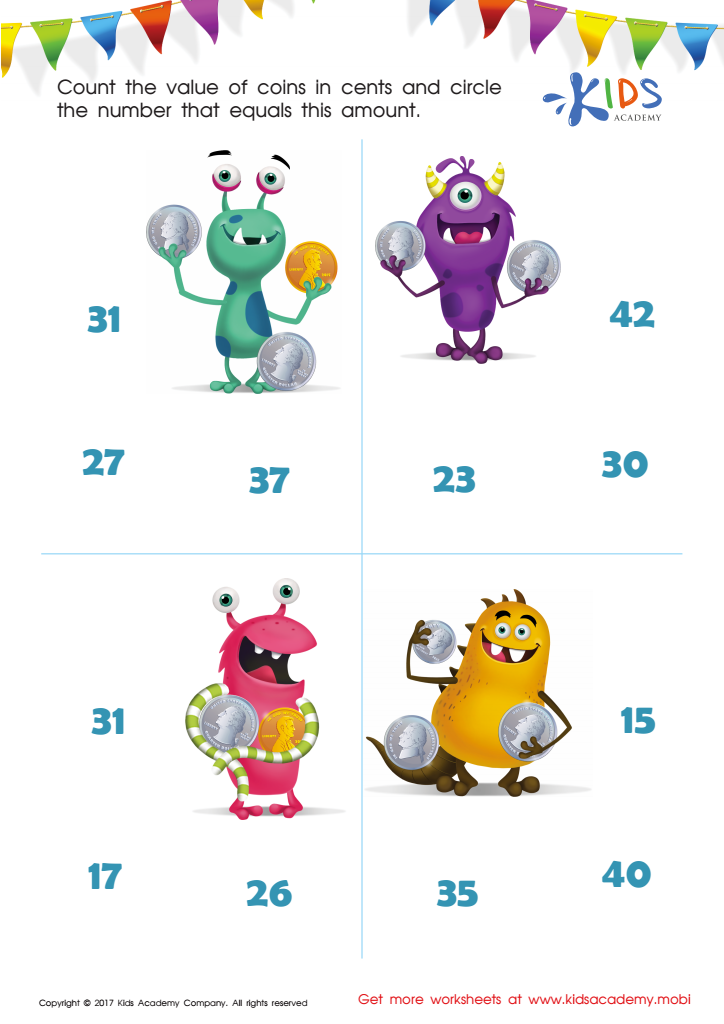
How Many Coins Money Worksheet
 Assign to My Students
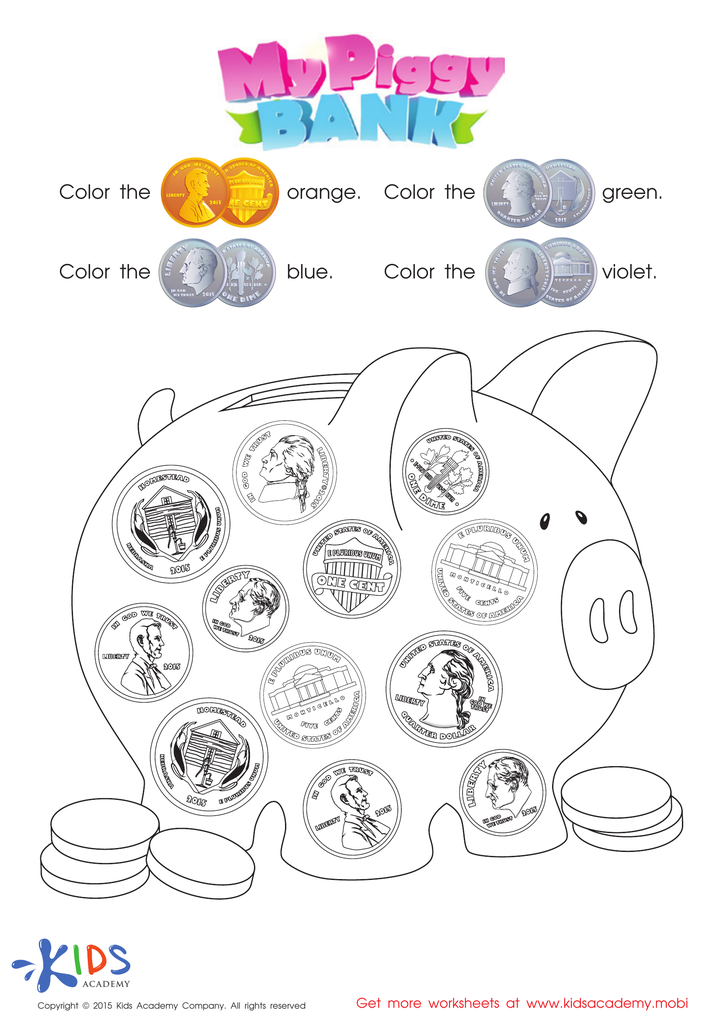
Recognizing Money Money Worksheet
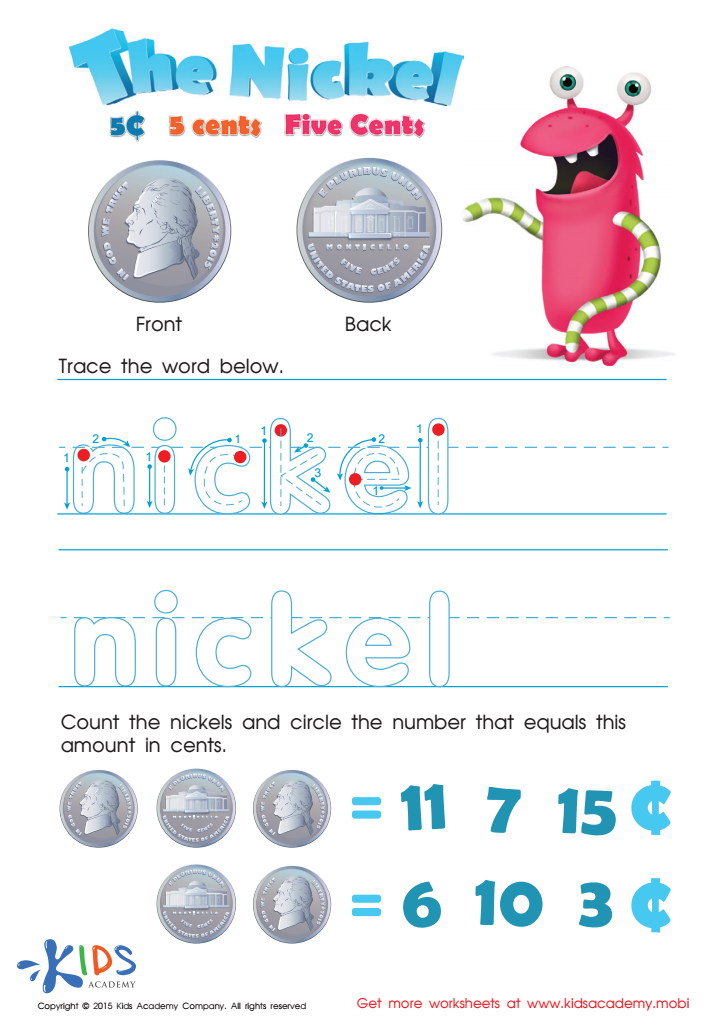
Five Cents or the Nickel Money Worksheet
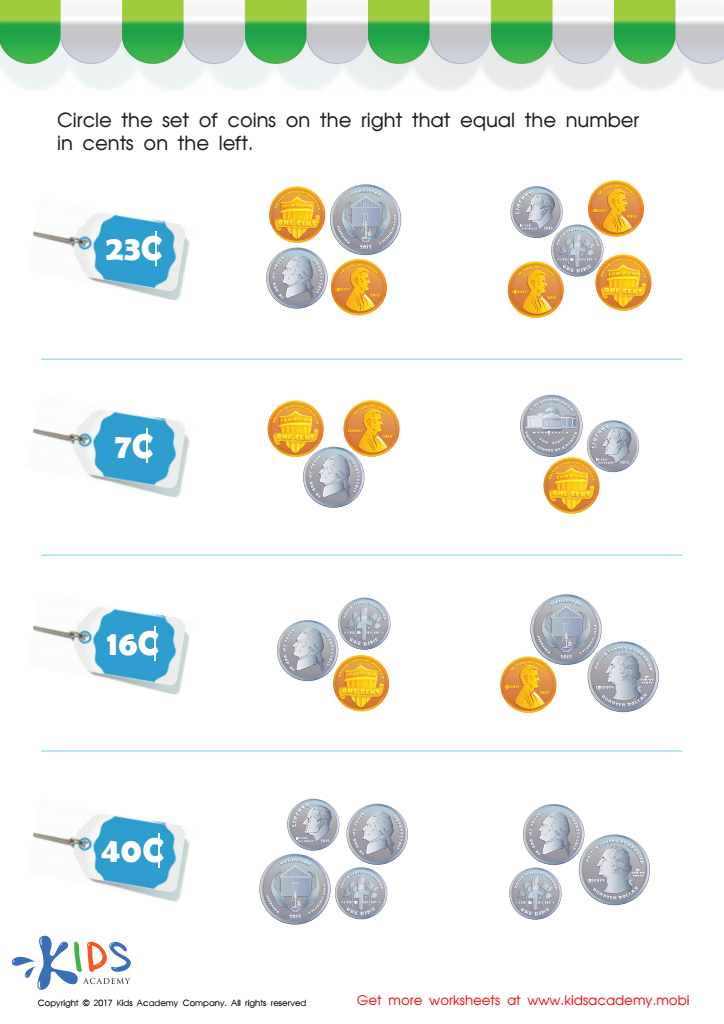
Picking the Coins You Need Money Worksheet








Embedding financial literacy in math lessons for 8-year-olds is critically important for several reasons that resonate with both parents and teachers. At this developmental stage, children are highly curious and impressionable, making it the perfect time to introduce basic financial concepts in a way that can grow with them.
Firstly, teaching financial literacy at a young age establishes a strong foundation for future financial responsibility. Understanding basic concepts such as saving, spending, and the value of money helps children develop decision-making skills that will be valuable throughout their lives. This early exposure can prevent financial mismanagement and debt problems in adulthood.
Secondly, integrating financial literacy with math enhances problem-solving skills and practical application of arithmetic. When children see how math relates to everyday life—like counting money, calculating savings, and budgeting—they understand the subject's direct relevance, fostering a deeper appreciation and interest in learning.
Moreover, early financial education promotes equality. By teaching all students essential financial skills, regardless of their socio-economic background, we help level the playing field. Kids from families that might not discuss finances at home especially benefit from this structured learning.
In sum, whether you are a parent or a teacher, prioritizing financial literacy in the math curriculum for 8-year-olds equips children with essential life skills, bolsters their academic performance, and prepares them for a more equitable future.








