Reinforce math concepts Math Worksheets for 8-Year-Olds
3 filtered results
-
From - To
Welcome to our "Reinforce Math Concepts" worksheets designed specifically for 8-year-olds! Our engaging and interactive math worksheets provide invaluable practice for young learners, offering a fun way to strengthen essential math skills. From basic addition and subtraction to early multiplication and division, these worksheets are tailored to support your child's learning journey. Each activity focuses on reinforcing key concepts, promoting critical thinking and problem-solving abilities. Whether at home or in the classroom, our comprehensive resources help children build confidence in their math skills, ensuring a solid foundation for future learning success. Explore our collection and watch your child thrive in math!
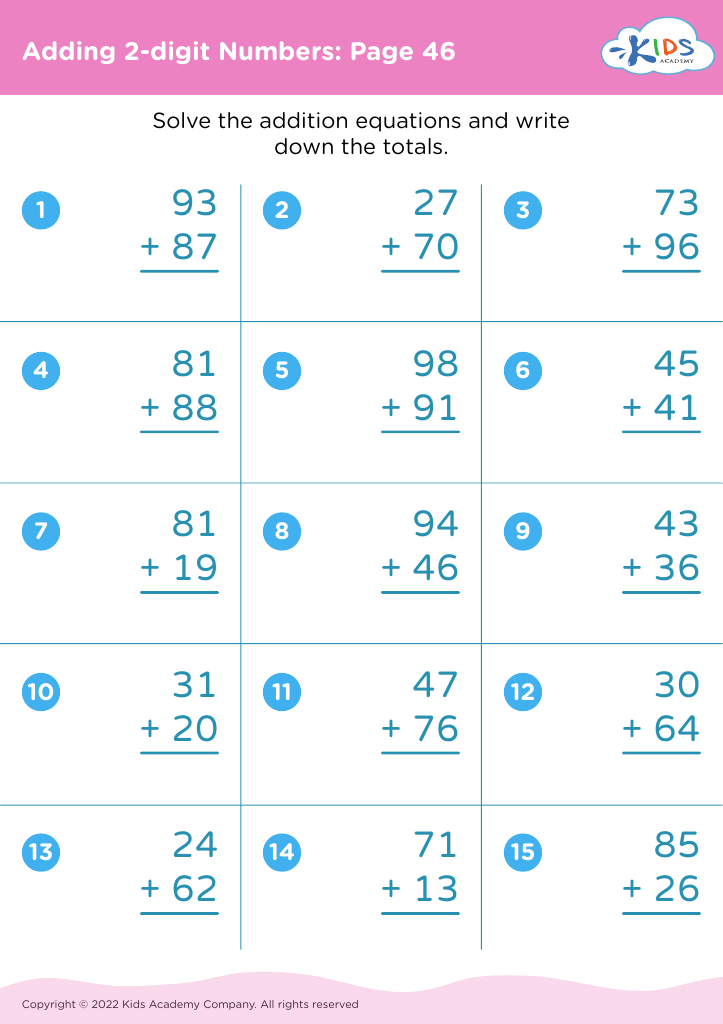
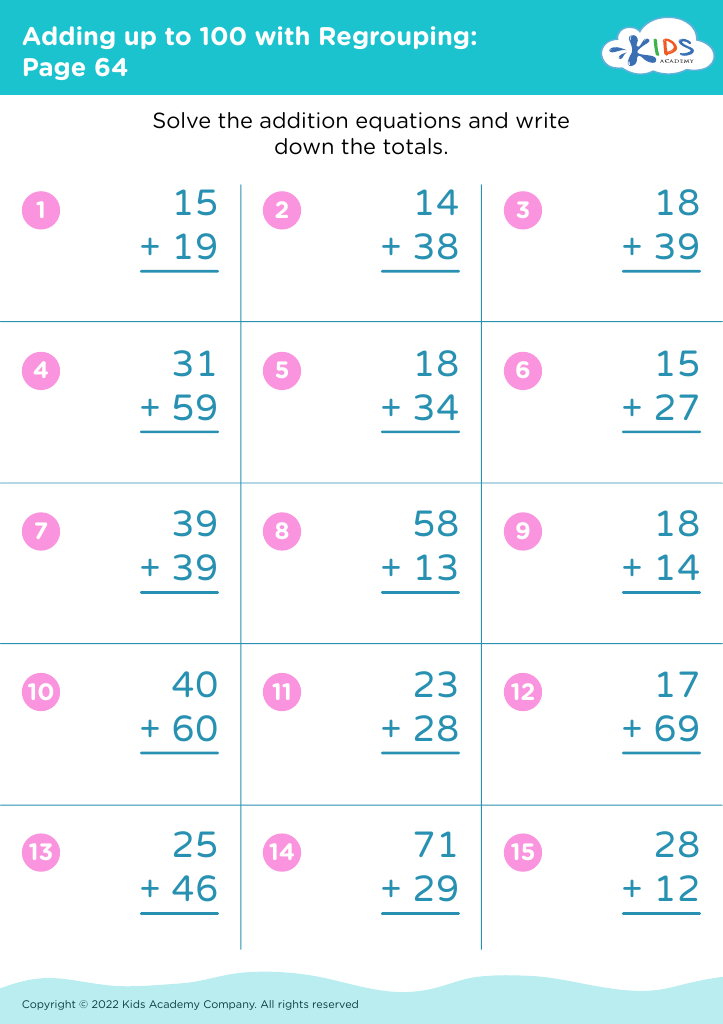
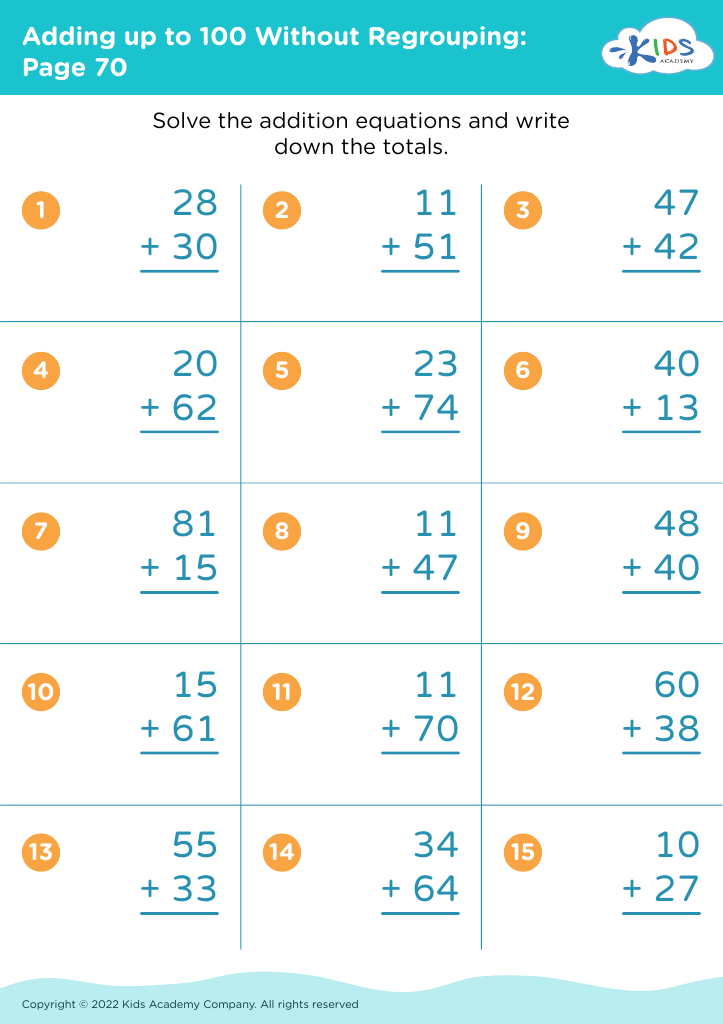








Reinforcing math concepts for 8-year-olds is crucial for their cognitive development and academic success. At this age, children are transitioning from basic arithmetic to more complex mathematical ideas, including multiplication, division, and introductory fractions. Consistent reinforcement helps solidify these foundational skills, ensuring they have a strong understanding to tackle more advanced topics later on.
Parents and teachers play a vital role in this process. Engaging with children through fun activities, games, and real-life applications makes learning enjoyable. This not only promotes a positive attitude towards math but also encourages critical thinking and problem-solving abilities essential for future learning.
Moreover, early intervention can identify and address learning gaps. When parents and teachers collaborate, they can create a supportive environment that meets the child's individual needs, catering to different learning styles. Additionally, a solid grasp of math improves self-confidence, which is beneficial across all academic subjects.
Involving parents in the reinforcement process fosters a love for learning and builds a partnership in the child's educational journey. Ultimately, strengthening math skills at this critical developmental stage lays the groundwork for lifelong learning and numeracy, helping children navigate a world that increasingly relies on math and logic.








