
Understand number relationships Math Worksheets for 8-Year-Olds
3 filtered results
Difficulty Level
Grade
Age
-
From - To
Subject
Activity
Standards
Discover our expertly designed "Understand Number Relationships Math Worksheets for 8-Year-Olds." These engaging printables help young learners grasp foundational math concepts, such as patterns, comparisons, and operations. Each worksheet combines fun activities with educational content, ensuring kids build essential skills while enjoying the learning process. Perfect for classrooms or homeschooling, our worksheets support mathematical confidence and problem-solving abilities. Give your child a solid math foundation with our vibrant, interactive resources tailored specifically for 8-year-olds. Explore now to boost your child's number sense and critical thinking abilities!
Favorites
With answer key
Interactive
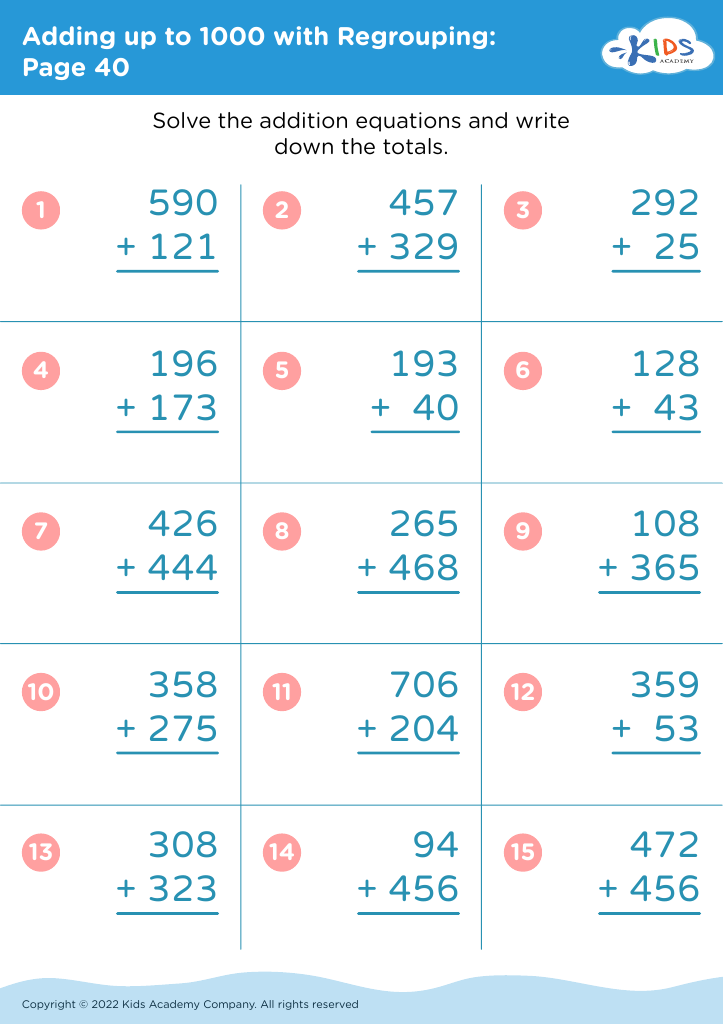
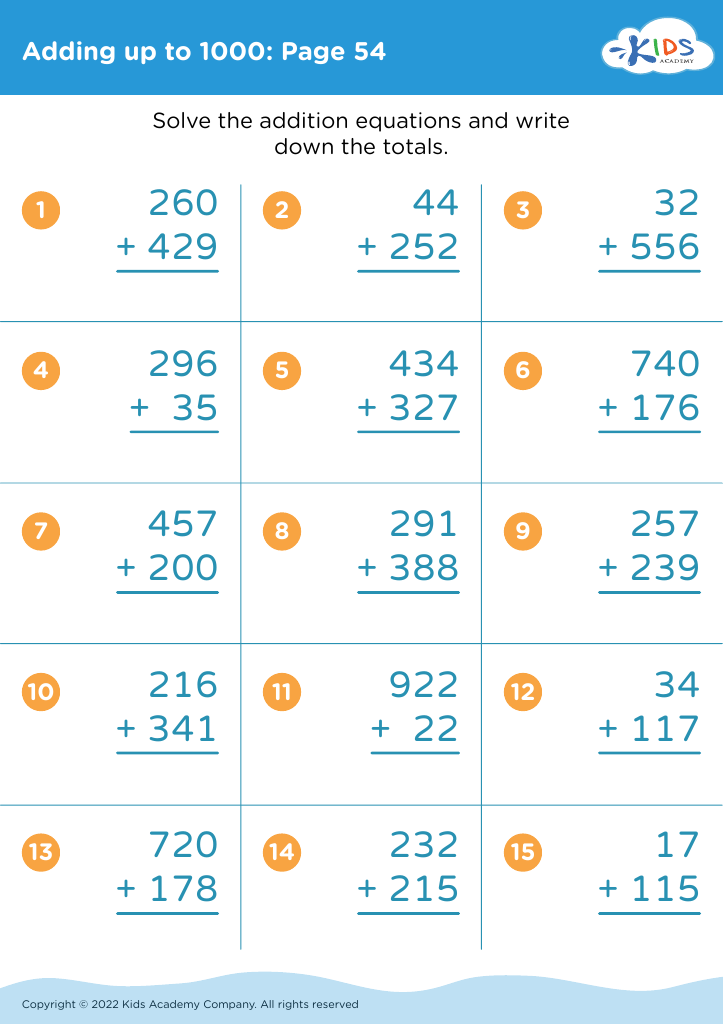
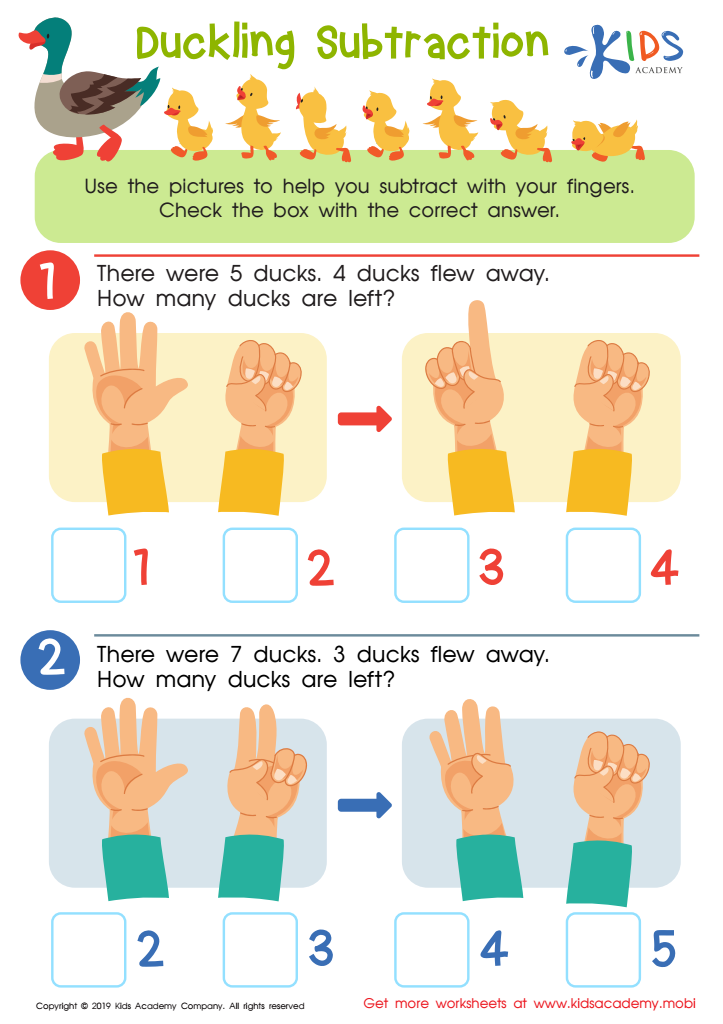
Duckling Subtraction Worksheet
Help your students learn equations and math with this fun worksheet. There are two questions to solve with the help of the pictures. Ask them to subtract with their fingers and check the box with the correct answer. This makes math easier and more enjoyable!
 Assign to My Students
Duckling Subtraction Worksheet
Worksheet
Join Kids Academy for Free
Who is primarily going to use this learning content?






Understanding number relationships is crucial for 8-year-olds because it lays the foundation for all future math learning and problem-solving skills. At this age, children transition from simple counting to more complex operations and concepts such as addition, subtraction, multiplication, and division. When kids grasp how numbers relate to one another—for example, knowing that nine is one less than ten or two more than seven—they build mental models that support arithmetic and algebra.
Parents and teachers should care about these concepts because they're integral to everyday activities and academic success beyond math. For instance, children apply number relationships when measuring ingredients while cooking, dividing items evenly among friends, or understanding time. These experiences cultivate logical thinking, precision, and analytical skills.
Moreover, early mastery of number relationships fosters confidence and enjoyment in math. Children who see how numbers fit together can find math less intimidating and more engaging, encouraging a lifelong positive attitude towards learning.
Failing to develop these skills can lead to struggles in later grades. Gaps at this stage compound over time, making complex subjects like algebra and geometry difficult. Hence, focusing on number relationships ensures a strong mathematical foundation, critical for both immediate and long-term academic success.








