Understanding adjectives Math Worksheets for 8-Year-Olds
5 filtered results
-
From - To
Discover the engaging world of adjectives with our Understanding Adjectives Math Worksheets designed specifically for 8-year-olds! These interactive worksheets combine essential language skills with fun math problems, encouraging students to identify and utilize adjectives in various contexts. Your child will enhance their vocabulary while practicing important math concepts, fostering a holistic learning experience. Each worksheet is carefully crafted to suit the developmental needs of your child, making learning both effective and enjoyable. Explore a variety of exercises that promote critical thinking and creativity as your child navigates the exciting intersection of language and math. Get started today and watch your child's skills soar!
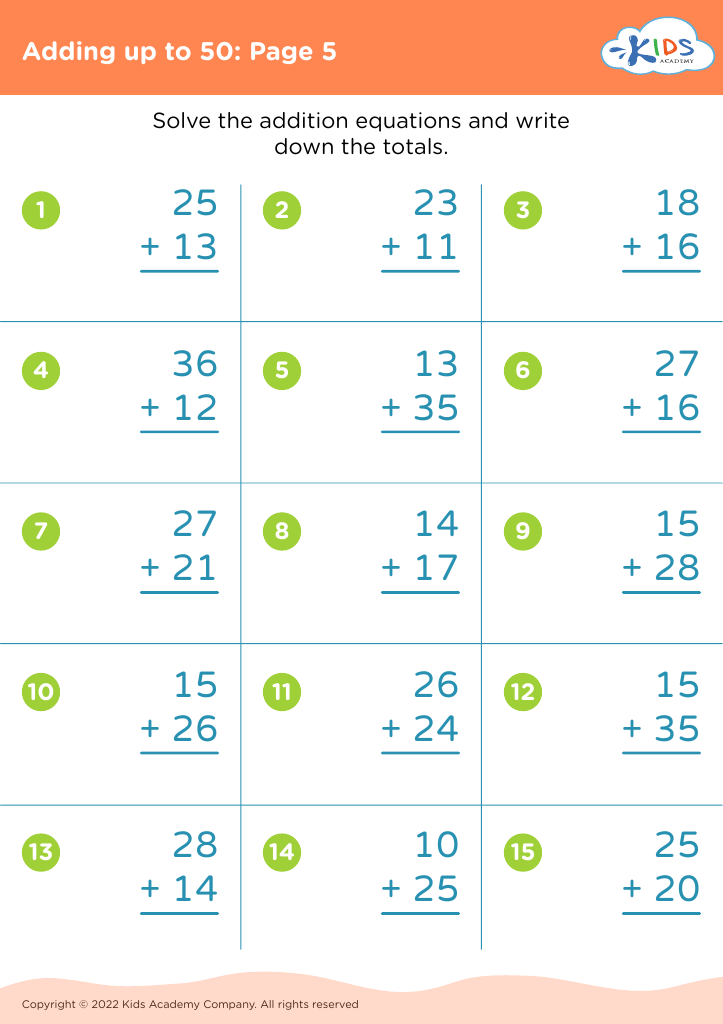








Understanding adjectives is essential in a child's overall development, especially for 8-year-olds who are at a critical stage in their learning. For parents and teachers, knowing the function and application of adjectives enhances both language skills and cognitive development. Adjectives enrich children's vocabulary, helping them articulate their thoughts and feelings more vividly, which fosters effective communication.
In the context of math, adjectives play a vital role in problem-solving. For instance, when children describe shapes, sizes, and quantities, they need to understand terms like "larger," "smaller," "equal," and "different." This comprehension also helps them in critical thinking and reasoning, as they begin to categorize and compare numbers and objects.
Additionally, understanding adjectives plays a role in reading comprehension and following instructions. As young learners encounter word problems, a firm grasp of descriptive words helps them decipher what each question asks and arrive at the right solution. Promoting adjective comprehension thus lays the groundwork for broader mathematical understanding, enhances literacy skills, and supports a well-rounded educational foundation. Engaging with adjectives nurtures children's confidence and competence across multiple subjects, ultimately contributing to their success in school and beyond.








