
Understanding greater/less than Math Worksheets for 8-Year-Olds
3 filtered results
Difficulty Level
Grade
Age
-
From - To
Subject
Activity
Standards
Unlock your child's mathematical potential with our "Understanding Greater/Less Than" worksheets designed specifically for 8-year-olds! These engaging activities help young learners grasp the concept of comparing numbers through fun exercises and encouraging visuals. Kids will practice identifying greater and less than symbols, improving their number sense, and developing critical thinking skills. Our worksheets cater to different learning styles, making math both enjoyable and effective. Ideal for classroom or home use, they reinforce essential math fundamentals while fostering confidence in young mathematicians. Explore our resources today and give your child the solid foundation they need in mathematics!
Favorites
With answer key
Interactive
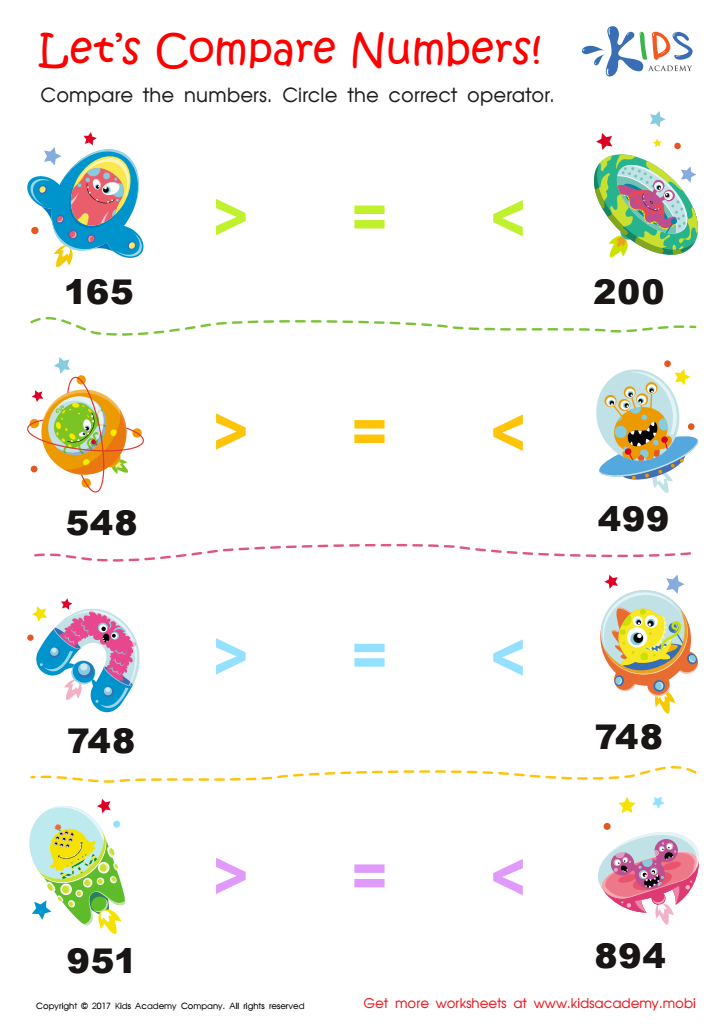
Comparing Numbers Worksheet for 2nd Grade
Alien friends are back to help your child learn to compare numbers using >, < and = symbols. This 2nd grade worksheet will challenge them with larger numbers!
 Assign to My Students
Comparing Numbers Worksheet for 2nd Grade
Worksheet
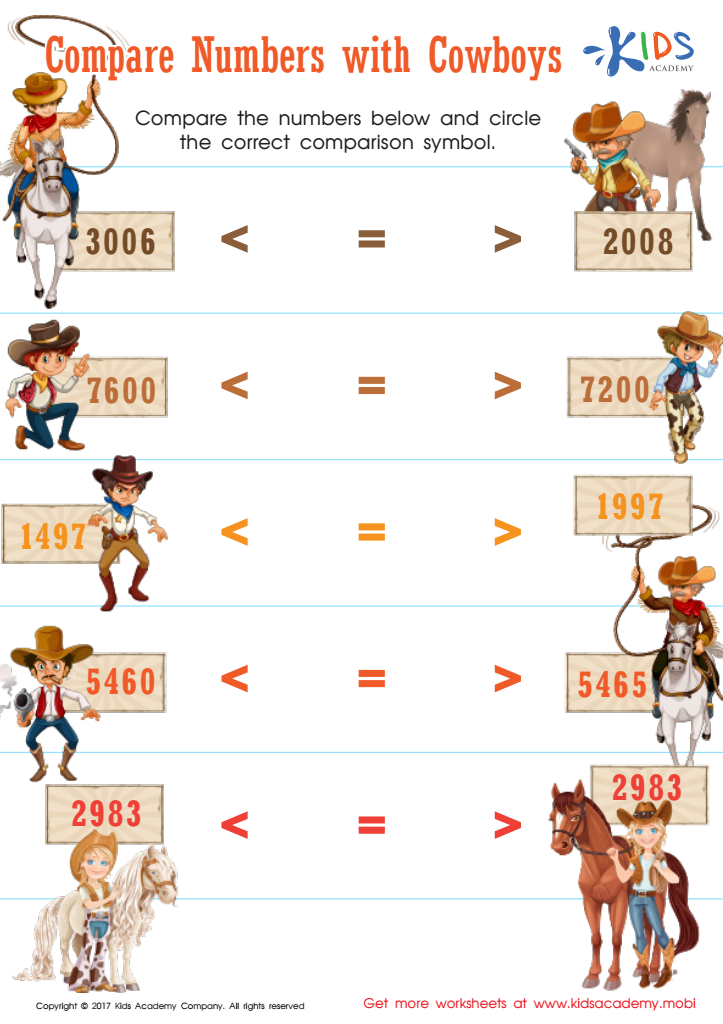
Compare Numbers Worksheet for 3rd Grade
Time to get a roundup on big numbers! Help your 3rd grader practice comparing thousands with this compare numbers worksheet. They'll use >, <, and = symbols for tricky numbers. Jump in and join the cowboys!
Compare Numbers Worksheet for 3rd Grade
Worksheet
Join Kids Academy for Free
Who is primarily going to use this learning content?


.jpg)
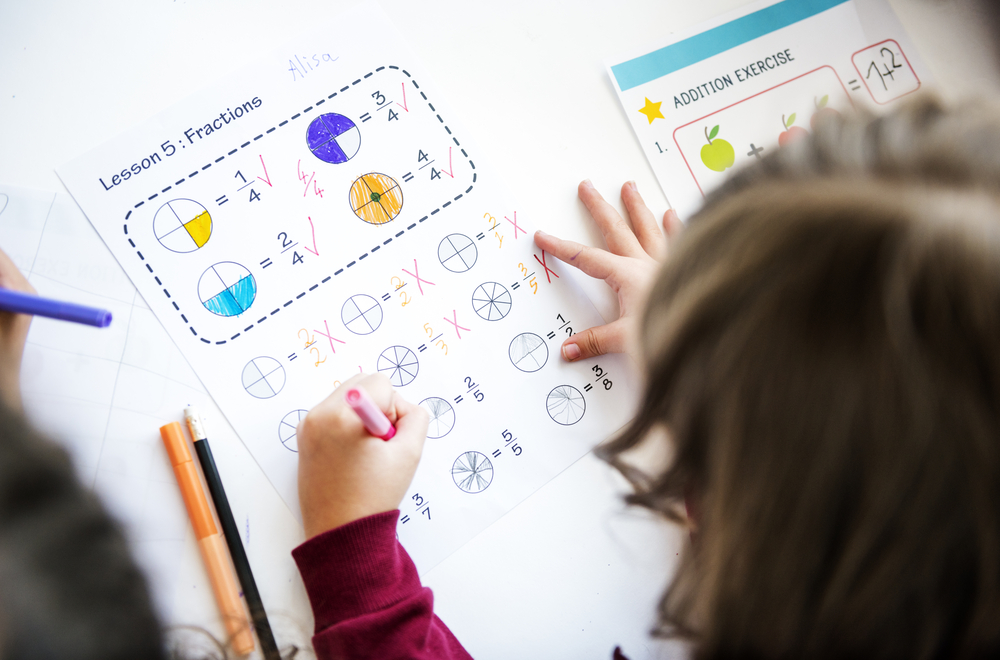



Understanding the concepts of greater than and less than is crucial for 8-year-olds as it serves as a foundation for their mathematical development. At this age, children are transitioning from basic arithmetic to more complex mathematical concepts. Grasping these comparative values helps them develop critical thinking and number sense, which are essential skills for future problem-solving.
When parents and teachers prioritize these concepts, they contribute to the child's confidence and independence in math. Mastering greater than and less than aids in realistic applications, such as budgeting, measuring, and time management, thus preparing them for everyday life. Moreover, a firm understanding of these comparisons also enhances skills for fractions, decimals, and inequalities, which they will encounter in higher grades.
Encouraging discussions about how numbers relate to one another fosters a curiosity about mathematics. Engaging games that involve comparing quantities can make learning fun and interactive, ensuring children build a positive attitude toward math. Overall, appreciating greater and less than not only strengthens their mathematical reasoning but also provides a stepping stone for academic success in diverse subjects as they progress in their education. Parents and teachers play a pivotal role in nurturing this foundational skill, making it an essential focus in early learning.








