Mental math skills Times Tables Worksheets for 8-Year-Olds
4 filtered results
-
From - To
Enhance your 8-year-old's mental math skills with our engaging Times Tables Worksheets! Designed to make learning enjoyable and effective, these worksheets focus on mastering multiplication facts through fun exercises and interactive learning. By practicing regularly, children will improve their speed and accuracy, developing confidence in their math abilities. Our user-friendly format encourages independent learning, making it easy for parents and teachers to support students. With various activities to choose from, kids will strengthen their number sense while enjoying the process. Equip your child with essential math skills that will benefit them for years to come—download our Times Tables Worksheets today!
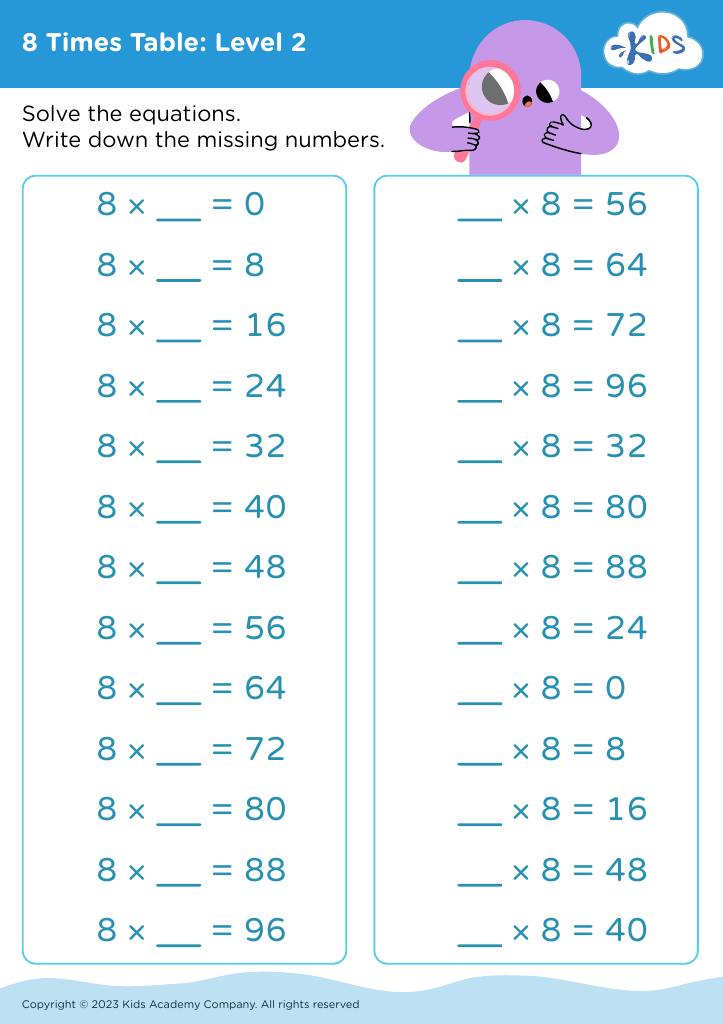
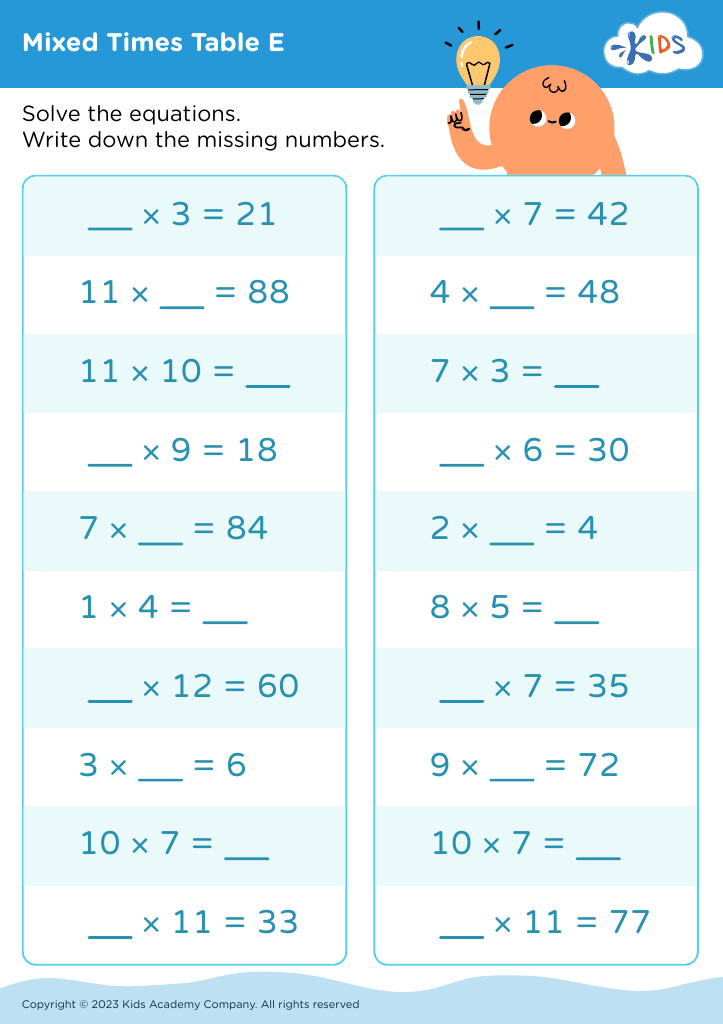
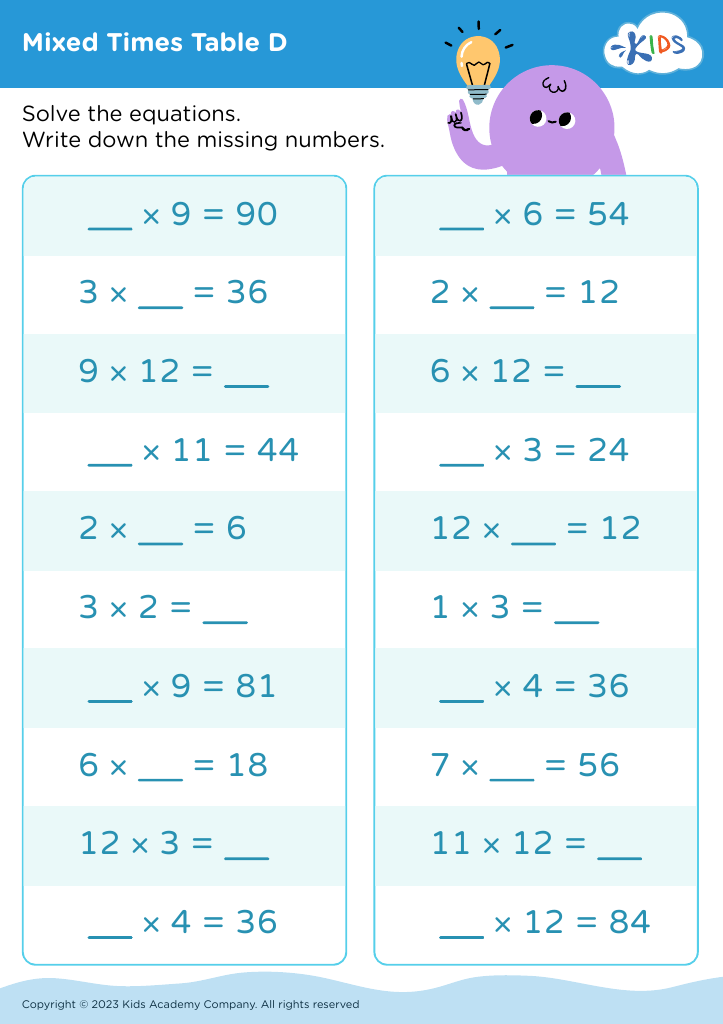
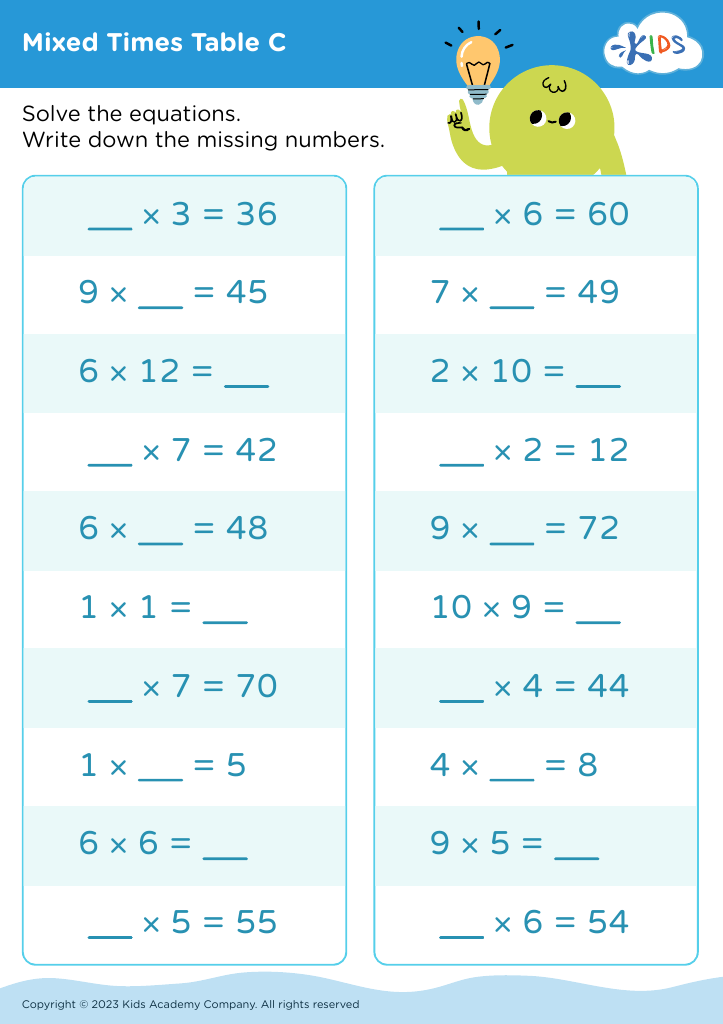





Parents and teachers should prioritize mental math skills, particularly times tables, for 8-year-olds due to their foundational role in a child's overall mathematical proficiency and confidence. Mastering times tables not only aids in quick computation but also fosters a deeper understanding of number relationships and enhances problem-solving abilities.
At this age, children begin encountering more complex math concepts, including multiplication, division, and fractions. Proficiency in times tables equips students with the tools they need to tackle these challenges effectively, reducing anxiety during math lessons and assessments. Additionally, mental math skills promote greater cognitive flexibility, allowing children to manipulate numbers and think critically.
Furthermore, children who excel in mental math often find joy in learning, encouraging a positive attitude towards mathematics that can persist throughout their educational journey. It fosters self-esteem and independence, as students feel more empowered to tackle mathematical problems without relying on calculators or other aids.
In conclusion, investing time in developing mental math skills, particularly times tables, will yield long-term benefits, setting children up for success in mathematics and enhancing their overall academic experience. Collaborative efforts from parents and teachers can create a supportive environment to reinforce these essential skills.








