Times table reinforcement Times Tables Worksheets for 8-Year-Olds
4 filtered results
-
From - To
Welcome to our "Times Table Reinforcement Worksheets" designed specifically for 8-year-olds! Our engaging and interactive worksheets help students master their multiplication skills, building confidence and fluency in mathematics. Featuring colorful designs and varied activities, these resources make learning times tables fun and effective. Your child can practice essential multiplication facts through exercises that reinforce retention, enhance problem-solving skills, and promote independent learning. Whether used in the classroom or at home, our worksheets support productive practice and help children excel in their arithmetic skills. Start enhancing your child's math abilities today with our comprehensive collection of times table reinforcement worksheets!
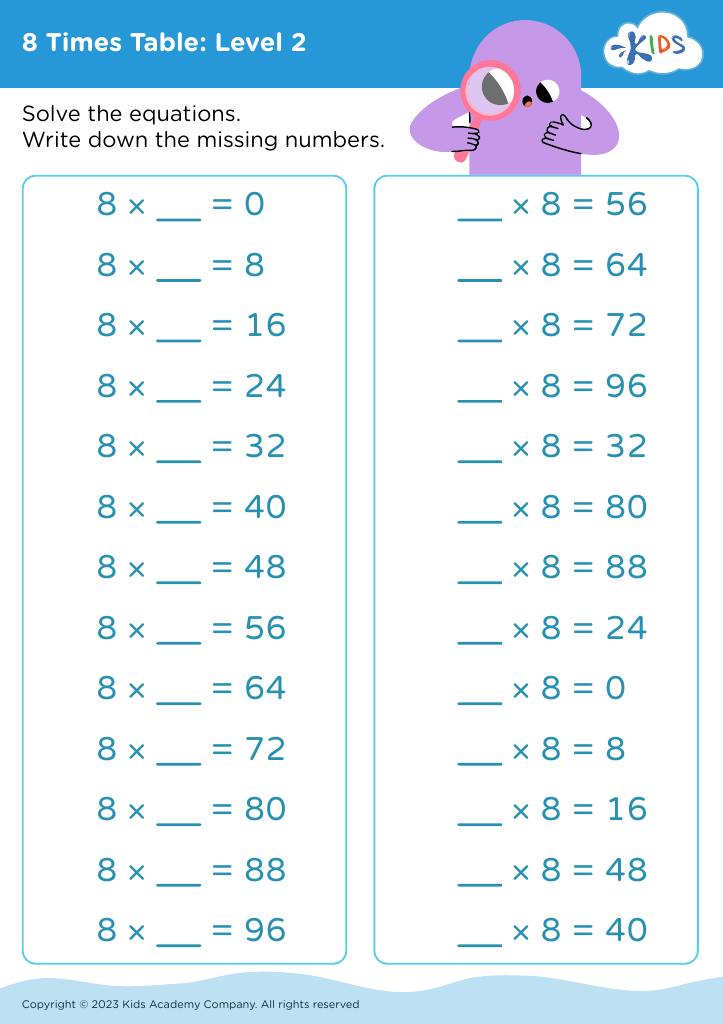
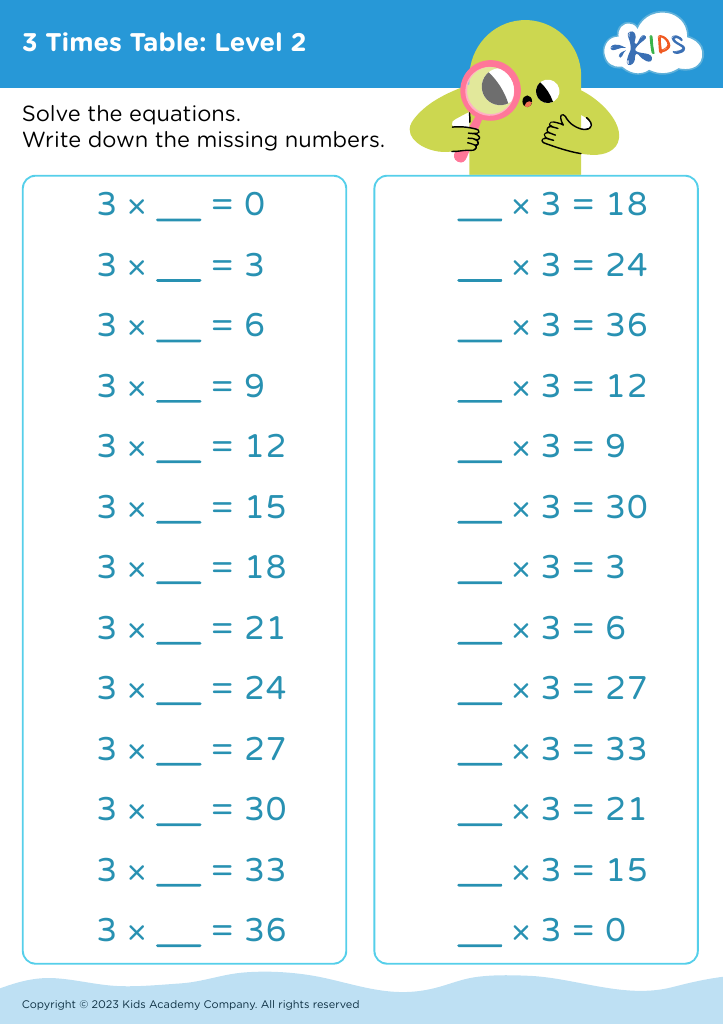
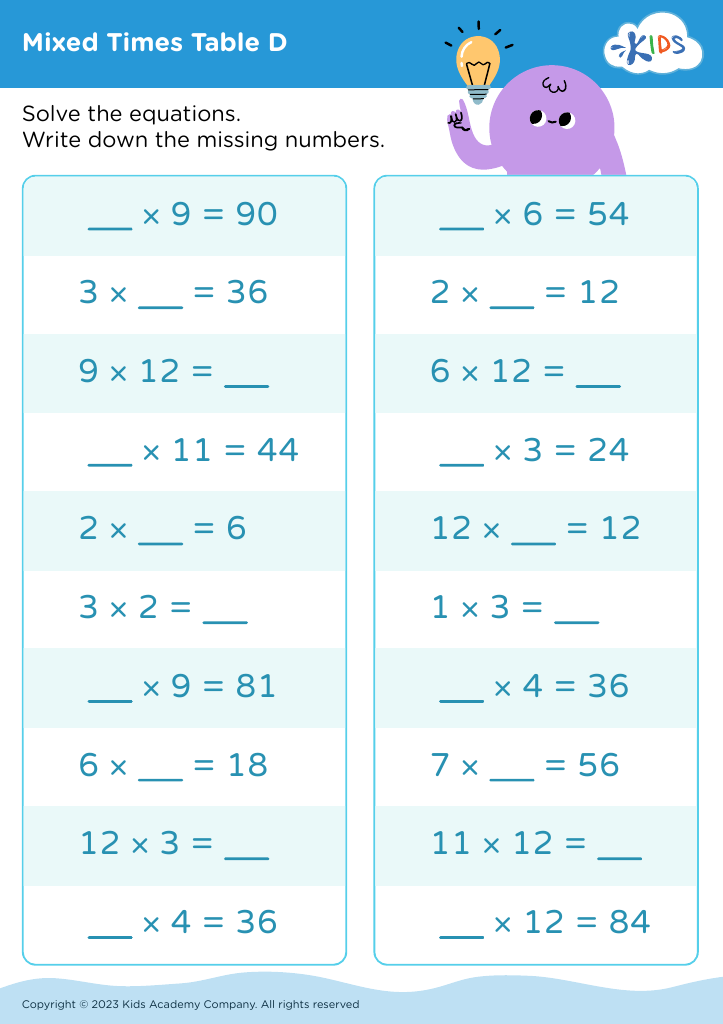
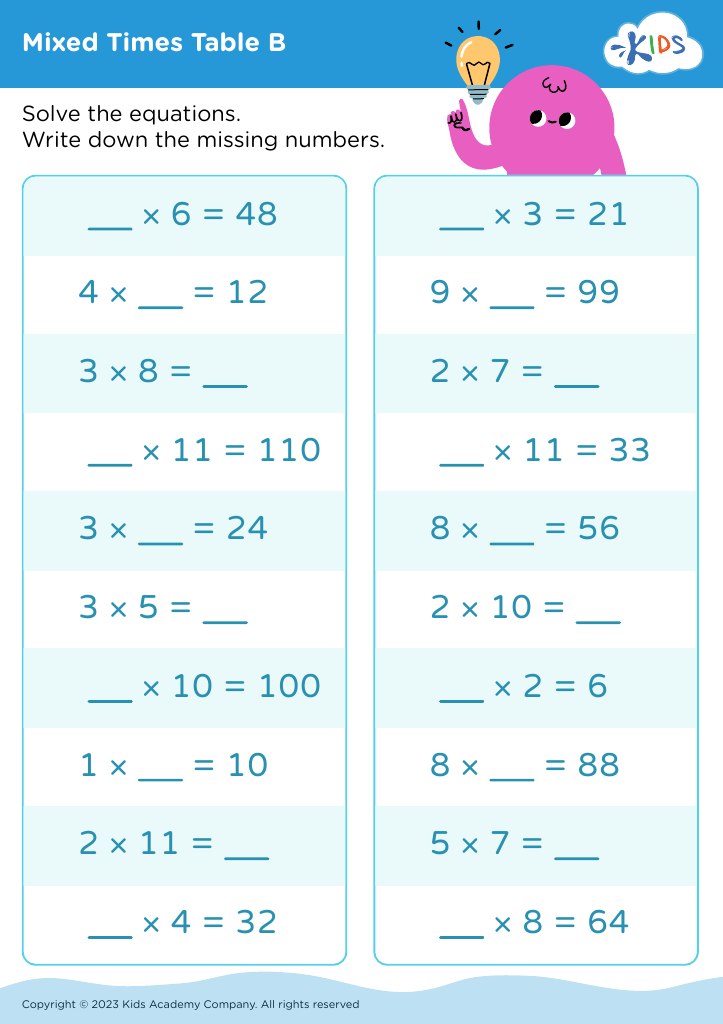





Reinforcing times tables for 8-year-olds is crucial for several reasons. First, mastery of multiplication lays a solid foundation for future mathematical learning. At this age, children are transitioning from basic arithmetic to more complex concepts, such as division, fractions, and even early algebra. A strong grasp of times tables enhances their confidence and speeds up problem-solving skills, proving beneficial for more advanced topics down the line.
Moreover, understanding multiplication fosters broader cognitive skills, such as critical thinking and pattern recognition. It helps children develop quantitative reasoning, which is essential not just in mathematics but in real-world applications like budgeting, cooking, and planning.
Beyond academic benefits, gaining proficiency in times tables can bolster a child's motivation and self-esteem. It can lead to improved performance in school, decreasing anxiety related to math assessments. For parents and teachers, reinforcing this skill through fun and engaging activities – whether it be games, songs, or quizzes – creates a supportive learning environment. This makes math an enjoyable subject rather than a daunting one. Ultimately, prioritizing times table reinforcement positions children for future success in academics and everyday life, making it an essential focus for both parents and educators.








