Logical Reasoning Word Problems Worksheets for 8-Year-Olds
5 filtered results
-
From - To
Boost your child's critical thinking with our "Logical Reasoning Word Problems Worksheets for 8-Year-Olds"! Designed specifically for young learners, these engaging printable worksheets help enhance logical reasoning and problem-solving skills. Each worksheet presents real-world scenarios that kids need to analyze and solve using their math knowledge, promoting deeper understanding and retention. Perfect for classroom use or at-home practice, these activities strengthen essential math abilities while making learning fun and interactive. Equip your 8-year-old with the tools they need to excel in mathematics and logical thinking. Visit Kids Academy to get started today!
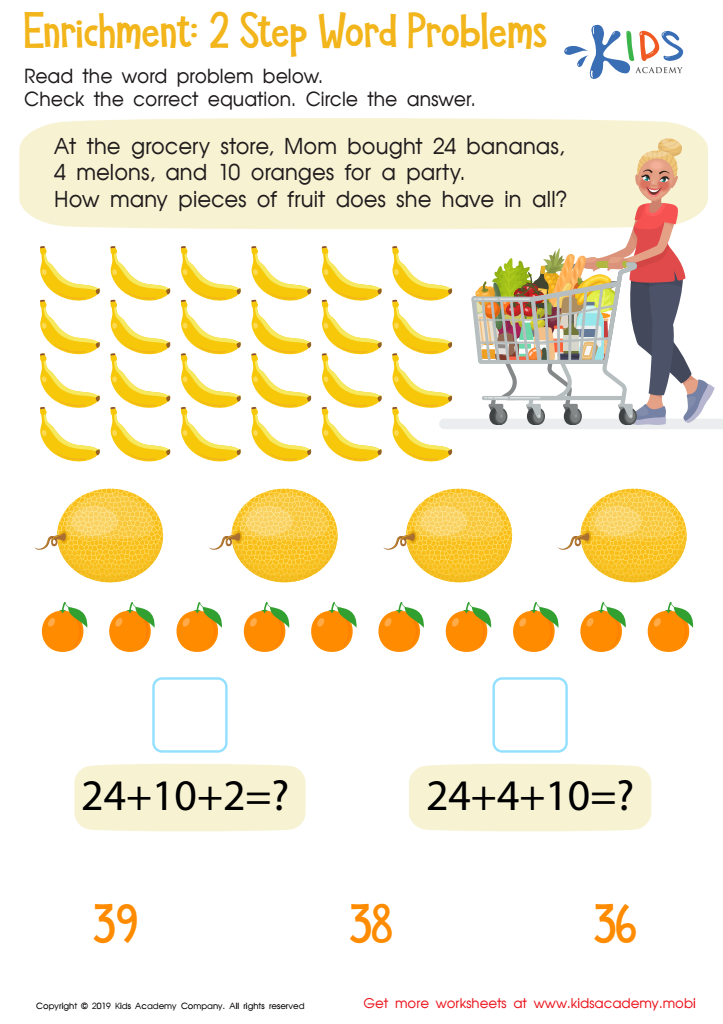
Enrichment -2 Step Word Problems Worksheet
 Assign to My Students
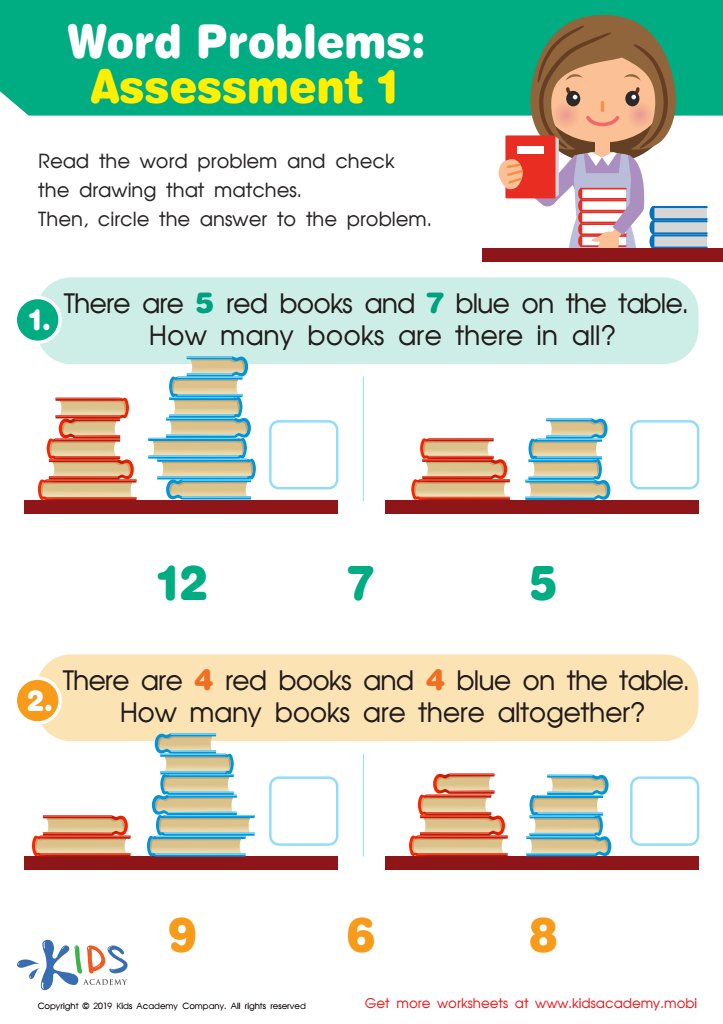
Word Problems: Assessment 1 Worksheet
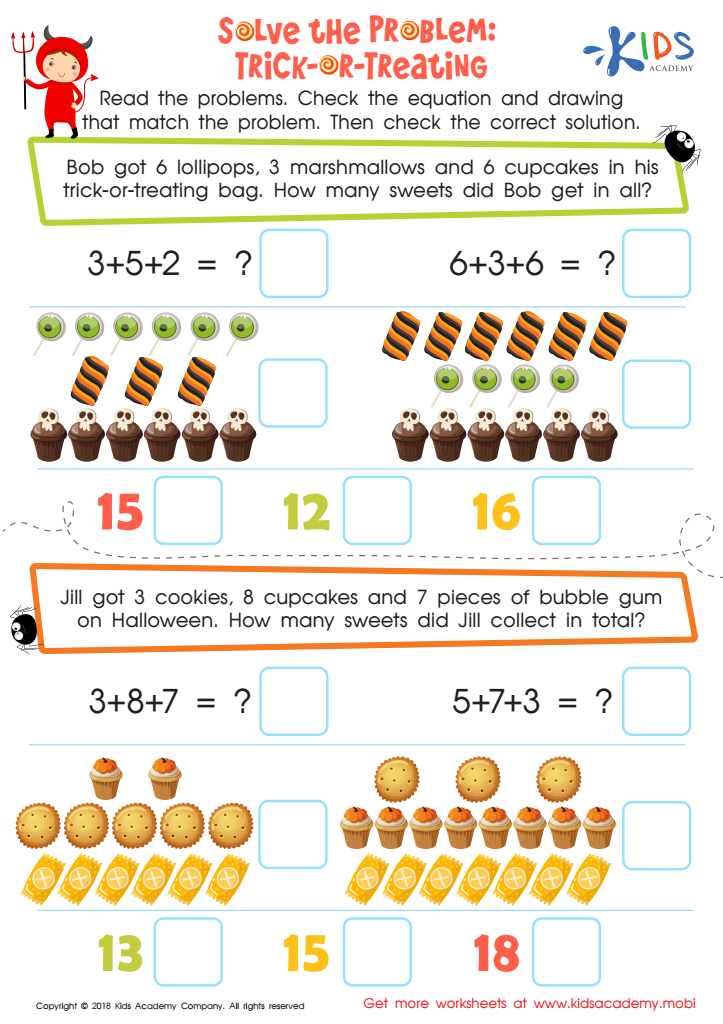
Solve the Problem: Trick–or–treating Worksheet
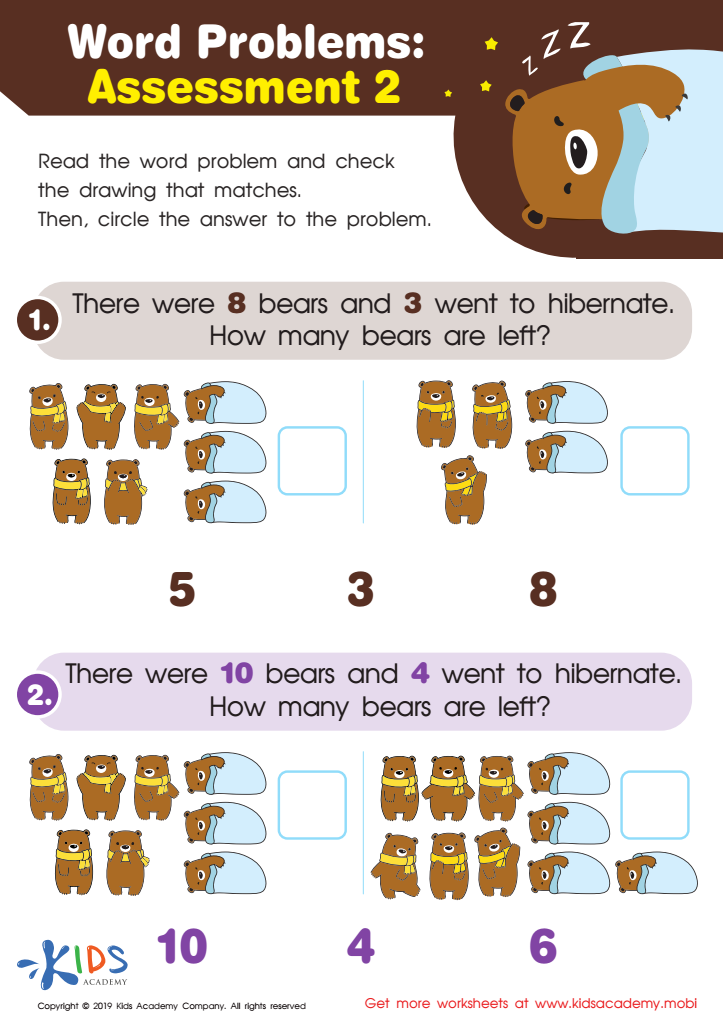
Word Problems: Assessment 2 Worksheet
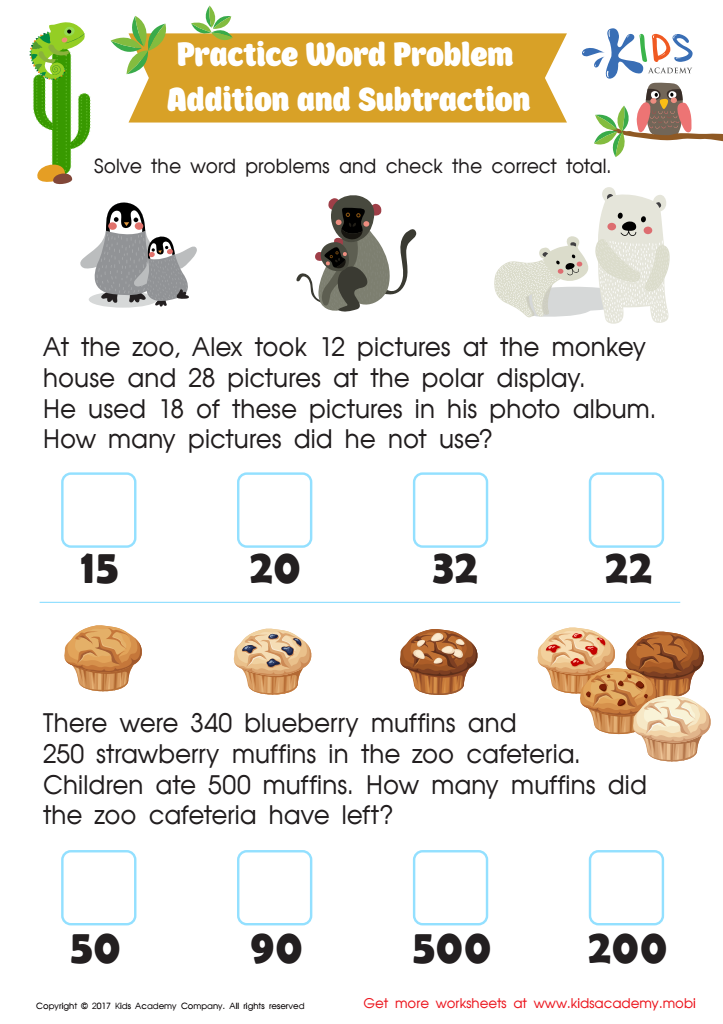
Addition and Subtraction: Word Problems Worksheet



.jpg)




Parents and teachers should care about introducing logical reasoning word problems to 8-year-olds for several key reasons. Firstly, logical reasoning problems enhance critical thinking skills. By solving these problems, children learn to identify patterns, establish connections, and make well-informed decisions. This form of thinking transcends mathematical skills, enriching their overall cognitive development.
Secondly, such problems teach persistence and problem-solving patience. When faced with a challenging task, children learn the value of grappling with problems and exploring various solutions. This builds resilience and fosters a growth mindset, essential traits for lifelong learning.
Moreover, logical reasoning word problems improve communication skills. Children must often explain their thought process and solutions, thereby developing their ability to articulate complex ideas clearly and concisely. This skill is invaluable not only academically but in everyday interactions.
Additionally, these word problems are often presented in a narrative format, which can enhance reading comprehension. Understanding the context of a word problem requires children to read and interpret text effectively.
In essence, logical reasoning word problems are a multifaceted tool that nurtures essential life skills, making children better learners and thinkers. This holistic development fosters academic excellence and prepares them for future challenges, making it crucial for parents and teachers to prioritize their inclusion in education.








