Analytical thinking Reading Fiction Worksheets for 8-Year-Olds
3 filtered results
-
From - To
Enhance your 8-year-old's analytical thinking skills with our engaging Reading Fiction Worksheets! Designed specifically for young learners, these worksheets utilize popular fictional stories to foster critical thinking and comprehension. Through interactive activities, children will analyze characters, plot developments, and themes, helping them develop deeper connections with the text. Our fun and educational resources are perfect for both the classroom and at-home learning, ensuring children not only enjoy reading but also cultivate their analytical abilities. Transform reading time into an enriching experience with these thoughtfully crafted worksheets that encourage exploration, discussion, and a love for literature!
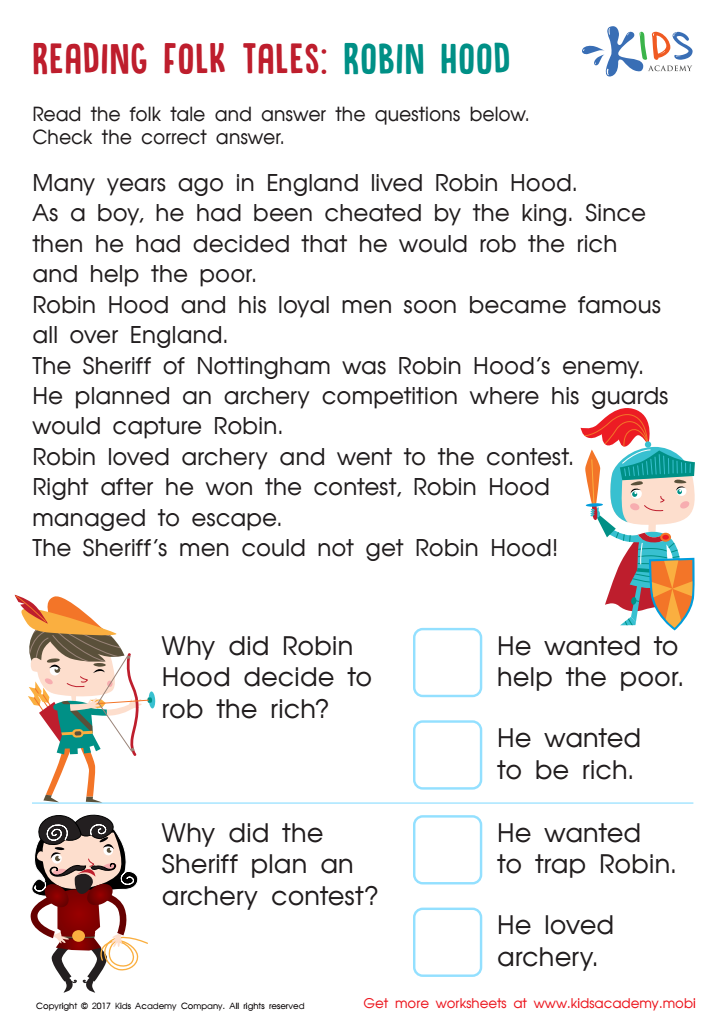
Robin Hood Folktale Worksheet
 Assign to My Students
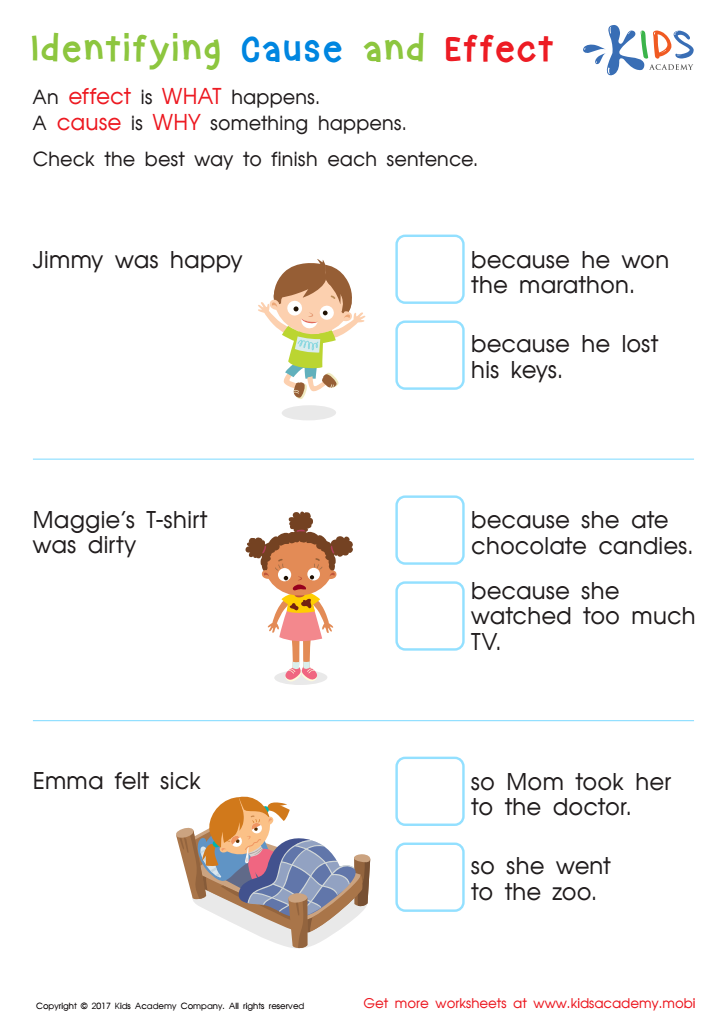
Indentifying Cause and Effect Worksheet
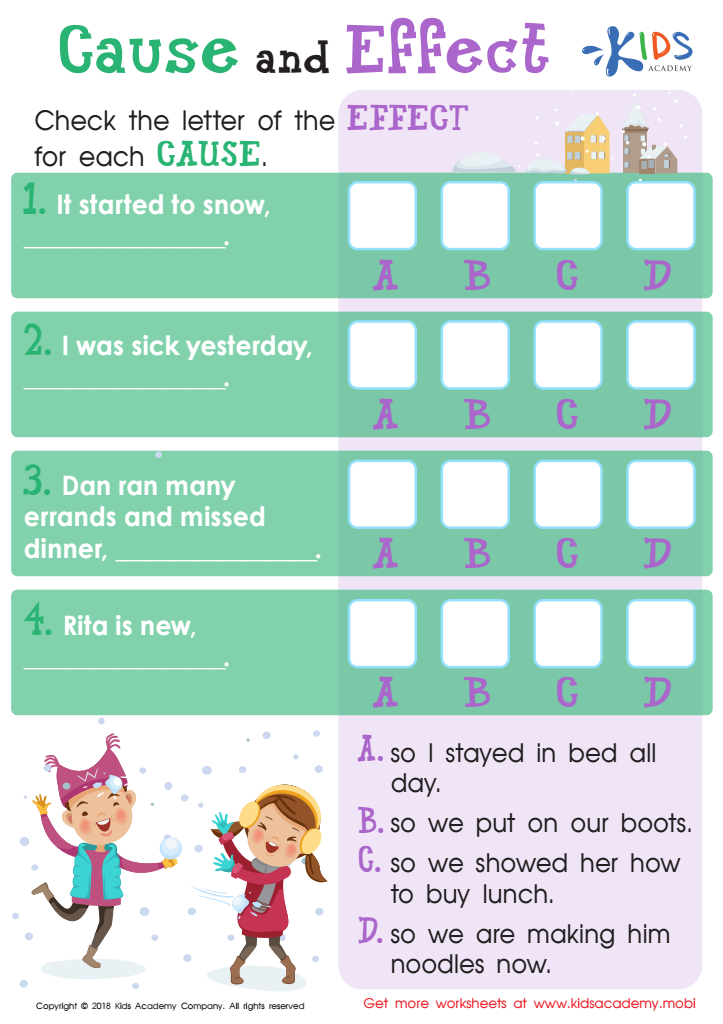
Cause and Effect Worksheet



.jpg)

.jpg)

Analytical thinking skills are crucial for children's cognitive development, and reading fiction plays a pivotal role in fostering these abilities, especially in 8-year-olds. At this age, children are developing their capacity to analyze, reason, and understand complex narratives. Engaging with fiction encourages them to think critically about characters' motives, plot developments, and underlying themes.
When children read fiction, they learn to make connections between different ideas and experiences, enhancing their problem-solving capabilities. This process cultivates empathy as well; they start to see the world through different perspectives, understanding diverse emotions and situations. Such social understanding is essential in fostering communication skills and emotional intelligence.
Moreover, fiction often presents moral dilemmas or conflict situations, inviting children to contemplate outcomes and make decisions about what is right or wrong. By discussing these themes with parents or teachers, children further enhance their analytical skills through active dialogue.
Parents and teachers should therefore prioritize analytical thinking through reading fiction, as it not only enriches vocabulary and comprehension but also equips children with vital life skills. As they analyze stories, they build a foundation for better academic performance, improved interpersonal relationships, and responsible citizenship in the diverse world around them.








