
Problem-Solving Skills Reading Fiction Worksheets for 8-Year-Olds
5 filtered results
Difficulty Level
Grade
Age
-
From - To
Subject
Activity
Standards
Boost your child’s problem-solving abilities with our engaging Reading Fiction Worksheets designed specifically for 8-year-olds. These worksheets encourage young readers to think critically and creatively as they navigate through captivating stories. Each activity focuses on extracting key information, analyzing characters’ decisions, and exploring potential outcomes within fictional contexts. By honing these essential skills, children learn to effectively tackle challenges in reading and real-life situations. Our user-friendly format not only makes learning enjoyable but also fosters a deeper understanding of narrative elements. Perfect for home or classroom use, these worksheets are a valuable resource for developing confident, capable problem solvers.
Favorites
With answer key
Interactive
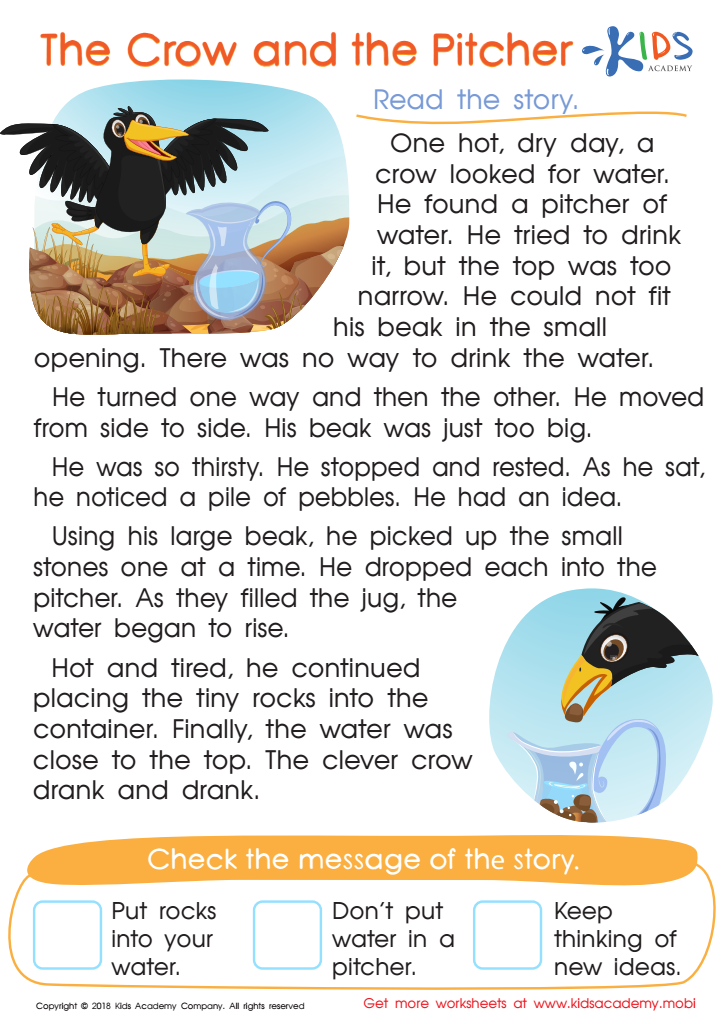
The Crow and the Pitcher Worksheet
Introduce your child to reading comprehension with this fascinating worksheet from Kids Academy! Featuring Aesop's fable of a thirsty crow, your child will enjoy reading and determining the central theme of the passage. This worksheet is a great way to give your child a purpose for reading while helping to build their comprehension skills.
 Assign to My Students
The Crow and the Pitcher Worksheet
Worksheet
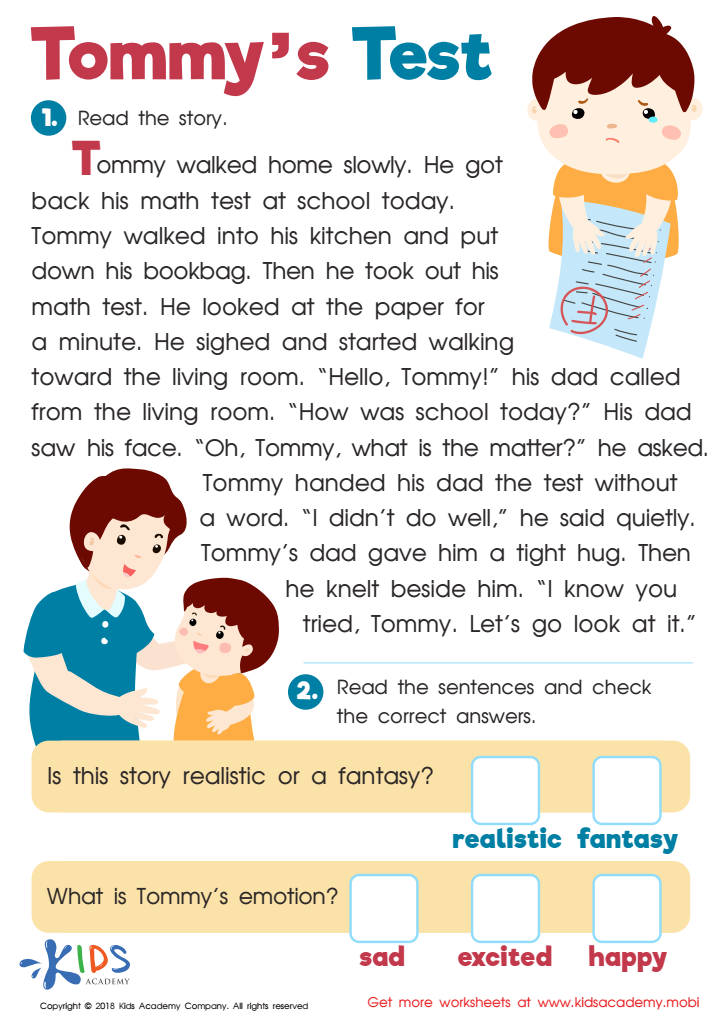
Tommys Test Worksheet
Reading short stories to your students builds a bond, teaches new words and lessons. Read the story aloud and then have them listen for details. Ask them the questions at the bottom and help them check the answers.
Tommys Test Worksheet
Worksheet
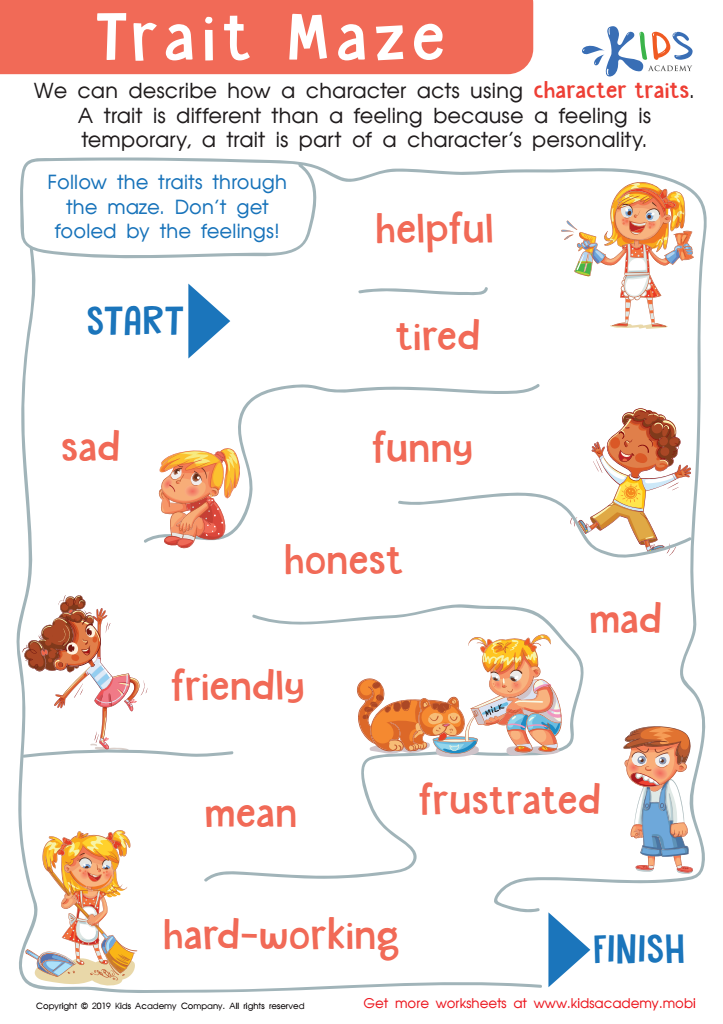
Trait Maze Worksheet
A trait is a character's personality and should not be confused with a feeling, which is temporary. In this worksheet, kids learn about traits by following them through a maze and ignoring the feelings on the path.
Trait Maze Worksheet
Worksheet
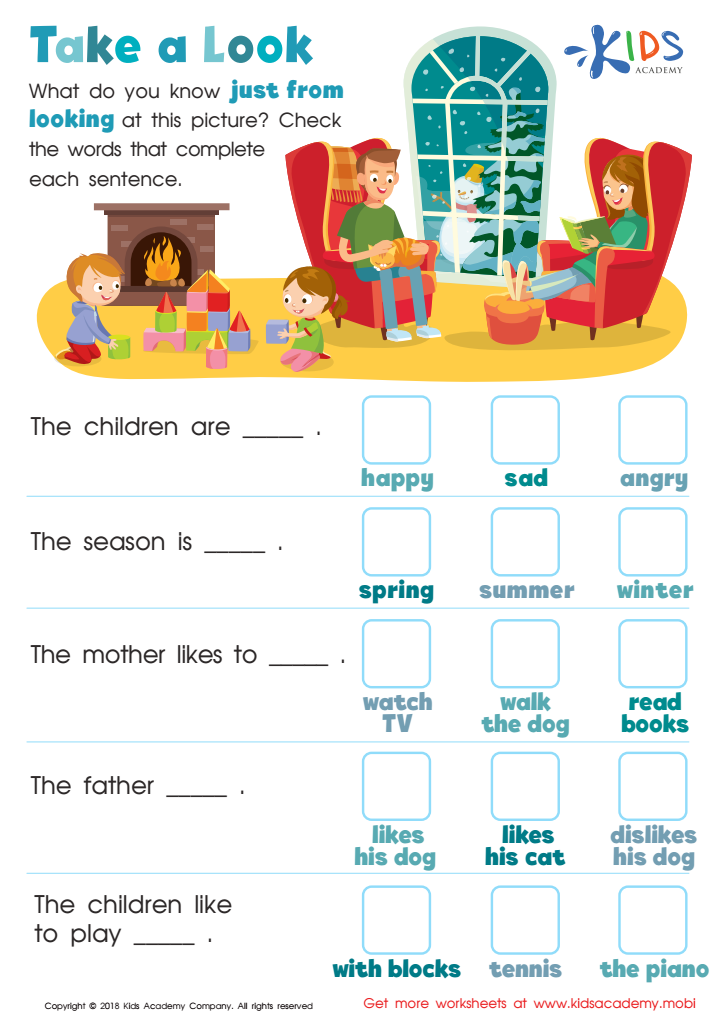
Take a Look - Part 1 Worksheet
Young learners gain understanding when using picture clues when reading. Looking at illustrations can help students learn the meaning of key vocabulary when reading fiction or informational text. Ask your students to look at the worksheet and observe what they can learn from the picture. It's a great comprehension strategy for early readers.
Take a Look - Part 1 Worksheet
Worksheet
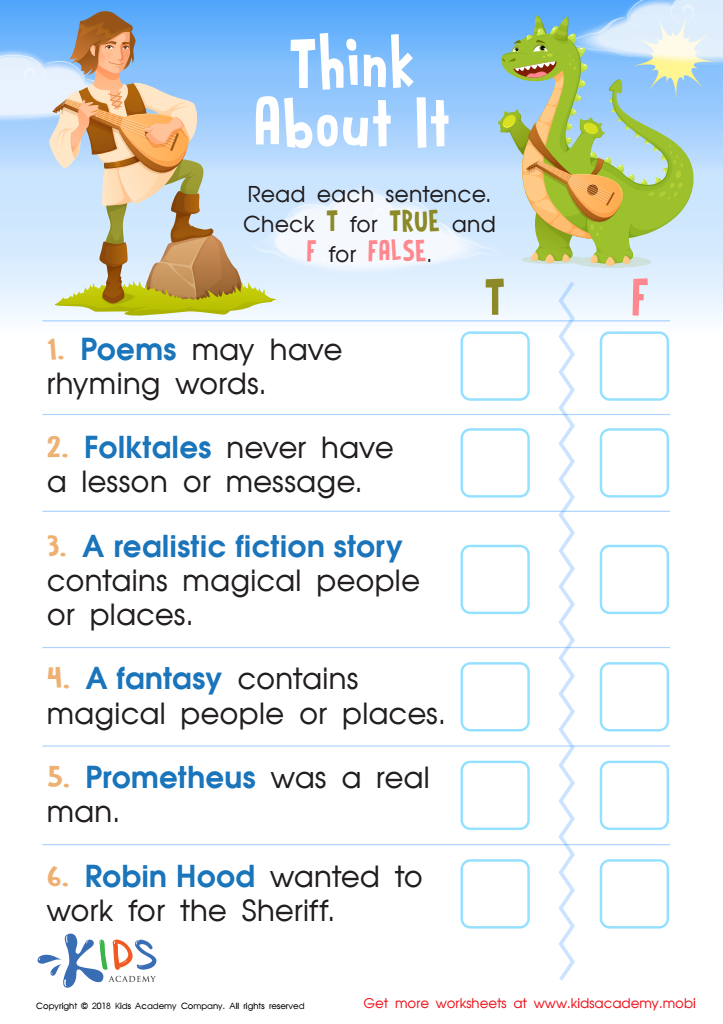
Think About It: Assessment Worksheet
Reading is a fun and important way to learn. Help your students become better readers with this simple yet colorful worksheet. Read each sentence aloud, then have them read it by themselves. Ask them to check T for True and F for False. It's a great way to practice their reading skills!
Think About It: Assessment Worksheet
Worksheet
Join Kids Academy for Free
Who is primarily going to use this learning content?








Parents and teachers should prioritize problem-solving skills in children, especially through reading fiction, because these skills are fundamental for overall cognitive development and emotional intelligence. At the age of eight, children are becoming more adept at critical thinking; engaging with fictional narratives allows them to analyze various scenarios, understand different perspectives, and enhance their decision-making abilities.
When children read fiction, they encounter characters facing challenges and dilemmas. This exposure encourages young readers to think about how they would resolve similar issues and empathize with others' feelings. This process of engagement nurtures both creativity and reasoning, as children evaluate outcomes and consequences.
Additionally, problem-solving through fiction extends into real-life applications. Children learn how to approach conflicts, navigate relationships, and confront challenges head-on. By discussing characters' decisions and their consequences with adults, children can refine their problem-solving techniques and apply them to their own lives.
Ultimately, reading fiction not only strengthens literacy skills but also molds resilient and thoughtful individuals. In an ever-changing world, nurturing strong problem-solvers will help children successfully navigate life's complexities and encourage a lifelong love for reading and learning. Thus, fostering this skill set is valuable for their academic journey and personal growth.








