
Critical Thinking Reading Non-Fiction Worksheets for 8-Year-Olds
5 filtered results
Difficulty Level
Grade
Age
-
From - To
Subject
Activity
Standards
Enhance your child's reading skills with our engaging Critical Thinking Reading Non-Fiction Worksheets tailored for 8-year-olds. These worksheets are designed to foster curiosity and analytical skills by immersing young readers in fascinating non-fiction topics. Each activity encourages children to think critically, make connections, and draw conclusions, helping them become proficient readers and independent thinkers. Our thoughtfully crafted content aligns with age-appropriate standards, ensuring an educational yet enjoyable experience. Perfect for home use or classroom settings, these worksheets will ignite a love for learning and empower your child with valuable comprehension and critical thinking skills. Discover the joy of reading non-fiction today!
Favorites
With answer key
Interactive
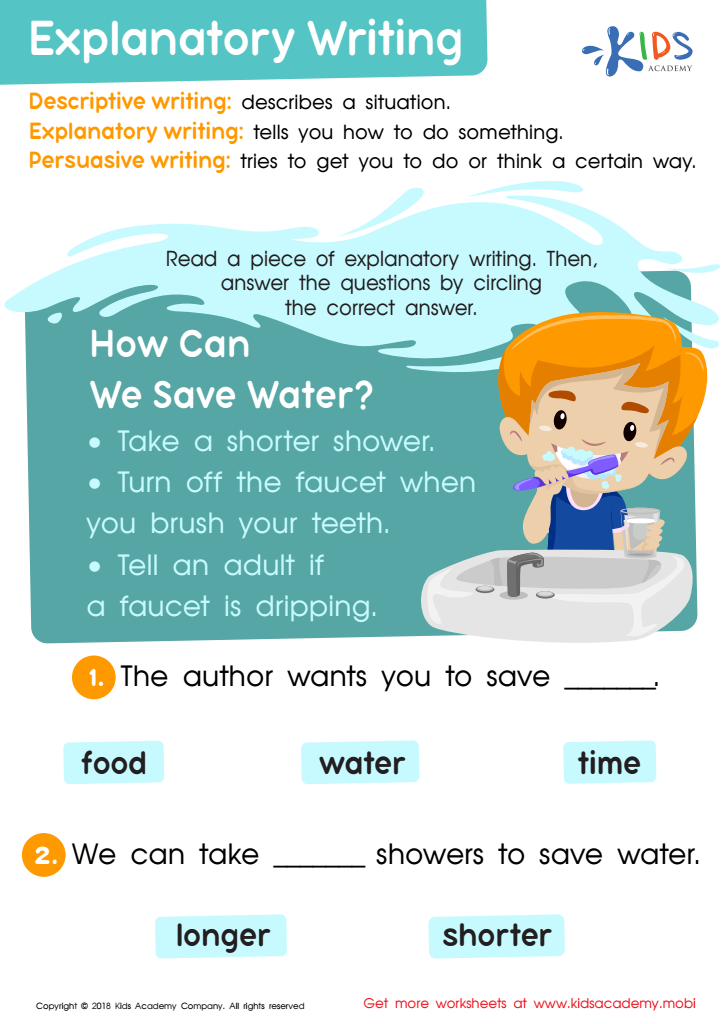
Explanatory Writing Worksheet
This worksheet teaches kids the three main types of writing. Descriptive writing describes a situation, explanatory writing explains how to do something, and persuasive writing is used to sway readers' opinions. Read the text and help your kids answer the questions by circling the right answer.
 Assign to My Students
Explanatory Writing Worksheet
Worksheet
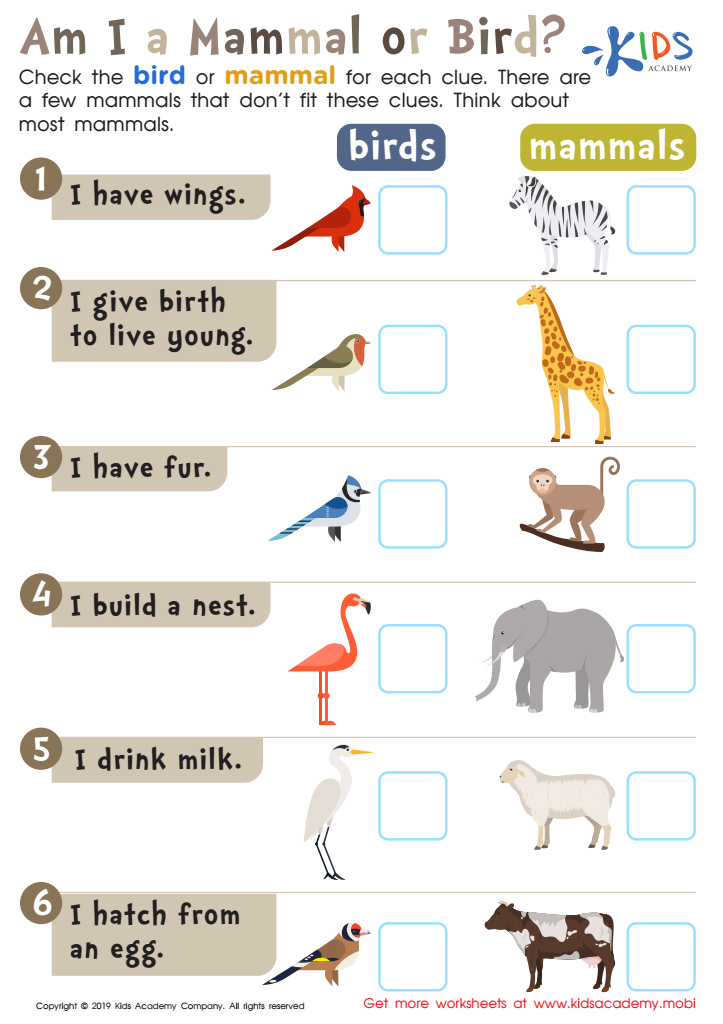
Am I a Mammal or Bird? Worksheet
We categorize animals into groups such as mammals, birds, reptiles, etc. This worksheet helps kids understand the difference between birds and mammals. Read through the clues and think about each one. Then decide if it describes a bird or mammal, check the box and complete!
Am I a Mammal or Bird? Worksheet
Worksheet
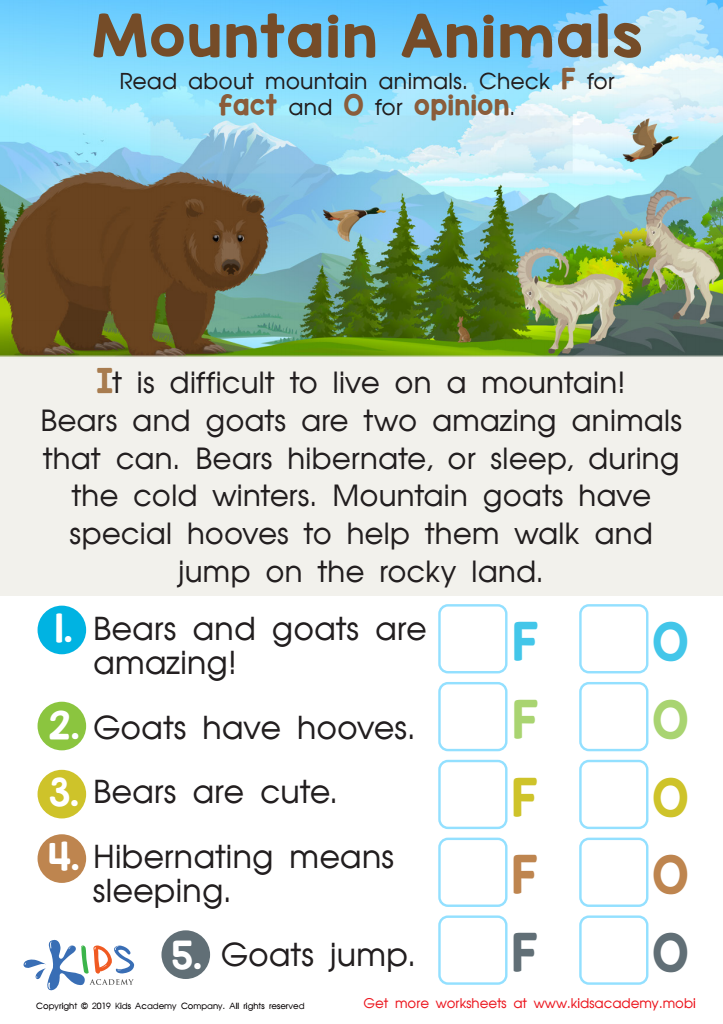
Mountain Animals Worksheet
Is mountain wildlife amazing? Fact or fiction? Help your child sharpen critical-thinking skills with this engaging worksheet. Featuring a fun nonfiction passage about animals like bears and goats, your child will read through the text and identify each statement as fact or fiction. Perfect for boosting reading comprehension and analytical abilities!
Mountain Animals Worksheet
Worksheet
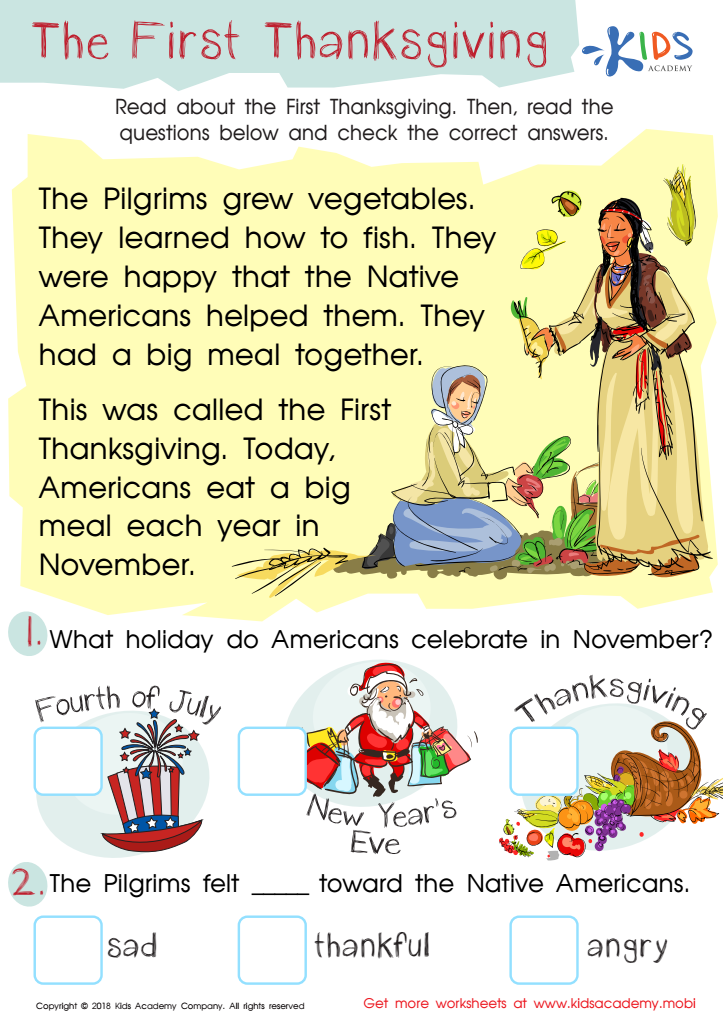
Assessment: First Thanksgiving Worksheet
When the Pilgrims arrived in America in 1620, they met the Native Americans and formed a pact to live in harmony. The Native Americans taught the Pilgrims how to survive in the new land, which helped them celebrate the First Thanksgiving. Read this text to your children and help them answer the questions below.
Assessment: First Thanksgiving Worksheet
Worksheet
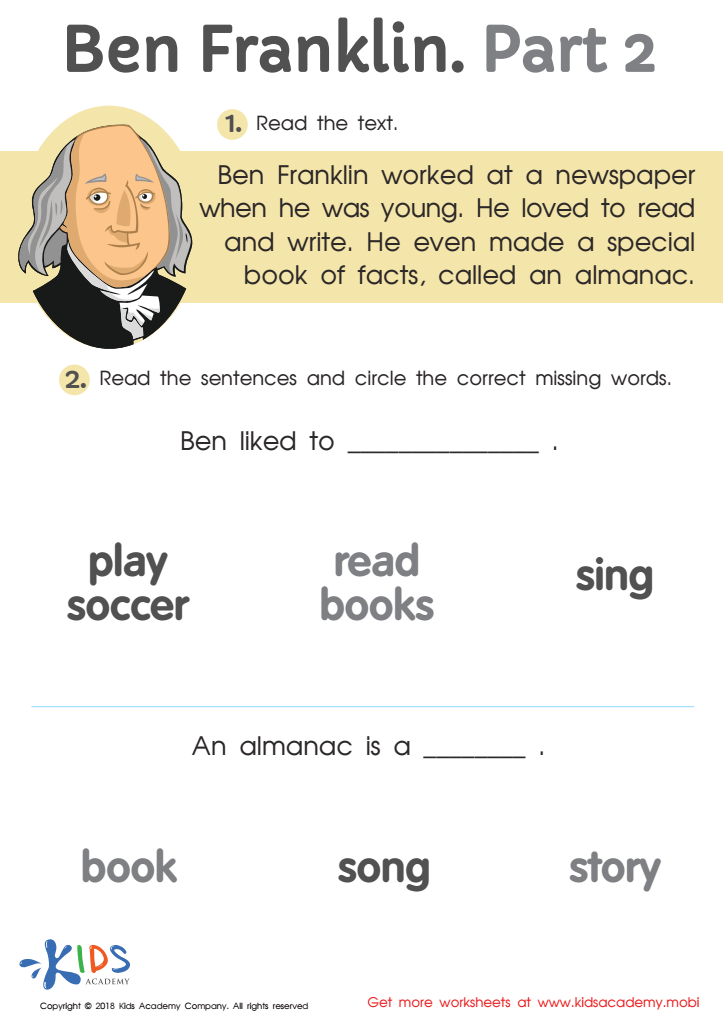
Ben Franklin Part 2 Worksheet
History is filled with great figures, like Benjamin Franklin. Let your kids in on the legacy by introducing them to the founder of the US fire department, diplomat, and inventor. Then, use a worksheet to have them fill in the blanks with the correct word to teach them more. Read the text, then read the sentences and have them circle the missing word.
Ben Franklin Part 2 Worksheet
Worksheet
Join Kids Academy for Free
Who is primarily going to use this learning content?








Parents and teachers should prioritize Critical Thinking in reading non-fiction for 8-year-olds because it equips children with essential skills for understanding the world around them. At this age, kids are naturally curious and begin to explore complex ideas. Engaging them in non-fiction reading encourages inquiry and creates opportunities for analyzing information rather than just absorbing it.
Critical thinking fosters skills such as evaluating sources, distinguishing between fact and opinion, and recognizing biases. These abilities are crucial as children encounter diverse viewpoints online and in their everyday lives. By reading non-fiction, children learn to ask insightful questions, assess evidence, and draw logical conclusions, which sets a solid foundation for their academic growth and informed citizenship.
Furthermore, nurturing critical thinking through non-fiction can lead to improved reading comprehension. When children deconstruct texts and synthesize ideas, they become more adept at retaining and articulating knowledge. Additionally, this practice promotes creativity, as they learn to connect information and generate new thoughts.
Ultimately, by emphasizing critical thinking in non-fiction reading, parents and teachers enable children not only to be competent readers but also to become thoughtful, engaged learners who can navigate a complex world with confidence and curiosity.








