Enhancing Counting Skills Worksheets for 9-Year-Olds
7 filtered results
-
From - To
Discover our "Enhancing Counting Skills Worksheets" tailored for 9-year-olds, designed to make learning both fun and effective! These engaging worksheets provide a variety of counting activities that challenge students to improve their numerical understanding and problem-solving skills. From counting objects to completing number sequences, each worksheet is crafted to boost confidence and mastery in essential counting concepts. Perfect for home or classroom use, these resources support differentiated learning, catering to various skill levels. Explore creative exercises that promote interactive learning, making mathematics an enjoyable experience. Watch your child's counting abilities flourish while laying a strong foundation for future mathematical success!
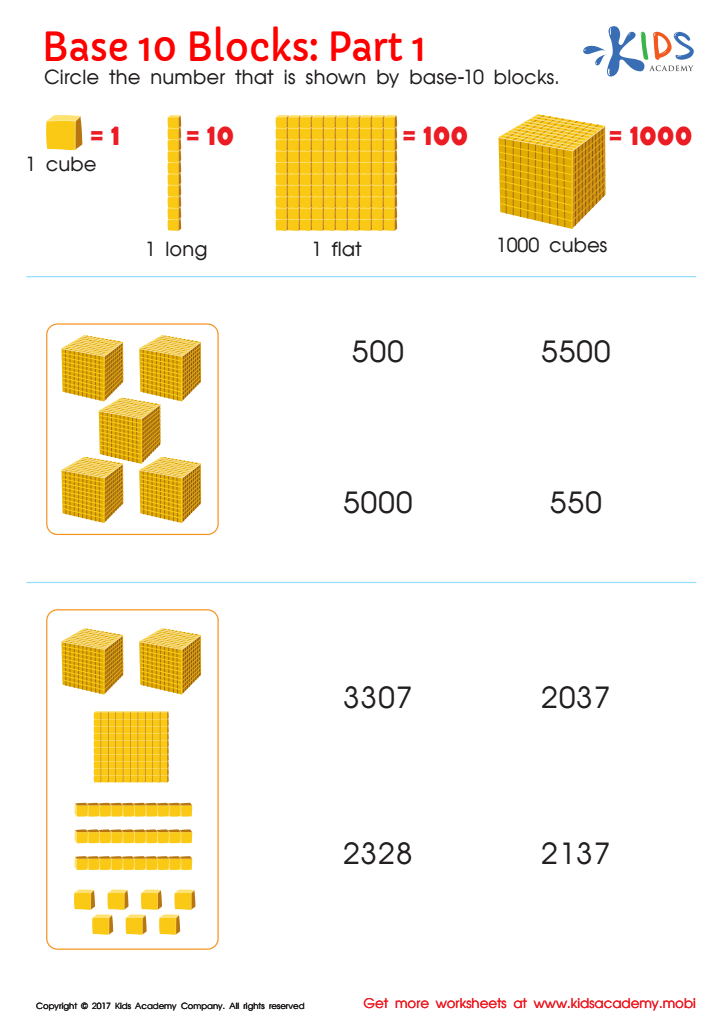
Place Value Thousands Worksheet
 Assign to My Students
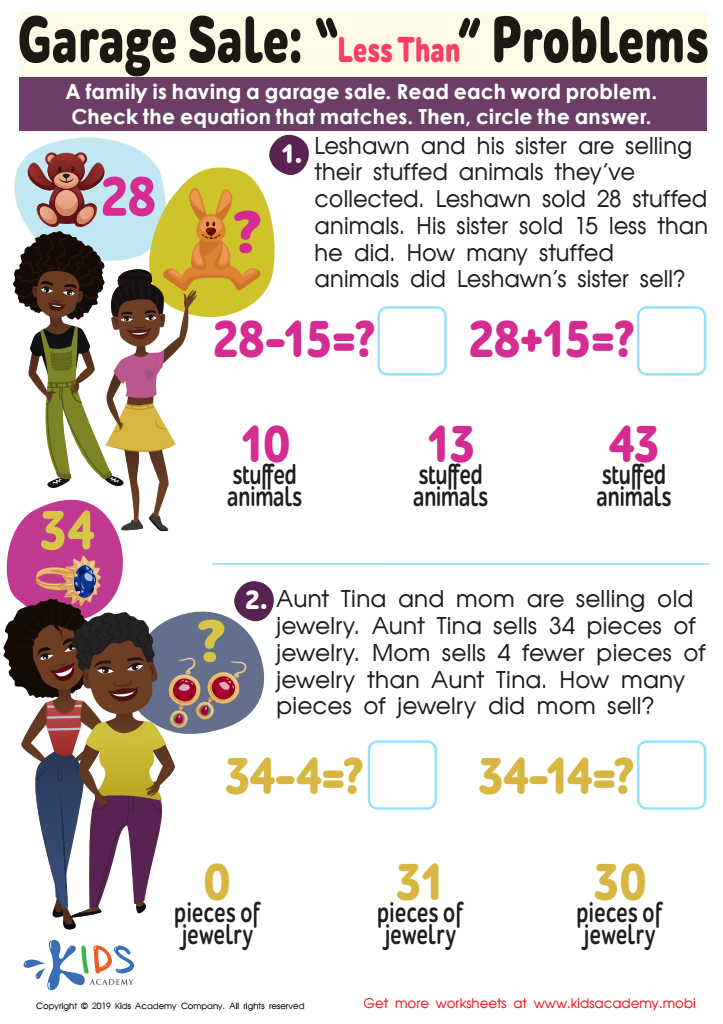
Garage Sale Less Than Worksheet
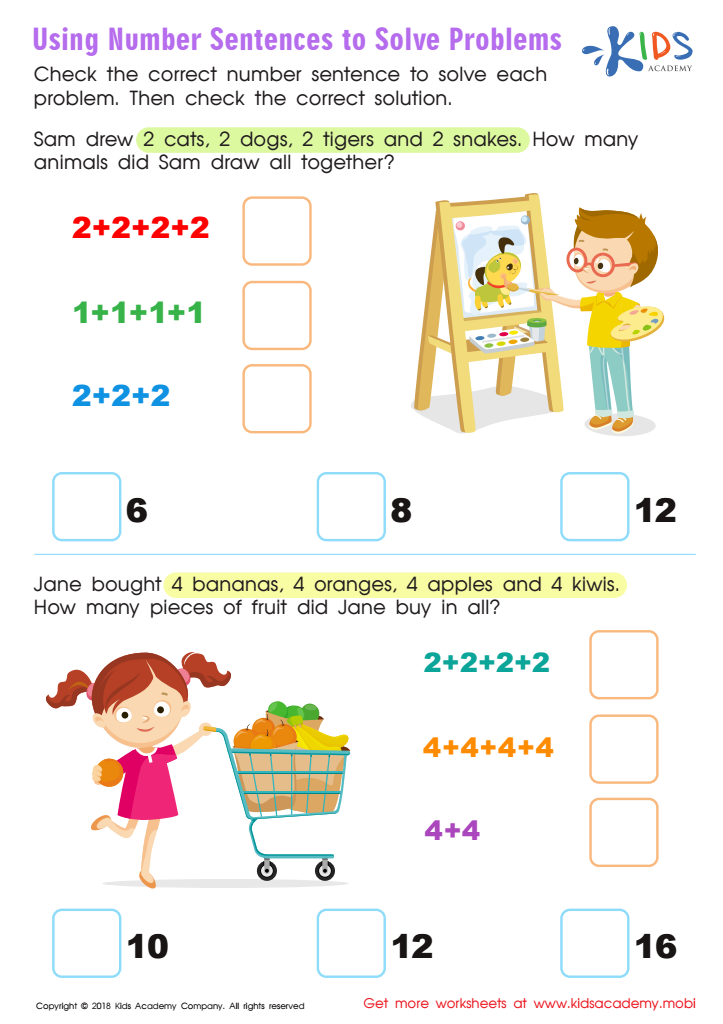
Using Number Sentences to Solve Problems Worksheet
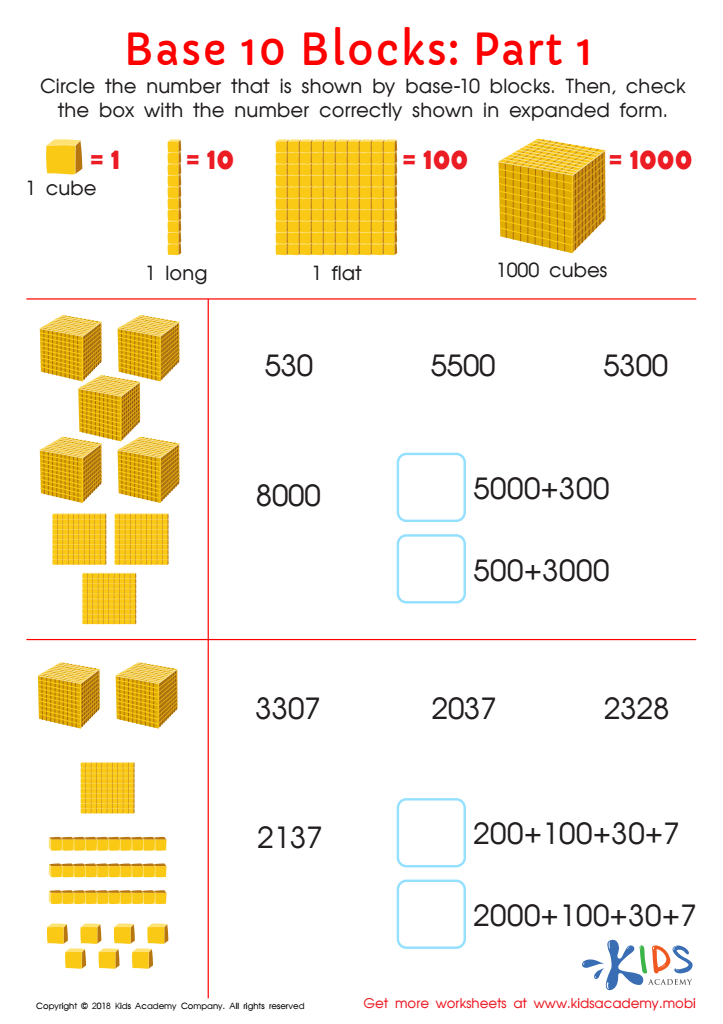
Base 10 Blocks Worksheet: Part 1
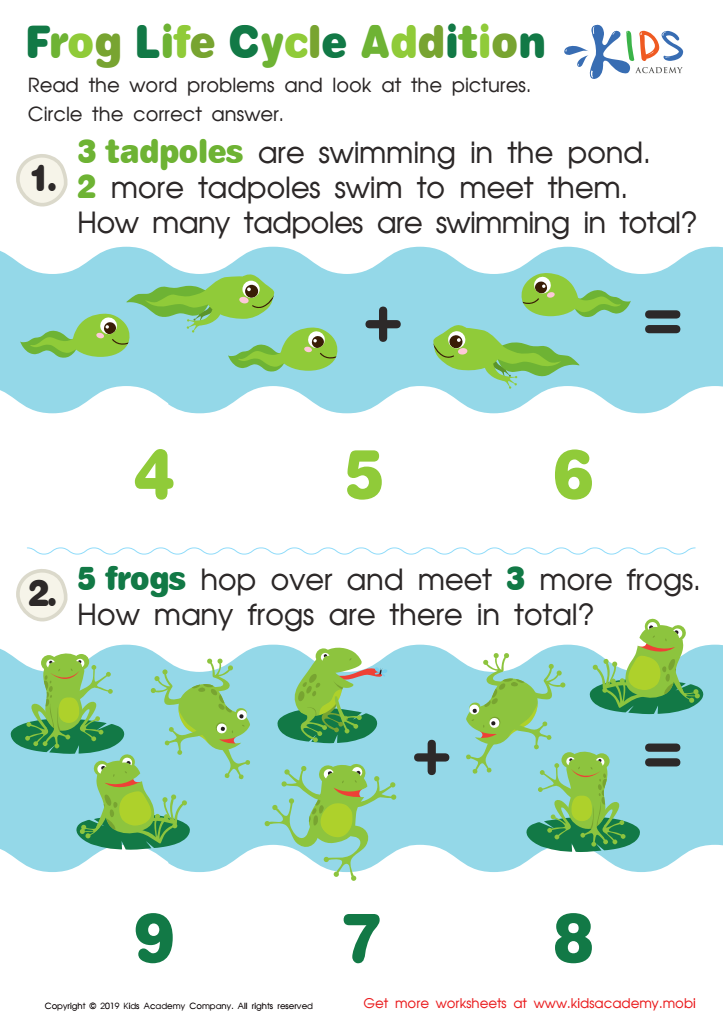
Frog Life Cycle Addition Worksheet
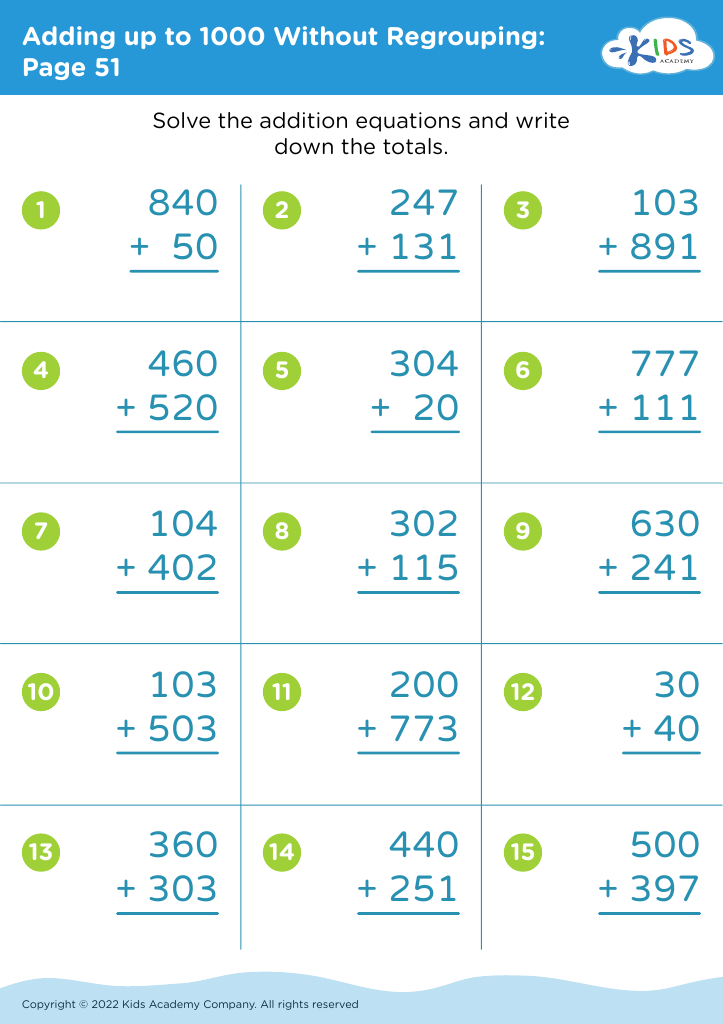
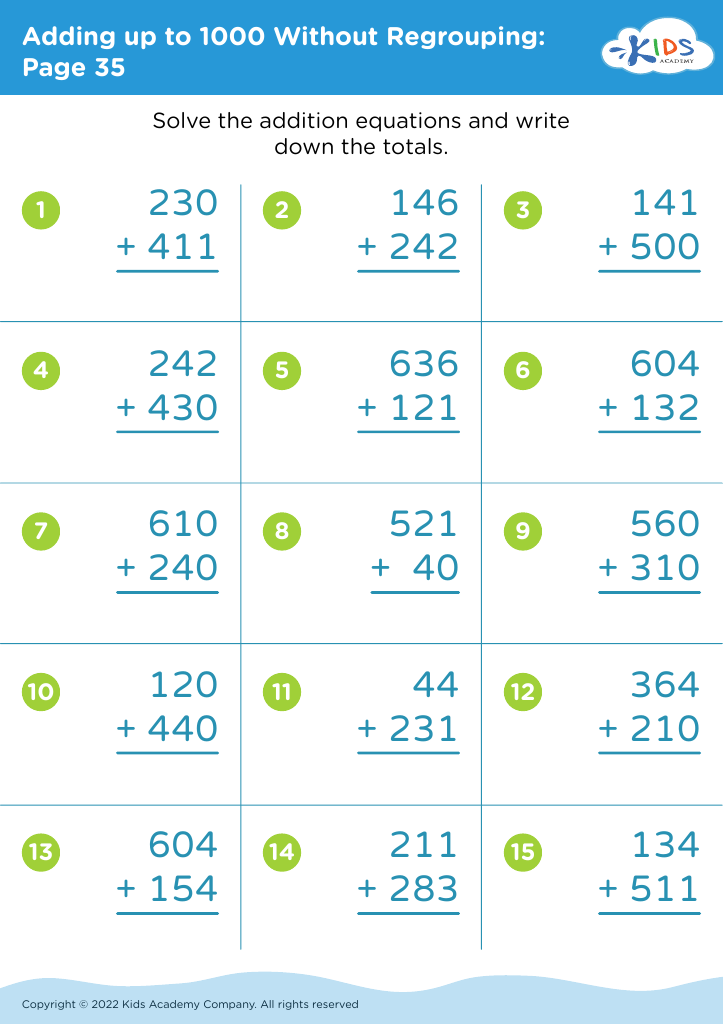





.jpg)

.jpg)
Enhancing counting skills for 9-year-olds is crucial for several reasons, impacting both academic success and everyday life. At this age, children are transitioning from basic counting to more complex mathematical concepts such as addition, subtraction, multiplication, and division. Mastery of counting lays a solid foundation for these advanced skills, allowing children to solve problems more efficiently and confidently.
Additionally, strong counting abilities foster logical thinking and reasoning skills. As kids learn to count, they develop the ability to recognize patterns, understand quantities, and make comparisons—skills that are essential not only in mathematics but also in science, technology, and daily decision-making.
Moreover, counting skills contribute to a child’s self-esteem. When children feel competent in their mathematical abilities, they are more likely to engage in classroom activities and pursue higher-level math in the future. This engagement can translate to improved academic performance and a lifelong appreciation for learning.
Finally, as math is integrated into various aspects of life—like budgeting, cooking, or planning—parents and teachers should recognize that supporting counting skills now will equip children with vital tools to navigate real-world situations successfully, paving the way for their overall success in life.








