Understanding bar graphs Worksheets for 9-Year-Olds
4 filtered results
-
From - To
Discover our engaging "Understanding Bar Graphs Worksheets for 9-Year-Olds," designed to make learning fun and interactive. These expertly crafted worksheets help kids grasp the essentials of bar graphs, including data interpretation and analysis. Ideal for enhancing math skills, the activities encourage critical thinking and build a strong foundation in data literacy. Each worksheet offers colorful visuals and relatable scenarios to keep young learners motivated. Perfect for classroom or home use, these educational tools support curriculum standards and provide just the right level of challenge. Equip your 9-year-old with the skills they need to master the basics of bar graphs!
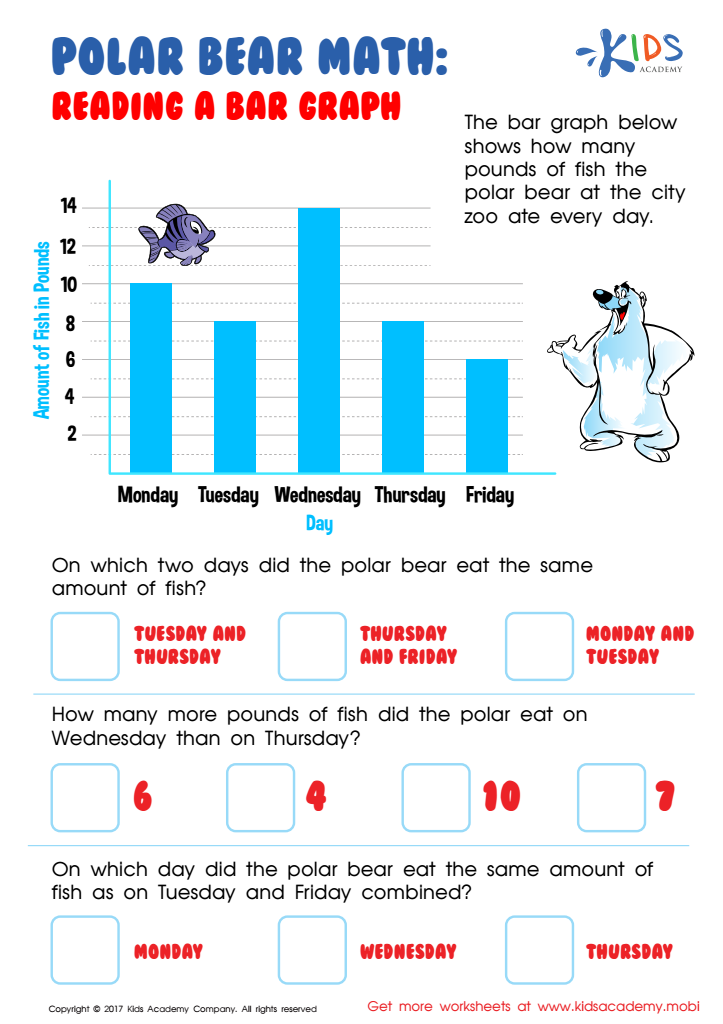
Reading Bar Graph Worksheet
 Assign to My Students
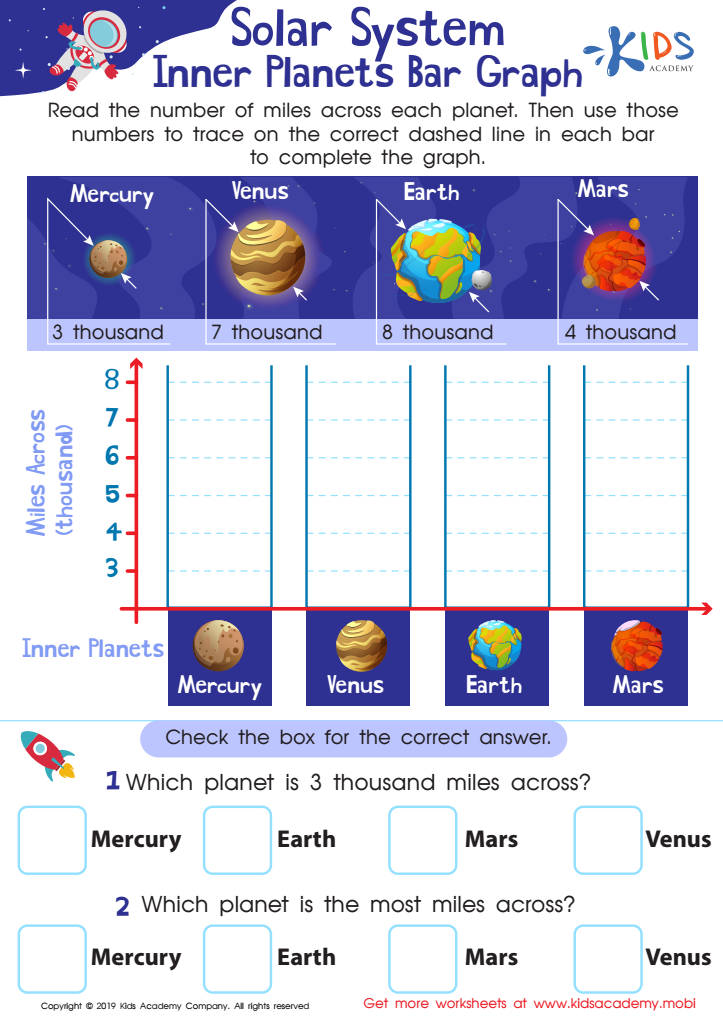
Planets Bar Graph Worksheet
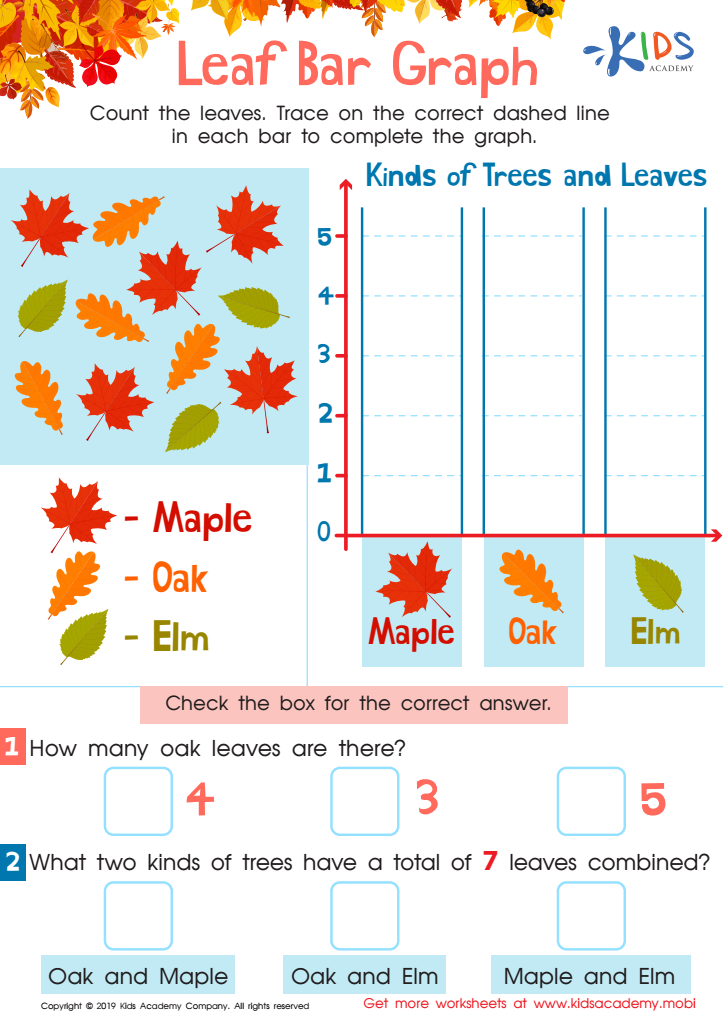
Leaf Bar Graph Worksheet
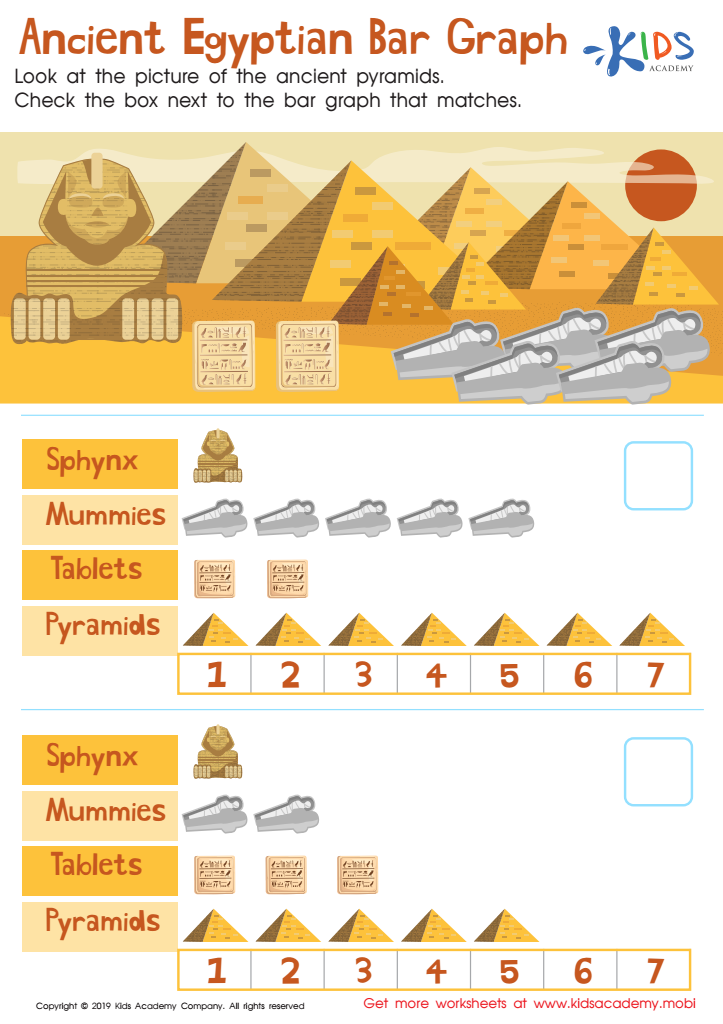
Egyptian Bar Graph Worksheet







Understanding bar graphs is crucial for 9-year-olds as it lays a solid foundation for various essential skills in both academic and everyday contexts. Firstly, bar graphs are a practical introduction to data interpretation, a fundamental skill across multiple subjects including math, science, and social studies. Grasping how to read and create bar graphs enhances a child's ability to comprehend and synthesize information, promoting critical thinking.
For parents and teachers, encouraging proficiency with bar graphs means equipping children with tools to logically organize and visually interpret data, fostering numerical literacy from an early age. This understanding also supports the development of problem-solving abilities, as children learn to draw conclusions from visual data representations.
Incorporating bar graphs into learning activities reinforces engagement through visual and interactive means, catering to various learning styles. It aids in making abstract concepts more tangible and accessible, ensuring that children are well-prepared for more complex mathematical concepts in later grades.
For parents, the relevance extends beyond academics; bar graphs appear in everyday contexts like tracking household chores, understanding weather patterns, or even interpreting sports statistics. The ability to understand bar graphs ultimately bolsters a child's confidence and aptitude, fostering a comprehensive growth perspective that integrates real-world applications.








