Understanding economics Worksheets for 9-Year-Olds
3 filtered results
-
From - To
Welcome to our "Understanding Economics Worksheets for 9-Year-Olds" page! Here, young learners can explore the basics of economics through engaging, age-appropriate activities. Our thoughtfully designed worksheets introduce key concepts such as supply and demand, goods and services, and the importance of budgeting. With fun exercises and colorful illustrations, children will grasp essential economic principles while enhancing critical thinking and problem-solving skills. These worksheets foster curiosity and practical understanding, making economics relatable and enjoyable. Whether used at home or in the classroom, our resources inspire a foundational knowledge of economics that will benefit young minds as they grow.
 Assign to My Students
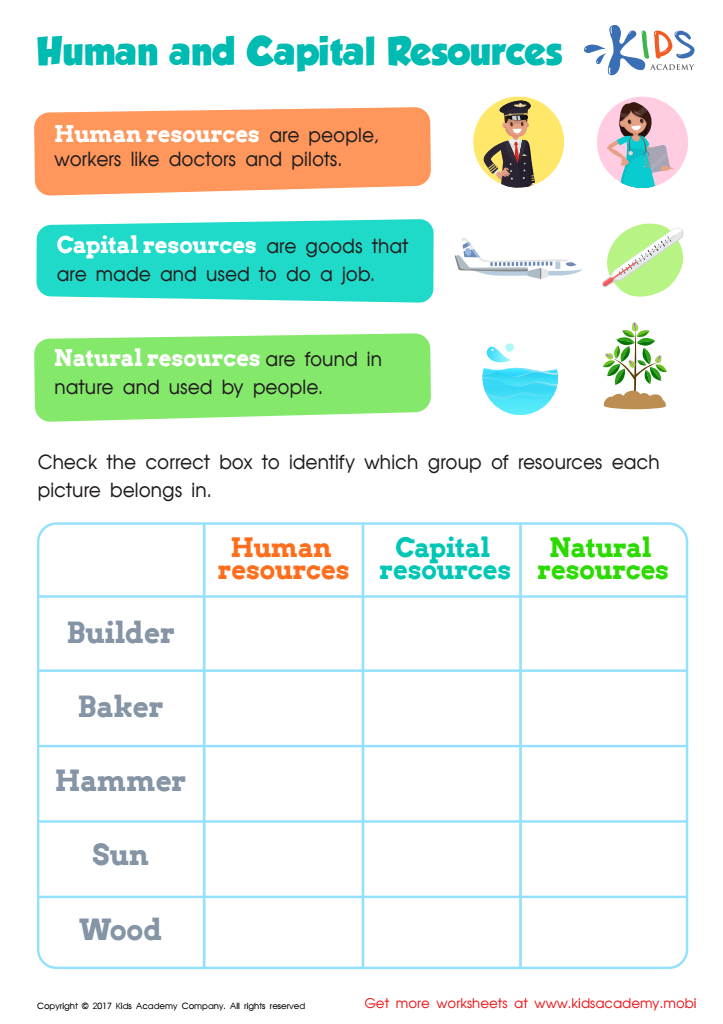
Human and Capital Resources Worksheet
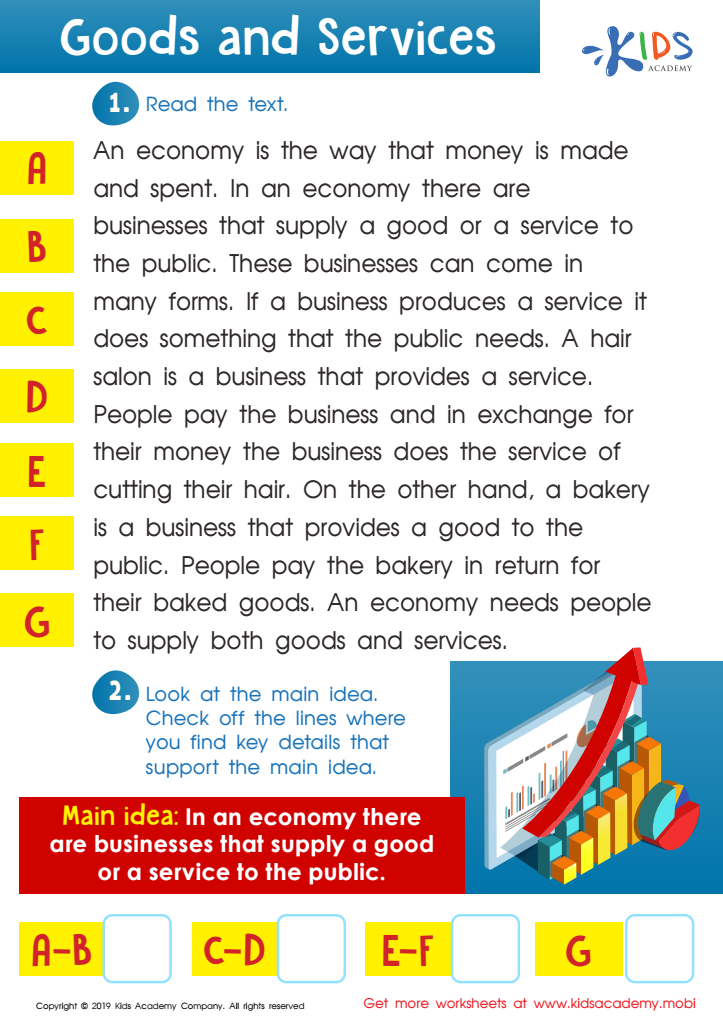
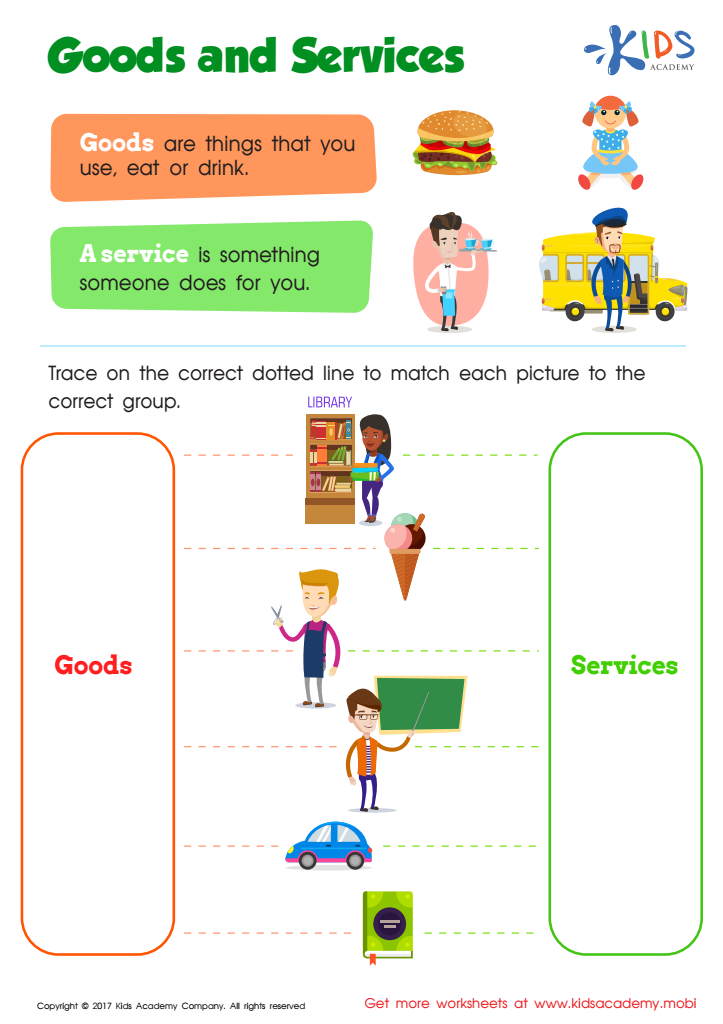
Goods and Services Worksheet







Understanding economics is essential for 9-year-olds, as it lays the groundwork for informed decision-making and responsible citizenship. Parents and teachers should care about this because economic literacy helps children grasp the value of money, resource allocation, and the impact of their choices. At this age, students are beginning to understand concepts like saving, spending, and budgeting, all of which are fundamental to their future financial well-being.
Moreover, an early introduction to basic economic principles fosters critical thinking and problem-solving skills. Children learn to analyze situations, consider alternatives, and understand consequences, which will serve them well throughout their lives. They also begin to recognize the interconnectedness of their actions and the broader economy, encouraging them to think globally and socially.
In a rapidly changing world, arming children with economic knowledge empowers them to navigate real-life challenges, such as consumerism, investments, and community involvement. By cultivating this awareness, parents and teachers are not only nurturing responsible individuals but also helping to create a generation capable of addressing complex economic issues. Ultimately, instilling an understanding of economics in young minds equips them with essential life skills that promote a better future for themselves and society as a whole.








