Understanding syllables Worksheets for 9-Year-Olds
4 filtered results
-
From - To
Unlock your child's potential with our "Understanding Syllables Worksheets for 9-Year-Olds." Perfectly designed for third-grade students, these worksheets involve fun and engaging exercises to help kids grasp the concept of syllables. Our materials focus on reading, writing, and breaking words into syllables, fostering strong phonetic and language skills. Each worksheet offers interactive and colorful activities, making learning enjoyable. Ideal for both classroom and home use, these resources will boost your child's confidence and improve their literacy abilities. Help your 9-year-old master the building blocks of language with our expert-approved worksheets today!
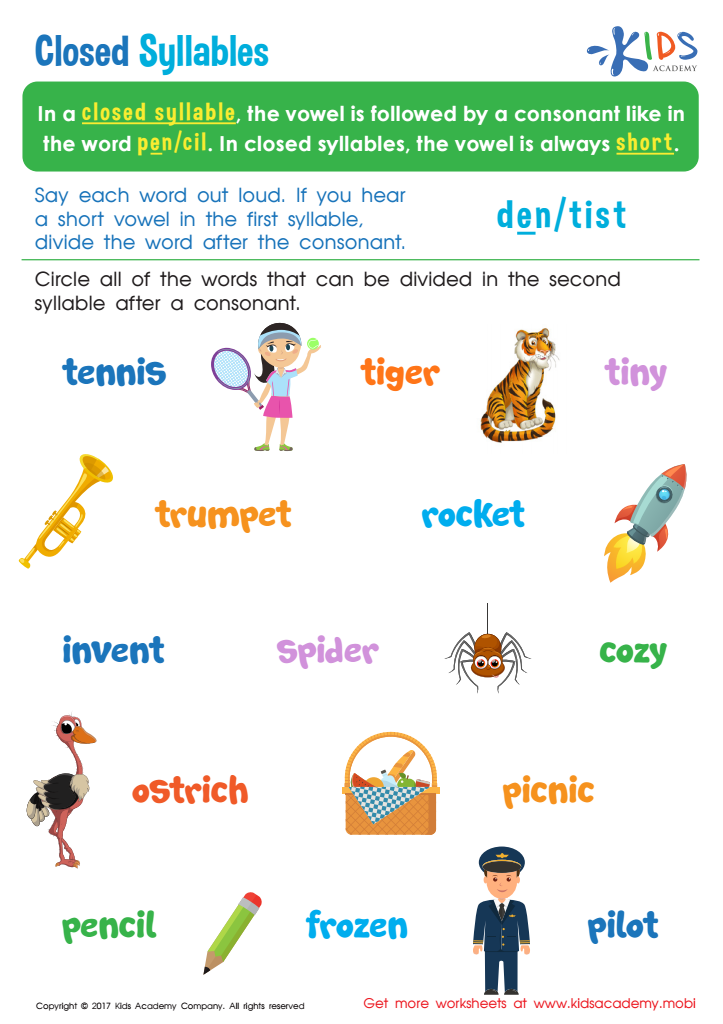
Closed Syllable Spelling Worksheet
 Assign to My Students
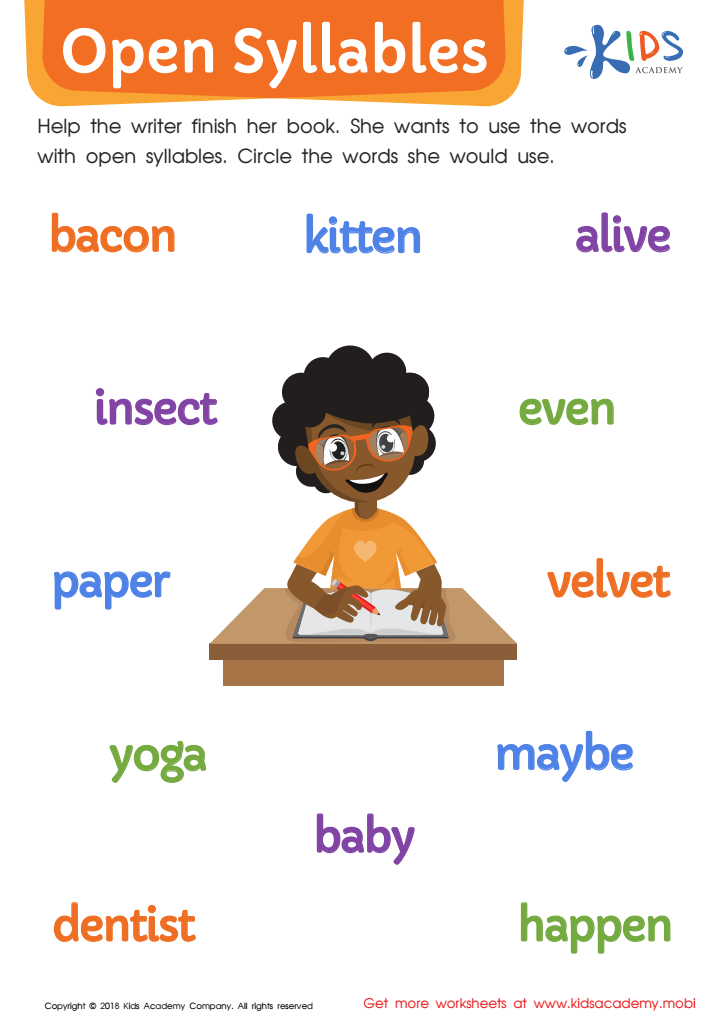
Open Syllables Worksheet
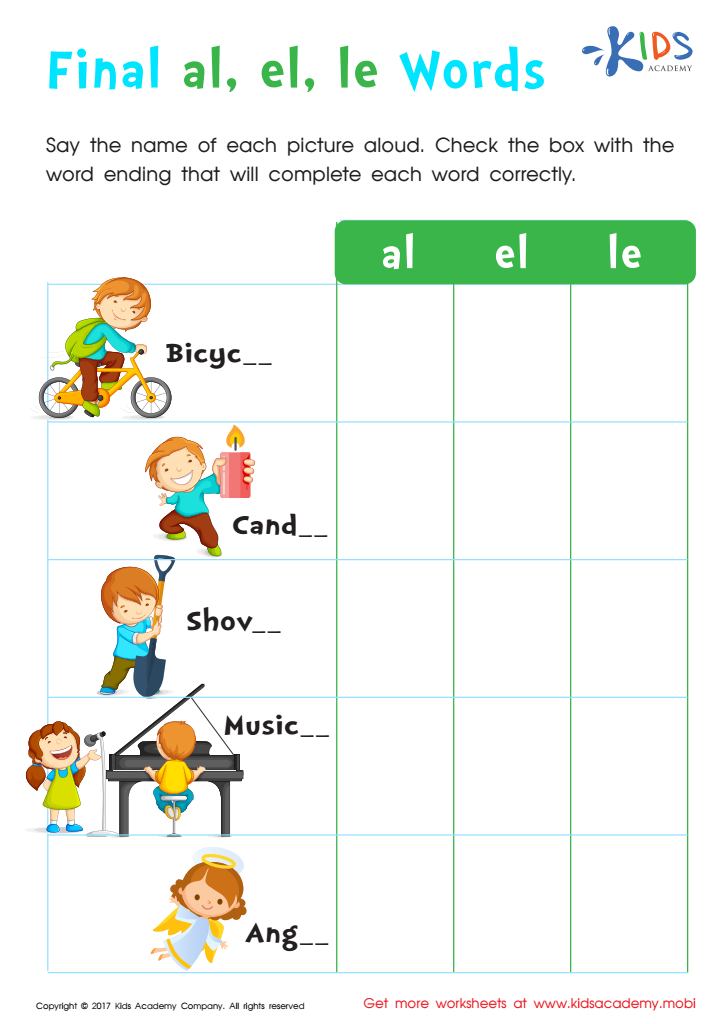
Spelling Words Ending with –le, –el and –al Worksheet
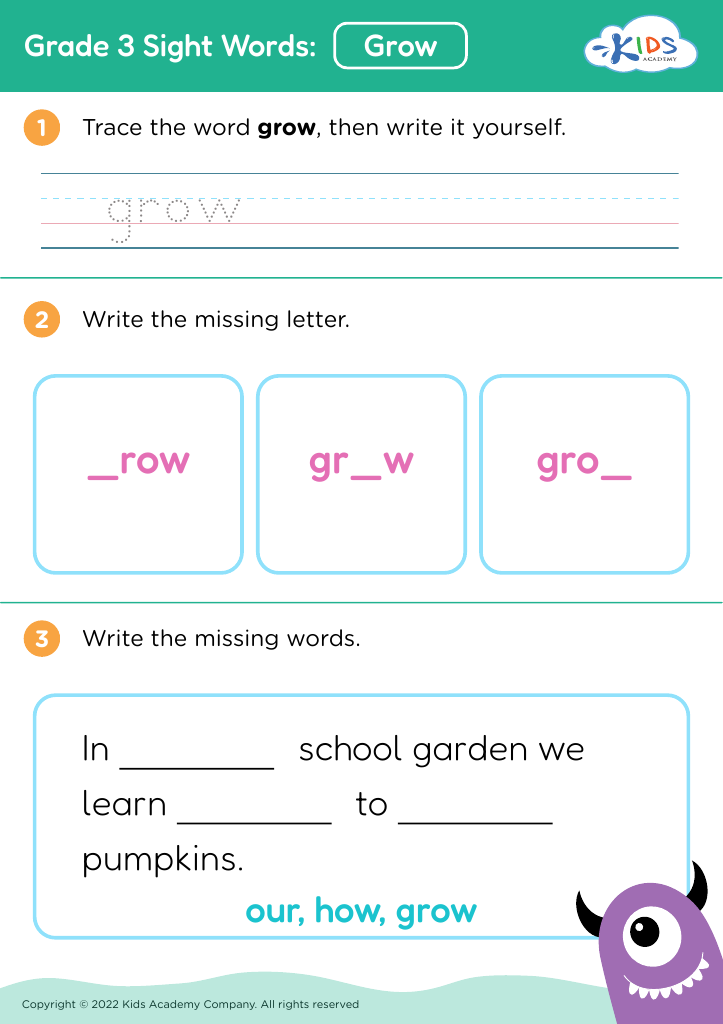


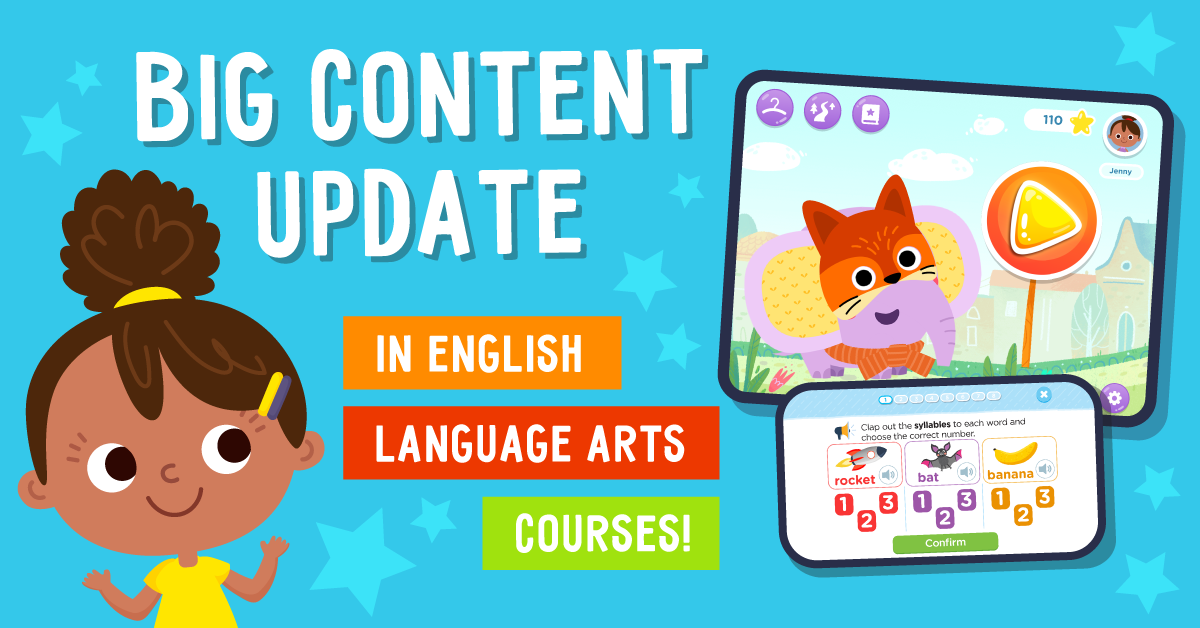




Understanding syllables at the age of nine is crucial for children's literacy and language development. Syllables form the building blocks of words, and grasping their structure aids in reading, writing, and speaking more effectively.
When children recognize syllable patterns, they can decode unfamiliar words more easily, enhancing their reading fluency. Breaking words into syllables makes them less intimidating, allowing kids to tackle more complex vocabulary. For example, understanding that "information" can be broken down into in-for-ma-tion helps a child process and pronounce it correctly.
Moreover, syllable awareness boosts spelling skills. By knowing how words are divided, children can predict spelling patterns and recognize where to place vowels and consonants. This predictive ability aids in more accurate word formation and minimizes the frustration of frequent spelling errors.
Syllables also play a pivotal role in developing better pronunciation. Proper syllable breaks can prevent mispronunciation and improve overall speech clarity, crucial for effective communication.
Finally, for non-native English speakers or children with learning difficulties, syllable recognition can provide a systematic approach to language learning, fostering more inclusive and supportive educational environments.
Thus, parents and teachers should prioritize syllable instruction to build a robust foundation for advanced literacy skills, empowering children for future academic success.








