Visual Learning Addition and Subtraction Word Problems Worksheets for 9-Year-Olds
5 filtered results
-
From - To
Discover our engaging Visual Learning Addition and Subtraction Word Problems Worksheets designed specifically for 9-year-olds! These worksheets utilize vivid illustrations and real-life contexts to strengthen math skills fluently and effectively. By incorporating visual stimuli, students will better understand mathematical concepts and improve their problem-solving abilities. Each worksheet features an array of fun, relatable scenarios that challenge young learners to apply addition and subtraction in different contexts, enhancing critical thinking. Perfect for classroom use or at-home practice, these resources cater to various learning styles and promote a stimulating educational experience. Begin your child’s journey of mathematical curiosity today!
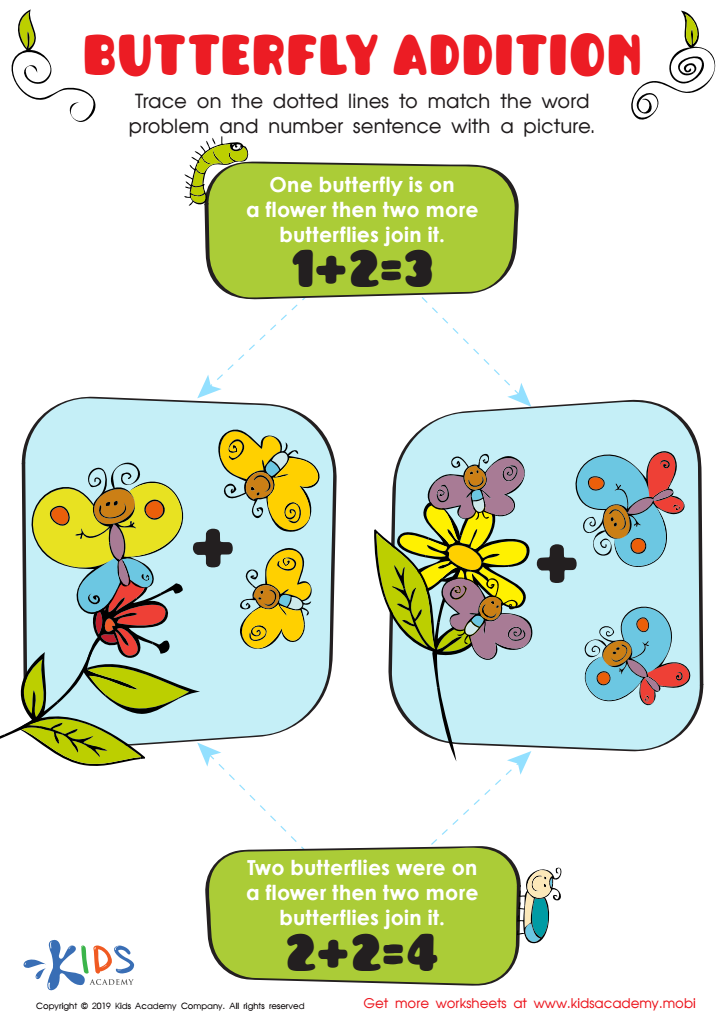
Butterfly Addition Worksheet
 Assign to My Students
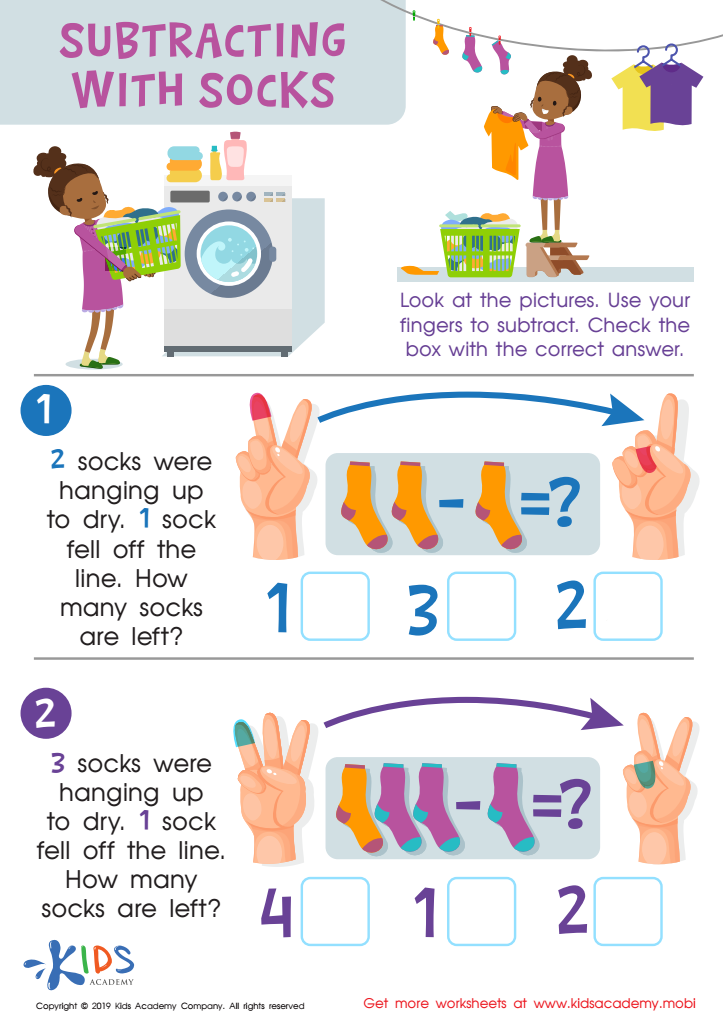
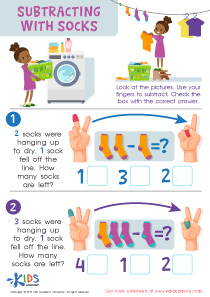
Subtracting Socks Worksheet
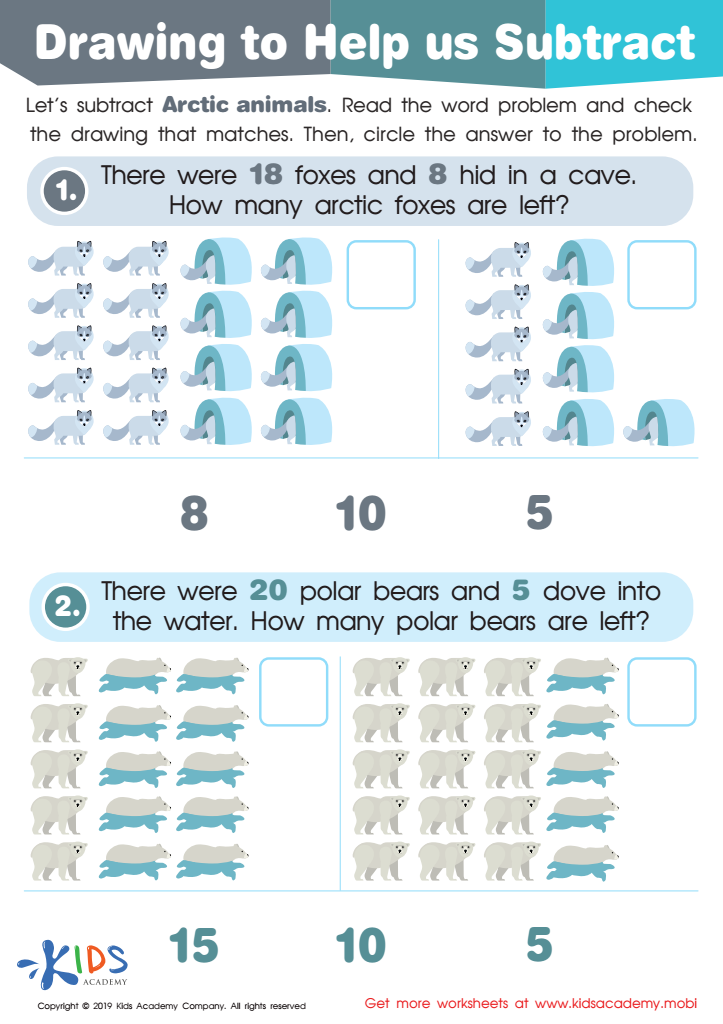
Drawing to Help Us Subtract Worksheet
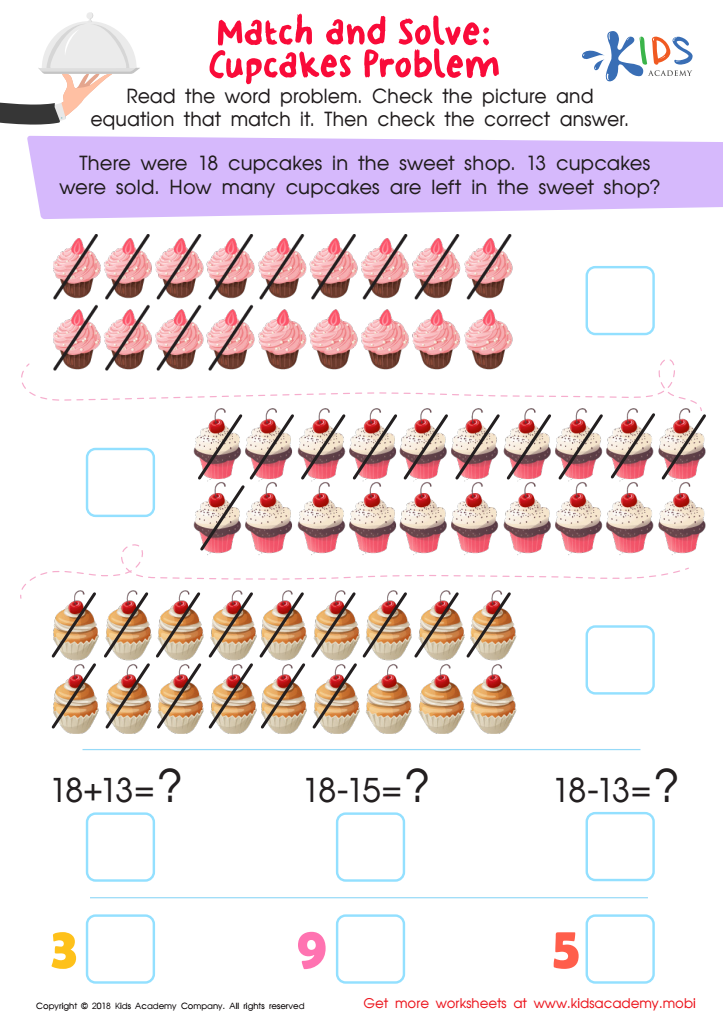
Match and Solve: Cupcakes Problem Worksheet
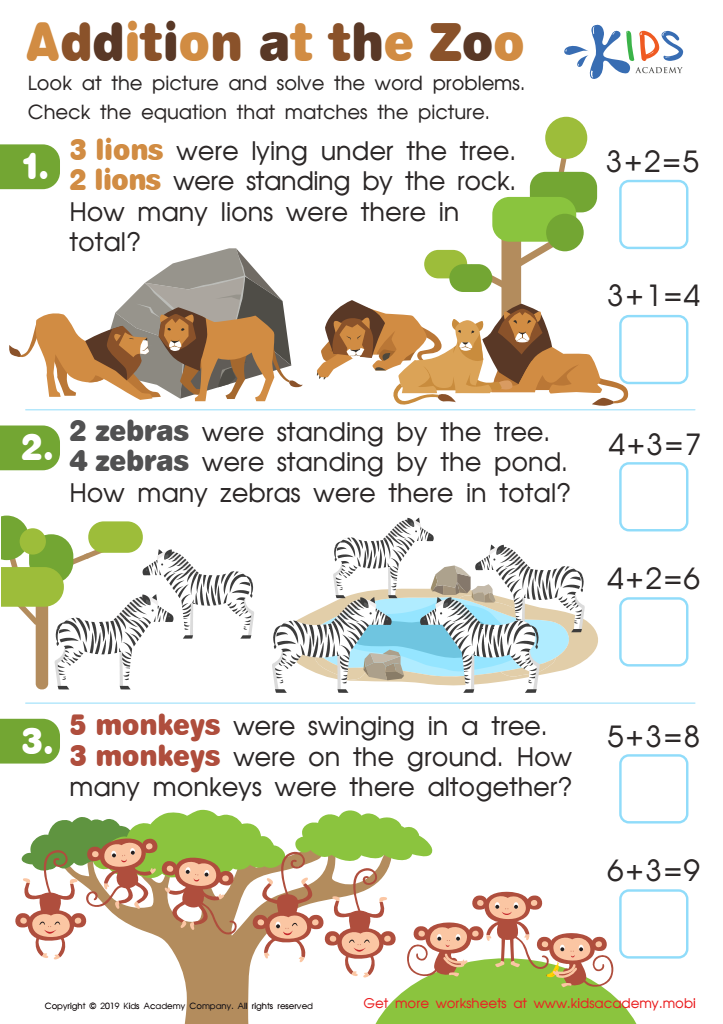
Addition at the Zoo Worksheet








Visual learning addition and subtraction word problems are crucial for 9-year-olds as they bridge the gap between abstract mathematical concepts and real-life applications. At this age, children often face challenges in understanding mathematical operations in a conceptual manner. Visual aids, such as diagrams, number lines, or charts, help them grasp these concepts more effectively. These tools allow students to visualize the problem, encouraging them to think critically about what is being asked and how to approach it.
Moreover, this method caters to different learning styles, especially for those who may struggle with traditional worksheets or verbal explanations. Visual representation can improve retention and comprehension, making math less intimidating and more engaging. Supporting visual learning also enhances spatial awareness and logical reasoning, skills that are essential not only in mathematics but in everyday decision-making.
Teachers and parents should prioritize strategies that include visual learning approaches in word problems, as they cultivate problem-solving skills that extend beyond the classroom. By creating a supportive environment that acknowledges individual learning preferences, we foster a love for mathematics, empower students to approach challenges with confidence, and lay a foundation for future academic success.