Enhance your 9-year-old's math skills with our engaging worksheets focused on comparing fractions through addition and subtraction. Designed to make learning fun and interactive, these worksheets feature vibrant graphics and clear instructions that guide young learners as they master comparing fractions of different sizes. By practicing these essential skills, children will develop a deeper understanding of fraction concepts, paving the way for future math success. Each worksheet encourages critical thinking and problem-solving while ensuring that students can collaborate and learn at their own pace. Discover the joy of learning with our thoughtfully crafted fraction worksheets today!
Check out this FREE Trial Lesson on Addition & Subtraction for age 9!

Z

Favorites
With answer key
Interactive
  • 9
  • Comparing Fractions
  • Addition & Subtraction
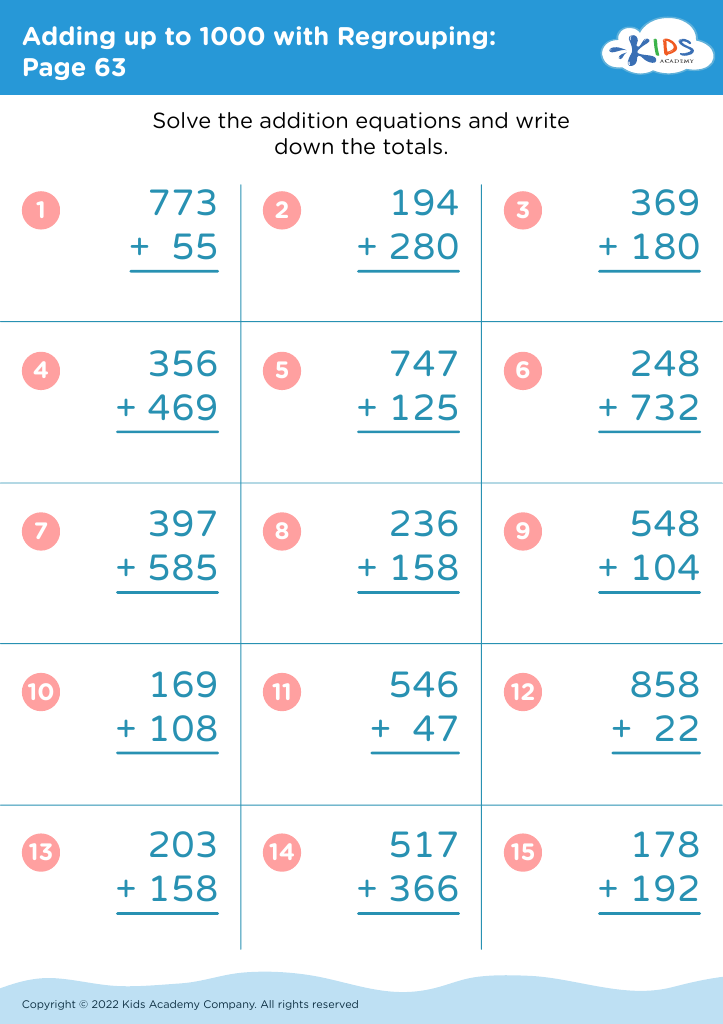
Adding up to 1000 with Regrouping: Page 63
Worksheet
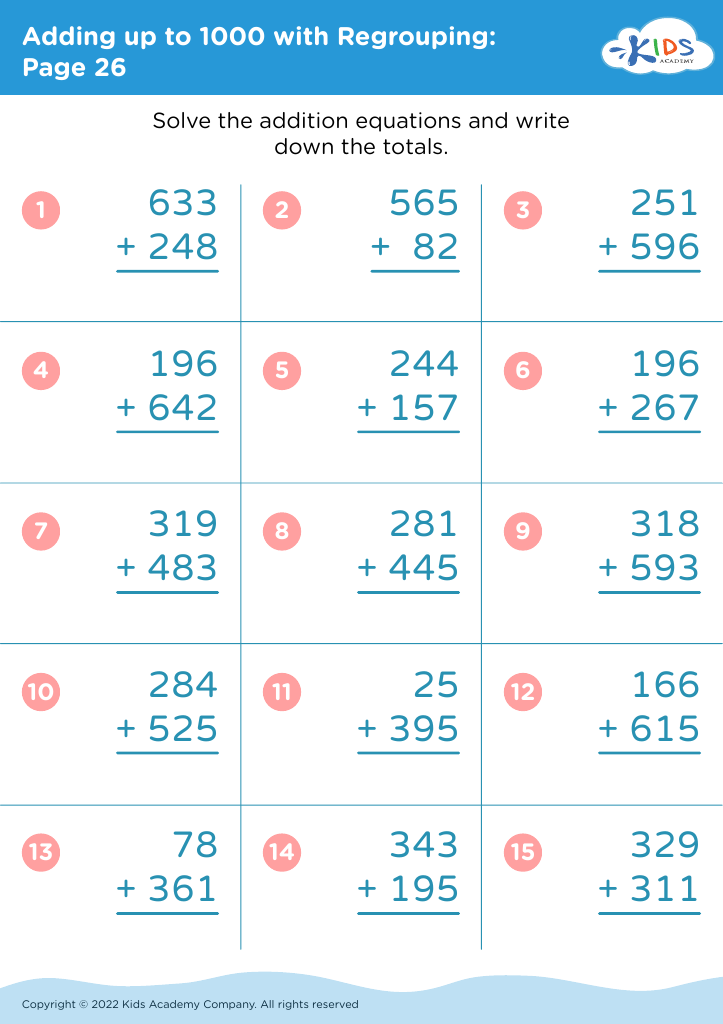
Adding up to 1000 with Regrouping: Page 26
Worksheet
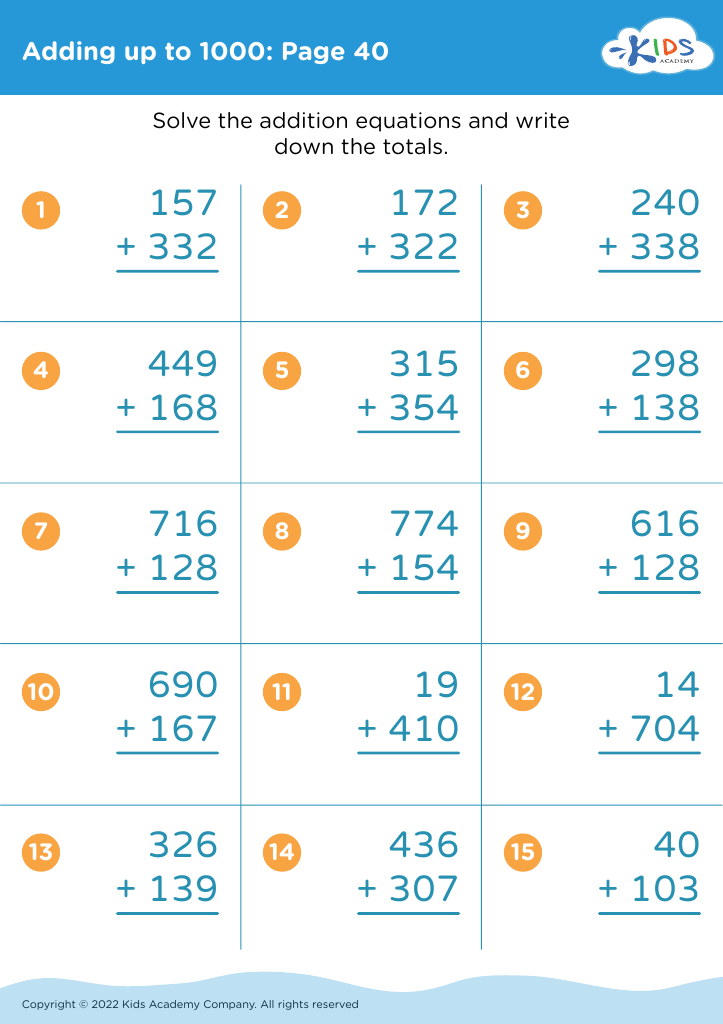
Adding up to 1000: Page 40

Adding up to 1000: Page 40

Adding up to 1000: Page 40
Worksheet
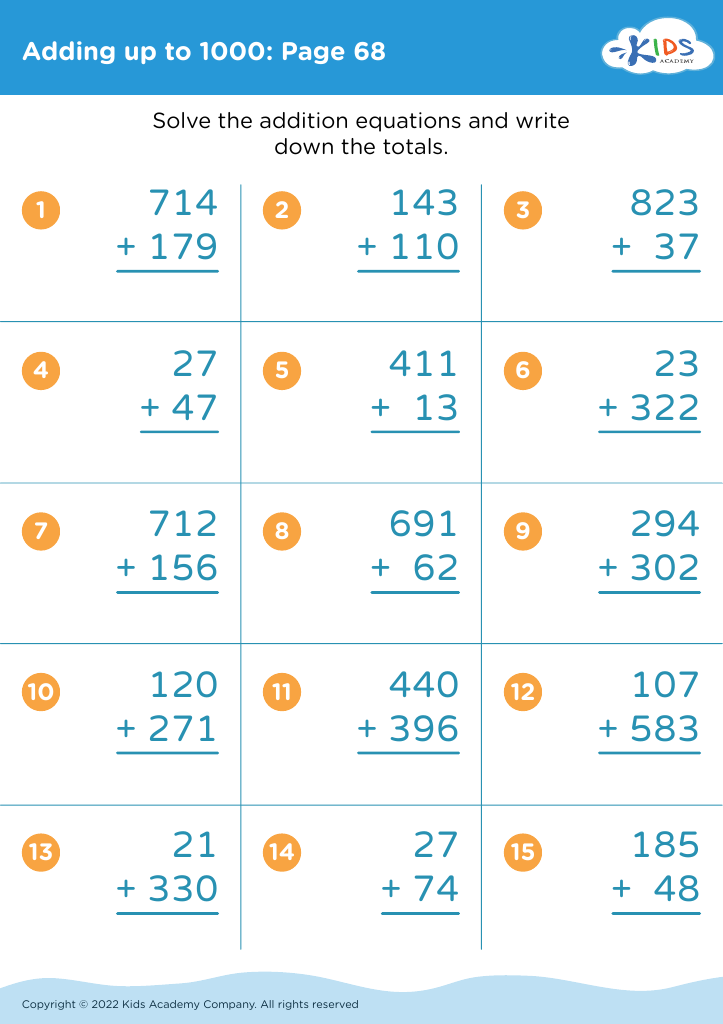
Adding up to 1000: Page 68

Adding up to 1000: Page 68

Adding up to 1000: Page 68
Worksheet
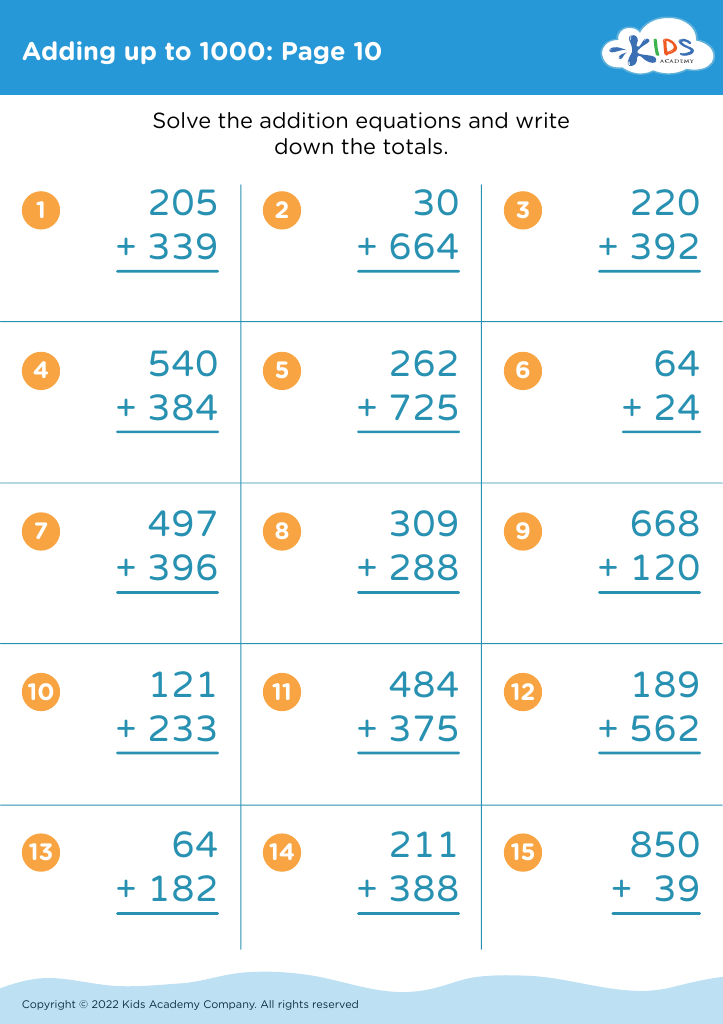
Adding up to 1000: Page 10

Adding up to 1000: Page 10

Adding up to 1000: Page 10
Worksheet
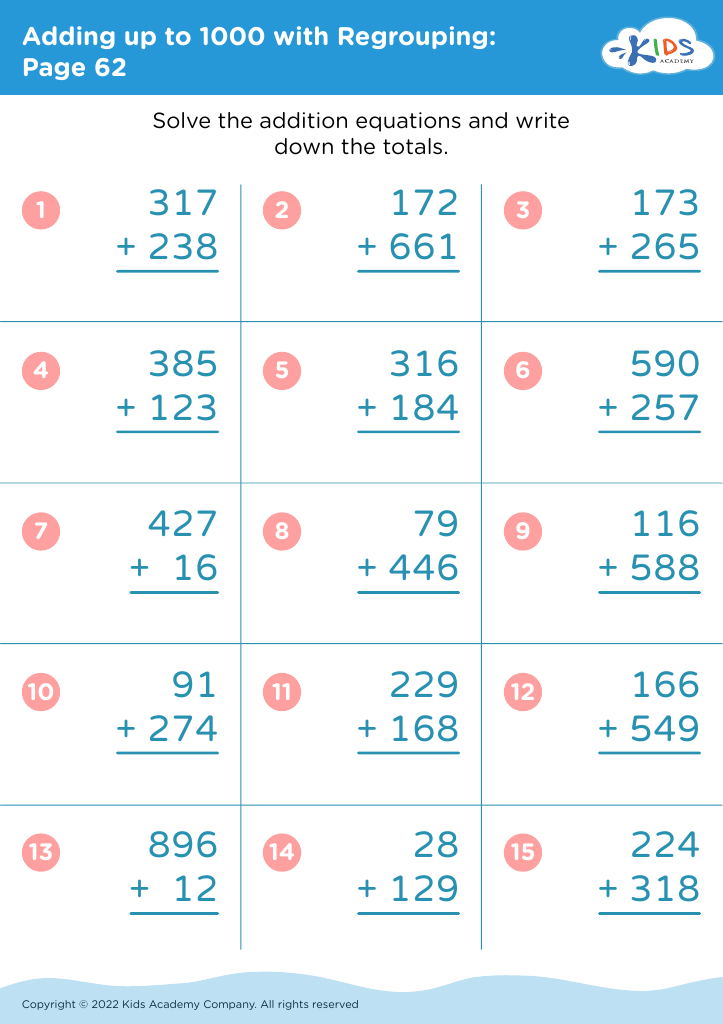
Adding up to 1000 with Regrouping: Page 62
Worksheet
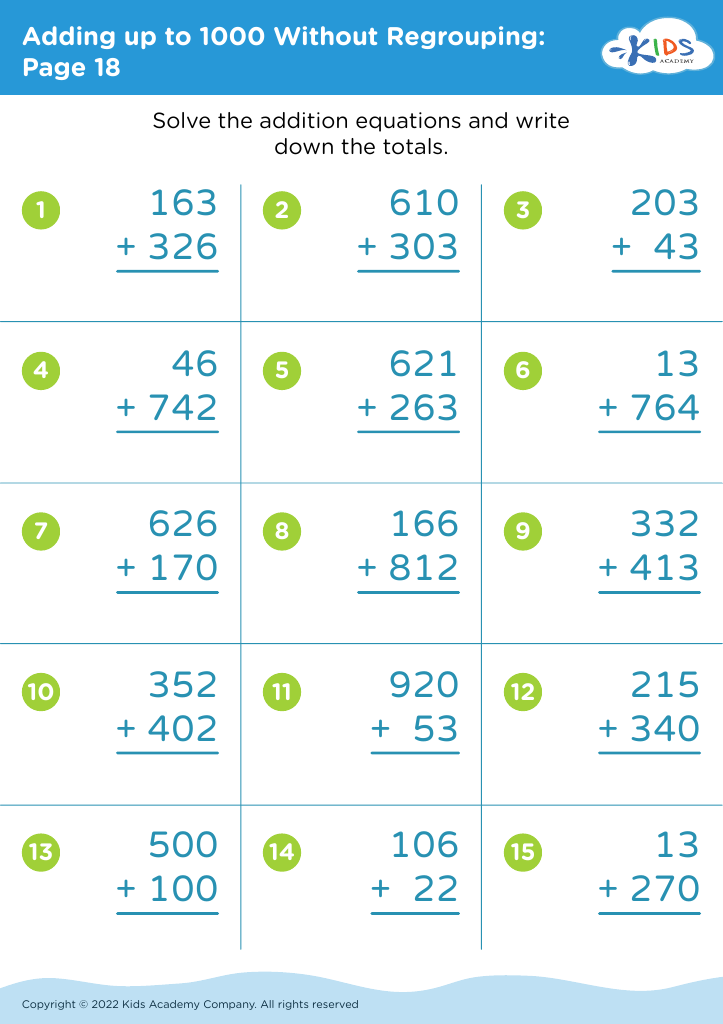
Adding up to 1000 Without Regrouping: Page 18
Worksheet
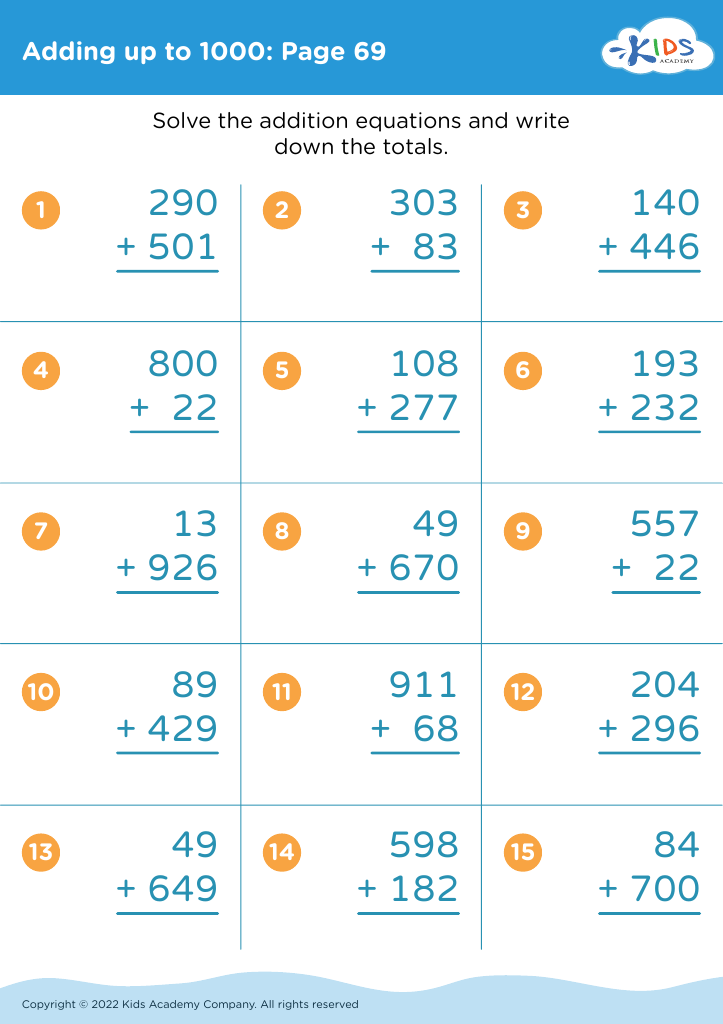
Adding up to 1000: Page 69

Adding up to 1000: Page 69

Adding up to 1000: Page 69
Worksheet
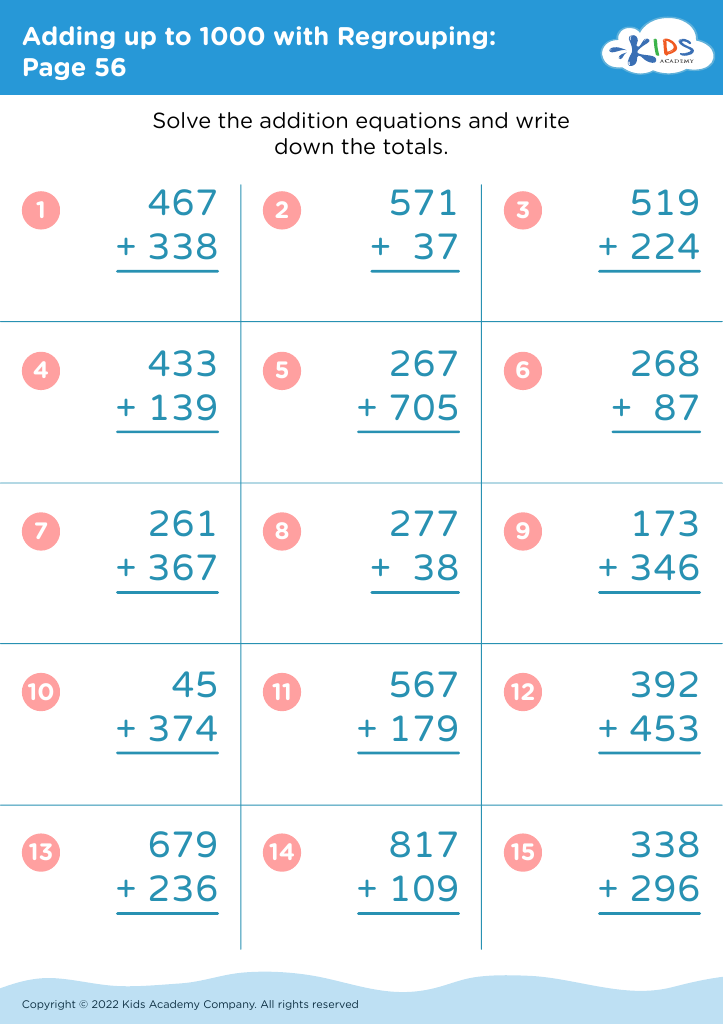
Adding up to 1000 with Regrouping: Page 56
Worksheet
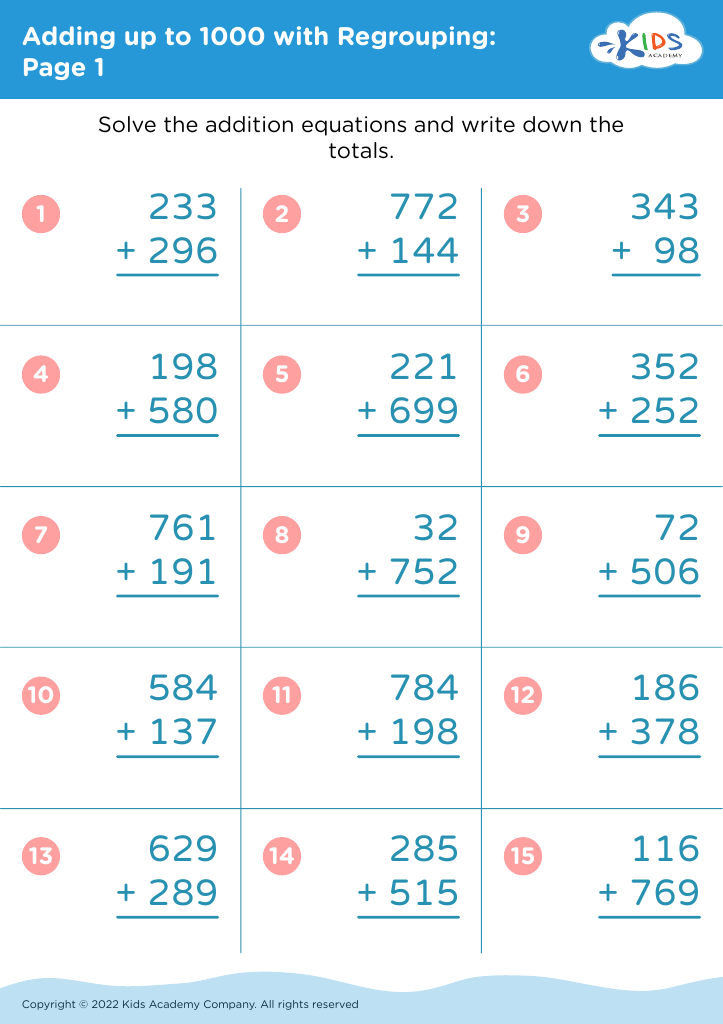
Adding up to 1000 with Regrouping: Page 1
Worksheet
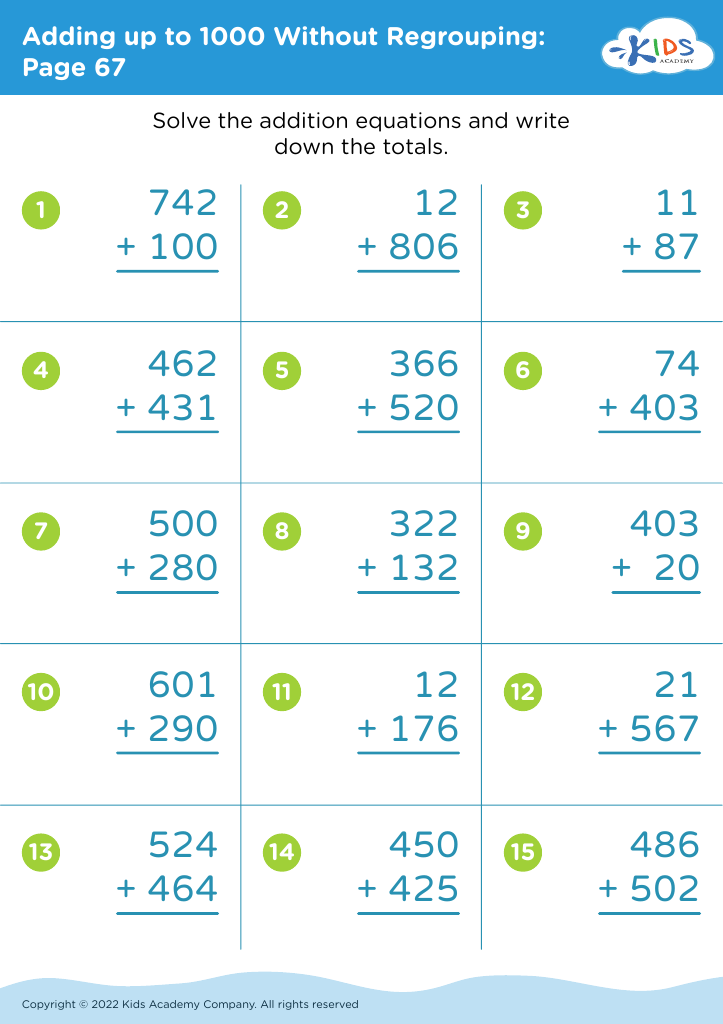
Adding up to 1000 Without Regrouping: Page 67
Worksheet
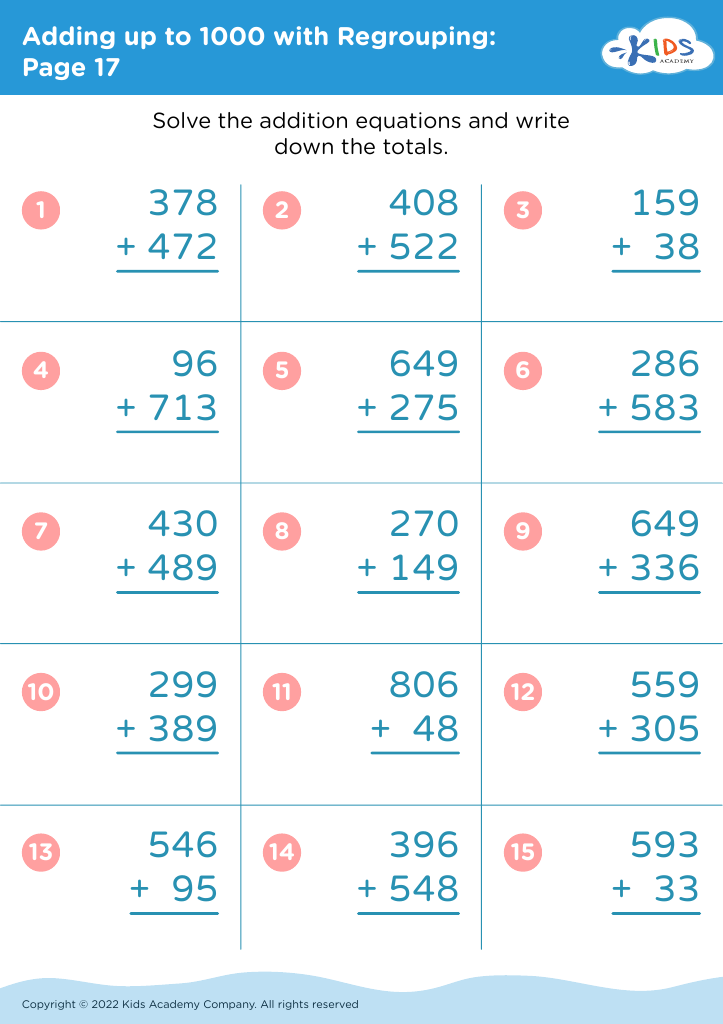
Adding up to 1000 with Regrouping: Page 17
Worksheet
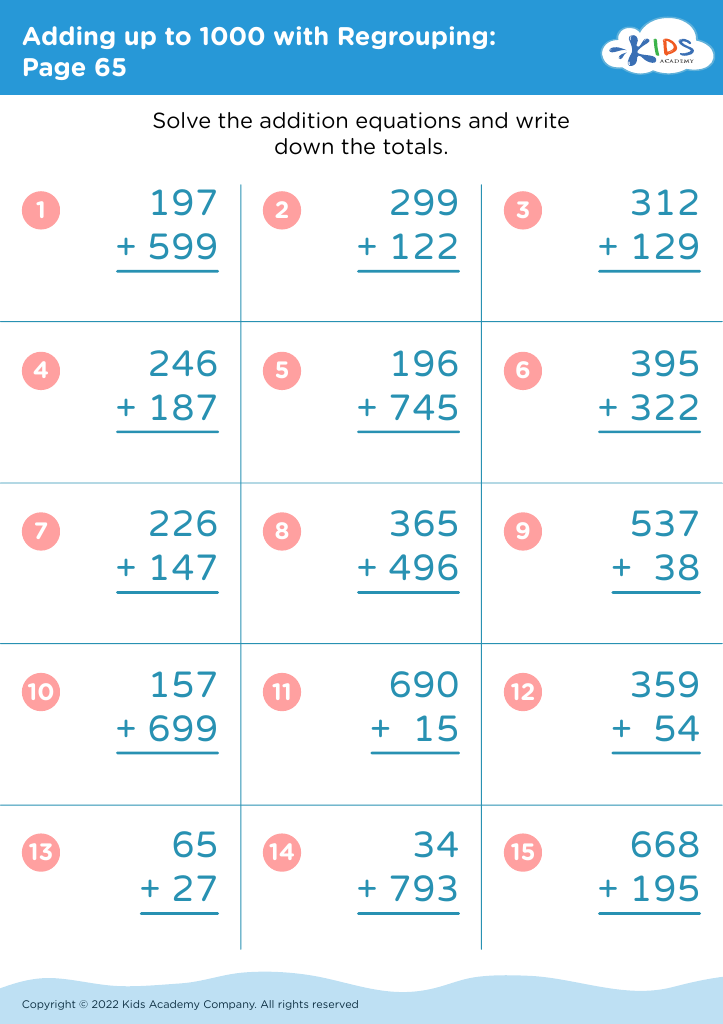
Adding up to 1000 with Regrouping: Page 65
Worksheet
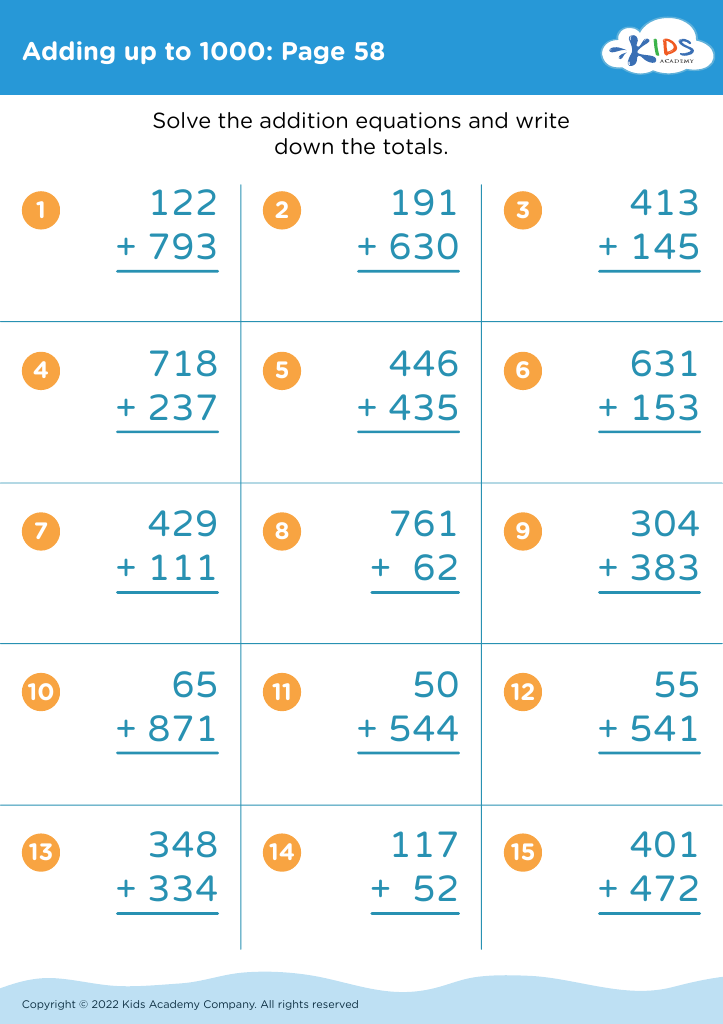
Adding up to 1000: Page 58

Adding up to 1000: Page 58

Adding up to 1000: Page 58
Worksheet
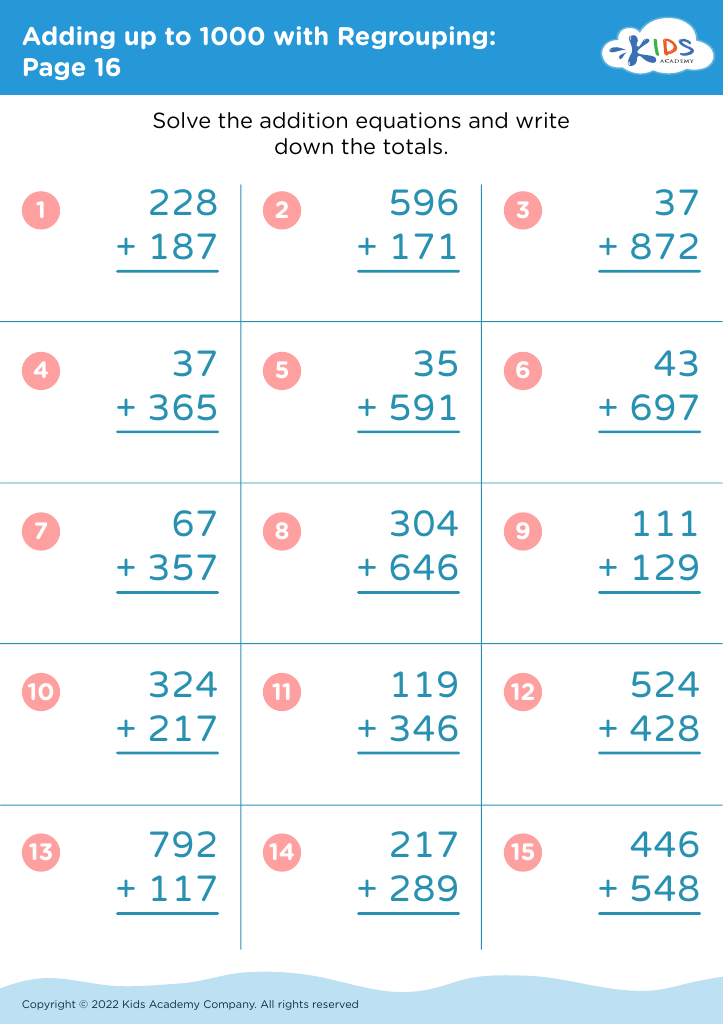
Adding up to 1000 with Regrouping: Page 16
Worksheet
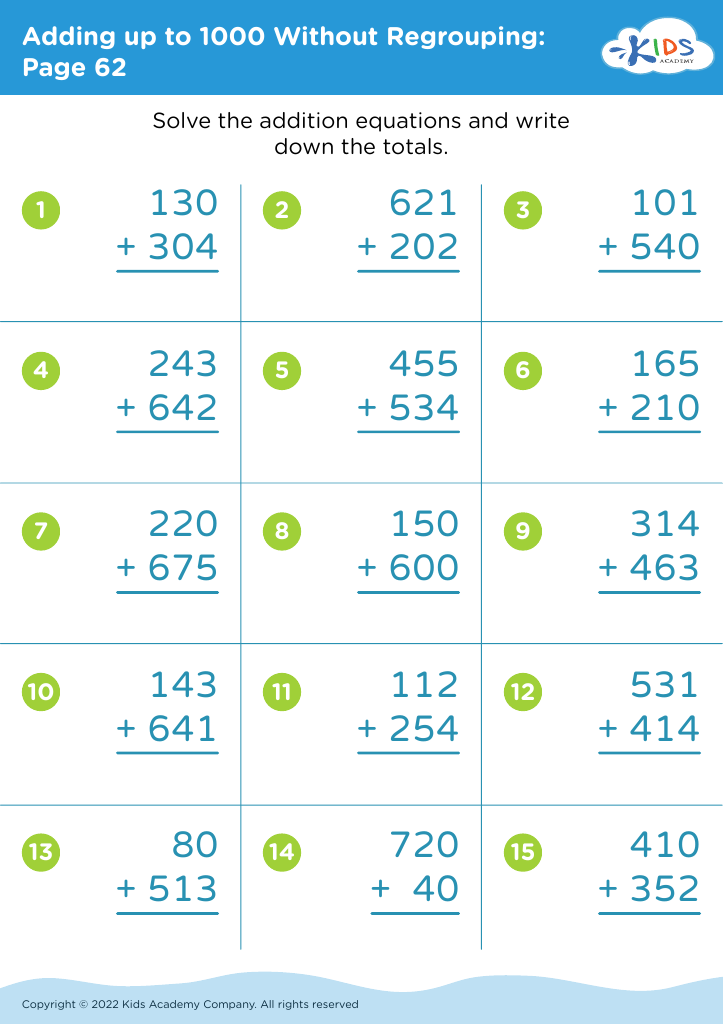
Adding up to 1000 Without Regrouping: Page 62
Worksheet


Understanding how to compare fractions, especially in the context of addition and subtraction, is crucial for 9-year-olds as it lays the foundation for more complex mathematical concepts in later grades. When children learn to compare fractions, they develop critical thinking and problem-solving skills. This process aids them in understanding concepts such as equivalent fractions, and common denominators, and reinforces the idea that fractions represent parts of a whole.

Moreover, mastering fraction comparison enhances a child's ability to perform addition and subtraction with fractions. Parents and teachers should care about this because it directly impacts a child's confidence and proficiency in math, areas that are integral to academic success and daily life. For example, when children learn to add or subtract fractions in real-world scenarios (like cooking or dividing objects), they apply their skills in meaningful contexts.

Additionally, nurturing an environment where kids explore these concepts promotes positive attitudes toward math. This early foundation encourages a growth mindset, helping them to tackle more advanced topics in future grades with ease. Therefore, emphasizing the comparison of fractions during this developmental stage is essential for a child's mathematical journey and overall cognitive growth.